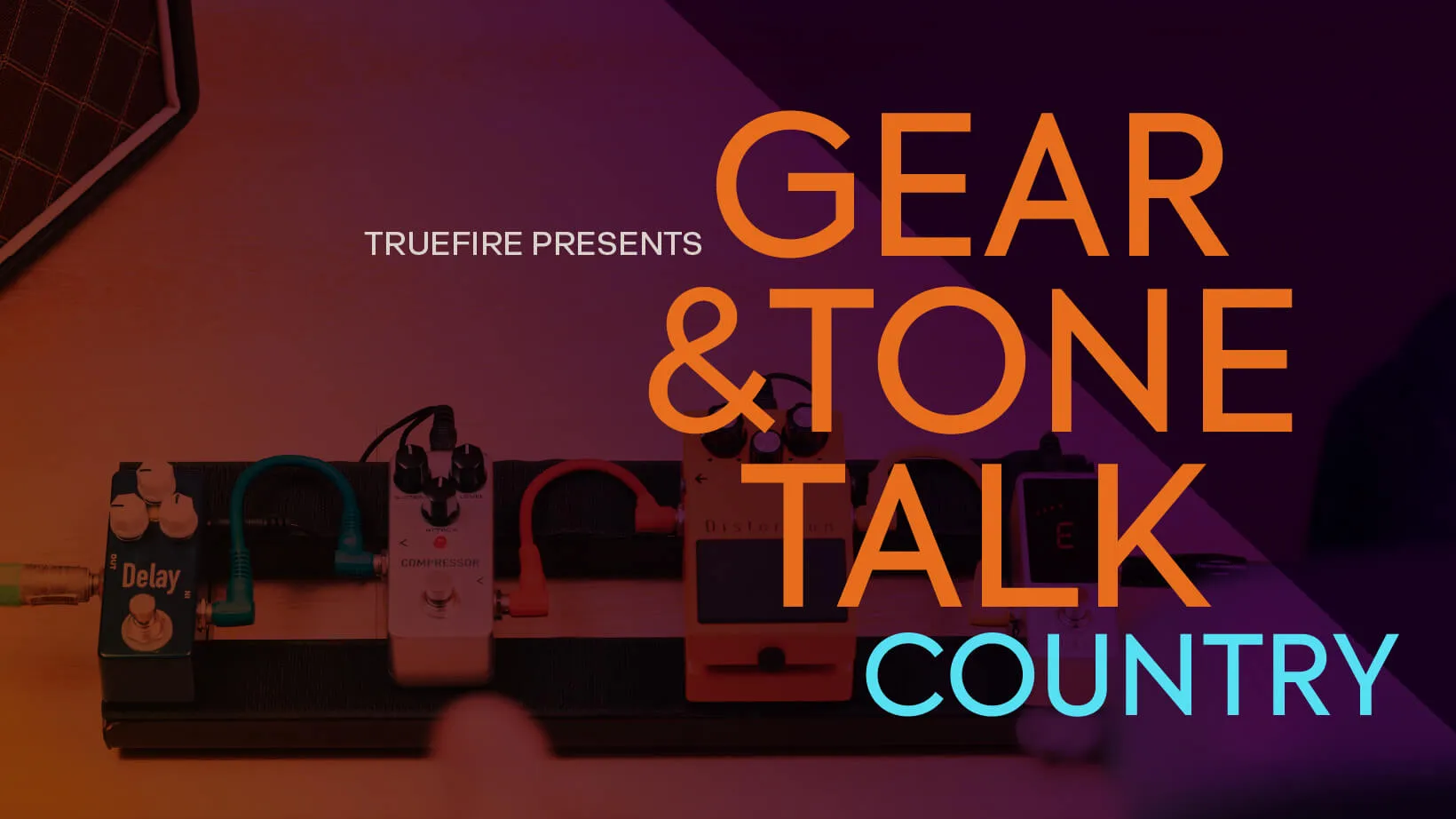
Gear & Tone Talk: Country

TrueFire's Country Artists Share Priceless Gear & Tone Insight

Marty FriedmanTommy EmmanuelSteve VaiEric GalesEric Johnson

Get this course and 1,000+ more with All Access

Try 14 days free. Cancel any time.

Purchase Individual Course for $9.99
Gear & Tone Talk: Country

About this course

Learning how to dial in the elusive “perfect tone” is a journey that never ends for we guitarists. Understanding how our instruments and settings impact sound is requisite for dialing in the optimal tone for the genres you dig and expressing your own artistic identity.

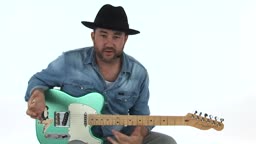
Each edition of TrueFire’s Gear & Tone Talk series is a genre-specific compilation of gear and tone video segments from top TrueFire artists’s courses. They’ll rundown their rig and talk about how they “dial in” their own tone for the performances in their courses.

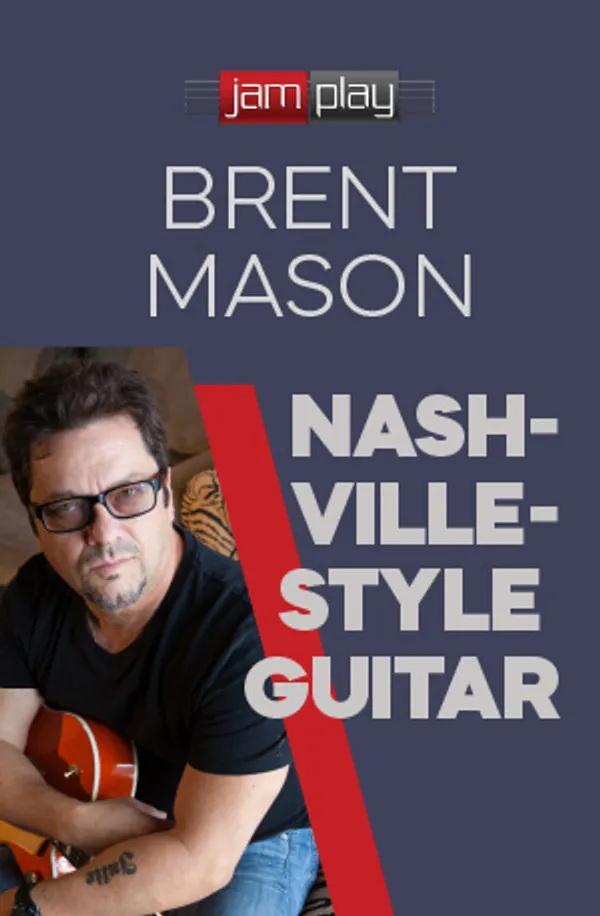
In this Country edition, you’ll absorb solid gear and tone insights from 6 TrueFire artists: Jason Loughlin, Ladd Smith, Johnny Hiland, Corey Congilio, Matthew Lee and Brent Mason.

You’ll have all of TrueFire’s learning tools at your fingertips to personalize your workspace and reference the videos at your own pace. You can loop, slow down, or speed up any section of a lesson.

Plug in and let’s dial in our country tone!
Release date: 04/01/2023 • 2h 08m runtime
Start Course
Sample lessons
Gear & Tone Talk with Jason Loughlin
From Country Connections
Gear & Tone Talk with Matthew Lee
From Honky Tonk Guitar: Lead Edition

What's included

23 lessons • 1 charts

Gear & Tone Talk with Jason Loughlin
Jason's Gear is a video guitar lesson presented by Jason Loughlin and is sourced from 50 Rockabilly Licks You MUST Know

I couldn't be more appreciative of my endorsement from Bill Nash. I have a couple of his telecasters. The one I'm using in this course is a modified T-52. It has a Jason Lollar Charlie Christian pickup, Lollars in the bridge, Bigsby, reversed switch plate and no bevel on the edge of the frets. When I got it I switched the volume pot to have a really even sweep and the tone pot to have a fast sweep. I also use Gibson, Danelectro, Eastwood, guitars.

I was using a few different pedals in this course. One was the Keeley Compressor which I use very subtly. I find it really helps with evening out attacks when I'm Travis picking. For overdrive I use the Box of Rock by Zvex. Very realistic, dynamic overdrive with a boost switch that has tons of headroom. I always have this pedal with me no matter what the gig is. Finally, for slapback I use the Strymon El Capistan tape delay. Here's a short list of other gear I endorse - D'Addario strings (.10-.42) Dimarzio pickups, Pedaltrain Pedalboards and 65 Amps.
Gear & Tone Talk with Ladd Smith
G&L Guitar is a video guitar lesson presented by Ladd Smith and is sourced from Modern Nashville Guitar

"What an awesome guitar! I feel very blessed to have found it. It took me years to pull that off and like I said, it was very serendipitous. It really helps you free up your mind so that you can be creative and focus on the music when there are no annoyances or distractions in the way your guitar plays or sounds. It should feel like an extension of your body with a tone that just inspires you. The guitar that I'm talking about here is a late-nineties (I'm guessing) G&L ASAT Classic, heavily customized with the Stets-Bar tremolo system that I love, jumbo frets, a Keith Banjo Tuner among other bells and whistles. One thing to note also is that I usually prefer a 3-piece Bridge with the bottom wall shaved (it gets in the way of the finger work) and Brass Saddles on the G-D-A-E Strings, and the special Seymour Duncan Pickups. Let me give you those pickups for reference; Seymour Duncan Five-Two in the Bridge Position. Basically it was designed for Brent Mason originally and it's usually a custom shop order. Sand-cast Alnico V magnets on the three low strings add more definition and punch to the bottom end. Sand-cast Alnico II magnets on the three high strings provide a warm and smooth top end without sacrificing that great Tele quack. Tele players often complain that their low strings sound mushy and their high strings are too bright - especially in the bridge position. The Five-Two concept counteracts this phenomenon. - Alright, that was cut and pasted - but I couldn't have said it better myself. Next is the Seymour Duncan HotStack - which I mistakenly call a 'HotStack in the video which is an entirely different (but equally awesome) pickup - this pickup I blend in with the Neck and Bridge pickups with an independent volume knob. It's great for finding a sweet spot somewhere between a Strat and Tele. Also the middle pickup has a double tapped coil put in by my good friend and guitar tech Chris Roberts. Last but certainly not least is the Seymour Duncan 'Firebird Mini-Humbucker' in the Neck Position - which is phenomenal in my opinion. I personally like it just as good or better than any other kind of mini-humbucker I've heard. If you want to feel basically what my neck is shaped like, don't put your hands around someone's throat, but do go feel a Danny Gatton Signature Model Telecaster. I love the high-gloss Curly Maple neck in that special U shape, so that's basically what my guitar neck is inspired by. Depending on what strings and frets I will be playing around on that particular track, I temper tune my guitars the best that I can. That's basically what the Buzz-Feton tuning system is about by the way. I don't have enough space to get into Temper Tuning in detail, but it's definitely something worth researching on Google or Wikipedia if you're going to be recording solo guitar parts.

A couple things that I forgot to mention are my picks and strings of choice: I use a .73 Ultex Guitar Pick by Dunlop Accessories. This is my very favorite pick out of ALL of them I've ever tried, I've never had one break on me, not even once, no matter how hard I play. Jimmy Dunlop told me that the Ultex material is a Patented Material first developed for use by NASA. The .73 Ultex is somewhere between Medium and Heavy and extremely versatile for electric or acoustic lead. When I do Acoustic Rhythm tracks I usually use a thin Nylon pick by Dunlop. When I use a Thumbpick, I like the Fred Kelly Slick Pick, Herco Blue Thumbpicks (made famous by Chet Atkins and then Brent Mason) and I also like John Pearse Thumbpicks.

My guitar strings are GHS Boomers, a nickel-plated steel wrapped around wound custom string set that we are working on getting out there to you guys as a 'GHS Boomers - Artist Signature Set', so you don't have to mix packages together like I have all these years! Here are the gauges: 0095, .0115, .016, .026w, .036w, .046w You get a real thick wirey feel from the bigger gauge on the bottom and the 9 1/2's on top gives you a very rich and full sound on the high end. I can't stand wimpy thin sounding tone and I've found that along with the pickups and everything else, a fresh set of strings that 'fit your guitar' helps the magic along tremendously.

String Treatment: My pal Thom Bresh uses 'Fast-Fret' on his guitars, and he loves it, but it's a bit too high-maintenance and sticky for me. I'm a fanatic for these little chemically treated pads called Axe-Wipes by DeoxIT & CAIG Labs - I don't officially endorse or promote them, but I've used them for years and I run my strings through them as soon as they come out of the package. You would not believe all of the oil on a set of strings straight from the factory, in any brand. Well, oil collects particles and you get gunked up and rusty pretty quick, especially if you have a high phosphor level in your sweat (cut back on the soft drinks!) These Axe-Wipes just make your guitar sound better in general, and you don't have to change your strings anywhere nearly as often, also it makes your fretboard Super Fast. Having grown up in the guitar shop, I've tried everything to make the neck play faster and get the strings to last longer. I've tried magnetizing and/or demagnetizing the strings, talcum powder on the neck, boiling your strings (this was mainly a Bass Guitar thing), every oil, polish, neck lubricant, spray-on, rub-on product out there and frankly nothing can touch this stuff. It's magical, I've got all of my buddies using it now - well, except for Bresh, he loves that Fast-Fret."

Gear & Tone Talk with Ladd Smith
Pedalboard is a video guitar lesson presented by Ladd Smith and is sourced from Modern Nashville Guitar

"I feel so lucky to have the chance to show you the result of years of research that we've done regarding the downright best guitar effects out there. And believe me, we haven't tried them all, but between myself and my musician friends, there's not a whole lot out there that one of us hasn't tried or doesn't have a report on. First of all you need to know that my pedalboard as it is seen here is a condensed version of my studio pedalboard. And yes, everyone had a good laugh at my 'Airport Pedal Security System' held together with cable ties - which was for the express purpose of the pedals being held in place and surviving the airport luggage transit experience down to St. Petersburg. It isn't very aesthetically appealing. However if you're in a pinch, drill some holes and use some industrial strength cross ties from the hardware store. My friend 'Rooster', at Trailer Trash Pedalboards swears by 3M Dual Lock, which is a velcro-like system of interlocking mushroom shaped heads that snap audibly that you need a screwdriver to separate when he builds his world-renown noiseless pedalboards. Unfortunately we didn't have the time to have Rooster put a pedalboard together for this filming. We did however put this pedalboard together on a Gigbox by Gator Cases, which is an amazing invention by my buddy Joe Hooper of Nashville - when you uncover your pedal board just take the lid and flip it over and pull up the A-frame stand and it holds three electrics and one acoustic.

I think this is a pretty self-exploratory section of video. I wish I had time to go into all of the different amps, cabinets and mics that we use and experiment with in the studio but I don't. So let me just list the effects we used on the course in order of the signal chain:

X2 Digital Wireless XDS-Plus System

Visual Volume Pedal by Visual Sound

Ecstasy Drive by Wampler Effects / Indyguitarist.com

Keeley 4-knob Compressor

Boss Bluesdriver BD-2 - Modded by Keeley Electronics

MK423 Boost by Creation Audio Labs

Texas Flood by Toadworks

Signa-Comp Drive by CMAT Electronics

T.C. Electronics Chorus + Pitch Modulator & Flanger

Line6 DL4 Delay - Modded by Keeley Electronics

Line6 MM4 Modulator Effects

Gigbox Road Case by Gator

Mesa/Boogie Lonestar Amplifier

All connected with my trusty George L’s Pro Cables, they're the best - period.

Like I said, you can check out the new and improved LaddSmith.com Gear section with links to all of my favorite stuff.

I just want to say Thanks Again for purchasing my course. I really hope I was able to share something that will help you on your musical journey. Don't forget to be creative and revisit this course, I always see stuff that I missed the first time through... If you liked this course, please recommend it to your friends, family, AA sponsor, distant relatives, noisy neighbors, ex-lovers and community leaders. Especially if they need to practice like I do. Thank you for reading my commentaries and I sincerely hope you've enjoyed Modern Nashville Guitar!

Special thanks to (in no particular order): God; my creator, best friend and teacher, My loving, inspiring and supportive Father, Mother, Brother & Family, All of my friends and family that shared their knowledge and wisdom with me and encouraged me to keep at it, Nicolette Fontaine; None of this would be possible if it wasn't for you loving and believing in me when I could not, My Godfather; Duane Hitchings, Argill's Music Store, The HMA Family, Joe Hupp, Danny Sexton, Allen Reynolds, Mark J. Miller, Ed Beaver, Thom Bresh, Michael Molenda; thank you for my first big break, Ernest Rideout and the GH07 Band, Jude Gold, GH07 Judges; Joe Satriani, Nuno Bettencort, Elliot Easton, Mike Varney, Steve Lukather & Greg Howe, The Truefire family; for welcoming us into your home and making us feel like long lost cousins; Brad Wendkos & Family, Alison Hasbach, Nancy Catalano, Ren Wright, Dave Weisbrot (I wish we could make a record together-I still have so much to learn from you), Ed Sengstack, Nick Hinckley, Eric Hunter, Charlie Diaz, Rachel Goette, Andy Pervazov and Josh Catalano, Muriel Anderson and The All-Star Guitar Night Family, All of The Smith Family, Thank you Uncle Levon, Aunt Lorraine, Aunt Lovenia and Aunt Lovella for your encouragement, Randy & Lavinia Hutchison; thank you for inspiring me to really follow lead guitar, Christine McKay, Jessica Ford, David Johnson, Joy Ford & Family, Brice Henderson & Family, Dallas & Sharon Frazier, Don Goodman & Family, David Norris & Family, Chris Roberts; thank you for constantly going out of your way to help me out whether it's your skills as a drummer or as my pickup and effects tech-you're the greatest, Chris Leuzinger, Trey Alexander, Wendyann Pope-Herron, Tommy Butler, Mark Dreyer & Studio 23, Bob Berk, Bob Saxton, Buster B. Jones, Tony McAmy, Tony DeLaRosa, Fred Boekhorst, Leona Williams & Family, Larry Farragelli, Michael Tempesta, Gordon Dillingham, Shawn Roberts; thanks for customizing a great guitar, Ray Anderson & Bill Qualls, Scotty & Marie Blevins, Joe Hooper, Mark Hendricks, Jaime Scott & the X2 Family, Brent Lollis and The Triad Crew, Brent Mason & Family, Brian Wampler, Seymour Duncan, Randy Fuchs, Bobbe Seymour, Biff Watson, Carl Jackson, Lisa Sharken, Wally Saukerson and the Wally's World Crew, John Briggs & Michael Sistad at ASCAP, All of my Producer Friends and Studio Clients. There are So many others that I do not have room to list here, you know who you are. Thanks again to every influence, hero and friend mentioned in the course!"

Gear & Tone Talk with Johnny Hiland
Gear Talk is a video guitar lesson presented by Johnny Hiland and is sourced from Ten Gallon Guitar

Now is one of my favorite times because I get to share all this wonderful gear that I'm using to capture the Johnny Hiland tone. There's so much gear out there these days that it's very hard to make a decision on what suits you best. I have some of the best endorsers in the world and they treat me so wonderfully and you can find a whole list of the gear I use on JohnnyHiland.net. First off, I want to show you some of the guitars I use. This first one is my number one, it's a honey burst Ernie Ball Music Man Silhouette and I love Ernie Ball Music Man guitars. I've been playing them now for about five years. They are well built, very balanced, and very comfortable to play. The neck is nice and slick. They oil their necks, so there's no lacquer on the fret board. This makes them very fun to play and easy on the hands. This Music Man Silhouette features 24 frets and a tremolo that stays in tune when I dive bomb with it. I'm able to cover any genre of music with this guitar. Here are two of the things that makes this guitar so special. I work with a company called Martin Six String Customs, we have developed some custom Johnny Hiland products. The wiring harness that is in this guitar is my signature wiring harness. You can go to martinsixstringcustoms.com and check out the Johnny Hiland wiring harness, which is awesome, and a lot of people never take into consideration how important a wiring harness is. It has made a huge difference in my life. MSSC offers custom Johnny knobs, too. They have rubber grips around them, which makes them good for volume swells. You can pick those up at the MSSC website, as well. The pick-ups in this guitar are signature Johnny Hiland Six Shooter Singles made for me by Electric City Pick-Ups. You can visit electriccitypickups.com. These Six Shooter Singles are made for Stratocasters or Silhouettes. I'm very proud of the sets of pick-ups that Billy Megela has designed for me. The bridge pick-up is based off of a 49 Broadcaster pick-up. When I go after my old chicken pickin’ sound this pick-up will really do it. The middle and neck pick-ups are like old Strat pick-ups out of the sixties. They're all A3 magnet loaded and full of tone. The Runbarr is an innovation that should have come out years ago. The Runbarr is right in between my neck and middle pick-up. This product is designed to where it raises your pickguard up so that when your pick goes through the strings, it only allows you so much pick space so that you don't lose your pick and gain better pick control. A lot of times when people play fast or when they want to do sweep arpeggios, they can easily lose their picks down in been the strings so this gives you more pick control. It's an awesome product. I want to demonstrate how this affects me. This is device is designed for people who want to pick faster and for peoplw who want to speed pick and play Heavy Metal. For me, I tend to use it when I'm doing arpeggio sweeps. I'm playing and sliding my pick over the Runbarr and every note is cleaner, as the Runbarr makes it easier for the pick to sweep. So the pick control is just amazing. You can find out more information on the Runbarr at www.ezrollguitar.com or you can also go to my website at johnnyhiland.net and I will be glad to hook you up. Email me directly at info@johnnyhiland.net, if you want more info.

Here is my first silhouette and I love this guitar.

Now Goldilocks is a Music Man Silhouette. This is the first one that Music Man ever sent me, this guitar is very special and dear to my heart. There's a reason I brought her out to show to you guys because I used her a lot in section one. This is a prototype set of pick-ups that Billy Megela did for me at Electricity City Pick-Ups. This is a truer form of a telecaster pick -up, which is in the bridge of this guitar. We actually have a set of Johnny Hiland telecaster pick-ups that you can get through ECP. All my guitars are decked out with MSSC wiring harnesses, Electric City Pick-Ups, and my custom Johnny knobs. I love this guitar because it has more of a tele appeal for chicken pickers. If you own a telecaster to play country guitar with, we do have pick-ups for you. I also want to showcase Levy's Leathers that I use for all my straps and gig bags. I've been with them for 12 years and they've always taken such great care of me. Part of the chicken picking thing is that you have to a nice big western belt buckle strap and of course Levy's Leathers makes those and their leather quality is just fantastic and beautiful and all the gig bags they make are great. I want to give Levy's a big shout-out because they've been so kind to me over the years. I just had to share my little Goldilocks with you. She's a prize possession of mine. I wish I had known about Music Man guitars years ago when I first started playing because they have been become my favorite guitars I've ever owned in my lifetime.

Next is my beautiful Bill Comins Jazz Box . When people ask me about this guitar and why I need it, seeing as I'm a chicken picker, they can get their answer throughout this course. As you've seen, I love western swing and jazz elements thrown into the chicken pickin’ world. It does happen. This is a beautiful hand built guitar, I'm very proud of this guitar. I just recently got to know Bill and he's a dear friend of mine. This a high end jazz box. When people ask me about this guitar I say "I'm legally blind so I can't drive a car or a motorcycle. I could never actually own a Harley Davidson or a Rolls Royce or a Cadillac. So this guitar is my Harley Davidson, and Cadillac all put into one". With as beautiful as this guitar is, you can see why I call it that. Bill Comins is based out of Pennsylvania as well as MSSC and ECP. I got the Pennsylvania connection going on. This guitar has one of Billy Megela's pick-ups from Electric City and wiring harness from Matt Martin at MSSC. You can check out Bill Comins at cominsguitars.com. Bill is one of the most amazing men I've met, a fantastic builder of jazz boxes. He's even done guitars for D'Angelico in the past. These guitars are sensational. Again, this is my Harley, Rolls Royce. You're going to pay for a beautiful jazz box like this but I can guarantee you when you do you will be so happy and pleased that you will never want to put this guitar down. Bill puts so much passion in his construction. If you do contact him through the internet, tell him Johnny Hiland sent you.

There's two guitars that I've brought with me that are made by Godin guitars up in Canada. This is their Multiac Slim, nylon string guitar and it helps me get that Jerry Reed tone. Jerry played a lot of nylon string and so did Chet Atkins in country guitar. Godin guitars for me make the best nylon guitars. Buster B Jones played one of these as well. What I love about Godin guitars is that when I would play guitar onstage, I would play electric and I would have a hard time transitioning from a thin body electric to a thicker body acoustic. So with Godin, I found that it was amazing, you could virtually plug this acoustic style guitar into any amplifier or into a direct box. I've plugged these into four twelve half stags and they sound amazing. The biggest thing for me was the thickness of the guitar. It's about the same depth as an electric guitar. Godin guitars are fantastic. This is my Multiac Slim nylon guitar. Let me grab the other guitar I want to show you. This is another beautiful Godin guitar. This is Acousticaster. It looks just like a tele and it feels like a tele when you play it on your body.

Dava grip picks. This little pick is amazing and rubber coated and that's why they're called grip picks. There are 3 lines-if you reach out to the first line, it's a light, if you go to the middle line it's a medium and if you grab on the inside it's a heavy. They come in different colors but they're all the same thickness. Dava grip picks rock and I need to give a shout-out to them. Dave Story runs the company and I love these picks. Getting back to my Acousticaster, this little guitar is amazing. If I'm on the bus or actually traveling somewhere, and I want to warm up before a show and all my gear is onstage, I will always grab by Acousticaster and practice in the room and warm up. It's got a maple neck, Canadian spruce top, the back is mahogany. The craftsmanship of Godin guitars is unbeatable. They sound great. They're fabulous guitars and I want to take this opportunity to thank everyone at Godin guitars. Check them out at godinguitars.com. Tell them I sent you, they'd be tickled to hear that!
Gear & Tone Talk with Johnny Hiland
Gear Talk is a video guitar lesson presented by Johnny Hiland and is sourced from Ten Gallon Guitar

Now let's get into the pedal world. I absolutely love my pedal board. This is a chicken picker's dream right here. You can virtually cover any gig in the world with this pedal board. To start off, I'm using a Pedaltrain 2 Pedal Board. I love Pedaltrain, they're awesome. John Chandler is a great friend of mine. I'm also using Analysis Plus cables. I have a signature Johnny Hiland cable with them. This one that I'm using here is in a brown color and it's a country boy's color and that's' why I brought those cables out. My signature cable is more of a studio sort of cable. It's a little thicker. You can go to www.analysis-plus.com to check them out. You can also check out pedaltrain.com. Let me walk you through this pedal board because there's a whole plethora of fun things on here. I'm powering everything with a Pedal Power2. This is manufactured by a company called Voodoo Lab. I've got so many names to get out to people. Pedal Power 2 is powering everything and in the bottom you can see there's all kinds of little connective cables that connect to every single pedal on my board. You can power up to 8 pedals with this, which is very cool. I want to show you how I have everything set up. The first thing going from my guitar is actually my Hardwire tuner. This is a fun pedal because it's a polyphonic tuner. It's great. You can check out Hardwire pedals. They're well built. They'll take a licking and keep on ticking. Then directly it goes into this little guy on top. This is a Bryan Wampler Ego Compressor made by Wampler Pedals. What I love about this one is it has a blend knob to where you can compress as much as you want to and then you can actually blend some of your amp tones back into the compressor or vice versa, however you like to look at it. Then we go down here to this little guy who is in third in line. This is called the Jetter Red Shift and this is the distortion you've been hearing throughout this course. It's a small little pedal but it's a monster distorter. There's a little tiny switch over here to the left that you can actually switch it from TS 808 tube screamer sound and if you click that switch it takes you in the Dumble world. It sounds incredible. So that wraps up the Jetter Red Shift.

Then we connect to the Xotic RC Booster. The RC Booster is a clean boost and what I love about this pedal is that there is a gain knob on this where you can add a little dirt to your tone if you need to get that Danny Gatton sound. You can get that sound from this pedal. I love Xotic Pedals, they've been so good to me. I do cherish this pedal. I use it every single time I'm playing so the RC Booster is a must have. Let's move on to the next pedal which is one I cannot live without. I have three different pedal boards that I use: a pedaltrain mini, this pedaltrain 2 that I use most of the time, and then I have the pedaltrain pro which is a big studio board. I don't care how small or short your pedal board is, you have to have this pedal. This is called the ISP Decimator. This is a noise reduction pedal but it does not gate your tone or sound. So you can turn this bad boy on, and I personally leave mine on all the time, and essentially it takes all the unneeded noise out of your amplifier so if you're running a distortion and compressor at the same time, it takes all the unnecessary noise from there. That is the pedal that I will have on every single board that I ever build the rest of my life. I love it. Now let's go to the Hardwire Tremolo. I love Hardwire pedals because you can get an array of Tremolo sounds, even to like a Leslie sound. This pedal does a number of different things. It lights up when I tap on it. It has a nice big blue LED in it so you can see it onstage. Up top, there is a Hardwire Reverb Pedal and I love the reverbs out of this. You can get everything out of it, from spring reverbs to hall reverbs, even some reverbs where you can add some delay to it. This pedal is so wonderful and it can be as transparent as you want it to be, or as big and bold as you need it to be. My last pedal here on the top left is my Hardwire Delay Looper pedal. All the delays you hear in this course come from this little guy. It's built like a tank and it sounds great. You can spread the delays as long as you want and you can loop. You can get the old rockabilly delay from it. With the cables, everything is connected by multiple connection cables from Analysis Plus, some that they've built me like here, I've got some horizons- all kinds of different mismatched wires because when you're stepping on pedals, you can step through some cables, so over the years I keep a whole bag of those little connection cables because you never know when you're going to need one. Between the cables, the power supply by Voodoo Lab and the pedal board itself and all these cables, that will give you a pedal board that will suit any gig, whether you play jazz, country, or blues. It's an amazing pedal board. I have 8 pedals on there, and that gets the job done.

Now we're going to talk about my beautiful signature amplifier made by a great company CEC Amplification. This is the signature Johnny Hiland Road Dog 212 Combo. I am so proud of this amp. It's an amazing amp, and Craig even made it in my favorite color- brown. This amp is offered in this brown color that I actually use or you can get in a gray color with a black grill cloth. It's pretty awesome that you can get this in two different colors. Let me talk to you about what makes the Road Dog so unique and special. It is a chicken picker's dream. This is an easy to use amp. I like to refer to it as the blind boy amp because it is so easy to use. It's 100 watts of raw power. She's got Celestion K100 speakers which I absolutely love Celestion speakers. I've been endorsed by them for many years so a big thank you to everyone at Celestion for taking care of me on this. The K100s rock with this amp. Craig has spared no expense. We have O'Netics transformers in here. We have six L6 tubes that are actually the little snubbed nose tubes. All the wiring in this amp, everything in this amp, as far as the craftsmanship and quality of it is about as high end as you can get. Craig does not settle for second-best. The designer of this beautiful amp is Craig Wildenradt . He is an amazing guy. Let me talk to you about the back panel. We have an effects loop right there. You can use the effects loop if you wish but if you don't and you don't plug into it, it's actually completely out of the signal. I personally run my pedal board straight in so I don't use the effects loop. When there's nothing plugged, it's completely clean. You have an extension cab out, so you can run an extension cab with this which makes it really cool. Now on the front panel, It's very user friendly. I love how this amp is laid out. Essentially from left to right, you have main volume knob on the far left. Right next to it your gain knob. Some people ask "why would you need a gain knob in a single channel amp? Well, I'll get to that in one moment. Then you have your EQ, treble, middle and bass. In the Johnny amp here, we have switchable reverbs which is really cool. It's all based in a switch right here. All the way to the left is off and then you have 3 separate reverbs and how much of the reverb you want is controlled by the next knob which makes it really cool. The next knob is the master volume. What makes the Johnny amp so unique is that we designed this amp to where you're a country boy like myself and you like to play rock an d blues then it's a monster pedal amplifier. Pedals sound amazing through this amp. The reason we have the gain knob is if you play straight into this and you went a little more break up to your country sound, you can get that at low volumes even. I know this is a 101 amp and its pretty powerful and if you turn the master volume all the way down you can still get a nice sweet 2 break-up based on how Craig has designed the tubes to work. You're not actually gaining, or pulling from the power tubes, it's more on the pre-amp side of things. Now, getting into the reverb section. The reverbs in this amp are sweet. They sound amazing. What Craig has done for me is he knows I'm a Danny Gatton fan so the first setting that you turn to is rockabilly slap delay which you will not find in any other amplifier that I know of. Then you turn the knob to the right of that reverb switching knob to set how much of it you want. I actually crank it all the way up there and it gives you the perfect rockabilly tone. The other two reverbs are really nice. One of them is a mid level reverb, and then the last one of the three is a deeper bigger reverb. You can set how much of that you want from there, as well. There is a wonderful video that I've done on my website, that you can check out if you want me to demonstrate this amp using my guitar. That's available on my website, www.johnnyhiland.net. You can watch it on my gear page, and I really hope that you check CEC Amplification. You can contact Craig on the website at cecamps.com. There you have it. I have run you through all of my gear. I've just had so many great endorsers through the years and I know that I don't want to leave anybody out. I just wanted to showcase what I'm using right here to do my TrueFire course but there is huge list of amazing endorsers that I have on my gear page at JohnnyHiland.net. So go to my website and check it out.
Gear & Tone Talk with Jason Loughlin
Tones and Gear is a video guitar lesson presented by Jason Loughlin and is sourced from Focus On: Travis Picking

As far as tone goes, I try to use a good clean tone. You want the clarity and nuance of the picking to come out. Some player prefer to play this stlye strickly on acoustic for that very reason. If you're a more of a Chet Atkins or Rockabilly fan you may prefer an electric. It really doesn't matter a great deal as long as you're getting a good clear tone out of the instrument. The only effects that are associated with travis picking are slapback echo and reverb. Any delay pedal is capable of giving you a good slapback. You want to dial in one short repeat. This style is known for using a thumb pick. While it will help you get a very clear and strong attach with your bass notes it's not mandatory that you play with a thumb pick. What kind of thumb pick you use is up to you. Try a bunch before settling. Also, try a bunch of the same sizes. Not all mediums fit the same. Make sure it fits snug without cutting off circulation.
Gear & Tone Talk with Jason Loughlin
Sounds and Gear is a video guitar lesson presented by Jason Loughlin and is sourced from Rockabilly Survival Guide: Lead

It's not very tough or expensive to get a good rockabilly guitar tone. Good clean guitar tone and slapback. Done! Ok, now for you guitar nerds like myself. I pick my amp for the room I'm playing. I want a good tube amp that will cut through the band with a clean tone but break up if I dig in or turn my guitar volume up. Sometimes there is no way around having to use an overdrive pedal. Think of it as an amp. Set it to that same sweet spot where your attacks and guitar volume are really changing that characteristics of the pedal. There are so many good affordable pedals these days it won't be hard to find one that does this well. You probably already own it. If you like more modern rockabilly and psychobilly you'll want to start with a driven sound and go from there. Every delay pedal can do slapback. Set it to one quick repeat. I like having the option to use reverb and tremolo depending on the tune. I don't always use reverb and slap together. Sometimes you can wash out the guitar sound in effects. Not good. Once it starts sounding like surf music to me I pull back the reverb on the amp. Ok, compression, I use it when I play a gretsch but otherwise not much. Gretsch's pickups sound great but they do get spikey. Light compression even outs the attacks. For the purist, use tweed amps, standels...and real tape echo. Nothing beats it. Tweed amps have natural sag or compression. Play one...a real one. Listen and remember that sound when you set your compressor pedal. Try to imitate it. It's subtle but effective. Any good guitar will do. Guitars with high output pickup sound funny for any roots music to me but if that's what you have just roll down the guitar volume and turn up the amp. A bigsby is a plus. It's just another way to add expression to your playing. It's also a sound largely associated with rockabilly. Not necessary though. Everyone thinks Gretsch when they think of "rockabilly guitars". Primarily because of Brian Setzer's influence. Though the first wave of rockabilly guitarist were using Gibson arch tops, les Paul's, esquires, duo jets...Like I said any good guitar will do the trick. If you haven't tried flat wound string you should. You may hate them but remember that's all that was available in the 50s. If you want to sound like Luther Perkins you can't do it without flatwounds. I do want to end by saying don't stress too much over the sound and gear. It's more important that you can actually play the music a nail all the little style differences. No one is noticing your pedal when you're playing great.

+ 16 more lessons

Start Course

Reviews

3 results

Bear01

Verified buyer

08/12/24

Great information
gregsguitarwisdom

Verified buyer

08/05/24

ok

GregDogg

Verified buyer

07/30/24

country gear yeah

Stop searching. Start improving with All Access.

Try 14 days free. Cancel any time.