1-2-3 Country

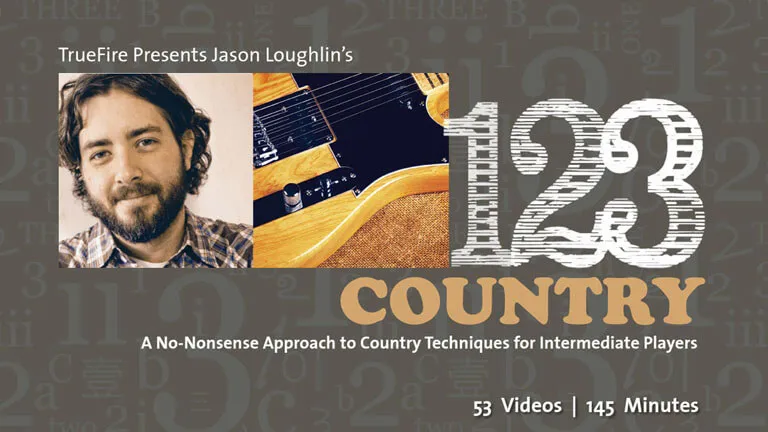
A no-nonsense approach to country guitar techniques for early intermediate players.

Marty FriedmanTommy EmmanuelSteve VaiEric GalesEric Johnson

Get this course and 1,000+ more with All Access

Try 14 days free. Cancel any time.

Purchase Individual Course for $14.99
1-2-3 Country

About this course

You’d need a DNA sequencer, a room full of musicologists and a very large wall to accurately map the rapid evolution of country music from its inception as Appalachian folk music back in the 20’s, to it’s mega-mainstream position in our culture today.

The wall would display branches to the Hillbilly, Singing Cowboy, Western Swing, Bluegrass and Honky Tonk music of the 30’s and 40’s, branches left and right to the Rockabilly, Nashville and Countrypolitan sounds of the 50’s and 60’s, and then all kinds of zigs and zags to and from Country Soul, The Bakersfield sound, Country rock, Outlaw country, Country pop, Neo-country, Alt Country and so many more country derivatives it would make your head swing.

If you compare Country music’s evolution to any other genre, you’ll find one very significant distinction — every generation of country music features the guitar front and center. And you’ll also find that the requisite skills for each generation’s guitarists likewise rapidly evolved to its present state of fretboard virtuosity. That's why so many blues, jazz and rock guitarists beg, borrow and steal techniques from country players and make no bones about it.

Jason Loughlin’s 1-2-3 Country is your fast-track Country guitar crash course. Intermediate players will be well served by Jason’s intuitive hands-on curriculum specifically designed to introduce students to the foundational right and left-hand techniques, rhythmic feels and harmonic considerations required to play both rhythm and lead Country guitar.

1-2-3 Country Guitar is organized into three hands-on sections designed to get you up to speed quickly without having to struggle through boring exercises and tedious theory — you’ll play your way through Jason’s engaging curriculum.

In the first section, Jason focuses on Country rhythm guitar. You’ll learn the essential ins and outs for utilizing the CAGED System, 3 versatile moveable chord shapes (C, A and E), 3 ways to navigate through I-IV-V Progressions and 3 essential Rhythm Guitar Techniques: Carter, Country Shuffle and Country Rock. Work through this section and you’ll be able to hold down the rhythm guitar parts for hundreds of Country tunes in all 12 keys.

In the second section, you’ll focus on lead guitar by exploring key approaches for soloing and improvisation and building a vocabulary of Country licks, which can be applied over any of the three moveable chord forms, in a any key.

You’ll acquire Flat Pickin' Licks for the E, A and C moveable chord forms; Double Stop Licks for the E, A and C moveable chord forms; and Bending Licks for the E, A and C moveable chord forms. These three techniques and bag of licks equips you with the skills and vocabulary needed to start soloing and improvising in a Country setting.

The third section puts everything you've learned in the first two sections to work in a musical context with a series of playalongs using rhythm tracks, You’ll play rhythm parts and then you’ll solo over six popular Country grooves; Honky Tonk, Boot Scootin’, Bakerfield Shuffle, Prison Blues, Why Won't You Call Me? and Okie On Parole.

For each of the grooves, Jason first demonstrates the rhythm parts and then shows you how to solo over the tracks using the techniques and licks you learned in the previous section. All of the key examples are tabbed and notated, plus you’ll get all of the rhythm tracks to work with on your own.
If you’re anxious to get in the Country guitar game, you won’t have to beg, borrow or steal — all you need is just a click away. Take 1-2-3 Country Guitar to the shed today!

P.S. When you’re ready to take your new-found Country guitar skills to the next level, pick up Jason’s Country Guitar Survival Guide: Lead Edition.

What you'll learn

  • Play Carter style rhythm pattern with alternating bass and chord strums
  • Execute three variations: open, palm muted, and Luther Perkins style
  • Apply Carter style over 1-4-5 progressions
  • Create the illusion of bass and guitar playing simultaneously
  • Reduce harmonic information for different musical contexts
Release date: 08/06/2014 • 2h 25m runtime
Start Course
Sample lessons
Country Rock
Country Rock
Overview
Country Rock
Country Rock
Demonstration
Flat Pickin' Lick For C Shape
Demonstration
Double Stop Lick For A Shape
Demonstration

What's included

53 lessons • 30 charts • 24 Jam Tracks

1-2-3 Country Guitar
Hi, I'm Jason Loughlin and welcome to 1-2-3 Country Guitar. Country music is largely responsible for shaping the sound of American music. It has a long and rich history that can be traced right back to European folk music. The evolution it experienced in the States has made it one of the main contributors in popular music today. There are endless styles and guitar techniques associated with country guitar. This can be overwhelming. Where do you start? Well, you just need a few rhythm and lead guitar approaches to get on your way to playing a wide variety of country music. This is not a beginner course, rather a crash course in getting inside of the language of country guitar.

Here's how this course is going to work. I've divided it into three sections; rhythm guitar, lead guitar and repertoire. In the rhythm guitar section I'm going to show you three chord shapes from the CAGED system, a movable E, A and C chord. Then we'll learn three ways to play a I, IV, V progression. The single string approach, 5th string approach and the 6th string approach. Finally, we will work through three classic rhythm guitar styles. Carter style, Country rock and a country shuffle.

The second section of the course will have us working through three lead guitar approaches. We'll learn a double stop, flat pickin' and a bending approach. In the final section we are going to use everything we've learned to work through six instrumental studies for country guitar. For each instrumental study I'll be showing the lead and the rhythm guitar part and then we're going to jam on them together. These studies were designed to expose you to common problems you will encounter while trying to apply the licks covered in the course.

Everything we cover in this course will be available in standard notation and tab. You will also get all the backing tracks from the course which allows you a lot of different ways to interact with the course. So crank those amps and let's get pickin'.
Rhythm Guitar
In section one we're going to work on country rhythm guitar. We'll cover three movable chord shapes from the CAGED system. The E, A and C. I'll show you three ways to find the I, IV, V progression. The single string, 6th string and 5th string approach. Then we'll learn three common country rhythms. Carter style, country rock and a country shuffle. For our rhythm guitar approaches I'm going to do a demonstration and a playalong. Let's get started with our movable chord shapes.
CAGED System
The CAGED system is a very simple short cut for insuring that you are always aware of the chord tones. You are using the open chord shapes as a template to help you visualize the building blocks of a chord. Chord tones are a point of resolve and everything else is tension. It's simply telling you to visualize the C, A, G, E and D chord shapes on the neck. We'll be using three. The C, A and E shapes. We can get a lot of mileage out of these three.
Three Movable Chord Shapes
Here are the three movable chord shapes that you will need as we work through this course. C, A and E. We need to make these common open chord shapes movable. We'll be doing that by freeing up our first finger to barre. You should always be aware of where the roots are. I've marked the roots in your notation and tab as white dots.
Movable C
Our movable C shape is achieved by starting with the pinky on the low root and building down from that. Our low E string will be muted most of the time unless we need to build in an alternating bass line. We would move our pinky back and forth from the 5th to the 6th string to create the bass line.
Movable A
Our movable A shape should look very familiar to a lot of you. It's also a very common barre chord. We can create an alternating bass line by alternating the first finger from the 5th to the 6th string.
Movable E
The movable E shape is probably the first barre chord we all learned. Our bass line here is achieved by alternating between either the 6th and 5th string or the 4th and 5th string.

+ 46 more lessons

Start Course

Reviews

22 results

BlueSteve

Verified buyer

11/24/25

123 Country

Jason’s 123 Country course has really helped me understand Chord Shapes. It has really helped me spice up my rhythm and lead playing, and the licks learned can be applied to not only Country music, but other genres as well. There is so much to learn from these lessons ! His other course, Trading Solos is awesome too !

fleaaaaaa

Verified buyer

04/09/25

A great place to start

Jason is an excellent teacher and I own several of his courses. This course includes both rhythm and lead approaches and would be a great place to start.

vbennett

09/09/22

A great starter into Country

Great course. Jason is easy to follow and one of my favorite teachers on Truefire. Don't hesitate to get this course if you are wanting to jump into Country guitar.

lrussel

Verified buyer

09/02/22

123 Country

Jason always clearly goes directly to the point and provides useful information. He is an excellent tutor.

Stop searching. Start improving with All Access.

Try 14 days free. Cancel any time.