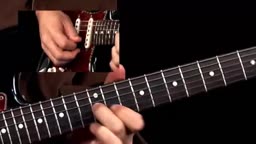
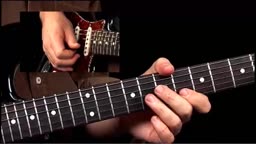
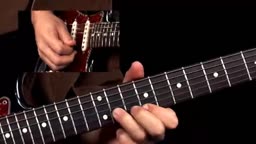
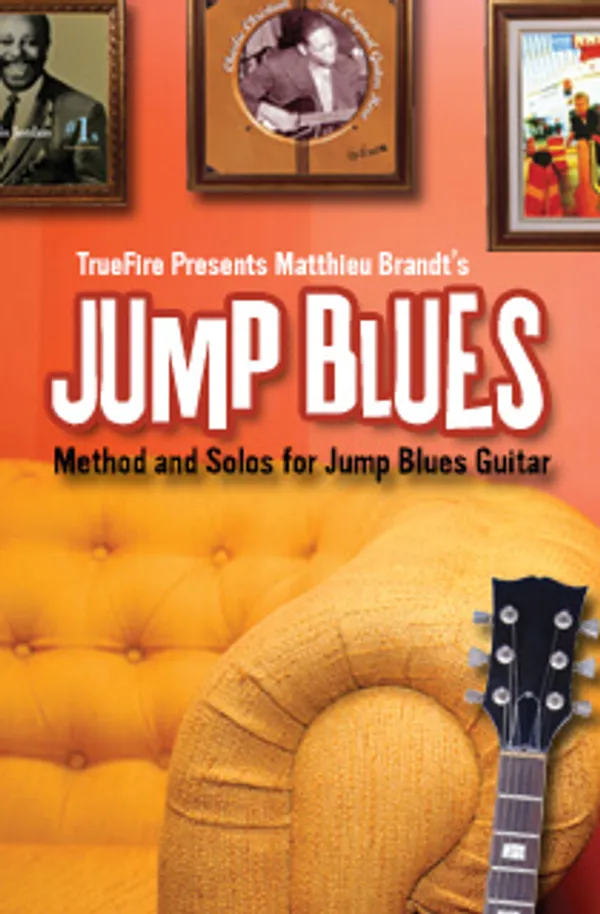
Many a guitar legend has cut their teeth and left their mark on the jazz-influenced blues style known as "West Coast Blues" (aka "jump" blues): Charlie Christian, Clarence Gatemouth Brown, Albert Collins, Johnny Guitar Watson, Duke Robillard, Hollywood Fats, Little Charlie Baty are just a few. But T-Bone Walker is likely the genre's definitive guitarist.
Relocating from Texas to Los Angeles in the early 40's, Walker's "electrification and urbanization of the blues" and catalog of blues hits for Capitol, Black & White, and Imperial would "popularize the use of electric guitar in the form more so than anyone else." T-Bone's "distinct jazzy jump blues" feel - Texas blues with a pinch of bebop, a dash of rockabilly, and a whole lotta swing - would influence the music scene in California during the 1940's and 1950's with many other Texas bluesmen following the migration to the west coast.
So many of the blues licks we play today, which we've copped from our current and previous generation blues heroes, are actually rooted back to jump and West Coast blues phrases - especially the tasty ones! We all pretty much agree that implying changes, as opposed to just blowing pentatonic runs, is what separates the men from the boys when soloing over standard blues changes. Implying changes, targeting tones, applying extensions are key elements of the West Coast style and good reason enough to study the genre. But there's more.
Getting a solid grip on the phrasing and rhythmic qualities of West Coast blues is also the key to achieving a real sense of boogie, swing, and jump ala Texas blues. Good enough for Stevie Ray, Jimmy Vaughn, Anson Funderburgh, and Johnny Guitar Watson - good enough for us. And what blues player worth their salt doesn't have a couple of dozen jazzy bebopish lines to spice up their solos and improvisations?!
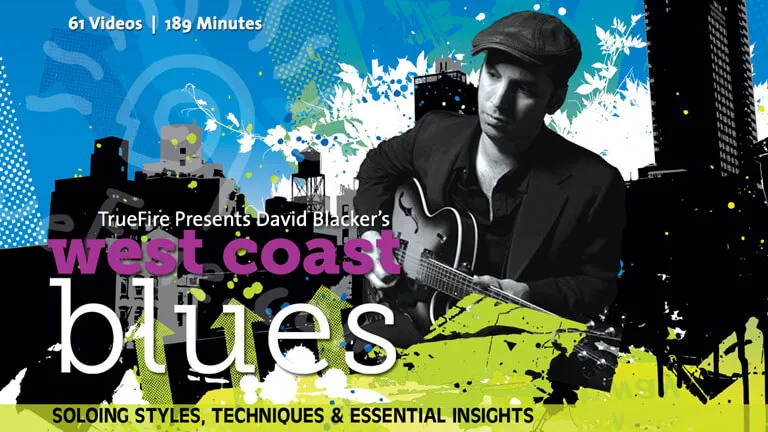
David Blacker's West Coast Blues delivers all of the above. Composer, producer, and top NYC educator, Blacker has been featured on numerous albums, commercials and radio spots. Blacker has studied and documented "roots" styles of guitar for almost twenty years establishing him as one of the few top experts in the field.
Blacker has pulled together an essential vocabulary of West Coast Blues phrases, feels and techniques. Rather than just working through a collection of "licks" and theory, Blacker has designed a contextual course of study; you'll play your way through the course working with 10 rhythm tracks, learning 30 choruses worth of West Coast Blues solos.
Blacker performs and then breaks down (with both technical and theoretical insight) 3 individual choruses for each of the following grooves:
Uptown Stomp Blues in Rhythm Texas Twang Shuffle Juke Joint Jump Strat Cat Boogie Swing It Blues Slow Blues Minor Swing Rhumba Blue Country Guitar Boogie
Master these 30 choruses and you'll have all the moves, feels, applied theory and phrases needed to take on any Jump or West Coast Blues playing situation. Better yet, your contemporary blues bag will explode with new colors, tasty lines and improvisational possibilities.
What you'll learn
Navigate from the I chord to IV chord using jazzy extensions (9ths, 6ths)
Apply the major/minor third hammer-on technique characteristic of jump blues style
Applying alternate tuning to swing blues context
Understand how to weave blues box patterns with jazz chord tones
Understand when to use major third vs minor third over I and IV chords
David Blacker is your guide through the ins and outs of West Coast Blues. David's approach to the guitar has culminated from immersing himself in American roots music--in particular, the blues. A self-taught musician who relies on his ear, David cut his teeth listening and learning from the masters, like Muddy Waters, Django, T-Bone Walker and Hubert Sumlin.
In TrueFire's West Coast Blues, David shares ten tunes specifically developed to share with you this sophisticated jazz and blues-based guitar style. West Coast Blues-style calls upon influences as diverse as bebop, swing and rockabilly--all delivered within a blues framework. You'll learn classic moves from pioneering players like T-Bone Walker, Clarence Gatemouth Brown, Albert Collins and Charlie Christian as well as tips gleaned from contemporary artists such as Duke Robillard, Hollywood Fats and Little Charlie Baty. This course's 30 featured solos will immerse you in the style while offering up a new vocabulary that is sure to become the cornerstone of your blues approach.
Great West Coast Blues players can take a standard blues piece and turn it on its ear using rhythmic and melodic ideas from a number of related styles, delivering a unique and authentic sound. Infusing jazz and blues ideas into one cohesive style, "Uptown Stomp" is our first foray into the jazz/blues amalgam."Uptown Stomp" is unique in the way it suggests chord changes that don't actually occur, "implying" chord substitutions. These implied chords are based on substitutions commonly found in both jazz and blues styles. Incorporating this implied chord-change technique into your lead work adds sophistication to your solos while opening up a new world of harmonic possibilities.
When it comes to swing and jump blues, there is a single name where both guitar styles converge--Duke Robillard. Duke is a treasure trove of classic phrasing, incorporating the moves of such iconic musicians as Charlie Christian, Tiny Grimes, T-Bone Walker and Charlie Parker. "Uptown Stomp" is heavily influenced by Duke and does its best to recreate some of his signature phrasing.
This solo features implied chord changes over a straight-ahead, uptempo swing-blues. Implying changes is a key element to this style, adding excitement and sophistication to otherwise standard blues progressions. Focus on chord tones on the downbeat of each change for effective note targeting. Also, playing with an uptown flare requires extending and alerting basic chords with chord tones such as the 6th, 9th, b9th, b5 and #5.
"Uptown Stomp's" second solo adds chromaticism into the mix as well as the effective targeting of key altered scale tones like the #5 and b9. For a crash course on extended blues harmony licks, pick up a copy of Swing by Duke Robillard.
A key lick that highlights the change from the I to the IV chord appears in the fourth measure, creating tension through its use of the C's #5. The b5 played just before the change to the IV chord voice leads perfectly into 9 of the IV chord--a half step down to the eighth fret on the B string. Be sure to check out the slide from b9 to the 9 over the G in the turnaround, creating a similar kind of tension.
West Coast players tend to cop licks and melodies from horn players more than fellow pickers, giving them a more sophisticated than usual approach to a blues progression. For extended listening in this vein, check out Up At Minton's by Stanley Turrentine.