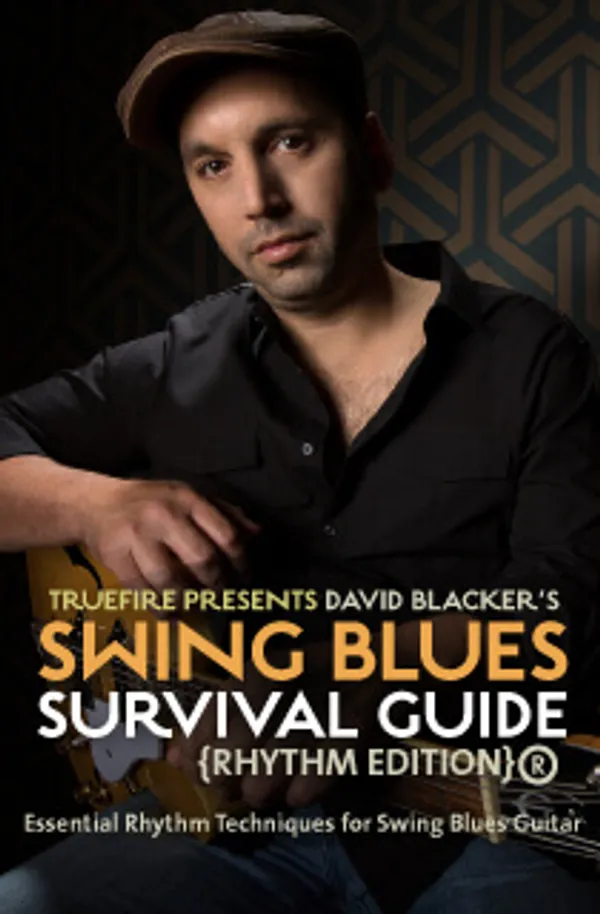
Swing Blues encompasses a variety of genres from the jazzy influenced Jump and West Coast styles to the Western Swing and Rockabilly styles of the 40’s, 50s and 60’s. Guitarists like T-Bone walker, Bill Jennings, Tiny Grimes, Duke Robillard, Hollywood Fats and Charlie Christian are widely acknowledged for establishing the role of the guitar in this exciting and still very popular musical genre.
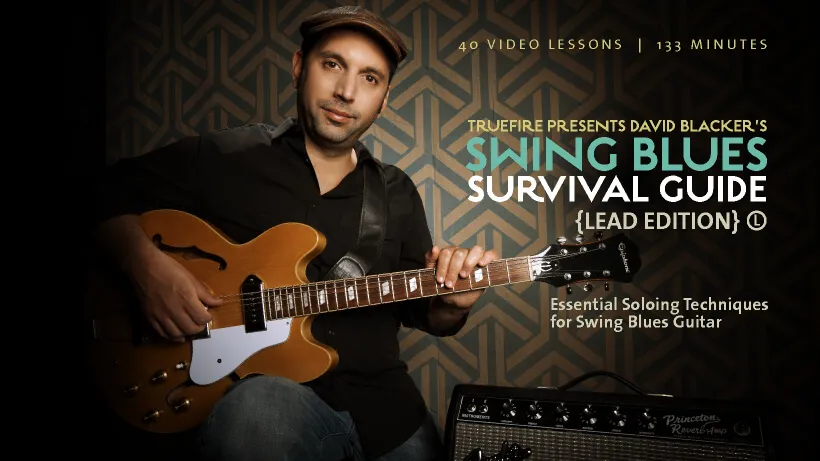
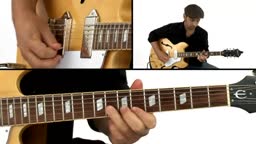
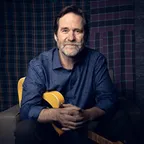
David Blacker’s Lead Edition of the Swing Blues Survival Guide guides you through all of the essential concepts and techniques you’ll need to play solid lead guitar across virtually the entire Swing Blues songbook.
”In the Lead edition of my Swing Blues Survival Guide, we’re going to look at approaches like note targeting, phrasing, transposing phrases to unlock different areas of the fretboard, playing off of chords, playing through transitions, and working with chromaticism. We’ll then apply those techniques across 12 soloing Performance Studies covering the stylistic approaches of many of the great swing blues players. “
David organized the course into two sections. In the first section, you’ll learn the 5 key concepts that form the basis for playing swing blues lead guitar: Note Targeting 101, Transpose It Down, Transpose It Up, Chromaticism and Pull-Off Backslides.
In the second section, you’ll play your way through 12 Performance Studies applying all of the essential concepts and techniques that you learned in the first section. David demonstrates all of the Performance Studies over rhythm tracks and then breaks them down by stepping you through the key concepts and techniques employed in the solo.
Billy Boy (2 Solos) - ”In the first solo of Billy Boy, we're going to look at some great Bill Jennings ideas. Some key take-aways are a great transition lick over the 7th & 8th measures, and a classic II-V-I turnaround. In the second solo ofBilly Boy, we're going to move up the neck and look at some great Bill Jennings ideas that play off of key chord shapes. We'll look at another great 7th & 8th measure transition riff and a II-V-I turnaround.”
Swing It On Over (1 Solo) - ”In Swing It On Over, we'll look at some ideas inspired by the great solo on the Hank Williams song Move It On Over. It's in the key of E, and incorporates some great major/minor based pentatonic fingerings and western swing style phrasing. The key take-aways from this piece are the movement between minor & major pentatonic fingerings and rolling hammer-ons. This Performance Study also employs a lot of key note targeting and playing through the chord changes.”
Shades of Duke (2 Solos) - ”Shades of the Duke is a look at two solos in the style of Duke Robillard. Duke is a master swing blues stylist, and someone you've got to spend a minute studying to get a solid handle on. I highly recommend all his recordings, but the album Swing is a great starting place. It features a ton of great swing blues language and phrasing. The two solos are in the key of Bb, a very common swing blues key, and are meant to be played together as one long solo. They incorporate some key melody based riffs, transitional elements, II-V-I turnarounds, and ideas in multiple octaves and positions on the neck.”
Elementary, Mr. Watson (1 Solo) - ”This Performance Study is a take on a Texas style shuffle in the style of Junior Watson. Junior Watson is a great west coast blues player. I highly recommend the William Clarke album Double Dealin’, where Junior's playing really shines within a great harp/guitar jump sound. He spans of a lot of different genres, from swing & bebop to classic blues and jump. This shuffle highlights a few of his unique phrasing ideas as applied to a shuffle in Bb.”
Jumpin' In The Boneyard (2 Solos) - ”T-Bone Walker is a central figure in the world of swing blues guitar. His playing has influenced tons of players from B.B. King to Stevie Ray Vaughan to Buddy Guy to Duke Robillard and many more. His style is really unique and characteristic, and getting the feel of his approach to phrasing will really help you progress in this style. I highly recommend the Black & White Recordings put out by Capitol Records. These two pieces are in the key of C, and are based off the tune T-Bone Jumps Again. String them together to make a two chorus extended solo.”
From Tiny to Junior (2 Solos) - ”These Performance Studies originated from a Junior Watson solo that I came across in a YouTube video. However, I found out later that the 2nd half of the solo was quoting a number of lines from a Tiny Grimes solo in a song called Call of the Wild off his recordings with The Rocking Highlanders, ergo the name From Tiny to Junior. It's got a lot of great west coast/jump language in it. I recommend taking it slow or learning it at half tempo as it's got a lot happening.”
Hollywood Stomp (2 Solos) - "This piece incorporates some of the key phrasing ideas of Hollywood Fats. Hollywood was a sensational blues guitarist in the 70's, who played with a number of people from Muddy Waters to James Harman to John Lee Hooker to Albert King and others. Fats is not a widely known blues guitarist, but he is definitely one of the greats, and a must-study to get a handle on the jump/west coast sound. This Performance Study features two solos in the key of D, based off of Fat's playing on the song Okie Dokie Stomp."
All of the performance studies are tabbed and notated for your practice, reference and study purposes. You’ll also get Guitar Pro files so that you can loop and/or slow any section down as you work through the lessons. Plus, David generously includes all of the rhythm tracks for you to work with on your own.
Grab your guitar and let’s get swingin’ with David Blacker!
What you'll learn
Master pull-off backslide phrasing technique
Execute a complete jazz-blues solo combining double stops, bends, and arpeggios
Navigate between jazz chord voicings and straight-ahead blues licks seamlessly
Use flat third to major third movement to create authentic jump blues feel
Understand how to target chord tones while soloing
Hi, I'm David Blacker and welcome to the lead edition of Swing Blues Survival Guide. I've broken the course into two sections: In the first section, we'll cover "Essential Concepts" as applied to five mid-tempo swing blues progressions. We're going to look at things like note targeting, phrasing, transposing phrases to unlock different areas of the fretboard, playing off of chords, playing through transitions, and working with chromaticism. In the second section of the course, we'll work through 12 lead guitar studies, covering the playing of great swing blues players such as Bill Jennings, Duke Robillard, Junior Watson, T-Bone Walker, Tiny Grimes, Hollywood Fats and more. These performance studies are all in twelve bar blues format, and each can be played as an independent solo or you can string them together when jamming or playing in a band context. Let's grab our guitars and get started!
This essential concepts section is intended to give you the tools to begin developing your own playing style and approach to swing blues. We're going to look at things like note targeting, phrasing, transposing phrases to unlock different areas of the fretboard, playing off of chords, and playing through transitions and working with chromaticism. All of these exercises are played over a mid-tempo swing blues progression in C.
In this lesson, we're going to focus on targeting the key chord tones relative to each individual chord within the progression. We'll also look at moving between blues box fingerings and more jazz inspired fingerings. Being able to fluidly move between these types of fingerings is a very important element of playing solid swing blues lead.
Here we'll transpose the phrases from the first exercise down the neck. We'll relate these licks to specific chord shapes so that we can move them freely to other places on the neck - just as we would with moveable chords. The goal is to begin playing off of chords and break out of the standard blues boxes.
In this exercise, we'll transpose the ideas to chord shapes up the neck. We'll look at the concept of substituting a 7b9 chord over the 2nd measure of the IV chord. This is a concept that jazz players use to imply harmonic movement and create tension/release.
In this lesson on chromaticism, we'll look at key chromatic lines within a blues progression. Learning to play chromatic lines within a blues context is a great way to jazz up your blues.
The pull-off backslide is an essential phrasing convention in swing blues. It's a horn based riff, as are many swing blues licks. Once learned, it can be applied to many phrases, and it will make your playing sound much more authentic.
Get your feet wet in the Swing, Jump and West Coast blues styles!
I had been wanting to get more familiar with the kind of licks and ideas that I hear my favorite West Coast and Jump blues guitar players use all the time. This is an excellent introduction, covering many of the styles of the late great players and some of the current masters who are modernizing the genre (the lesson called "Jumpin' In The Boneyard" is a great example of this). Having said this, the course is not just for intermediate students: there is also plenty of stuff here for more advanced guitarists.
S
SPBest
04/25/23
Truly rewarding!
I took this course after your rhythm course and found both really great and stimulating, adding a lot to my playing ,thanks!
B
Ben
01/30/23
Swing Blues Survival Guide: Lead
This is a really superb course! The sole are interesting and inventive and the theory behind the note choices is explained really clearly. David Blacker is an excellent and very calm teacher. One of the most useful Truefire courses in terms of opening up this genre of music!
P
pendragone
Verified buyer
11/21/20
Swing up with David
A must if you want to SWING hard!
T
Tomas F.
11/17/19
A course that made a big difference to me
Amazingly good setup, learning the basics of chord progression and then following up with the lead course. Very good pedagogy and clarity, so you don't get caught up in the learning. These courses added a whole new tone to my blues.