Slide Supernatural

Interactive Video Master Class

Marty FriedmanTommy EmmanuelSteve VaiEric GalesEric Johnson

Get this course and 1,000+ more with All Access

Try 14 days free. Cancel any time.

Purchase Individual Course for $14.99
Slide Supernatural

About this course

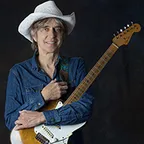
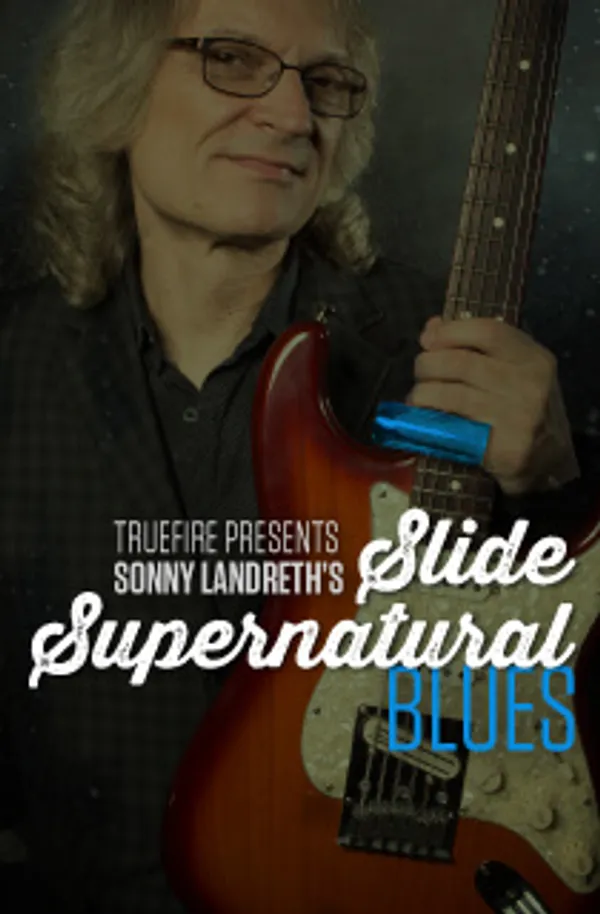
Eric Clapton calls him "the most underestimated musician on the planet and also one of the most advanced.” John Hiatt, Junior Wells, John Mayall, Irma Thomas, Clarence Gatemouth Brown, Kenny Loggins, Mark Knopfler, Eric Johnson, Robben Ford, Vince Gill, Bonnie Raitt and hundreds of other world-class artists who have had the privilege to make music with him would emphatically agree. Sonny Landreth’s slide guitar prowess is supernatural.

Avert your eyes and ears from Sonny’s mesmerizing work on the fretboard (if you are able) and study his compositions — you’ll also be thunderstruck by his musicianship, artistry and creative genius. If Leonardo Da Vinci played guitar, he’d be Sonny Landreth.

Sonny is also a highly skilled educator and Slide Supernatural is his first in-depth video course. We’re honored that he chose TrueFire to help him present and share the key concepts, techniques and creative approaches that comprise his signature style in this comprehensive Master Class for Slide Guitar.

Sonny organized his curriculum into two sections. In the first section, Sonny presents the 20 key concepts, techniques and tunings that comprises his signature ‘supernatural’ style.

Sonny presents and demonstrates Slide Considerations, Guitar Setup, Four Signature Principles, Signature Principles in Action, Muting and Finger Guarding, Open String Options, Vibrato (Like a Leslie), Palm Technique, Layering A Track, Tremolo Picking, Extensions, G Tuning, Open A Tuning, Open D Tuning, Open E Tuning, Open Gm Tuning, Open Am Tuning, Open Dm Tuning, Open Em Tuning and A Melodic Tuning.

In the second section, Sonny steps you through 12 Slide Studies where you’ll learn how to apply all of the key concepts and techniques, from the first section, in a real-world musical context. Sonny generously prepared the included rhythm tracks from sections of his original recordings to match up with the specific technique being applied in the Slide Study.

Sonny uses a section from "For You and Forever" to demonstrate Travis picking, ghost notes and finger guarding

You'll work on more finger guarding with a fretted rhythm pattern pulled from "The Milky Way Home"

You'll work on tremolo picking, single note lines and fretting multiple notes behind the slide over a section of "The World Away"

Using sections from "The Promised Land," Sonny passes on some extra-supernatural lead lines using notes behind the slide

You’ll work on harmonics, ethereal ghost notes and rhythmic syncopations over the second line groove of "Congo Square"

Sonny pulls a classic shuffle section from "Gemini Blues" to demonstrate alternating between fretted and slide notes

The theme of "Hell At Home" is an ideal track for you to work and master impressive rake and slap harmonic techniques

Sonny shows you how to craft instant chord voicings to create tension and release in open E using the verse from "Brave New Girl"

Learn how to use vibrato to create a lyrical vocal quality with the rhythm tracks and melody of "Brave New Girl"
You’ll also use a section of "Next of Kindred Spirit" to learn how to incorporate multiple parts for a complete solo piece

Using the verse of "Zydeco Shuffle," you’ll pick up on some Chet Atkins-style picking and fretting behind the slide

Sonny shows you how call and response can make a solo piece more conversational using sections of "Here and After"

Sonny demonstrates all of the key concepts and techniques over the rhythm tracks, and then breaks it all down in a clear and very accessible manner. All of the Slide Study performance examples are tabbed and notated, plus all of the rhythm tracks are included to work with on your own.

Slide-guitar playing Sonny Landreth fans are now just a click away from total enlightenment and a life-time of bliss in the shed. Even if you’re not a slide player, there are ample creative and harmonic riches herein to likewise keep you fat and happy in the shed for a very long time.

Get supernatural!


Recommended Guitar Slides

Ariel Posen Signature Slide

Ariel Posen Guitar Slide
Buy It Now at Sweetwater >

Dunlop 212 Pyrex Glass Slide

Dunlop Glass Guitar Slide
Buy It Now at Sweetwater >

D'Addario Brass Guitar Slide

Brass Slide
Buy It Now at Sweetwater >

Amber Glass Guitar Slide

Glass Guitar Slide
Buy It Now at Sweetwater >

What you'll learn

  • Integrate open strings with fretted slide notes for fuller sound
  • Create rhythmic slide parts using only two fingers
  • Use interval inversions to create harmonic movement
  • Build melodic tension using major 7th and 13th intervals
  • Build harmonic foundations that support lead melodies
Release date: 03/19/2014 • 2h 24m runtime
Start Course
Sample lessons
Open Gm Tuning
Open Gm Tuning
Technique 5
4 Signature Principles
Technique 12
Vibrato (Like a Leslie)
Technique 16
Slide Study 3
Slide Study 3
Performance

What's included

60 lessons • 27 charts • 12 Jam Tracks

Slide Supernatural
Hi, my name is Sonny Landreth. Welcome to Slide Supernatural. My goal is to help you unlock new possibilities with slide guitar. We're going to hold to some of the tried and true basics and expand upon that in three key areas: melody, harmony and rhythm. Melody for me is huge. It's always been a big part of the music that I've written. I think it goes back to the Delta Cats and the whole notion of getting a vocal quality, more of a lyrical sound on your instrument. With harmony it gets really interesting because with these open tunings there are a lot of possibilities with fretted notes, open strings, tones from the slide, and ghost notes on the other side of the slide. It gets pretty complex.

Rhythm is a huge part of my sound. I think it goes back to when I was a kid and going into New Orleans for the first time with my family. That's when I was first introduced to jazz and blues, and hearing second line and rhythms that had a lot of syncopation in it. For me that is like great spicy food.

I've organized my course into two sections. In the first section I'll run through many of the methodologies that I use in my playing all the time. I'll show you a lot of my favorite tunings: finger guarding, fretting behind the slide, vibrato, palm techniques, and other techniques that I use. In the second section we'll work with twelve slide studies that apply to all of the concepts we talked about in the first section. The rhythm tracks we will be working with are pulled from the original tracks from many of my recordings. Instead of learning the whole song I've selected sections of each song to work for the specific techniques we are applying. For example, in the first study we'll work on finger guarding. We'll check out a fretted rhythm pattern over an open A string and open A tuning over The Milky Way Home. We'll get into the minor blues using tremolo picking, single note lines, and fretting multiple notes behind the slide in The World Away. I'll show you some classic lead lines, supporting the rhythm parts and some cool lead lines using notes behind the slide on the intro and verse of The Promised Land. Then we'll dig into a second line groove like Congo Square using harmonics, ethereal ghost notes, and rhythmic syncopations. Next we'll hit a classic shuffle using Gemini Blues. Here I'll show you a blues progression alternating between fretted notes and slide notes, right hand muting for a chugging rhythm part. I'll show you how to rake and slap harmonics for the theme of Hell At Home. Then we'll investigate instant chord voicings to create tension and release in open E using the verse in Brave New Girl. Next we'll discover how we can use vibrato to create a lyrical vocal quality on the melody of Brave New Girl. We'll also work on some solo studies, the first of which is from the tune Next of Kindred Spirit, where we'll incorporate multiple parts for a complete solo piece. Using the verse of Zydeco Shuffle we'll dig into some Chet Atkins style picking and fretting behind the slide to form some great chord voicings. And finally we'll look at Here and After to show how call and response can make a solo piece more conversational. So all of this is going to be tabbed, notated and include rhythm tracks. So let's grab a guitar, grab the slide and let's get started.
SECTION 1: Techniques
In this first section I'm going to show you twenty different techniques that I use all the time.
Open G Tuning
Let's start off by taking a look at open G tuning. We have to retune some strings to get there but it's easy, from low to high we have D, G, D, G, B, D.  This makes sense, of course, because a G chord is spelled G, B, D. Each tuning gives us some very cool and unique options to work with, and what I love about open G tuning are the octaves contained within it. We have three D's on the 6th, 4th, and 1st strings, and two G's on the 5th and 3rd strings. When played in unison it gives us a great sound that I use quite a bit. These octaves work great with fretted notes or using the slide. We hear this sound in classic Delta and Country blues tunes all the time. I also like to take advantage of the top string for some more lyrical and melodic lines that I can play against the open lower strings.
Open A Tuning
Open A tuning or Spanish tuning is apically the same as open G tuning but everything is up a whole step. From low to high the strings are E, A, E, A, C#, E. I was first turned on to open A tuning by Lowell George and Robert Johnson. I really like the higher tuning of open A because it produces some great upper partials and harmonics that I find extremely useful. Note how different it sounds from open G, I find it has a great lyrical quality to it that leans itself to different songs and melodies. As we saw in open G, we have the same octave combinations between the strings. Experiment playing in both of these tunings to really hear the sonic difference.
Open D Tuning
Open D from low to high is D, A, D F#, A, D. As we can see we have octaves in this tuning as well that we can take advantage of, also a root on the high string. I love open D because it has an elastic feel to it that really effects the sound. The notes sink in more especially in a lead setting.  This is because it is a lower tuning and the stings are a bit more slack. I also like that I can play a lot of lyrical phrasing and let the sympathetic strings ring out on the low end, this something that we will see I do a lot. This tuning was also a favorite of Elmore James and I have always loved his sound. Elmore is often called the King of Slide guitar and was a big influence on me.
Open E Tuning
Open E tuning or what used to be called Vestapol is basically the same as tuning the guitar to a standard open E chord. It's the same as open D just everything is up a whole step, so all the octave ideas are the same. Something interesting to note with open tunings and using a slide, since in this case the guitar is tuned to an E chord, if we barre at the 5th fret we get a A chord, and the 7th fret will give us a B chord. We can work through a blues pretty easily this way. The I chord is the open strings and the IV and V chords are on the 5th and 7th frets. I write a lot in open E as I like the harmonics it produces and it matches my voice well. As you can hear, the difference between D and E tuning may just be a whole step but sonically they are quite different.
Open Gm Tuning
Open G minor is the same as open G but we lower the B string to Bb to give us the minor third. So from low to high D, G, D, G Bb, D. As with all the tunings we have covered take time to investigate the octaves available. For me this is a real vibey sound and is great to add mood to a piece or a track when you want to do layering, melody or soloing, harmony, rhythm, anything really it really works well. And like D tuning and the lower tunings - I like having that depth on the low end and still have harmonics ring out on the top strings. And even just fretting those, letting that all ring out. No matter what you do, that minor third is so prevalent and affects the overall sound, it gives it that atmosphere.

+ 53 more lessons

Start Course

Reviews

13 results

duketango

Verified buyer

03/24/26

Sonny Landreth. Nuff said…

Just love listening to Sonny talk about his approach. If you’re looking for a comprehensive introduction to advanced slide playing, not sure what else you’d need? A little of everything tuning(s) wise, muting techniques and behind the slide concepts, all explained clearly by one of the masters. Magic.

jammac544

Verified buyer

05/17/25

10/10

Awesome course! I’ve learned so much about technique and tone! 10/10 recommend to anyone looking to get better at slide at any level!

rickwilli

Verified buyer

01/09/21

Loved it!

Very informative!

wholmer

12/31/20

What a GREAT slide course!

I decided to take the step to try learning slide guitar and of course went to truefire. The way Sonny takes the time to lead you to each next step is great. He is a natural teacher. He got me hooked with the 1st lesson. Youll be sorry when it's over

azeitegallo

Verified buyer

12/10/20

Really great course

Landreth is a great teacher and his style of teaching is like he is in front of you explaining all the details. But don't fool yourself: there's a lot here to learn and the lessons demand a lot of attention. Reserve some time in order to get results.

Stop searching. Start improving with All Access.

Try 14 days free. Cancel any time.