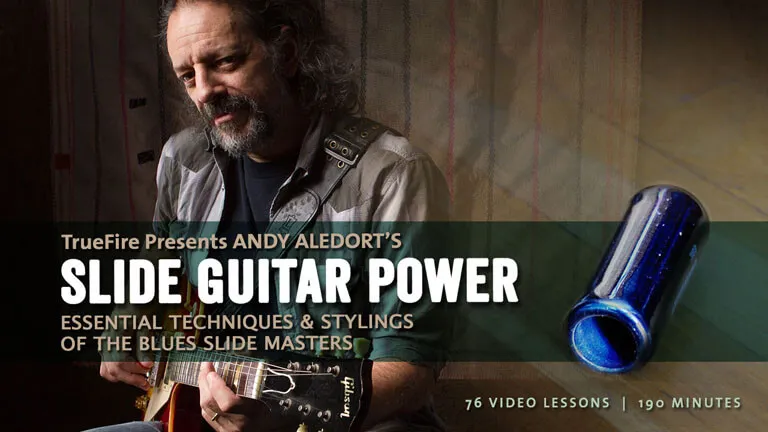
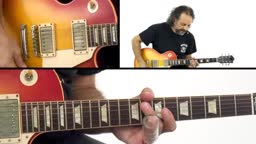
Slide Guitar Power

Essential techniques & stylings of the blues slide masters

Marty FriedmanTommy EmmanuelSteve VaiEric GalesEric Johnson

Get this course and 1,000+ more with All Access

Try 14 days free. Cancel any time.

Purchase Individual Course for $19.99
Slide Guitar Power

About this course

Most of us remember exactly where we were and what we were doing when significant events in our life occurred. W.C. Handy’s transmogrification from formally trained musician and educator to ‘Father of the Blues’ was triggered in a single moment on a Tutwiler, Mississippi train track back in 1903.

“His clothes were rags, his feet peeped out of his shoes. His face had on it some of the sadness of the ages. As he played, he pressed a knife on the strings of the guitar. The effect was unforgettable. His song too, struck me instantly; ’Goin' to where the Southern cross the dog.’ The singer repeated the line three times, accompanying himself on the guitar with the weirdest music I had ever heard.”

The vocal-like, impassioned qualities of blues slide guitar has likewise attracted millions of fans to the music of Robert Johnson, Hound Dog Taylor, Robert Nighthawk, Muddy Waters, John Lee Hooker, Elmore James, Sonny Landreth, Duane Allman, Ry Cooder, Bonnie Raitt, Derek Trucks, George Thorogood, Jeff Healey, Keb' Mo' and dozens of other blues slide masters over the decades.

Straight up, if you play the blues, you simply gotta have a few slide chops to call on and that’s what Andy Aledort’s Slide Guitar Power is all about — the essential slide know-how you need to power a vast repertoire of blues slide guitar tunes across a variety of artist styles.

“I’ll demonstrate proper fret-hand slide technique, proper pick-hand fingerpicking and flat-picking techniques, slide vibrato, essential open tunings, how to play in standard tuning, essential open-tuning chord positions, slide scales, essential riffs and patterns, and many other essential techniques — in short, everything you need to know to become proficient playing blues slide guitar.

I’ll also show you how to emulate the unique styles of blues slide masters Elmore James, Johnny Winter, Robert Johnson, Duane Allman, Ry Cooder, Derek Trucks, John Lee Hooker, Muddy Waters, Robert Nighthawk, Earl Hooker, Keith Richards and Stevie Ray Vaughn. Learning the ins and out of these particular artists’ styles, empowers you to also play in the styles of the artists that they were influenced by as well as the artists they themselves influenced.”

In SECTION 1: Slide Guitar Essentials, Andy covers Slide Materials, Wearing The Slide, String Action, Slide Positioning and Intonation, String Gauges, Right and Left Hand Muting, Fingers Versus Pick, Using a Capo and Slide Vibrato.

In SECTION 2, Andy introduces you to the very popular Open E Tuning and then drills down on Tuning and Essentials, Chords in Open E Tuning, Slide Scales in Open E Tuning, Incorporating Open Strings, E Major Pentatonic, E Major Hexatonic, Elmore James Style, Johnny Winter Style, Robert Johnson Style, Duane Allman Style, Ry Cooder Style, and Derek Trucks Style.

SECTION 3 focuses on Open D Tuning and the Johnny Winter Style, while SECTION 4 looks at Open A Tuning Essentials, Chords in Open A, Slide Scales in Open A, Incorporating Open Strings, John Lee Hooker Style, Johnny Winter Style, Robert Johnson Style, and Muddy Waters Style. Keith Richards and Mick Taylor Styles are examined in SECTION 5: Open G Tuning.

In SECTION 6: Standard Tuning and SECTION 7: Altered Standard Tuning, Andy delivers the goods for those of you who prefer to play slide without an open tuning. Andy shows you Slide Scales in Standard, E Major Pentatonic in Standard, Hybrid Scales in Standard, Robert Nighthawk Style, Earl Hooker Style, Duane Allman Style and SRV Style.

All of the artist style lessons consist of a performance in the artist’s style with a rundown of the artist’s unique characteristics. The performance is followed by a breakdown stepping you through the performance and slide techniques utilized to achieve that particular style of slide playing. All of the performances are tabbed and notated, plus you’ll get all of the rhythm tracks to work with on your own.

So grab your slide, grab your guitar and jump on the Southern with Andy...

“The Southern cross the Dog at Moorhead, an’ she keeps on through, If my babe gone to Georgia, believe I’m goin’ to Georgia too.”


Recommended Guitar Slides

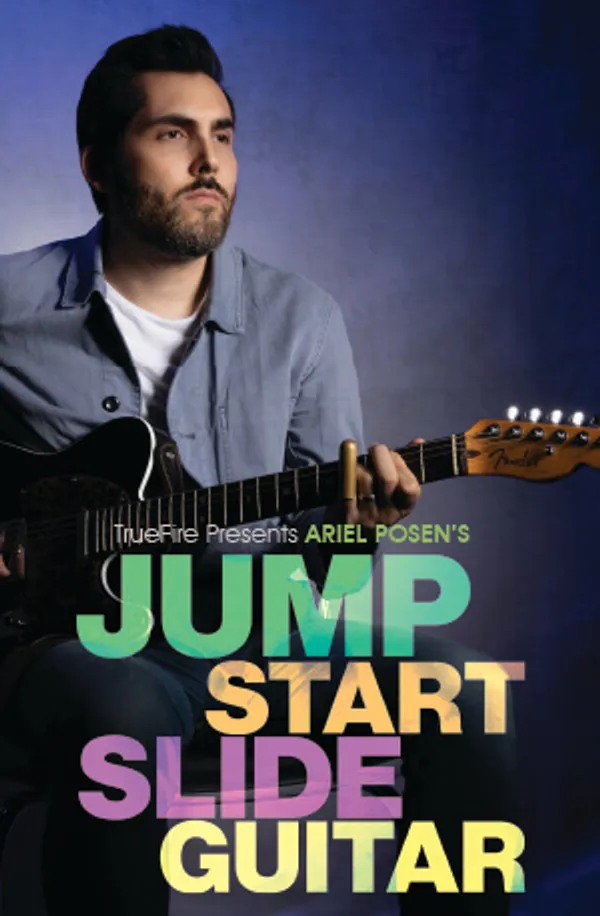
Ariel Posen Signature Slide

Ariel Posen Guitar Slide
Buy It Now at Sweetwater >

Dunlop 212 Pyrex Glass Slide

Dunlop Glass Guitar Slide
Buy It Now at Sweetwater >

D'Addario Brass Guitar Slide

Brass Slide
Buy It Now at Sweetwater >

Amber Glass Guitar Slide

Glass Guitar Slide
Buy It Now at Sweetwater >

What you'll learn

  • Play A7 and A6 chord voicings with melodic embellishments
  • Navigate I-IV-V blues progression in open A tuning with slide
  • Create call-and-response patterns between rhythm and slide parts
  • Play Keith Richards-style rhythm guitar parts
  • Understand how capo placement transposes open tunings
Release date: 11/07/2013 • 3h 09m runtime
Start Course
Sample lessons
Slide Vibrato
Slide Vibrato
Overview
Slide Scales in Open E Tuning
Overview
Duane Allman Style 1: Open E
Performance
Duane Allman Style 1: Open E
Breakdown

What's included

76 lessons • 38 charts • 12 Jam Tracks

Slide Guitar Power
SECTION 1: Slide Guitar Essentials
In this section we will address all of the essential elements of playing slide guitar, starting with the slide itself, whether to use a slide made of glass, such as a bottle or bottleneck type slide, or metal, such as chrome, steel or brass, or ceramic. Another essential decision is which finger of the fret-hand to wear the slide on: either the middle or ring finger, or the pinkie (though, very occassionally, the index finger has been used). The string action, the height of the strings in relation to the fretboard, is another important aspect of playing slide guitar, as is the choice of string gauges. We will also address proper slide guitar technique, which includes an investigation of proper intonation, right- and left-hand muting techniques, picking with the fingers, the pick or with both (hybrid picking), using a capo, and how to develop proper slide guitar vibrato.
Slide Materials
The very first decision to make when picking up slide guitar is what type of slide to use. There are many different materials to choose from, primarily glass, metal and ceramic. Another unusual choice is a Sears Craftsman spark plug ratchet, favored by both Lowell George of Little Feat and Dickey Betts of the Allman Brothers Band. As one could imagine, a metal slide has a sharper, more cutting tone to it; this is specifically why a metal slide is favored by Johnny Winter. Glass slides, such as bottlenecks cut from glass bottles, or small glass bottles such as that favored by Duane Allman (discovered when his brother Gregg brought him a glass bottle filled with a cold medication called Coricidin) yield a much warmer, smoother tone. Ceramic slides are also popular, and used occassionally by players such as Warren Haynes. Personally, I like ceramic slides better for acoustic playing, as the surface is generally rougher than glass or metal.
Wearing The Slide
Along with picking which slide you prefer - metal, glass, ceramic, etc. - you need to determine the best finger on which to wear the slide. The most commonly used fret-hand fingers for slide guitar are the pinkie, the ring finger and the middle finger (the index finger is used only very rarely, such as by slide guitarist Dave Hole from Australia). I got my start with a metal slide worn on the pinkie, in emulation of my primary slide influence, Johnny Winter. Johnny was influenced to use a metal slide on the pinkie by the playing of Robert Johnson and Muddy Waters. Wearing the slide on the pinkie also frees up the other three fret-hand fingers to use for fretting chords and playing riffs that are fretted conventionally. Duane Allman started the trend of using a glass bottle-type slide on the ring finger (as done today by Warren Haynes and Derek Trucks) and wearing the slide on the ring finger has an affect on the overall fret-hand movement, especially when adding vibrato. It also limits one's ability to fret notes conventionally. Wearing the slide on the middle finger frees up the ring finger and pinkie for fretting, and is favored by slide greats such as Bonnie Raitt, Ry Cooder and Dickie Betts.
String Action
The next choice involves what action - the height of the strings from the fretboard - you prefer when playing slide. Generally speaking, it's good to raise the action a little higher than normal lead-type action for playing slide (unless, of course, you prefer high action normally). Many players prefer a lower action than what is generally used when playing slide. One way to describe it is to set the action along the lines of standard acoustic guitar action, which usually is at least a millimeter higher than standard electric guitar action. This way, there is less likelihood of banging the slide into the frets while playing, as the higher action insures the slide will remain a safe distance above the fretwire. Higher action also allows players to dig in more (apply more force) with both the fret- and pick-hands. I prefer the unwound higher strings to be set slightly higher than the lower strings because I spend more time playing on the unwound strings than on the wound strings. But some players, such as Derek Trucks, prefer very low action so that when switching to conventional fretting, it is easier to play.
Slide Positioning and Intonation
Slide positioning and intonation - playing notes that sound in tune - are essential for proper slide guitar playing. For a note to be intonated properly, the slide must be positioned directly above the fretwire, and try to keep the slide (somewhat) parallel with the fretwire. Apply only enough pressure to sound a note clearly; do not allow the slide to bang into the frets. Also, lightly rest additional fret-hand fingers across the strings behind the slide, as this will eliminate unwanted overtones and ghost notes.
String Gauges
What gauge string to use is another essential decision to make for playing slide guitar. I use .010-.046, which is probably the most popular electric guitar string gauge , meaning that it is a gauge that is used most commonly regardless of musical style on the electric guitar. I used to use very heavy string gauges for slide, .014-.056, but a gauge that heavy prevented me from using the guitar for conventional playing as well. The advantage, though, was that I could hit the guitar very hard with both hands and the guitar would stay in tune and sound great. With .010s, I can use the same guitar for slide and for conventional fretting. I believe Duane Allman and Johnny Winter used .009s back in the late '60s/early '70s whether they were playing slide or playing conventionally.

+ 69 more lessons

Start Course

Reviews

28 results

swamp

Verified buyer

09/05/25

I enjoy Andy Aledort’s teaching style, he comes across as a genuine lover of music, a very knowledgeable master, very organized, and an all around nice guy. My only gripe with the lesson would have to be with the “download”, it doesn’t seem to be a true download.

queenscountyroots

Verified buyer

07/08/25

Great purchase

This is a fantastic and thorough introduction to slide guitar, both how it works (tone, tunings) and the biggest player styles (Johnny Winter, Derek Trucks, etc). I'm always finding new tidbits in Andy's lessons. Great purchase.

juharuoko

Verified buyer

05/05/25

Great value for the money!

Andy is such a versatile teacher

Weero

Verified buyer

03/10/25

Great

chanley

Verified buyer

02/17/23

Highly Recommend

Very accessible, clear, and fun.

Stop searching. Start improving with All Access.

Try 14 days free. Cancel any time.