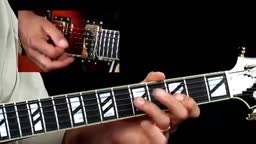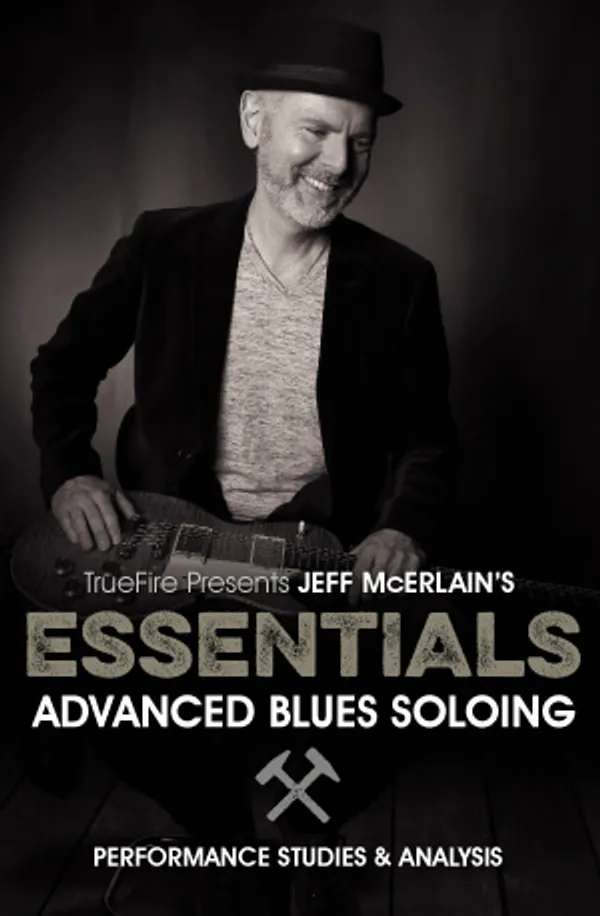
Play Jazz Guitar 10: Advanced Soloing Approaches

Electrify Your Jazz Guitar Solos with this Jazz Learning Path Core Course

Marty FriedmanTommy EmmanuelSteve VaiEric GalesEric Johnson

Get this course and 1,000+ more with All Access

Try 14 days free. Cancel any time.

Purchase Individual Course for $5.00
Play Jazz Guitar 10: Advanced Soloing Approaches

About this course

Welcome to Play Jazz Guitar 10: Advanced Soloing Approaches for late intermediate to advanced students of Jazz guitar.

This Jazz Learning Path core course is presented by 5 top TrueFire educators: Larry Carlton, Fareed Haque, Carl Verheyen, Frank Vignola, and Tim Miller.

The Advanced Soloing Approaches curriculum is comprised of select Jazz guitar lessons from the educators’ existing TrueFire course libraries.

The ability to improvise freely, and creatively, over any given groove or changes is one of the key skills that distinguishes the advanced and pro player. The insight and performance studies in this core course will advance your technical, creative, and improvisational skills. Learn the soloing examples note-for-note and then use the ideas and technical approaches to craft your own solos and improvisations.

Play Jazz Guitar 10: Advanced Soloing Approaches is organized into 5 sections. In the first section, Frank Vignola presents 4 soloing performance studies along with an extensive series of lessons focused on comping and soloing a jazz blues. Larry Carlton lights up the second section with a collection of the approaches he uses when improvising. In Section 3, Carl Verheyen presents 4 jazz rock performance studies that should keep you majorly busy in the shed for many moons. Fareed Haque goes big time modal in Section 4 with 5 improvisational playalongs. Tim Miller wraps up in Section 5 with 3 etudes based on his creative arpeggio applications.

When you’ve completed the lessons here in Advanced Soloing Approaches, you’ll find more lessons focused on soloing in Advanced Soloing Principles, also a Play Jazz Guitar 10 core course.

The educators demonstrate all of the key examples over jam tracks (where and when applicable) to simulate a real-world application, in a musical context. All of the key examples are also tabbed and notated for your practice, reference and study purposes.

You’ll also get Guitar Pro files so that you can play, loop or slow down the tab and notation as you work through the lessons. Plus, you’ll have all of the available jam tracks to work with on your own.

Take as much time as you need to work through each video guitar lesson before moving on to the next lesson. If you want to dig deeper or wider into any of the topics covered in this core course, check out the recommended supplementary courses in your learning path where you’ll find more examples, techniques and insight from top TrueFire educators.

Grab your guitar and let’s get started!

What you'll learn

  • Create melodic solos across chord changes
  • Improvise using rhythmic techniques
  • Understand jazz rock soloing techniques
  • Learn multiple improvisational approaches
  • Understanding jazz blues soloing techniques
Release date: 09/14/2016 • 3h 52m runtime
Start Course
Sample lessons
Comping & Soloing
Comping & Soloing
Soloing Example 3
Stutter Blues
Stutter Blues
Introduction
Stutter Blues
Stutter Blues
Solo Example
Stutter Blues
Stutter Blues
Breakdown

What's included

62 lessons • 29 charts • 24 Jam Tracks

Play Jazz Guitar 10: Advanced Soloing Approaches
Welcome to Play Jazz Guitar 10: Advanced Soloing Approaches for late intermediate to advanced students of Jazz guitar.

This Jazz Learning Path core course is presented by 5 top TrueFire educators: Larry Carlton, Fareed Haque, Carl Verheyen, Frank Vignola, and Tim Miller.

The Advanced Soloing Approaches curriculum is comprised of select Jazz guitar lessons from the educators' existing TrueFire course libraries.

The ability to improvise freely, and creatively, over any given groove or changes is one of the key skills that distinguishes the advanced and pro player. The insight and performance studies in this core course will advance your technical, creative, and improvisational skills. Learn the soloing examples note-for-note and then use the ideas and technical approaches to craft your own solos and improvisations.

Play Jazz Guitar 10: Advanced Soloing Approaches is organized into 5 sections. In the first section, Frank Vignola presents 4 soloing performance studies along with an extensive series of lessons focused on comping and soloing a jazz blues. Larry Carlton lights up the second section with a collection of the approaches he uses when improvising. In Section 3, Carl Verheyen presents 4 jazz rock performance studies that should keep you majorly busy in the shed for many moons. Fareed Haque goes big time modal in Section 4 with 5 improvisational playalongs. Tim Miller wraps up in Section 5 with 3 etudes based on his creative arpeggio applications.

When you've completed the lessons here in Advanced Soloing Approaches, you'll find more lessons focused on soloing in Advanced Soloing Principles, also a Play Jazz Guitar 10 core course.

The educators demonstrate all of the key examples over jam tracks (where and when applicable) to simulate a real-world application, in a musical context. All of the key examples are also tabbed and notated for your practice, reference and study purposes.

You'll also get Guitar Pro files so that you can play, loop or slow down the tab and notation as you work through the lessons. Plus, you'll have all of the available jam tracks to work with on your own.

Take as much time as you need to work through each video guitar lesson before moving on to the next lesson. If you want to dig deeper or wider into any of the topics covered in this core course, check out the recommended supplementary courses in your learning path where you'll find more examples, techniques and insight from top TrueFire educators.

Grab your guitar and let's get started!
Jazz Blues
The blues is genetically tied to virtually every genre of popular music in one way or another and this is especially true of jazz. In this section, Frank Vignola presents 4 jazz blues soloing performance studies showcasing the use of stutter picking, the flat 9, the sixth interval, and connecting licks to chord stabs. Frank also demonstrates a series of soloing and comping approaches where the performance evolve in sophistication and technique.

TIP! The key to having great soloing and improvisation chops is continuing to build on your basic soloing foundation. So you should be working on things like targeting notes, making sure you are playing the best possible note you can. This requires you to be knowledgeable about what the chords are doing underneath your solo. That is one of the things beginning soloists don't do enough of is pay attention to the chord progression they are playing over. You also have to keep your technique sharp - it is not good knowing all the right notes to play if you are sloppy and can't get to them in time. So while you have to work on the knowledge side of music to really advance your improv, you still have to be spending some time working with a metronome and pushing your physical limits as well.
Comping & Soloing
Lesson Source: Frank Vignola's Jazz Up Your Blues

In this segment we will discuss the interaction between guitarists. Techniques and tools on how we can use to listen in more and communicate through playing with another guitarist. Rhythm accompaniment and melody are both discussed.
Comping & Soloing
Lesson Source: Frank Vignola's Jazz Up Your Blues

In this example we use the simple blues progression in G. The first chorus we play four beats per bar ala Freddie Green or Bucky Pizzarelli. The second chorus we play a shuffle Boogie Woogie style rhythm. The third chorus we play some sharp 9 chord stabs. Listen to them and try to envision how these different rhythm parts would feed a soloist. These sharp 9 chords can really feed a soloist as when a soloist hears this chord he'll go for more bluesy pentatonic ideas which can create some excitement in the music.
Comping & Soloing
Lesson Source: Frank Vignola's Jazz Up Your Blues

In this solo we play simple bluesy grooving ideas envisioning comping in the styles we discussed in the comping section. Listen how the rhythmic guitarist parts effect the soloist. When the sharp 9 is played the soloist goes for the Bluesy pentatonic scale. This is a perfect example of how the rhythm guitar parts can feed a soloist.
Comping & Soloing
Lesson Source: Frank Vignola's Jazz Up Your Blues

We play, discuss and demonstrate how to communicate with the rhythm guitarist and rhythm section in a bit more detail. The first two choruses we set up a melodic statement to introduce the solo using space to create strong groove based simple melodic statements. The 2nd two choruses we play a groove based solo using octaves and chord stabs. The 5th and 6th choruses we play a little more on the edge rhythmically and harmonically. We discuss each idea in detail and how the rhythm guitar can influence what a soloist will play creating a musical dialogue.
Comping & Soloing
Lesson Source: Frank Vignola's Jazz Up Your Blues

The first and second chorus we take it easy to start again playing simple grooving ideas to establish a groove and build from there. Listening is the key. Listen in and try to hear the difference in the rhythm guitar having the soloist effect what he plays. Notice when the tremolo is being played by the soloist how the rhythm guitar digs into a bit to the rhythmic pattern he is playing and feeds a nice big full chord to end the phrase with the soloist. Accenting the back beat or beats 2 and 4 is a cool move to use to enhance the groove. Listen to the snare drum and match where the downbeat is placed while implementing this back beat idea. Utilize different areas of the fingerboard that are opposite areas from each other. If the soloist is playing high on the E string then the rhythm guitarist should be in the lower part of the fretboard.

+ 55 more lessons

Start Course

Reviews

1 result

TheStudent24

Verified buyer

10/30/24

Usedul

I haven‘t had the time to dive deep into all content, but what I used was very helpful.

Stop searching. Start improving with All Access.

Try 14 days free. Cancel any time.