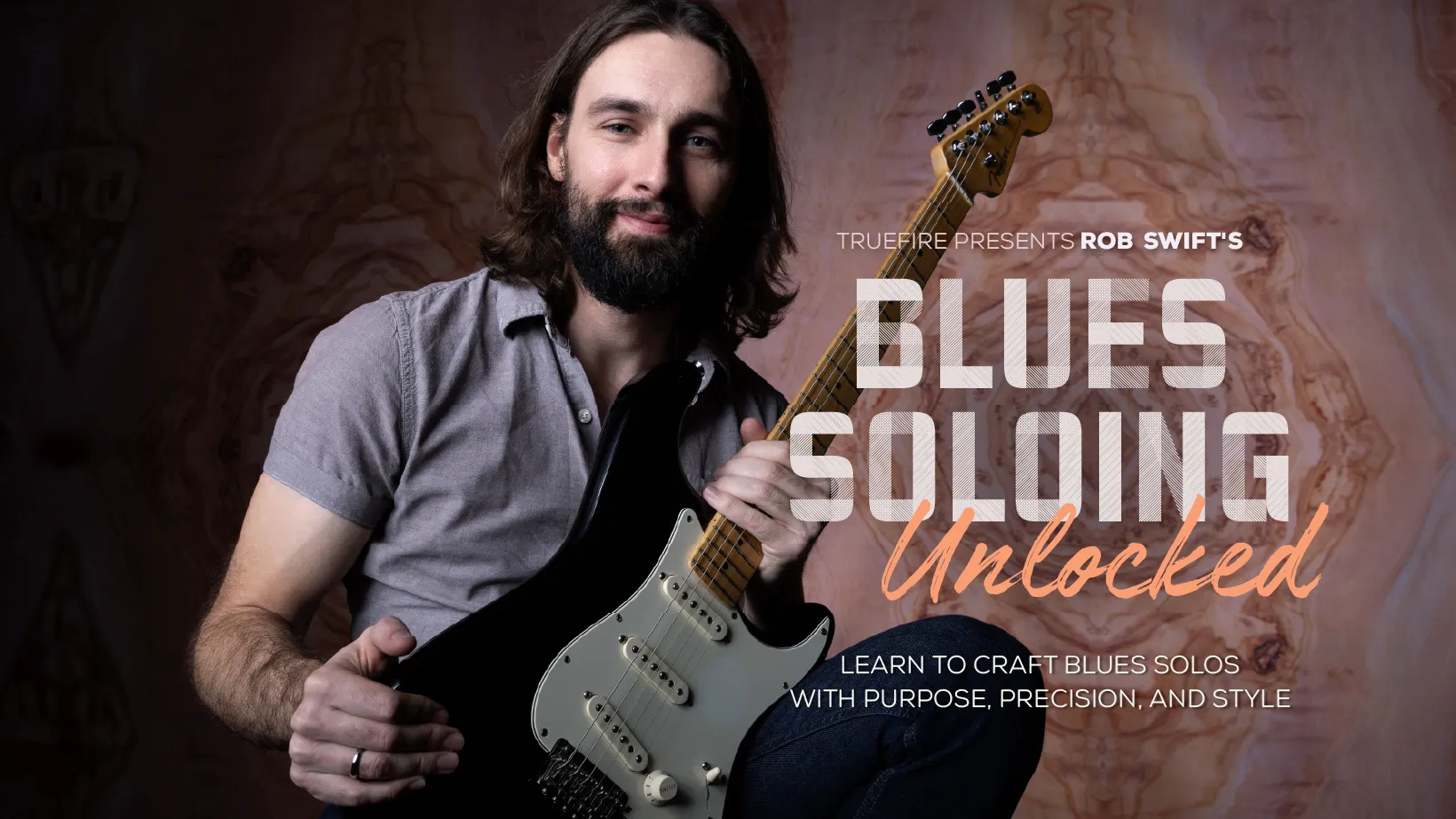
Blues Soloing Unlocked

Learn to Craft Blues Solos with Purpose, Precision, and Style

Marty FriedmanTommy EmmanuelSteve VaiEric GalesEric Johnson

Get this course and 1,000+ more with All Access

Try 14 days free. Cancel any time.

Purchase Individual Course for $29.99
Blues Soloing Unlocked

About this course

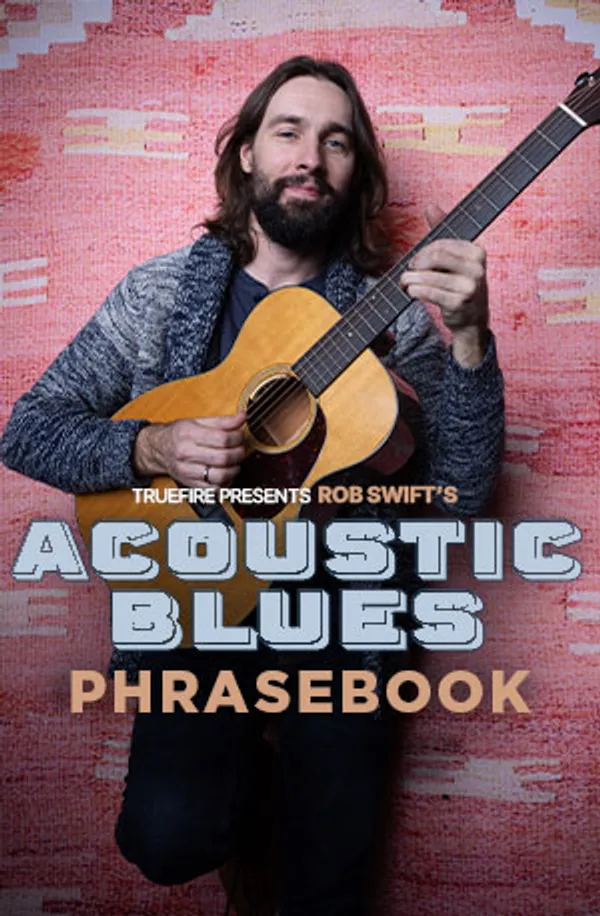
Crafting a great blues solo isn’t just about running scales – it’s about telling a story, playing to the changes, and expressing real emotion. In Blues Soloing Unlocked, Rob Swift gives you the tools to craft solos that connect directly to the harmony – unlocking a deeper, more musical approach across some of the most iconic blues styles.

You’ll work through five soloing studies rooted in classic genres like country blues, jazz blues, and Chicago blues – building your soloing vocabulary and learning how to create lines that sound authentic, melodic, and full of character.

You’ll learn how to:

  • Solo through the changes with harmony-based phrasing
  • Choose and apply scales that fit the chords and the feel
  • Use phrasing techniques inspired by B.B. King, SRV, and Clapton
  • Visualize the fretboard using the CAGED system
  • Confidently solo over a wide range of blues grooves
Each study starts with a deep dive into the chord progression, then walks through the relevant scale choices, phrasing strategies, and a full solo breakdown. You'll play everything in context with jam-ready backing tracks designed to help you find your own sound.

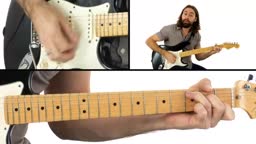
And with TrueFire’s interactive tools — synced tab, slow-mo, looping, and fretboard animations — you can lock in each concept at your own pace.

“If you’ve ever wanted to craft blues solos that truly fit the changes, this course is for you,” says Rob. “By the end, you’ll have a solid framework to build solos in a wide range of styles.”



What you'll learn

  • Play shuffle rhythm patterns over chord changes
  • Navigate jazz blues progressions with extended harmonies
  • Visualize CAGED shapes, arpeggios, and scales across the fretboard
  • Craft blues solos that fit chord changes
  • Understand the relationship between chord shapes and melodic possibilities
Release date: 08/01/2025 • 2h 05m runtime
Start Course
Sample lessons
Play-along & Improvise
Jazzin' Up the Blues: Practice Session
Blues Soloing Study in C
Down & Out: Performance
The Underlying Harmony
Lesson & Demonstration

What's included

28 lessons • 20 charts • 5 Jam Tracks

Blues Soloing Unlocked
Hey friends, I'm Rob Swift. If you've ever wanted to craft blues solos that truly fit the changes, this course is for you!

We'll break down five soloing studies across some of the most popular blues styles and forms. Each study starts with the foundation of the underlying harmony.

From there, I'll show you the scales that suit those changes best—and unlock the how and why behind classic phrases inspired by the likes of B.B. King, Stevie Ray Vaughan, and Eric Clapton.

Together, we'll learn to visualize CAGED chord shapes, arpeggios, and scales across the neck, and apply them like a pro soloist. By the end of this course, you'll have a solid framework that allows you to craft solos in a wide range of styles, including country blues, jazz blues, and Chicago blues.

So let’s dig in and unlock the art of blues soloing!
Practice Plan for this Course
In this course, we’ll kick things off by setting up a smart, intentional practice routine that helps us get the most out of every session. We'll start by locking in the chord progressions behind each solo and using the CAGED system to map those chords all over the neck. That’ll be our first focus—getting rhythm and fretboard fluency down. Then, we’ll dive into soloing positions and see how scales, arpeggios, and licks overlap with those chord shapes, giving us a deeper understanding of how it all connects. With this structure, we’ll spend time each day building muscle memory and musical insight, so that when we do jump into learning the solos, we’ll recognize how each lick fits into the harmony and feel confident using those ideas in our own playing or improvisation. It’s all about practicing with purpose and seeing the bigger picture as we grow more comfortable navigating the fretboard together.
Blues Soloing Study in G
In our first solo, “The King’s Pajamas,” we’ll dive into a classic blues in the key of G, inspired by the legendary B.B. King. As we play over a basic 1-4-5 progression, we’ll explore how to move through different positions of both the major and minor pentatonic scales across the neck. The real magic happens when we start blending those two sounds together—unlocking that signature expressive vibe that gives major blues soloing its soul.
The Underlying Harmony
Before we dive into soloing, we’re taking the time to really understand the chord progression underneath it all—because knowing how our licks connect to the chords makes our playing way more intentional. We’re working with a classic 12-bar blues in G, built on dominant and ninth chords for the I, IV, and V—G7, C9, and D9—and we’ll explore them in multiple positions across the neck using the CAGED system. As we walk through these shapes, we’ll learn to visualize them in different voicings, even ones we might not strum often, because they help us see how the scales we solo with—like the G major pentatonic—fit perfectly around those chords. By getting these shapes under our fingers and in our minds, we’ll be ready to move freely around the fretboard and make musical choices that feel natural and sound authentic.
Scales & Soloing Boxes
Now that we’ve got the chord shapes down, it’s time to dive into how our scale patterns overlap with those chords—this is where things really start to click. We’re going to explore how major and minor pentatonic scales sit right on top of the same chord shapes, and how blending them gives us that soulful, expressive blues sound. We'll learn to recognize key intervals—like the major third—that add sweet flavor to our licks, and we’ll see how everything we play over the I chord can be transposed to the IV and V chords. We’ll also get comfortable in essential soloing zones like the “E” position and B.B.’s Box, moving between them with confidence using the CAGED system. As we practice, we’ll take inspiration from legends like Stevie Ray Vaughan, learning to shift licks across different parts of the neck, so we’re not just playing patterns—we’re creating music that flows anywhere on the fretboard.
Lick Vocabulary
Now that we’ve laid the groundwork with chords and scales, it’s time to start learning the solo—note for note—by putting together a series of expressive blues licks that build on everything we’ve practiced so far. We’ll blend major and minor pentatonic scales, target key chord tones, and explore techniques like slides, bends, vibrato, and chromatic movement to capture that sweet, soulful sound. As we move through positions like the E-shape, G-shape, and B.B.'s Box, we’ll not only learn the licks themselves, but also how they fit rhythmically and melodically within the 12-bar blues structure. Along the way, we’ll draw inspiration from legends like B.B. King and Eric Clapton, using tricks like starting on upbeat accents, adding call-and-response phrasing, and incorporating classic blues resolutions. Each lick is designed to help us visualize the fretboard, connect musical ideas across chord changes, and ultimately craft solos that are both fluid and deeply rooted in the blues tradition.
Play-along & Improvise
Now that we've got the chord progression, scales, soloing positions, and a bunch of licks under our fingers—all designed to match the changes—we’re ready to start jamming with the backing track. As we play along, we’ll use the visual aid as a guide, but this is our chance to loosen things up and make the licks our own. We don’t have to stick to everything note for note—we can mix things up, combine ideas, and start weaving in some of our own improvisation. It’s all about having fun and letting our creativity take the lead.

+ 21 more lessons

Start Course

Reviews

7 results

Rogernice

Verified buyer

05/09/26

Learning blues solos

I love the way Rob explains how and why of voicing with blues licks. Explains arpeggios well. I’ve just started to get into this course along with working on other things and it helps tie things together. I definitely recommend trying it.

grantmcdon

Verified buyer

05/02/26

Brilliant Course

I love Rob Swift’s lessons, he explains things so clearly and then gives practical ways in which to implement his teachings. Great course.

arpeggio5

Verified buyer

03/30/26

Very good course intermediate goes through some really good concepts

EgonM

Verified buyer

12/18/25

Great learning

Dave L.

12/14/25

Good explanation of how to play the changes

Not just 'here's a hot lick, put your fingers here, here and here', but actually some explanation of what is going on and how it can be applied on other songs. More like this, please.

Stop searching. Start improving with All Access.

Try 14 days free. Cancel any time.