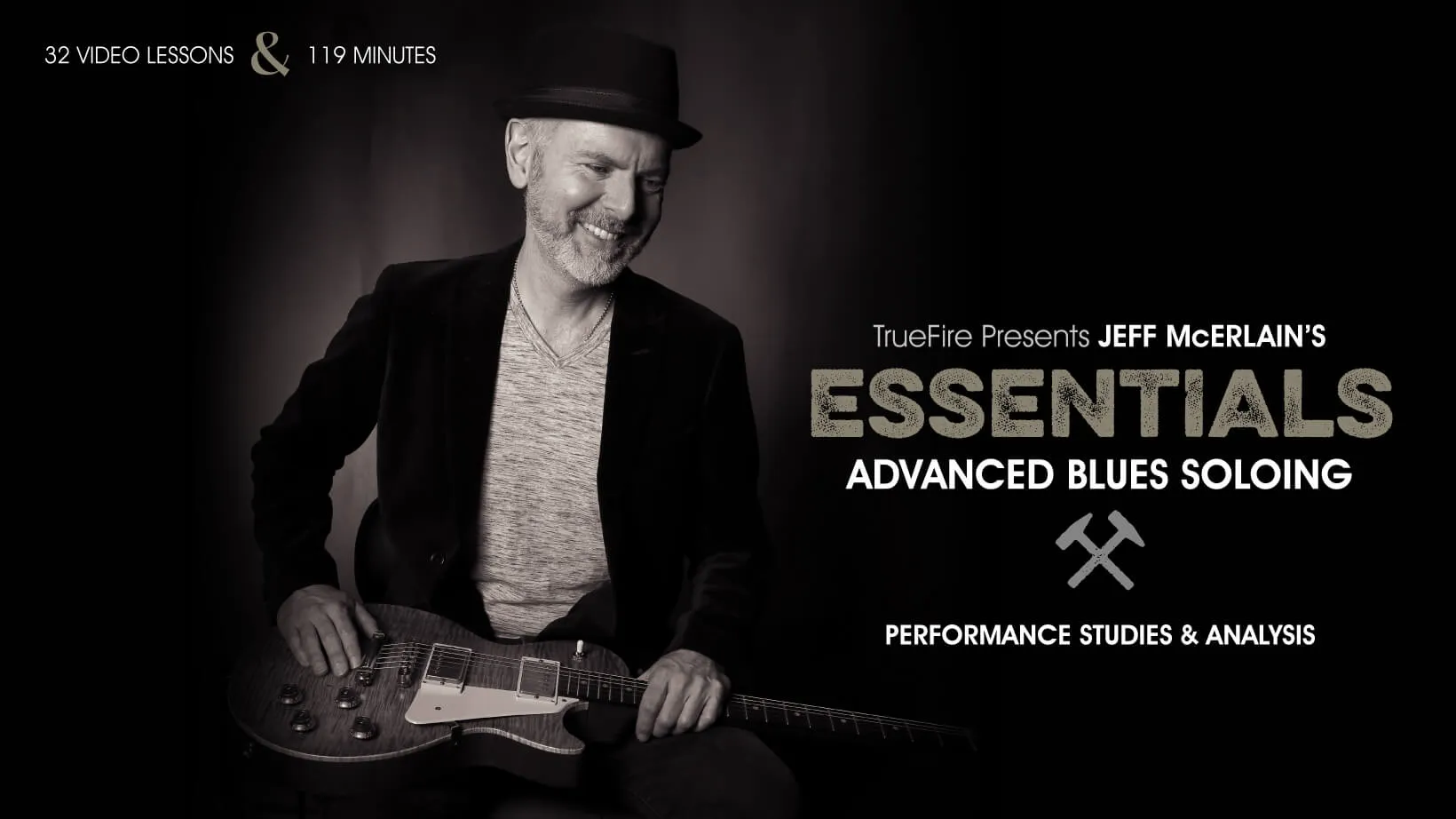
Essentials: Advanced Blues Soloing

Take Your Blues Lead Guitar Skills to the Next Level

Marty FriedmanTommy EmmanuelSteve VaiEric GalesEric Johnson

Get this course and 1,000+ more with All Access

Try 14 days free. Cancel any time.

Purchase Individual Course for $19.99
Essentials: Advanced Blues Soloing

About this course

Robben Ford, Larry Carlton, David Grissom, Stevie Ray Vaughn, Freddie King, Billy Gibbons, Albert King, and Buddy Guy are just a few examples of blues guitar masters who are widely respected for their “advanced” soloing skills and harmonic vocabulary. Ready to take your own blues soloing skills to the next level? Dig deep now into this Advanced Blues Soloing edition of Essentials from Jeff McErlain!

“I've prepared 10 performance studies that focus on the advanced soloing skills that all of our favorite blues and blues rock guitar players use in their own soloing performances. We'll work on phrasing, outlining the changes, double stops and over bends, big vibrato, utilizing half-step whole step diminished scales, soloing over bluesy ballads, incorporating diminished seventh arpeggios, hybrid picking techniques, chromaticism, and many other advanced skills and techniques.”
?These 10 soloing performance studies cover a range of styles, tempos and feels including shuffles, funk, mambo, 12/8, country blues and Texas boogies. For each performance study, Jeff will first demonstrate the solo and then break it down for you note-by-note.

All of the performance studies are tabbed and notated for your practice, reference and study purposes. You’ll also get Guitar Pro files so that you can play, loop and slow down the tab and notation as you work through the lessons. Plus, Jeff includes all of the backing tracks for you to work with on your own.

Grab your guitar and let’s advance our blues soloing chops with Jeff McErlain!

Jeff McErlain's Preferred Gear

Below is a list of Jeff McErlain's preferred gear including guitars, amps, pedals, accessories, and more. What you see in Jeff's lessons may or may not be this actual gear, but if you are trying to capture Jeff's sound and tone, the gear listed below is recommended by Jeff and it's a great place to start!

Guitars

Amps

Pedals

Accessories & More

What you'll learn

  • Master hybrid picking technique
  • Create melodic solos using pentatonic scales
  • Target chord tones in improvisation
  • Learn complex pickup and turnaround techniques
  • Understand blues soloing over 12-bar progression
Release date: 08/23/2017 • 1h 58m runtime
Start Course
Sample lessons
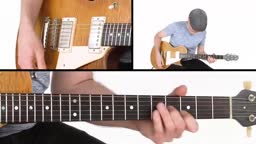
Shuffle E Solo
Shuffle E Solo
Performance
Affordable Shuffle Solo
Overview
Affordable Shuffle Solo
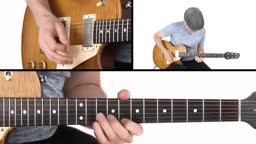
Performance
Affordable Shuffle Solo
Breakdown

What's included

32 lessons • 10 charts • 10 Jam Tracks

Essentials: Advanced Blues Soloing
Hi, I'm Jeff McErlain. Thanks for checking out Essentials: Advanced Blues Soloing. I'm really excited about this course, because I get to share with you some of my favorite ways to approach soloing. I have prepared 10 studies for you, all of them containing advanced techniques like hybrid picking, diminished scales, diminished arpeggios, controlled bends and vibrato, advanced phrasing, and more. I've covered a variety of styles, but I'm still staying within the blues genre.

Since this is an advanced course, I wouldn't say any of the examples are particularly easy to play, so please take your time with them. They're also not in any particular order due to difficulty. My suggestion is to listen through the examples and find the solo you would like to work on first and dive in. The ultimate goal here is not to be able to play this example perfectly but to pick up ideas from them to help increase your technique, vocabulary, and improve your phrasing. So, let's get started!
Shuffle E Solo
Let's get started with a classic shuffle in the key of E. To start, let's get some lingo going on so you can be with the in crowd:

The blues form is 12 bars long most of the time. In blues and jazz, one time through the entire form of the progression is referred to as a chorus. So, when the solo I'm playing is same solo for two choruses, it's two times through the complete form. Getting the lingo together is important, as in a pop song a chorus is very different. So, it's all about the context. Understanding feels is just important, for example this feel is called a shuffle. Other feels are boogaloos, rumbas, boogie-woogies, etc.
Shuffle E Solo
The point of this course is to start to crack the code of playing on the chord changes as opposed to over them. There's that lingo again! Playing over the core progression means we are playing one scale over everything, in a blues this often works out very well by just playing the minor pentatonic scale. The next level is playing on the chord progression, where we play the notes at a specific time on a specific cord. Good blues guitar playing does this in my mind, as it can add a level of sophistication to your playing. It takes time to know the right notes to play, but it is well worth the effort. A good way to do it is exactly what we're doing here - learn the solos that I've constructed and then break them down and analyze the placement of each note.
Shuffle E Solo
To make this solo easier to breakdown, I've constructed it in sections. What's cool here is that all those individual licks can be applied just about to any blues or rock tune provided you take the key into consideration. The three chords in an E blues are E7, A7, and B7. E7 is spelled E-G#-B-D, A7 is A-C#-E-G, and B7 is B-D#-F#-A.

As you go through this solo, be sure you see which note I'm playing on which chord. In the first lick, you can see I play a number of G# notes either via bending or fretting. By using that note, I'm clearly defining the E7 chord. The same goes for the A7 and B7. This is called playing on the chords and can open up a whole new world of possibilities.
BBQ Boogie Solo
As we all know, by this point if you own any of my other courses, I like Billy Gibbons a lot! I love ZZ Top's brand of rock 'n' roll and Texas boogie.

Here we have a cool example of something similar to what he would play on the song "Bar-B-Q" from the record Rio Grande Mud. I cannot recommend the first six ZZ Top records enough, to me they're one of the great American rock 'n' roll bands.

Here's a great example over their mix of rock 'n' roll and Texas boogie. I have no desire to sound like Billy, but it's fun to dig into someone's style and take elements and make them your own.
BBQ Boogie Solo
Like many of the solos in this course, this one is a little tricky. I start off with a cool lick reminiscent of the opening lick to the solo in "La Grange", but I've extended the idea all the way down the A minor blues scale. Notice how it's a melodic pattern that repeats going through the scale. Melodic patterns are essential devices for any musician as they are an excellent way to move around the fingerboard musically . I personally love the sound of a pattern like this as it brings me through the scale as a listener.

It's important to swing those eighth notes and 16th notes in this solo, and almost every blues solo for that matter. The feel should be relaxed and a little behind the beat, which takes a fair amount of time to master. I know I'm still working on this all the time and it's the first thing to go If I haven't been practicing. Play the pattern slowly at first and hear the notes so you know exactly what the pattern is in your head. Slowly bring it up to tempo, that is the only way to get it.
BBQ Boogie Solo
Next up is a cool little double stop repeated lick that can be incorporated just about anywhere. On this one, make sure you let the notes ring out on top of each other and get a nice smooth legato sound on the slides into the double stop.

Next, we have what we call an overbend, that's where we bend the string usually more than a whole half step. In this case, the overbend is a minor third from E to G. Minor thirds are very effective and cool sounding and are utilized a lot by Jimi Hendrix, Jimmy Page, David Gilmour, Eric Clapton, and Billy Gibbons.

There are two minor thirds in any pentatonic scale. In the minor pentatonic scale, they're between the root in the flat third and the fifth and flat seventh. This lick utilizes the root to the flat third. Have mercy!

+ 25 more lessons

Start Course

Reviews

9 results

RockyRoll

Verified buyer

10/09/22

Great course! Great teacher!

I have a couple of courses by Jeff and he's a top quality instructor. I'm just trying to get into the Blues and this course has some great info and even greater licks. Jeff's style is chilled and very clear. I give it five stars!

GrooveToad

09/30/22

A Fine Course

Along with Andy Aledort, Jeff McErlain is one of my favorite educators on Truefire. He does a fine job of breaking down songs, and musical ideas. I've been playing guitar since 1969. I appreciate Jeff's teaching style which suits my learning style. He'd be a cat I'd like to sit down and jam with. I know when I finish these lessons I'll be an even better player. Let me say, it doesn't matter your age as long as you keep learning, and keeping your mind and fingers strong.

Quark77

Verified buyer

09/28/22

Lots of gold nuggest

Jeff McErlain is a very good teacher who brings across these more advanced solo concepts in a simple and digestible way. Lots of gold nuggets here, spanning across multiple blues styles. Highly recommended.

Stratotao

Verified buyer

08/07/22

Jeff

Great lessons! Jeff is a great teacher.

ibanezjs20

Verified buyer

01/16/21

As all Jeff courses this a home run too, i can study tha targering the note for each chord and also the soloing in the blues is there with the analysis, in glad that i hace this course

Stop searching. Start improving with All Access.

Try 14 days free. Cancel any time.