Modern Jazz Harmony Playbook

Modern Jazz Voicings and Rhythmic Approaches for Guitar

Marty FriedmanTommy EmmanuelSteve VaiEric GalesEric Johnson

Get this course and 1,000+ more with All Access

Try 14 days free. Cancel any time.

Purchase Individual Course for $9.99
Modern Jazz Harmony Playbook

About this course

When you’re comping in a modern jazz ensemble setting, guitarists need to be focused on how they can complement the rhythm section and, at the same time, support the soloist harmonically. What rhythmic approach should be applied? What voicings are appropriate? How simple or sophisticated should the guitar part be?

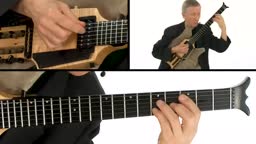
John Stowell’s Modern Jazz Harmony Playbook answers these critical questions in detail and illustrates the key concepts in a musical context across a series of performance studies.

”In this Playbook, we’ll explore five commonly encountered jazz progressions. I’ll first analyze the changes for you to establish the basic harmony of the song. I will then demonstrate 3 comping performance studies -- ranging from a basic approach to more sophisticated versions. Each performance study is followed by a detailed breakdown of the voicings and rhythmic approaches I used in the study.

We’ll start off comping the changes for the jazz standard, In a Mellow Tone. We’ll work on the changes for Sonny Rollins’ St Thomas and then a modern jazz harmonic approach that we can use for the Chuck Wayne tune, Solar. Billy Stayhorn’s Take the A Train follows and then finally, we’ll comp the changes for the Jobim classic, The Girl From Ipanema.”


John will explain and demonstrate all of the key concepts and approaches along the way. You’ll get standard notation and tabs for all of the performance studies. Plus, you’ll be able to use TrueFire’s learning tools to sync the tab and notation to the video lesson. You can also loop or slow down the videos so that you can work with the lessons at your own pace. All of the backing tracks are included to work with on your own as well.

Grab your guitar and let’s go deep with John Stowell!

What you'll learn

  • Apply melodic minor voicings over dominant chords
  • Anticipate and delay chord resolutions for rhythmic interest
  • Comp behind advanced soloists with appropriate harmonic complexity
  • Balance harmonic complexity with serving the tune and soloist
  • Recognize and respond to reharmonization in real-time playing
Release date: 10/26/2020 • 1h 40m runtime
Start Course
Sample lessons
Comping Approach 1
Comping Approach 1
Take the A Train: Performance
Comping Approach 1
Comping Approach 1
Take the A Train: Breakdown
Comping Approach 2
Comping Approach 2
Take the A Train: Performance
Comping Approach 2
Comping Approach 2
Take the A Train: Breakdown

What's included

37 lessons • 15 charts • 5 Jam Tracks

Modern Jazz Harmony Playbook
Hi, I'm John Stowell. Welcome to this Modern Jazz Harmony Playbook!

When I'm comping in a modern jazz ensemble setting, I'm focused on how I can complement the rhythm section and, at the same time, support the soloist harmonically. What's my rhythmic approach? What voicings are appropriate? How simple or sophisticated should my part be?

In this Playbook, we'll explore five commonly encountered jazz progressions. I'll first analyze the changes for you to establish the basic harmony of the song. I'll then demonstrate 3 comping performance studies - ranging from a basic approach to more sophisticated versions. Each performance study is followed by a detailed breakdown of the voicings and rhythmic approaches I used in the study.

All of the performances are tabbed and notated and you'll be able to sync the tab and notation to the video using TrueFire's learning tools. All of the backing tracks are included and you can loop or slow down any of the videos so you can work with the lessons at your own pace.

Ready to get started? Grab your guitar, and let's begin.
In a Mellow Tone
It's important to emphasize the broader applications of this progression and the simple reharmonization ideas that I reference.
Comping Approach 1
Note the use of some single note fills and basic voice leading. I'm also varying the attack (legato/staccato) of the chords and playing clearly defined rhythmic figures.
Comping Approach 1
It's important to remember that accompaniment should reflect the harmonic and melodic content of the soloist. Basic voice leading used in comping gives the soloist specific information to respond to.
Comping Approach 2
In this performance I'm using more tensions over all of the dominant chords to create resolution, and I'm also more active in this version.
Comping Approach 2
Additional tensions referenced over dominant chords are best used as passing tones when comping. The goal is to support and engage the soloist without interrupting their flow.
Comping Approach 3
Take note of the more active rhythmic approach, the delayed or anticipated resolutions and my phrases played over the bar line.

+ 30 more lessons

Start Course

Reviews

8 results

williamjrosen

Verified buyer

06/07/25

Really good stuff

massimovescovi

Verified buyer

12/12/24

Molto interessante :)

sixfix79

Verified buyer

04/22/23

Amazing

What a great teacher. Explains everything so well and in a beautifully calm manner. There are so many things you can take out of this wonderful course. I highly recommend this to anyone wanting to get out of any kind of ruts they are in musically

Norlo

02/08/22

Great comping ideas from John Stowell

John Stowell is one of the best jazz guitar educators. Period. The etudes in this course are rather tricky because of John's technique and sense of time and rhythm and the TABs are not always accurate. I suggest student to use their ears and pay attention to the videos to get the music correctly.

sgblons

Verified buyer

11/08/21

A Treasure Trove

John Stowell continues to provide some of the tastiest and most sophisticated harmonic approaches to jazz guitar. These videos are dense with information. The tab perfectly transcribes what he plays, and then he shows other variations as he breaks things down. I find some of his chords too stretchy for my hands. (Notice how he holds his neck nearly vertical, which helps enormously.) I've also found that some things seem to sound different even when I play them correctly. There are always subtleties in tone and articulation that are unique to each player. Even so, I know I will pick up many new and useable ideas from these lessons. Stowell slips in all kinds of asides about how to approach the art of comping that are also wonderful. Lots to chew on here.

Stop searching. Start improving with All Access.

Try 14 days free. Cancel any time.