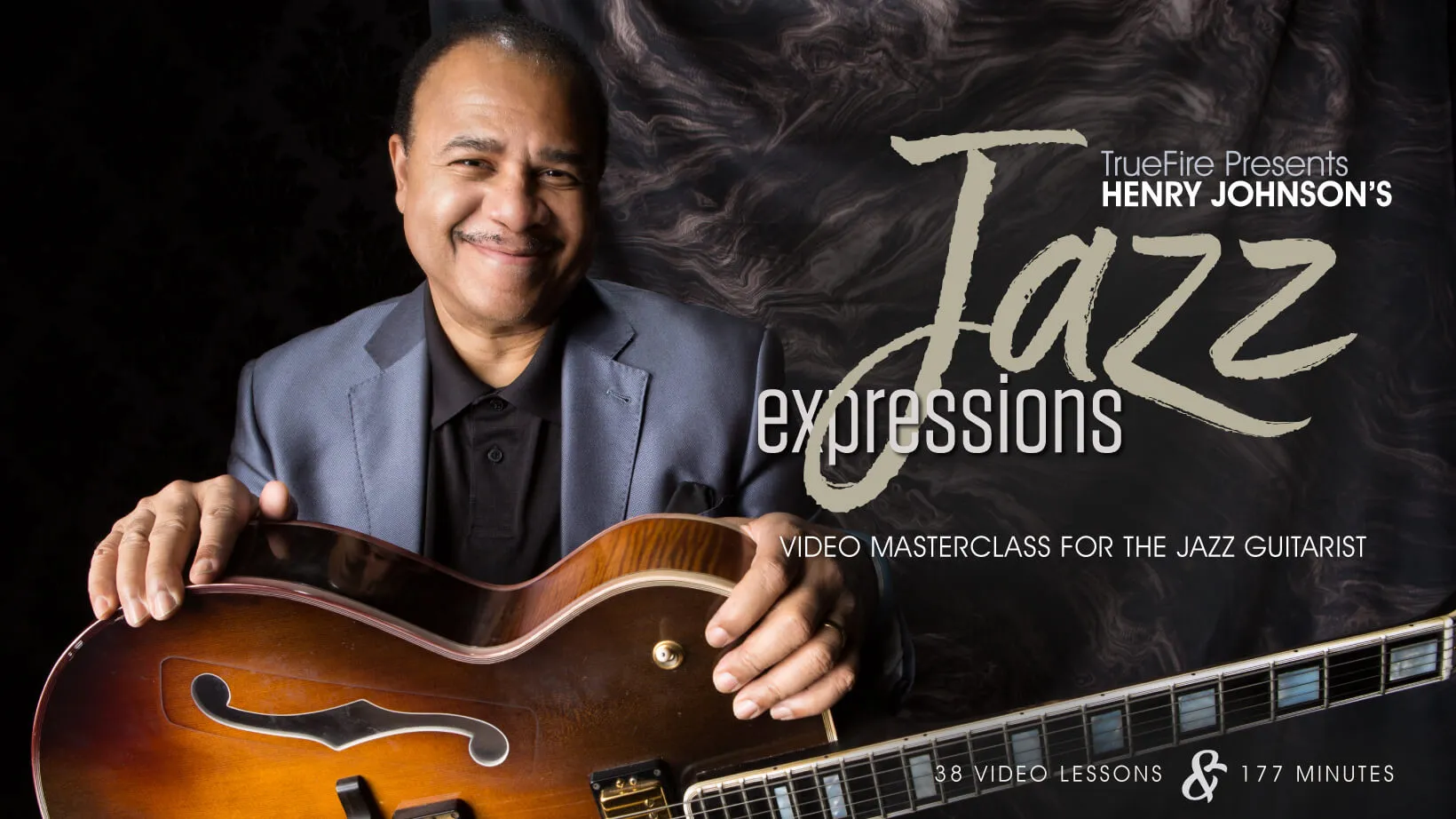
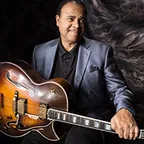
Jazz Expressions

Video Masterclass for the Jazz Guitarist

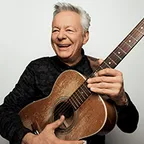
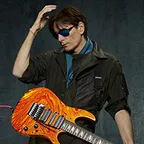
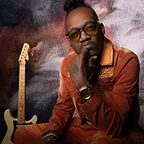
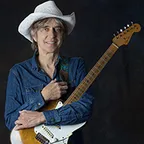
Marty FriedmanTommy EmmanuelSteve VaiEric GalesEric Johnson

Get this course and 1,000+ more with All Access

Try 14 days free. Cancel any time.

Purchase Individual Course for $19.99
Jazz Expressions

About this course

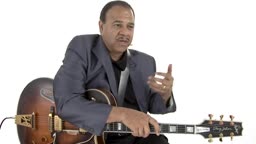
Jazz is a ‘many splendored thing’ powered by innovation, imagination, and extraordinary virtuosity. While masters of jazz guitar were inspired in their early years by other players, each also brings something new and individual to the table thus compounding the splendor of the form.

Henry Johnson is one such master. Old enough to have been privileged to have played, toured and recorded with many legends of jazz, Henry is also still young enough to bring fresh energy and creative approaches to the evolving art of jazz improvisation.
"In my opinion, this Henry Johnson's masterclass is the best jazz class you've ever recorded, and I have almost if not all of them. I hope you'll do more classes with this great jazz melodies builder." - Joel, TrueFire Student
Henry’s debut album, You’re the One, won a five-star rating from Downbeat magazine, was nominated for a Grammy, and was described by a JazzTimes review as “a thoughtful piece of work which may well become a jazz guitar classic.” Henry has recorded a number of other albums and has recorded and performed with luminaries such as Ramsey Lewis, Vanessa Ruben, Richie Cole, Nancy Wilson, and Dizzy Gillespie, among others.

”I started playing guitar at a very early age -- mostly gospel and R&B -- but when I started listening to the music of Wes Montgomery,  Kenny Burrell, and George Benson, I knew immediately that was the direction I wanted to go myself. In addition to my own solo recordings, I’ve been fortunate to be able to work, tour or record with many giants of jazz like Jack McDuff, Freddie Hubbard, Ramsey Lewis, Jimmy Smith, Sonny Stitt, Stanley Turrentine, and Joe Williams to name just a few. Over the years, I’ve developed my own sound and playing style that I’m excited to share with you here in Jazz Expressions.”

Henry organized Jazz Expressions into two sections. In the first section, he presents some of the concepts and techniques that are characteristic of his approach to jazz: Visualizing the Fretboard, Chord Shapes & Inversions, Inversions & Areas of Activity, Improvising with Chord Colors, Using Octaves, Phrases Not Scales, The Blues, Rhythm Drives the Solo, Listening to the Band & Comping, The Thumb & the Pick, Dom7 as a Parent Chord, Chord Progressions, and Sing Your Melodies.
"FANTASTIC! This long-awaited series is vitally important for guitarist young and old. Henry is an excellent professor of the music of which he loves. Through the years Henry has absorbed the music of jazz and other genres like a 'sponge.' It takes a special talent to be able to hear, study, practice, ask questions of the legendary jazz artists and have the ability to truly perform to the highest caliber in order to achieve excellence. Bravo Henry, bravo! And thank you to the company and staff that produced this much-needed video." - Renee M.
In the second section, Henry guides you through a series of performance studies, in a variety of styles and keys to help illustrate how to apply the concepts covered in the first section. Henry will first perform the study over a backing track and then break it down explaining the underlying techniques and harmonic approaches.
"Henry's cool Blues Shuffle lesson got me hooked! Minimalistic playing with cool variations ... very cool and insightful! TrueFire has some phenomenal jazz courses and Henry Johnson just got himself added to that list! Great material and shared stories along with added concepts and great hints!" - Jim C., TrueFire Student
All of the key examples and performance studies are tabbed and notated for your practice, reference and study purposes. You’ll also get Guitar Pro files so that you can play, loop and/or slow down the tab and notation as you work through the lessons. Plus, Henry includes all of the backing tracks for you to work with on your own.

Grab your guitar and let’s inject a little splendor in our own playing with Henry Johnson!

What you'll learn

  • Use harmonic devices like augmented scales and altered dominants
  • Master octave playing with rhythmic variation
  • Create rhythmic illusions using double-time feel against ballad tempo
  • Learn to target chord tones within slow-moving chord progressions
  • Develop call and response phrasing techniques
Release date: 02/07/2018 • 2h 57m runtime
Start Course
Sample lessons
Inversions & Areas of Activity
Demonstration
Phrases Not Scales
Phrases Not Scales
Demonstration
Rhythm Drives the Solo
Demonstration
Swing Blues
Swing Blues
Overview

What's included

38 lessons • 20 charts • 7 Jam Tracks

Jazz Expressions
Hi, I'm Henry Johnson and welcome to Jazz Expressions. I started playing guitar at a very early - mostly gospel and R&B - but when I started listening to the music of Wes Montgomery, Kenny Burrell, and George Benson, I knew immediately that was the direction I wanted to go myself.

In addition to my own solo recordings, I've been fortunate to be able to work, tour, or record with many giants of jazz like Jack McDuff, Freddie Hubbard, Ramsey Lewis, Jimmy Smith, Sonny Stitt, Stanley Turrentine, and Joe Williams to name just a few. Over the years, I've developed my own sound and playing style that I'm excited to share with you here in Jazz Expressions.

I've organized this course into two sections. In the first section, I'll talk about some of the concepts and techniques I consider essential in my approach to jazz. Then in the second section, we'll work through a series of performance studies in a variety of styles and keys to help illustrate how I apply the concepts we covered in the first section.

I'll break down all the highlights and key approaches for each performance, you'll get tab and standard notation, and you'll get all of the rhythm tracks to work with on your own. You can loop or slow down any of the performances so you can work with the material at your own pace. So, grab your guitar, and let’s get started!

One last thing that I think is important to mention is transcribing. The key to learning ANY musical language, especially jazz, is transcribing. You should make it one of your most used tools. Transcribing is simply just playing along with the recording(s) that you are interested in studying and learning from. In order to do that, you need to slow the recordings down, and the best software for doing that I've used is called, "Transcribe".

When you're transcribing solos, other things are happening at the same time. Your sense of timing is being developed, your ear is being trained to hear complex harmonies and relative pitches, you learn to recognize stylistic characteristics of each player that you can incorporate into your own playing, and you develop your chops. All this happens at the same time without you having to focus on just one thing. So, whatever you do, start transcribing and include it in your daily practice routine for maximum benefits.
SECTION 1: Essential Concepts
In this first section of the course, we're going to cover a lot of the concepts that I use on a daily basis and how I look at the guitar and how it functions in music. Let's get started.
Visualizing the Fretboard
Now we're going to talk about visualizing the fretboard. Our instrument is a very visual instrument - we can see what we're doing while we're doing it. So, to me, that's an advantage. Now, every time I put my hand down, I can see all the notes, but with the guitar, it's just not the notes - it's the shape as well. When playing a chord, I can see the shape, but I can also see the notes inside of it. And since I've been playing so long, I can hear it before I actually play it.
Chord Shapes & Inversions
First, let's deal with the major chord shapes, looking at Gmaj7. Let's play the inversions, which are just arpeggios note-for-note, going up the neck. These inversions that we find are called "areas of activity" where we can get the Gmaj7 sound.

Next, let's look at the minor chord shapes, moving up the neck using the Gmin7 arpeggio, and then we'll go on to the dominants, which uses a flatted 7th but major 3rd. These are all moveable - and when you do, you'll be going to a different key. Take your time with these and try to learn these positions, as these will fuel your improvisation.
Inversions & Areas of Activity
Here's an application of playing in the "areas of activity" for the major 7th, minor 7th, and dominant 7th inversions for G. These areas are great places to improvise, especially a great place to play the pentatonic scale. Give it a try.

You might be wondering, "Why do I need to play in any given shape? Why am I playing in a high shape or a low shape? What determines that?" For me, I've been playing with piano players and keyboard players all my life, and when playing in the band, you have to interact with them. So, if I'm playing with a keyboard player who's playing high, I want to be playing low. You want to play the shape that makes the most sense so that you're not in the same register that they are. And if you do this for a long time, it will start to happen automatically.
Improvising with Chord Colors
So now I'm going to give you an idea of what I do when I hear a chord and how to improvise using the shapes. It's important to think of the notes within any shape as "colors" that you can use. We'll run through the major 7th, minor 7th, and dominant 7th areas of activity as examples.
Using Octaves
Let's talk about octaves for a minute. I always get questions about octaves; what they are, how do you play them, etc. When you're playing them at the same time, it's important to mute the string in the middle so that it doesn't ring out. In our example using A, you only want to sound the E (A on the 5th fret) and the D string (A on the 7th fret).

You can use octaves to fill out melodies. Try making up your own melodies using octaves - the idea is to practice using the octaves so you become comfortable with them and you don't have to think about it. You can just do it. Once you have them down, you can apply them to things you already know - such as playing the pentatonic scale with octaves.

+ 31 more lessons

Start Course

Reviews

17 results

joshua2416

06/03/26

Amazing!

I loved it
5peter5000

Verified buyer

01/01/23

Henry Johnson has a deep insight in the jazz forms he teaches, inspiration from Wes Montgomery and Kenny Burrell just to mention two of his sources recorded back in the -50 and -60s, jazz that is immortal for generations to come that was an eye opener also for me many years ago

Zorglub

Verified buyer

12/02/22

Great!

MikeSwimby

04/23/22

Brilliant Course

I've returned to this course after purchasing it a good while ago and am absolutely loving it. There's a lot of information to take in, so, you may find you have to take it slowly. You could skip to section two and just learn note by note some of what is being played. There isn't the whole transcription for all the songs in this section but I like the challenge of transcribing for myself what is being played. Henry has already given you the 'road map' of what he's doing and where he's playing it on the fretboard in each piece of music and with the loop tools you can figure it out, which is so rewarding (if not a little frustrating at times!) This really is a brilliant course

Corrado43

07/25/21

Jazz Expressions

I am so impressed by Henry Johnson's ability to spell out the language of Jazz Guitar playing. His finger style rhythm and single note soloing is presented with style and creative flair. His Funky groves to me reminded me of tasteful Smooth Jazz. In addition, he outlined some of his complex solos in a clear and manner breaking them down to where I felt at ease in learning some of them. What truly impressed was his comments regarding learning to play statements or phrases rather then just learning scales and also understanding your role as Rhythm player. I believe I enjoy the guitar playing much more after going through his course!!

Stop searching. Start improving with All Access.

Try 14 days free. Cancel any time.