




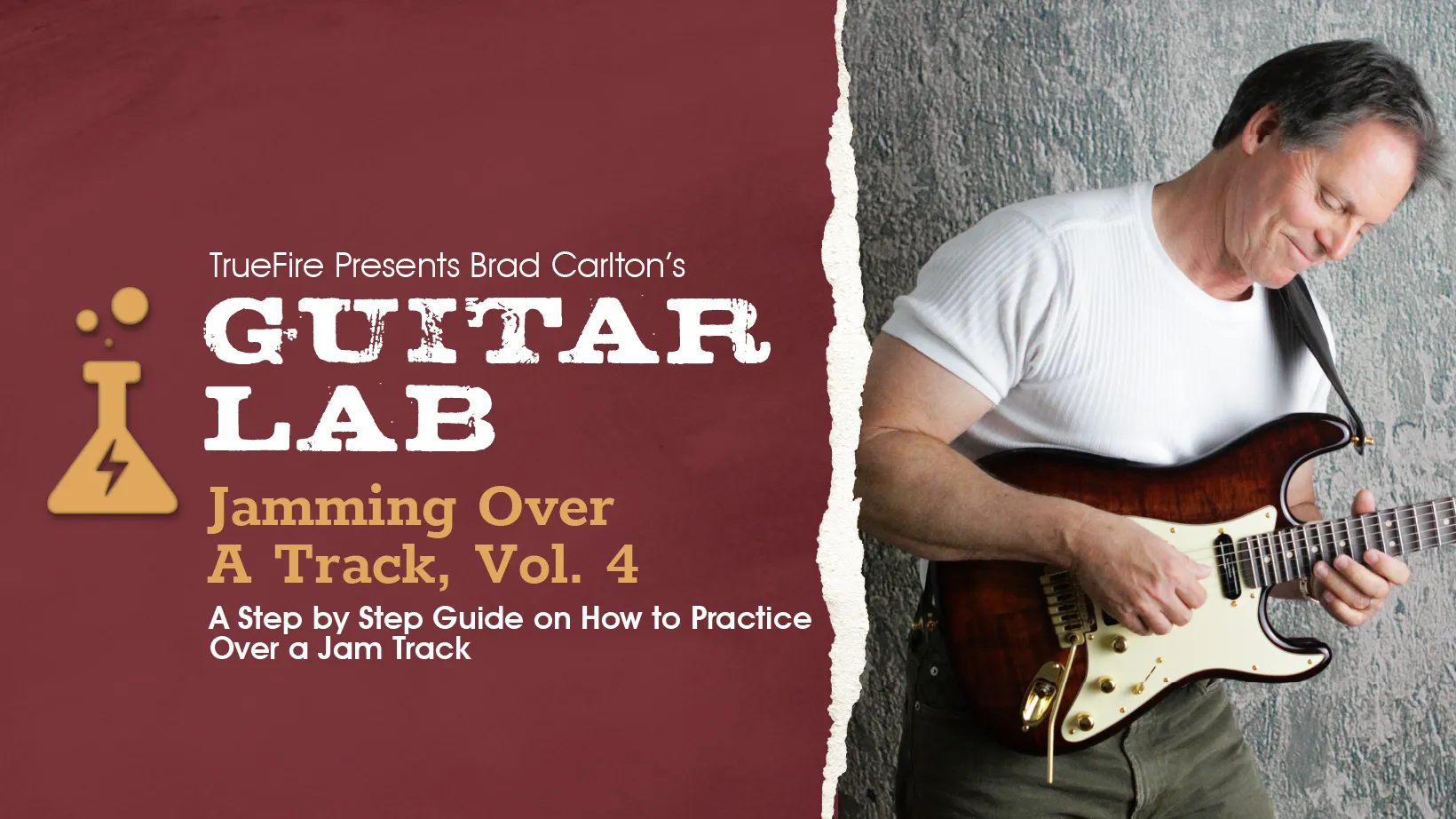
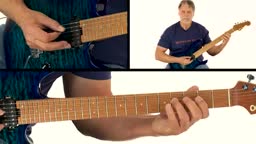
Guitar Lab: Jamming Over A Track, Vol. 4

Master Your Groove: The Essential Guide to Jamming Over Tracks

Marty FriedmanTommy EmmanuelSteve VaiEric GalesEric Johnson

Get this course and 1,000+ more with All Access

Try 14 days free. Cancel any time.

Purchase Individual Course for $5.00
Guitar Lab: Jamming Over A Track, Vol. 4

About this course

Guitar Lab: Jamming Over a Track Vol. 4 takes your jamming skills to the next level. In this volume, you'll dive even deeper into the techniques for playing over static chord tracks, with a focus on advanced rhythms, scales, and chord structures to elevate your improvisation.

From building complex solos to mastering intricate bass lines and drum patterns, this course will help you unlock new creative possibilities. Whether you're refining your fundamentals or exploring new techniques, Guitar Lab: Jamming Over a Track Vol. 4 will inspire fresh approaches to your practice sessions and playing.

What you'll learn

  • Apply chordal concepts to single note improvisation
  • Play minor add 9 voicings in all three inversions
  • Use interval structures (particularly flat third intervals) in improvisation
  • Improvise using A Dorian mode over a jam track
  • Develop deeper theoretical understanding of modal improvisation
Release date: 10/01/2024 • 1h 33m runtime
Start Course
Sample lessons
Dorian Voicings | min add 9
Demonstration

What's included

10 lessons • 1 charts • 1 Jam Tracks

Jamming Over A Track Vol. 4
Hi, I'm Brad Carlton, and this is Volume 4 of Jamming with a Track. I'll be covering concepts that utilize the A Dorian mode over this particular jam track. I'll also provide chordal ideas that translate into single-note improvisation.

You'll learn how to improvise using different structures with intervals, focusing on the flatted third and the heptatonic arpeggio. There's a lot of great material here—it's deep, but if you're familiar with my work, you know what to expect. So, grab your guitar and let's jam!
Dorian Voicings | min add 9
This lesson introduces the A Dorian mode and explores the A minor add 9 chord, a simple yet effective variation of the minor chord. By raising the root to the ninth, you'll create new harmonic textures for both comping and soloing. Practice visualizing this interval across the neck and applying it in different chord inversions, focusing on the clarity and melodic depth it adds to your improvisation.
Dorian Voicings | m7
This lesson introduces the A minor 7 chord and its inversions, focusing on visualizing the root, flat 3rd, 5th, and flat 7 across the neck. By mapping out these chord tones, you'll begin to see patterns for both chord voicings and arpeggios. The idea is to simplify by working within a single position before expanding to more complex shapes like drop 2 voicings. Practice these voicings and connect them to familiar minor chords, using the chord tones to guide your melodic ideas and soloing.
Dorian Voicings | m7/6
In this lesson, we explore the minor 7 add 6 chord, building on the voicings from the previous lesson. By incorporating the 6th, you add a funky, dynamic sound to your playing. The challenge here is balancing the b7 and b3 while integrating the 6, often by raising the 5th. As you experiment with different voicings and fingerings, you'll notice some unique shapes and harmonic possibilities. Focus on simplifying your chord choices by using two or three voices, creating space for a tight, groove-driven approach.
Dorian Voicings | m9
In this lesson, we explore the minor 9 chord, an extension of the minor 7, adding a smooth, sophisticated sound. Building on previous voicings, you'll learn how to incorporate the 9th by adjusting the minor 7 shapes you already know. By raising the root to the 9 or focusing on triad stacking, you can create richer harmonies and melodic options. The key is understanding how these intervals interlock and extend, giving you access to more complex sounds while still grounding your playing in familiar chord shapes.
Dorian Voicings | m11
In this lesson, we're building a minor 11 chord by stacking thirds. Start with an A minor triad (A, C, E) and move up through C and E minor. This gives us the key intervals: root, flat 3rd, 5th, flat 7th, 9th, and 11th. However, in practical comping, we don't play all six notes. Focus on the essential tones—flat 3rd, flat 7th, 9th, and 11th—and experiment with voicings and inversions. Try playing G over C and A bass notes to create a lush, minor 11 sound.
Dorian Voicings | m13
The minor 13 chord completes the Dorian arpeggio, using all seven notes. Since it's tough to play all these notes at once on guitar, we use fragments. A helpful approach is to think of poly-chords, like G major 7 over an A minor triad, to understand the structure. Focus on key intervals like the flat 7, 9, 11, and 13 to create rich voicings. Experiment with these ideas to expand your chord vocabulary.

+ 3 more lessons

Start Course

Reviews

2 results

Osokin

Verified buyer

10/29/24

Dorian Mastery!

In this fourth volume of his ‘Jamming Over A Track’ lesson series, Brad Carlton does a deep dive into the application of different Dorian Voicings over a static minor chord backing. This is quite advanced material, but these lessons will really ‘hip’ up your playing!
Ohio5665

Verified buyer

10/25/24

Product image Guitar Lab: Jamming Over A Track, Vol. 4

These volumes of lessons are full of all kinds of great information you can use. I always learn something from one of the best teachers around Brad Carlton!

Stop searching. Start improving with All Access.

Try 14 days free. Cancel any time.