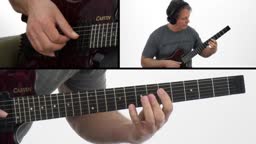
Lesson Source: Frank Vignola's 1-2-3 Jazz Chord Melody<b>Alright let's create a chord melody arrangement for "Take Me Out to the Ballgame". We've gone over various sections, but now let's put it all together. The first measure, the prevailing chord is a C. The first melody note is a C. We'll notice that the next melody note is a higher C, so we'll use the lower C that we find in our Cmaj chord vocabulary, so the first chord is a Cmaj. Go to your chord vocabulary, Cmaj, and find the chord that has the low C in it, which is this one. The second melody note is a higher C. We go to the Cmaj chord vocabulary, and find the Cmaj chord with the melody C note on top, which is this one. So the first two chords are these.
The third melody note in the second measure is an A note, the prevailing chord is Cmaj. So we go to our chord vocabulary under Cmaj and find the Cmaj chord with the A on top, which is C6. The next note is a G note, the prevailing chord is Cmaj. In the chord vocabulary chart under Cmaj we find the chord which is Cmaj7. The next note is an E, descending from G. The prevailing chord is a Cmaj. Go to the Cmaj chord vocabulary and find the Cmaj chord with the E on top, which is Cmaj7. So now let's look at those first two measures and play them through. Our next prevailing chord is a Gdom7 chord in the third measure, with a G on top. So go to your chord vocabulary, find Gdom7 with the G on top. The next melody note is a D descending from G. So go to the G7 section of the vocabulary and find the Gdom7 with the D on top. So let's take the first four bars now.
The next measure the prevailing chord goes back to C with the low C in the melody. The next note is a high C with the C as the prevailing chord, so we go to the Cmaj section of the chord vocabulary and we find the C chord with the C on top. The next note is an A note with a prevailing C. So we go to the Cmaj section of the chord vocabulary and find the C chord with the A on top - C6. The next note is G, prevailing chord C. Go to the chord vocabulary chart under Cmaj and find the Cmaj chord with the G on top - Cmaj7. Once again we go to the E note descending from G, prevailing chord is C, so we go to the Cmaj section of the chord vocabulary and find our Cmaj chord with the E on top. The next chord is G7 with a G note on top, so we go to our G7 section of the chord vocabulary and find the G7 chord with the G note on top. So let's go over the first 8 measures now and get this down before moving on.
Moving on, we notice the prevailing chord becomes Adom7, the melody note is an A, so we go to the Adom7 section of the chord vocabulary and find the A7 chord with the A on top. Now we notice the next note is a G# which is outside of the scale, so one of our options is to play that as a single note. The next measure is an E note with a prevailing chord of A7, so in the A7 section we'll find the chord with the E note on top. The next note is the F natural, which is outside of the scale, so we'll play that as a single note. The next note is a G note, the prevailing chord is an A7, so we'll go the A7 section of the chord vocabulary and find the A7 chord with the G on top. So let's take those two measures of A7 and play them through. And then we move on and see the prevailing chord is a Dmin. The melody note is an A, so we go to the Dmin section of the chord vocabulary and find the Dmin chord with the A note on top, which is this. The next note is an F note descending from the A note, the prevailing chord is still Dmin, so we'll look at the Dmin section and find the chord with the F on top. The next note is a D note descending from the F note, the prevailing chord is still Dmin, so we'll look in the Dmin section of the chord vocabulary and find the Dmin chord with the D note on top. So let's go over those two measures of Dmin. So let's review from the A7 to the Dmin, those 4 measures.
So now let's review from the beginning up to that point. The next chord is Ddom7 with the A note as the melody note. You'll notice that note is ascending from the previous D on the Dmin. So Ddom7, the prevailing chord, A is the melody note. So we go to the Ddom7 section of the chord vocabulary and we find the D7 with the A on top, which is the D9. The next note is an A note again, and the next is again an A note with a D7. On the next note, which is a B and a C, I'm going to play those as single notes. So the D7, the two measures - "I don't care if I" are the lyrics - we're going to hit D7 with the A on top, single notes, up to the G7 which is now the prevailing chord with the D note on top, so we go to the G7 section of the chord vocabulary and find the G7 chord with the D note on top. The next note is a B note with a prevailing G7, but we'll use this B note and the following A note as single notes. The next note is a G note, the prevailing note is still a G7, so we'll look at our chord vocabulary under the G7 and find the chord with the G note on top. The next two notes, E and D, we'll play as single notes, allowing the music to sound less cluttered. So let's go over those two measures of G7. G7 with a D note on top, a single B note, a single A note, and then a G7 chord with a G on top, then the E note and the D note as single notes, and then we're back to the C as the prevailing chord, and the C note in the melody, which we can reference from the Cmaj section of the chord vocabulary. So let's go over those 4 measures starting on the D7 with the A note on top, to the G7 with the D on top, single notes, G7 with the G on top, single notes, back to C with the C in the melody.
So let's now take the first half of the song, the first 16 measures, and put it together. That leads us back to C with the C note in the melody so we reference the Cmaj section of our chord vocabulary and hit the chord. The next note is the higher C, still in Cmaj, so we reference the vocabulary under Cmaj and find the chord with the high C. The next note is A, the prevailing chord is Cmaj, so again in the Cmaj section we'll find C6. The next note is G, prevailing chord is still C, so under that same section we find Cmaj7. The next note is E descending from G, prevailing chord Cmaj, so in the Cmaj section we find Cmaj7. The next chord is G7, melody note is a high G, so we go to the G7 section of chord vocabulary and we find this. The next note is D, prevailing chord G7, under the same section we find this. Then once again we hit the D note, now we're onto Cdom7 with the C note in the melody, so we go to the Cdom section of the chord vocabulary and find the C7 chord with the C chord on top. Then the D note, prevailing chord C7 under our vocabulary guide under C7 we find this. Next note is E, prevailing chord C7, so under the chord vocabulary we find this. The next note is F, prevailing chord C7, the chord vocabulary shows this. Then a G note, prevailing chord is C7, chord guide shows this. The next note is A, prevailing is F, so we go to our F section of the vocabulary and find the F chord with the A note on top which is Fmaj7. So now let's take it from "root, root, root for the home team" which is the beginning of the second half, and I'm starting at bar 17. Let's do that once more.
The next note is an A, the prevailing chord is an Fmaj, so we go to that section of the chord vocabulary and find Fmaj7. The next note is a B natural, prevailing chord is Fmaj, that's outside of the scale, so we'll play it as a single note. the next note is a C note with an Fmaj chord, so we reference our guide and find Fmaj7 or one of the options is an F6/9, so you can choose either one. Since we're on the first string, I'll choose the F6/9, because it's closer to the single note. The next chord is a Cdim with a C note, so we get the high C note, and we simply put the diminished chord there. So let's go over that. The next note is a B note, the prevailing chord is C, so we find the C chord in the vocabulary with the B note on top. Next the C chord still prevails, but there's an A chord in the melody, so we go to our chord guide under Cmaj and find this. That measure of C goes like this. The next note is a G note, and the prevailing chord is an A7. So we go to the Adom7 section of the guide and find the A7 chord with the G note on top. The next note is F#. I'm going to use that as a single note along with the G. Leading to D7 as the prevailing chord with the A note on top, so you reference the chord vocabulary under D7, find the D7 chord with the G on top...The next prevailing chord is a G7, the melody note is a B, go to the chord guide under G7 and find the chord with the B on top. Finally, the last chord is a C with a C note on top, ascending from the B note. So we go to the chord vocabulary under Cmaj and find the C chord with a C on top. So let's go over the last line of the music with the pickup notes...
Now let's run through the whole song, nice and slow, we're not worried about tempo, we're only worried about cleanliness and good transitions between chords.