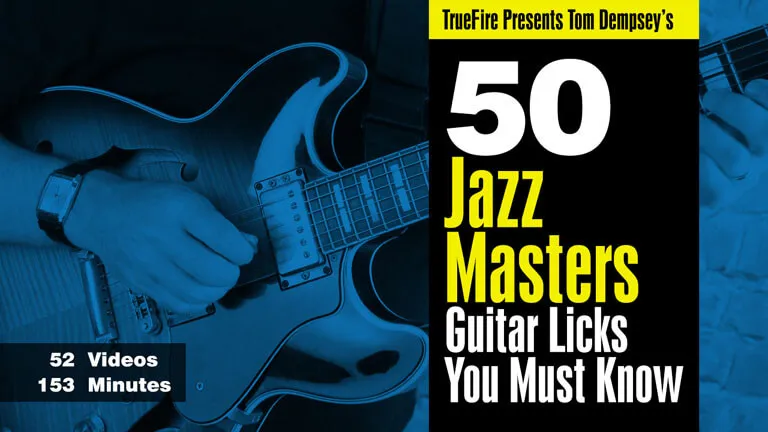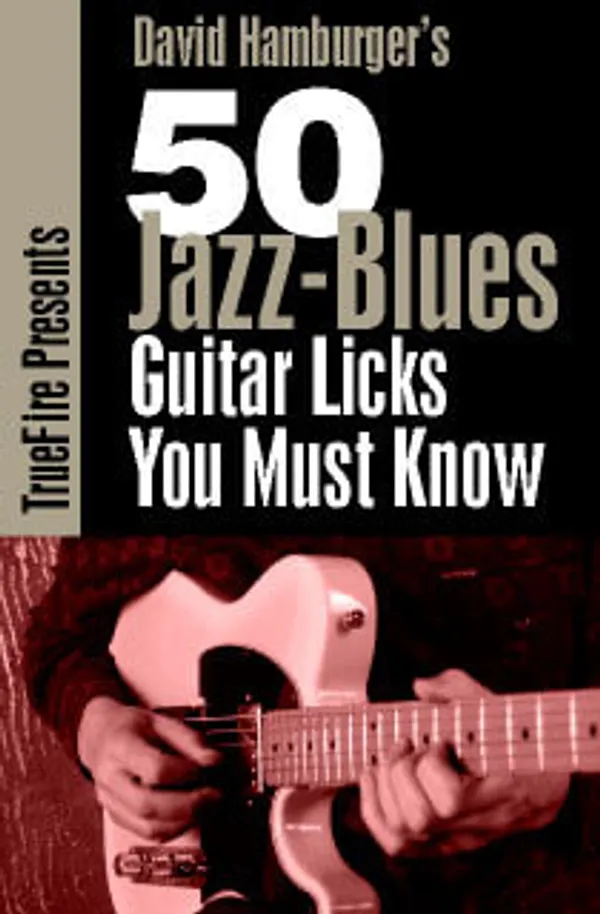
50 Jazz Master Licks You MUST Know

50 jazz licks you must know inspired by the genre's greats

Marty FriedmanTommy EmmanuelSteve VaiEric GalesEric Johnson

Get this course and 1,000+ more with All Access

Try 14 days free. Cancel any time.

Purchase Individual Course for $9.99
50 Jazz Master Licks You MUST Know

About this course

Your mission, should you decide to accept it, is to attempt playing any style of jazz guitar without copping inspiration and lickage from the masters of the form. What?! This ridiculous notion will self-destruct in ten seconds because that would unquestionably be an impossible mission. The six-string giants of jazz not only inspire us, they have authored the very vocabulary that we jazz guitarists quote to one degree or another in our improvisations. Much thanks to Tom Dempsey and this collection of 50 Jazz Master Licks You MUST Know, you're moments away from stoking your own vocabulary with 50 timeless, ear-grabbing lines from the best in the biz.

Jazz guitar is NOT about playing licks, far from it. Jazz is spontaneous, creative, original and a highly improvisational art form. Great jazz solos tell stories that shed tears, spark smiles and stop time. You'll spend countless disciplined years in the shed learning the language of jazz guitar and how to tell those stories in your own voice. Imitating, understanding and internalizing the vocabulary of the masters is an essential rite of passage for EVERY jazz guitarist. Getting a grip on the vernacular of jazz guitar empowers you to craft your own original lines and dialect.

Tom dug deep, wide and very selectively to take you on this learning adventure across the fretboards of such jazz guitar luminaries as Charlie Christian, Django Reinhardt, Wes Montgomery, Kenny Burrell, Tal Farlow, Barney Kessel, George Benson, Grant Green, Pat Martino, John Abercrombie, John Scofield, Pat Metheny and many more. You'll learn 50 highly versatile licks influenced by the music of these masters. Tom will also demonstrate how to apply the material in your own improvisations so that you can put the lines to work immediately.

All of the licks are presented over a rhythm track for context and then followed by a detailed breakdown of the line along with the techniques being employed to perform it. Everything is tabbed and notated, plus you get all of the rhythm tracks to practice the lines over by yourself.

Should you be captured or celebrated on stage by audiences near you, we will not disavow any knowledge of the learning path you followed to get there. 10, 9, 8, 7...

What you'll learn

  • Create authentic jazz rhythm guitar accompaniment
  • Study jazz improvisation strategies
  • Develop position-based improvisation skills
  • Understand bebop jazz guitar phrasing
  • Learn intervallic jazz lick
Release date: 02/24/2013 • 2h 32m runtime
Start Course
Sample lessons
Buckysuckle Flow
Buckysuckle Flow
Lick 14
Crazy 8's
Crazy 8's
Lick 20
Along Came Pat
Along Came Pat
Lick 28
No Greater Joe
No Greater Joe
Lick 30

What's included

52 lessons • 50 charts • 48 Jam Tracks

50 Jazz Masters Licks
Welcome to 50 Licks of the Jazz Guitar Masters That You Must Know. I'm really excited to share with you some great material from some of the masters of the jazz guitar in an effort to help you better connect with the language of jazz. Any study of jazz includes imitating and understanding the masters of the idiom as a way to internalize the sound of the vernacular of this language. In this course you will learn 50 of the most important licks that you must know in order to play jazz guitar. These licks will come from the influence of such jazz guitar luminaries as Charlie Christian, Django Reinhardt, Wes Montgomery, Kenny Burrell, Tal Farlow, Barney Kessel, George Benson, Grant Green, Pat Martino, John Abercrombie, John Scofield, Pat Metheny and many more. You will learn the licks that are influenced by the music of these masters but you will also learn how to apply this material to your own jazz improvisation. This is going to be an exciting study providing you with the foundation to be able to play jazz just like the masters. Let's get started.
Wind Be Gone
One of the premier jazz guitarists in jazz was Charlie Christian. He is well known for playing with Benny Goodman and for being one of the influential musicians that helped develop bebop. One of the hallmarks of his style was how he used riffs commonly played by horn players and applied them to the guitar. As you'll see many of his signature ideas came out of chord shapes like this. Lick #1 here is based on something he played on a classic recording of Gone With What Wind. It's a great riff that comes out of this chord shape. Check it out.
Timbers
Lick #2 is another classic Charlie Christian idea. This one comes from a song called Shivers that he recorded with Benny Goodman in 1939. This one comes out of this chord shape. There's also some nice chromatic movement here. It starts off very diatonic and then brings in a diminished idea while ending with a major pentatonic idea that's right in the pocket. Let's take a look.
Mean Swing
Django Reinhardt is one of the most distinctive voices on the jazz guitar. His style of music came from traveling and performing in gypsy circles throughout Belgium and France. His virtuosity is all the more amazing because he lost the use of the 3rd and 4th fingers of his left hand in a fire which left him with only two fingers to play his amazing music. This first idea is from a solo he played on the Ellington classic It Don't Mean A Thing If It Ain't Got That Swing. It features his classic arpeggiated style. Here it is.
Good Neighbor
Django was well known for being one of the first guitar players along with Charlie Christian to use what we now call neighbor tones as a way to draw more definition to chord tones within a solo line. Neighbor tones are tones either above or below a chord tone that can be used to draw attention to the defining tones of the chord. This idea is a classic Djangoesque and really brings out the sounds of the chords in the process. Let's take a look.
Tiny Blues
Tiny Grimes is a somewhat unrecoginized jazz guitarist. He played with Art Tatum from 1943-44 but also recorded with Charlie Parker. He played the tenor guitar which is a four stringed instrument. But the music and solos that he produced were very important to the lineage of the bebop jazz guitar movement. This one is from a blues solo that he took from a Charlie Parker recording. His use of sequential chromaticism gives us a different approach to improvisation within this period of jazz. Let's go check it out.
4-2 Da Bar
Freddie Green was the heartbeat of the Count Basie band. His style of playing provided the basis of the sound for what was known as the All American Rhythm Section. He always felt that you should never hear the guitar by itself. It should be felt within the rhythm section. The sound and style of his playing was indicative of the Count Basie sound and has influenced many guitarists and how they accompany. His style is a very important one to learn for a variety of reasons so let's check it out.

+ 45 more lessons

Start Course

Reviews

13 results

leeofcalifornia

Verified buyer

11/04/24

This is a terrific course and a great resource.
SongYY

Verified buyer

05/03/22

Learning Licks is important

Learning licks is good way to expand your vocabulary Especially learning from the master. If you learned 2licks by a week, that’s pretty a lot and powerful….Scott Henderson said. So guys don’t miss this. Practice practice and practice

2canoe

Verified buyer

03/12/21

50 Jazz Master Licks you Must know by Tom Demsey is a wealth of jazz examples inspired by the greats of the genre. Tom introduces the lick and the master who has inspired it.....he presents the lick then breaks it down, scale choice, arpeggios and additional information bringing out the prominent nuance and signatures of the artist's style. Thanks Tom and Truefire

jm786

Verified buyer

09/20/20

excellent

billyh

Verified buyer

06/11/20

Nice Licks

Some lovely licks here with some interesting background on them. I went through them and picked out 25 of the 50 I really want to learn. Very good value.

Stop searching. Start improving with All Access.

Try 14 days free. Cancel any time.