One of the most common techniques in Fingerstyle Guitar playing is actually borrowed from banjo players - a technique referred to as “the Banjo Roll”. These rolls use the thumb and fingers on the picking hand to arpeggiate chords, establish grooves, and even for playing melodies.
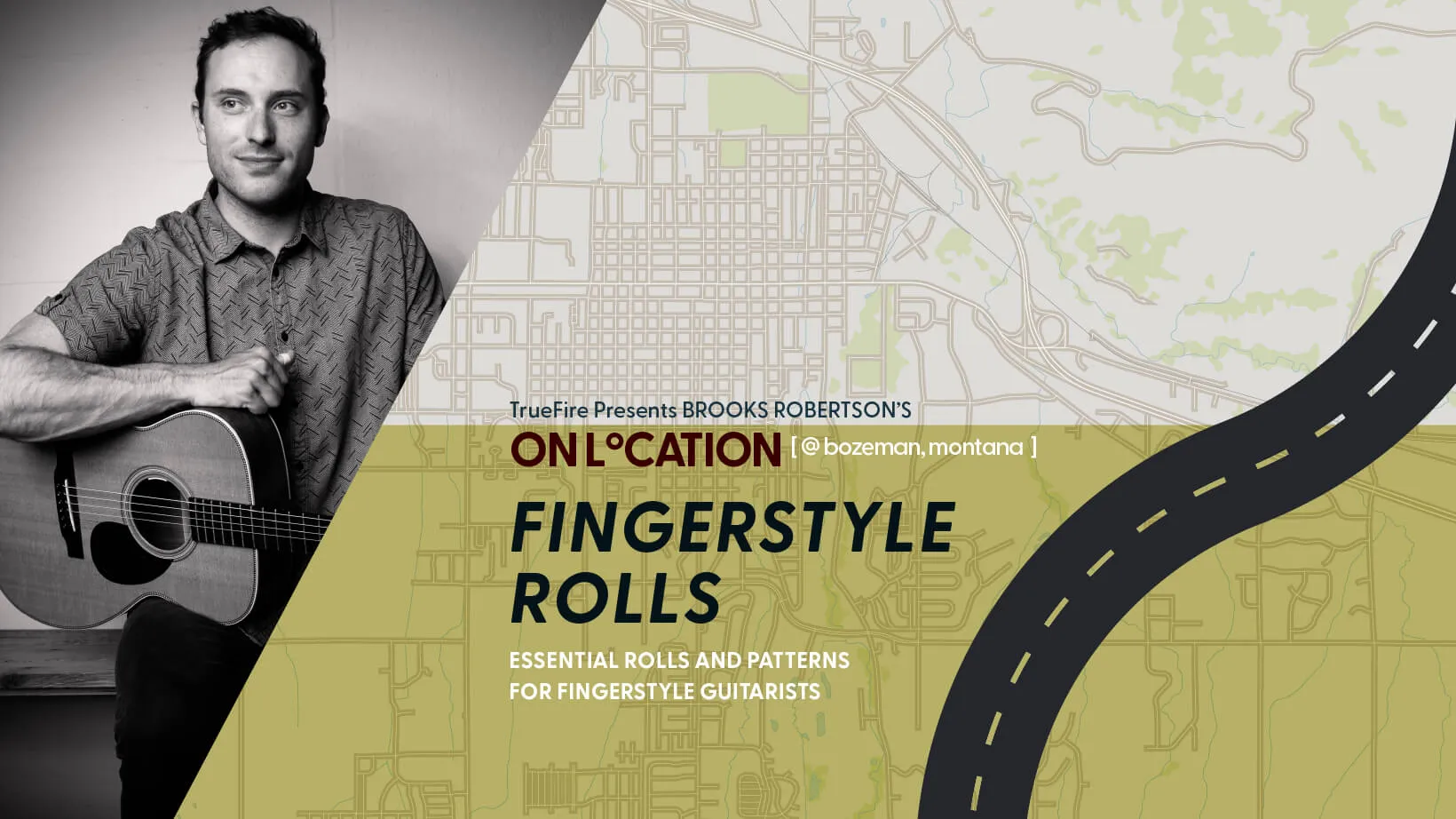
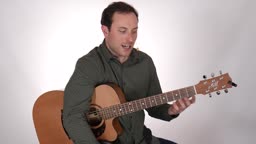
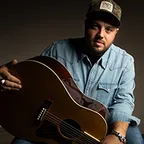
Filmed in Brooks Robertson’s home studio, this Fingerstyle Rolls edition of the On Location series dives deep and wide into this essential technique used by Chet Atkins, Jerry Reed, Tommy Emmanuel, Buster B. Jones and so many other of our favorite fingerstyle guitar masters.
”I’ve organized this course into six lesson sets, each of which focuses on a new banjo roll. We’ll start with some simple exercises to build the necessary motor skills. Then we’ll work on more advanced applications of the rolls, and ultimately put each to work in a short performance study with a unique style and flavor. You’ll also have all of TrueFire’s learning tools to work with along the way.”
In the first set, you’ll work on a forward roll to arpeggiate chords and then you’ll play a flowing melody in the key of A minor. Next up, a funky tune in B minor that uses a backward roll with open strings and chromatic notes - what Jerry Reed would call a “swarm”. In the third set, Brooks guides you through an E Blues that utilizes a mixed roll to play a catchy melody with open strings, slides, pull-offs, and arpeggiated chords in the bridge. After Brooks shows you how to pull off an Index and Middle Double-Stop roll, you’ll put it to work in a study called Double-Stop Waltz, which is a relaxed ballad in the key of E Major. Middle & Ring Paired Double Stop Rolls are featured in In the fifth set, After learning the skill, you’ll play through a performance study in D minor that uses a Drop D tuning with a latin inspired sound and groove. And finally, you’ll learn how to combine single-and-two-string forward, backward, and mixed roll techniques into a bright and fun approach to play Waltz in A Major.
Brooks will explain and demonstrate all of the key concepts and approaches along the way. You’ll get standard notation and tabs for all of the performance studies. Plus, you’ll be able to use TrueFire’s learning tools to sync the tab and notation to the video lesson. You can also loop or slow down the videos so that you can work with the lessons at your own pace.
Grab your guitar, and let’s ‘roll’ in with Brooks Robertson!
What you'll learn
Navigate complex jazz chord progressions in drop D tuning
Navigate chord progressions while maintaining consistent picking patterns
Use chromatic slides within fingerstyle context
Coordinate left hand chord shapes with right hand fingerpicking patterns
Memorize and execute multi-section etude with Latin feel
Hi I’m Brooks Robertson. Welcome to this Fingerstyle Rolls edition of On Location.
One of the most common techniques in Fingerstyle Guitar playing is actually borrowed from banjo players - a technique referred to as “the Banjo Roll”. These rolls use the thumb and fingers on the picking hand to arpeggiate chords, establish grooves, and even for playing melodies.
If you’ve ever listened to Fingerstyle guitarists like Chet Atkins, Jerry Reed, Tommy Emmanuel, or Buster B. Jones then you’ve heard the banjo roll technique in use.
I’ve organized this course into six lesson sets, each of which focuses on a new banjo roll. We’ll start with some simple exercises to build the necessary motor skills. Then we’ll work on more advanced applications of the rolls, and ultimately we’ll put each to work in a short performance study with a unique style and flavor. You’ll also have all of TrueFire’s learning tools to work with along the way.
In the first set, we’ll work on our forward roll to arpeggiate chords and play a flowing melody in the key of A minor.
Next up a funky tune in B minor that uses a backward roll with open strings and chromatic notes - what Jerry Reed would call a “swarm”.
In the third set we’ll work on an E Blues that utilizes a mixed roll to play a catchy melody with open strings, slides, pull-offs, and arpeggiated chords in the bridge.
Double-Stop Waltz is a relaxed ballad in the key of E Major.
In the fifth set we’ll learn a performance study in D minor that uses a Drop D tuning and has a latin inspired sound and groove.
And finally, we’ll learn to combine single-and-two-string forward, backward, and mixed roll techniques into a bright and fun to play Waltz in A Major.
Are you ready to get started? Join me here in my home studio, and let’s explore the amazing sounds we can get when we use Banjo Rolls for Fingerstyle Guitar!
The forward banjo roll is a versatile technique that is a fundamental pattern used in many great songs and licks. This basic pattern can be used as foundation to build upon, to come up with your own melodic or accompaniment ideas, as you'll see I did in the "Forward Motion" Etude.
A few great examples of fingerstyle tunes that use the Forward Banjo Roll include:
•"Cannonball Rag" Intro, as played by Chet Atkins and Jerry Reed on their album Me and Jerry
• "Squirrelly" as played by Chet Atkins and Jerry Reed on Chet Atkins Picks on Jerry Reed
• "The Finger Lakes" Intro, as played by Tommy Emmanuel
• "Cascade" Intro, as played by Chet Atkins
The basic forward roll is only 3 notes, played by the thumb, index, and middle finger, in that same respective order. Banjo Rolls can be played in a variety of rhythms, quarter-notes, eighth-notes, eighth-note triplets, sixteenth notes, and more. What's most important is first practicing the roll in a loop, always following the thumb, index, then middle finger order of fingers for the forward pattern. If you're just beginning with Banjo Rolls you should practice the forward roll with one static chord first, on one set of strings, taking your time and going for accuracy.
As you get the pattern(s) memorized you can begin trying the roll at faster tempos, across various sets of strings, and eventually with chord progressions and within licks & tunes. Work through all these exercises on a regular basis, memorize them, try them at various speeds and with simple chord changes. Once you can do it smoothly and have the muscle memory & motor skills developed, move on to the more advanced examples, exercises, and tunes using the forward banjo roll.
Let's take the forward banjo roll and first use it in a 2-bar pattern over an E7, A9, D7, G6 progression on the top 4 strings, as you'd hear many fingerstyle guitarists play in for the Intro of "Cannonball Rag". After you memorize the basic 2-bar forward roll pattern, try it out for yourself over various types of chords, various string sets, different keys, and across chord progressions of your choice.
The second example is taking the forward roll pattern and using it to ascend up across all 6 strings to nicely arpeggiate a single chord, like Buster B. Jones did in his tune "Jus D'Orange" over a B7 chord. You should try the same thing, using chords of your choice in the fretting hand, while you roll up the strings, always keeping the order of your pattern, thumb, index, middle finger, the same.
The third example and exercise to practice is a G7 lick using fretted notes, open strings and some chromatic notes, ascending up the strings and leading right into a Jerry Reed-style picking pattern. Practice looping this whole exercise, first at a slow tempo going to accuracy, then after you've got it memorized try gradually speeding the tempo up, keeping everything legato and ringing out smoothly.
The Forward Motion Etude is in A minor and has a Bossa Nova-inspired feel. We'll use a combination of static arpeggiated chords using our forward roll pattern, plus there's a flowing melodic section where the fretting hand will be moving all over the fretboard, while we keep the basic forward roll pattern consistent with the picking hand to efficiently play the melody. This Etude will bring both hands together to utilize our forward roll in a fun-to-play, musical context.
First spend some time listening and watching the performance video. Try to get familiar with the melody and feel of the tune. You'll hear a rhythm guitar and drum accompaniment. Once you've learned the whole tune, or even once you’ve got one section under your fingers you can use this performance video as a practice tool to play along with. Be sure to utilize TrueFire's video player tools to slow down and loop the video. There is a detailed transcription beneath the performance with TAB, Standard Notation, and picking-hand fingering indicated next to each note-head in the notation.
As you get started learning the Forward Motion Etude it's really important to be using the correct picking-hand fingering - you want to use the correct banjo roll pattern and technique in order to play as smoothly and efficiently as possible, that's really what this whole course is all about! You can find the suggested picking-hand fingering indicated above the TAB in the corresponding notation: p=thumb, i=index, m=middle, and a=ring finger.
The first 8-bar section of the tune (intro) uses our forward roll to arpeggiate an FMaj7 and E7(b13), resolving to A minor, setting up the next section, and overall mood of the tune. Throughout the intro you'll need to change chords on the upbeat (the "and") of beat 4, also known as an "anticipation". Strive for accuracy and smooth legato notes as you arpeggiate each chord. My advice is to be sure you're using the same chord shapes and fingerings as I demonstrate in the video.
As you work through the 16-bar main melody (A Section) take your time and strive to memorize just a few bars at a time, eventually stitching it all together to form an entire section (which will be repeated). The melody in the A section is a combination of fretted notes, open strings, chromatic notes, and chord shapes on the top 4 strings.