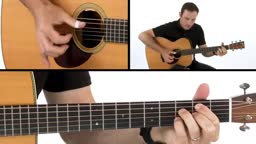
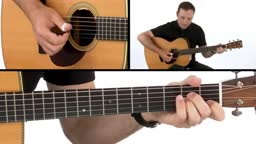
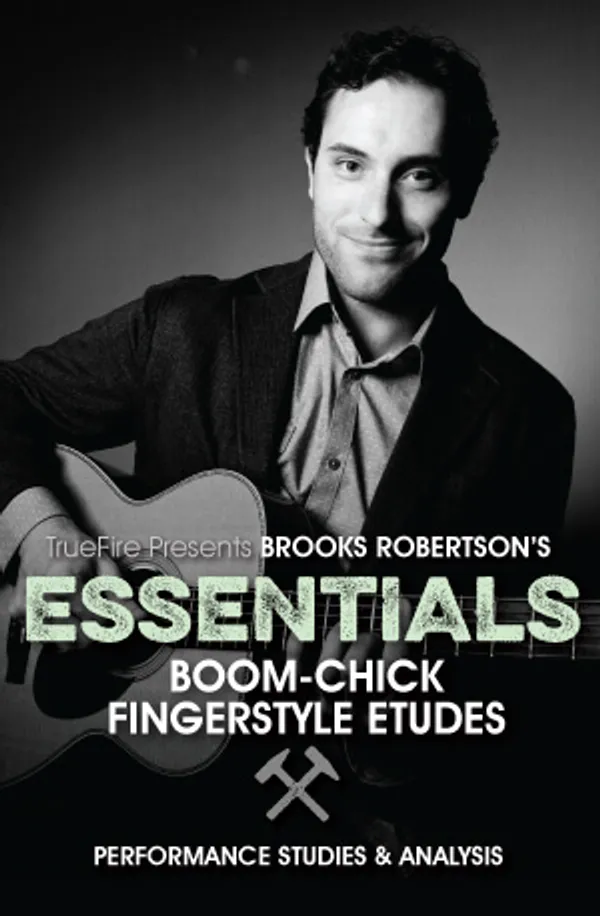
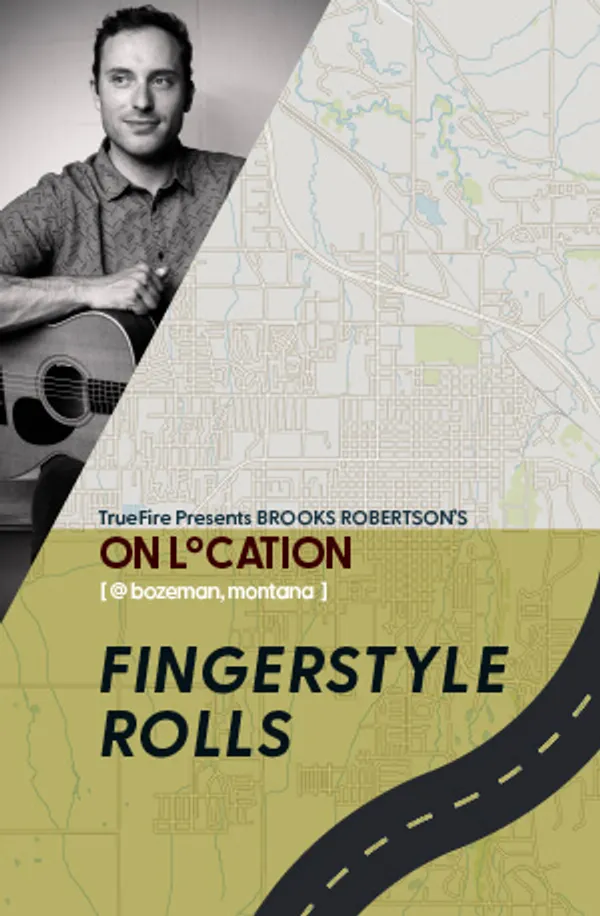
Hi, I'm Brooks Robertson. Welcome to Take 5: Boom Chick!
Boom chick is a versatile technique used and refined by many great fingerstyle guitar icons such as Mose Rager, Ike Everly, Doc Watson, Merle Travis, Odell Martin, Chet Atkins, Jerry Reed, Tommy Emmanuel, Thom Bresh, Richard Smith, Doyle Dykes and many more. The technique can be applied to folk, country, blues, jazz and Americana tunes. At the core of the technique is an alternating thumb pattern often played with muted bass strings and sustaining treble strings. Upon having a grasp of the fundamental techniques commonly used in this style, you can perform bass, chord, and melody simultaneously on one single instrument.
In this course, I'll begin by demonstrating and teaching the essential steps for getting started in this iconic style of playing. The course opens with a 30-minute primer video introducing proper picking hand placement and discusses the common use of fingernails and a thumbpick. Next, you’ll be introduced to 3 basic alternating bass patterns which will set you up to then slowly work through essential picking patterns using thumb, index, middle, and ring fingers. Taking the time to work on a few beginning patterns will help you develop proper technique in addition to thumb and finger independence. Next, we'll cover the common ways to mute the strings using both the left and right hands, an essential tool used with fingerstyle guitar.
Following the primer, I'll slowly guide you through a series of five short tunes that each introduce a new technique and gradually increase in difficulty.
Level 1: This short tune in the key of G can be played using only the thumb and the index finger on the picking hand. This performance study will help you develop playing a simple bass line, chord tones, and melody with no syncopation (i.e. all the notes will be on the beat) using only whole, half, and quarter notes.
Level 2: In the key of C, this tune combines an alternating bass with index, middle, and ring fingers to play "pinches" (i.e. thumb and fingers playing at the same time on the same beat) on beats one and four. The melody is based off of this simple rhythmic pattern and demonstrates that melodic motifs can be generated from simple rhythmic picking patterns. This tune will also introduce a partial barre and a hammer-on with the fretting hand.
Level 3: This tune in A minor uses muting on both the fretting and picking hand to perform an accented and staccato melody. The verse has a great groove that is propelled by using a "heavy" alternating bass and swing 8th notes. A syncopated slide will also be introduced which is a common expressive technique used in a variety of fingerstyle tunes. The bridge of the tune contrasts the main melody by changing dynamics and being played with a smooth, sustaining, legato approach which will demand subtle control from your picking hand.
Level 4: This song in the key of A uses more sophisticated picking hand coordination to perform an intricate melody on the 1st (E) and 2nd (B) strings while allowing the chord tones to sustain using both fretted and open strings. We'll also be playing more complex chords combined with a swing rhythm, syncopated 8th notes, and dotted quarter notes while keeping the alternating bass performing steady quarter notes with the thumb.
Level 5: This is a great grooving tune in B minor which uses a combination of the techniques covered so far: alternating bass, muting techniques for left and right hand, straight and syncopated swing rhythms, expressive slides, sophisticated chords and more. The bridge of the tune introduces a soaring lyrical melody with an intricate rhythm using quarter note triplets against the steady quarter note bass. This tune will push you and will be a great transition into playing more challenging fingerstyle pieces.