Ear IQ: Reactive Improvisation

Develop Big Ears & Powerful Improvisation Skills!

Marty FriedmanTommy EmmanuelSteve VaiEric GalesEric Johnson

Get this course and 1,000+ more with All Access

Try 14 days free. Cancel any time.

Purchase Individual Course for $19.99
Ear IQ: Reactive Improvisation

About this course

More so than any other skill, "big ears" are the musician's superpower, Big ears will propel you wherever you want to go as a player. You'll be at home on any jam bandstand. You'll be able to solo over any chord changes, in any key. Your solos will be set free from the conscious deliberation of which notes are harmonically correct, over which chords. Your big ears will produce fresh, creative and engaging improvisations organically.

You're not born with big ears -- you have to nurture and develop them. But it's not about reading music, traditional ear training or becoming a music theory genius. It's about learning how to process what you hear and being able to respond to it intuitively, in the moment.

Tens of thousands of hours playing out is one route to take. Thankfully, there's an alternative for those of us not fortunate enough to have that opportunity -- Jon Herington's Ear IQ.
"This is an absolutely fantastic course! If you don't find something great to take away, you're just not paying close enough attention. DIg into what Jon is serving up here -- you won't be sorry." - Kenneth Gonzalez, TrueFire Student
"Learning how to use your ears to guide the music you make is unquestionably the single most important skill you need to develop as a musician. Ear IQ is a natural and intuitive approach for developing BIG ears and powerful improvisational skills. No unnecessary theoretical baggage - no tedious exercises! you're going to listen, play, and learn to improvise your way through all of the material in the course."

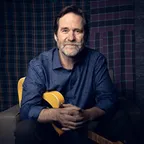
Jon has very big ears. He's an amazing guitar player, prolific singer-songwriter, award-winning bandleader, a brilliant producer and session player. In addition to his band, Jon is also Steely Dan's lead guitarist of choice, recording and touring with them since 1999. His pedigree is a mile long, and we've dreamed of working with Jon for a very long time. We're thrilled to welcome Jon to the family with his first TrueFire course, Ear IQ.

"In this edition of Ear IQ, Reactive Improvisation, we'll focus your ears on chords, note choices and improvise over chord changes. In the first section, I'll show you a straightforward and foolproof way to learn to play on chord changes. We'll listen to progressions, listen to all the notes against the chords, create collections of notes to use in our improvising, and explore various techniques to use those collections to create fresh sounding solos that nail the changes."
"This course shows how to listen and evaluate the notes for improvization on a individual song basis, not just relying on a specific scale. This way you have all of the best notes to work with which are customized to each song. This is another one of those courses I constantly come back to and get more out of with each viewing. Jon is a great teacher and I wish he had more courses available." - John Pejril, TrueFire Student
Keep your guitar close because you'll dive right in and play your way through the first section of the course -- no theory, no exercises as promised. Jon gives you his step-by-step approach for Reactive Improvisation:

The Reactive Approach
STEP 1 - Analyze The Harmony
STEP 2 - Evaluate The 12 Tones
STEP 3 - Create Collections
STEP 4 - Find Chord Tones
STEP 5 - Connect Chord Tones
STEP 6 - Target Notes and Chromaticism
STEP 7 - Neighbor Notes
STEP 8 - Add Expression

"In the second section, we'll apply everything we learned, in the first section, to five new sets of chord changes. We'll dig deep into each of these progressions, analyze the harmony, find the most useful collections of good sounding notes for each chord, and I'll talk about some strategies that might be most effective in each case. For example, we'll start with Caroline Yes, a 12 bar blues in A. Then we'll look at I'll Fix Your Wagon, where I'll show you how to apply different collections of notes on each chord. After that, we'll look at a complex progression - In Love With Love, which we'll divide into three manageable sections. I'll also demonstrate the collections for each song and give you an improvised performance with the backing track."

All of the key demonstrations, performances, and examples are tabbed and notated for your practice, reference and study purposes. You'll also get Guitar Pro files so that you can loop and slow any section down as you work through the lessons. Plus, Jon generously includes all of the rhythm tracks for you to work with on your own.

Ready to grow some BIG ears? Grab your guitar and get reactive with Jon Herington!

What you'll learn

  • Apply systematic chromatic analysis to any chord progression
  • Apply reactive improvisation to various musical contexts including blues and complex changes
  • Recognize how the harmonic universe shifts from chord to chord in a progression
  • Build note collections for each chord that reflect the underlying harmony
  • Develop ear-guided improvisation skills without heavy theory
Release date: 08/19/2015 • 2h 26m runtime
Start Course
Sample lessons
Analyze The Harmony
Analyze The Harmony
Step 1
Create "Collections"
Step 3
Target Notes and Chromaticism
Step 6
Caroline Yes
Caroline Yes
Analysis & Collections

What's included

23 lessons • 19 charts • 9 Jam Tracks

Ear IQ: Reactive Improvisation
Hi, I'm Jon Herington, and welcome to Ear IQ: Reactive Improvisation. Learning how to use your ears to guide the music you make is unquestionably the single most important skill you need to develop as a musician. The Ear IQ series is a natural and intuitive approach for developing big ears and powerful improvisational skills. No unnecessary theoretical baggage, no tedious exercises: you're going to listen, play, and learn to improvise your way through all the material in the course.

In this first edition of Ear IQ, Reactive Improvisation, we'll focus your ears on chords, note choices, and improvising over chord changes.

I've organized the course into two sections. In the first section, I'll show you a straightforward and foolproof way to learn to play on chord changes. We'll listen to the chords, create collections of the best sounding notes on those chords, and explore various techniques to use those collections to create fresh sounding solos that really nail the changes.

In the second section, we'll apply the Reactive Improvisation concept to five new sets of chord changes, and then solo over each one. For example, we'll start with Caroline Yes, a 12 bar blues in A. Then we'll look at I'll Fix Your Wagon, where I'll show you how to apply different collections of notes on each chord. After that, we'll look at a complex progression - In Love With Love, which we'll divide into three manageable sections.

For each progression, you'll get detailed charts and diagrams for the rhythm changes, and reference guides that illustrate the collections of notes to use for improvising over each chord. You'll get tablature and standard notation for key examples, all five of my solos, and you'll get all the jam tracks to work with on your own.

Ready to raise your Ear IQ? Grab your guitar and let's get started.
SECTION 1: The Reactive Approach
I get a lot of students who come to me because they're frustrated with their soloing on songs with chord changes that temporarily go out of the key. I’m going to show you a method of finding the notes that "work" best on any given chord in the context of a song, then work to apply that understanding to playing on changes. (The high art of playing on chord changes is the hallmark of the jazz tradition, of course, but the current pop/rock/R&B formats frequently have songs with the occasional chord that goes out of the key, and I've found a foolproof way to get students to develop strategies for negotiating those changes without requiring the serious extended study most aspiring jazz players undertake.) To do this, you're going to have to listen well and trust your ear.
Analyze The Harmony
If you want to improvise well on chord changes, it's critical to develop the ability to quickly analyze the harmony and memorize the form of a song's unique set of chord changes. This involves listening to every note, discovering the unique combinations of notes that are occurring at the same time at every moment of the song, and reducing all the details into the simplest possible manageable, memorizable form. If you can master this, the following sections will be much easier and more rewarding.
Evaluate The 12 Tones
The simplest, most foolproof way to discover the best sounding notes on any chord is to play each of the 12 notes against the chord, and react to each one. Does one note sound particularly beautiful or consonant against a chord? Does another note sound foreign, dissonant, or just wrong? Does one note sound particularly strong and powerful against the chord? Does another sound a little less strong, but interesting? To improvise well, and to prepare ourselves to make the most musical choices, it will help to explore the character and quality of each note against each chord, and to remember the feeling each note evokes against the sounding chord.
Create "Collections"
Creating "collections" of notes is one of the best strategies for playing on chord changes. After having prioritized and categorized each of the useful notes on a given chord change, it's possible to create many different combinations or "collections "of notes to use as raw material for improvising over a chord.
Find Chord Tones
Almost without exception, the “best” sounding notes are notes that occur in the chord. That's why it's important to develop the ability to quickly find chord tones on every chord in a song. This is a critical skill if you want to develop the ability to improvise in a truly fresh and free way, and not merely rely on practiced phrases and memorized ideas.
Connect Chord Tones
Now that you can find those chord tones, I can show you how to use your ear to discover the best sounding notes to use to create lines that connect one chord tone to another. Don't make assumptions! Listen to each chord in the context of the song - where it's coming from, and where it's going to, and choose your notes accordingly.

+ 16 more lessons

Start Course

Reviews

15 results

Osokin

Verified buyer

06/26/23

Develop Some 'Big Ears'!

Jon Herrington is a brilliant guitarist and musician, and in this great course he shares his practical approach as to how you can listen to each note in relation to a particular song form in order to subjectively evaluate its suitability. A great way to break out of the traditional scale/arpeggio approach to improvisation and develop some 'big ears'!

xqgjdjykcp

Verified buyer

05/16/23

Still going through the Fingerstyle course. Ear IQ had some good pointers on how to get better at listening and playing through notes to hear the difference and intervals relationships. I’ll be going back over the Ear IQ course to brush up on things, as that’s the case with most courses. Really enjoying the site..

AshTelecaster

Verified buyer

04/26/23

Analytical soloing approach

Jon Herington demonstrates how to analyze chords and progressions and to build solos off the important notes. This way your solos will sound cohesive to the music rather than just riffing away and hoping its good enough.

mikehilson

Verified buyer

11/13/22

Love this!

I’m a big fan of Jon Herington and I love both of his Ear IQ lessons. He’s a fantastic musician and a great educator. I highly recommend both lessons!

Uschmed

Verified buyer

06/06/21

Ear IQ: Reactive Improvisation

Like his other Ear IQ course this one is equally recommendable. Highly sophisticated guitarist who presents his material and approach in a very unassuming agreeable way. A lot to benefit from.

Stop searching. Start improving with All Access.

Try 14 days free. Cancel any time.