Kings of Blues & Rock Vol. 4: B.B. King

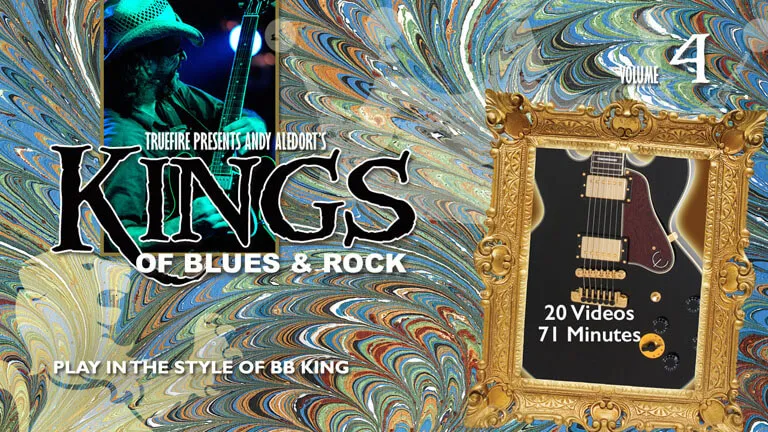
Examine the blues guitar style and soloing techniques of B.B. King

Marty FriedmanTommy EmmanuelSteve VaiEric GalesEric Johnson

Get this course and 1,000+ more with All Access

Try 14 days free. Cancel any time.

Purchase Individual Course for $9.99
Kings of Blues & Rock Vol. 4: B.B. King

About this course

Kings of Blues & Rock examines the playing styles of eight of the greatest and most influential blues and rock guitarists that have ever lived: Eric Clapton, Duane Allman, Jimmy Page, Johnny Winter, T-Bone Walker, B. B. King, Albert King and Freddie King. Kings of Blues & Rock is presented in eight Volumes, one volume for each artist.

This volume of video guitar lessons examines the playing style of B.B. King. Generally regarded as the "ambassador of the blues," Riley B. "B.B." King, born in Mississippi in 1925, has influenced more blues and rock guitarists than any other guitarist ever. With his immediately recognizable, vocal-like guitar solos, which cover the from sharp intensity to delicate beauty, classic one-of-a-kind vibrato and signature "B.B. box" phrasing, B.B. features his guitar, named Lucille, as the perfect foil for his expressive singing.

B.B. was influenced by blues players such as T-Bone Walker, Bukka White and Robert Jr. Lockwood, but also has an affinity for the jazz sounds of Johnny Moore, Django Reinhardt and Charlie Christian. Recordings such as "The Thrill Is Gone," "Everyday I Have the Blues," and "Sweet Little Angel" are prime examples of B.B.'s expertise; countless guitarists, such as Jimi Hendrix, Eric Clapton and Stevie Ray Vaughan, pointed to B.B.'s "Live at the Regal" album as one of the greatest blues albums ever recorded.

Kings of Blues & Rock will impact your playing in two distinctly different but equally important ways: first, you will learn how to play guitar in the style of BB King; more importantly, you will be able to take this information and use it to create your own style and sound in rock and blues guitar.

The playing styles of each artist is examined in a variety of musical settings designed around the artists' signature style and performances. All of the solo segments are played first at tempo, over practice rhythm tracks, and then presented slowly with thorough explanations. Practice rhythm tracks are provided so that you can practice the solo examples as presented and work on creating your own solo variations and ideas. Also discussed is the type of guitar and amp each artist favors, and the means by which they achieve their distinct, signature sound.

What you'll learn

  • Execute expressive string bends with controlled vibrato
  • Use rhythmic anticipation and syncopation for blues phrasing
  • Apply chromatic passing tones for melodic interest
  • Create melodic interest using only 4 notes through varied articulation and phrasing
  • Blend major and minor pentatonic scales seamlessly within phrases
Release date: 08/23/2007 • 1h 11m runtime
Start Course
Sample lessons
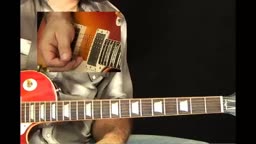
Every Day: Ex. 1a
Every Day: Ex. 1a
Breakdown
Every Day: Ex. 1b
Every Day: Ex. 1b
Performance
Every Day: Ex. 1b
Every Day: Ex. 1b
Breakdown

What's included

20 lessons • 10 charts • 5 Jam Tracks

Every Day
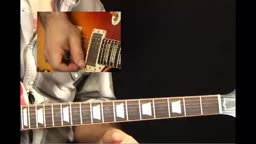
B.B. King is a master of blues phrasing, and the lines shown here, played over a medium uptempo swinging 12-bar blues in Bb, aptly illustrates his effortless, melodic style. The majority of the lines played here are based on the Bb minor pentatonic scale (Bb Db Eb F Ab), with brief reference on bar 10 to Bb major pentatonic (Bb C D F G). In bar 1, a Bb sounded on the high E string is immediately followed by an expressive slide up to Bb on the 11th fret of the B string; playing two consecutive root notes in this fashion is a B.B. trademark. Essential also to the B.B. King style is the inclusion of the "B.B. box," shown here in bars 4 and 5: as the name suggests, this is a "box" position (a fixed fretboard position) wherein the root note is positioned on the B string and is fretted with the index finger. From this root note "anchor," B.B. likes to play phrases made up of either the minor or major pentatonic scale, or a combination of both. Another signature element is the lick in bar 9, as a Cm7 arpeggio-C Eb G Bb-is articulated in swinging eighth notes over the ii (two minor) chord, Cm7.
Every Day: Ex. 1a
B.B. King is a master of blues phrasing, and the lines shown here, played over a medium uptempo swinging 12-bar blues in Bb, aptly illustrates his effortless, melodic style. The majority of the lines played here are based on the Bb minor pentatonic scale (Bb Db Eb F Ab), with brief reference on bar 10 to Bb major pentatonic (Bb C D F G). In bar 1, a Bb sounded on the high E string is immediately followed by an expressive slide up to Bb on the 11th fret of the B string; playing two consecutive root notes in this fashion is a B.B. trademark. Essential also to the B.B. King style is the inclusion of the "B.B. box," shown here in bars 4 and 5: as the name suggests, this is a "box" position (a fixed fretboard position) wherein the root note is positioned on the B string and is fretted with the index finger. From this root note "anchor," B.B. likes to play phrases made up of either the minor or major pentatonic scale, or a combination of both. Another signature element is the lick in bar 9, as a Cm7 arpeggio-C Eb G Bb-is articulated in swinging eighth notes over the ii (two minor) chord, Cm7.
Every Day: Ex. 1b
This example is presented in order to more clearly demonstrate the possibilities offered by utilizing the aforementioned "B.B. box" scale position. This entire 12-bar solo is played in the 11th-fret "B.B. box," moving from lines based on Bb major pentatonic (Bb C D F G) in bars 1-3, moving to Bb minor pentatonic (Bb Db Eb F Ab) when playing over the IV (four) chord in bars 5 and 6 (with a pickup into bar 5 at the end of bar 4). This is followed by a return to Bb major pentatonic for the remainder of the solo.
Every Day: Ex. 1b
This example is presented in order to more clearly demonstrate the possibilities offered by utilizing the aforementioned "B.B. box" scale position. This entire 12-bar solo is played in the 11th-fret "B.B. box," moving from lines based on Bb major pentatonic (Bb C D F G) in bars 1-3, moving to Bb minor pentatonic (Bb Db Eb F Ab) when playing over the IV (four) chord in bars 5 and 6 (with a pickup into bar 5 at the end of bar 4). This is followed by a return to Bb major pentatonic for the remainder of the solo.
Rock Me
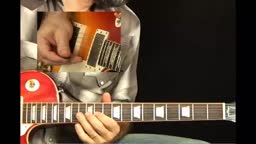
This excerpt is played along the lines of the B.B. King classic, "Rock Me Baby," one of the most influential blues ever recorded, covered by such blues rockers as Jimi Hendrix, Jeff Beck and Robin Trower. The groove here is an easy-swinging shuffle, played in C. Though the most prevalent scale used here is C minor pentatonic (C Eb F G Bb), the use of the major 3rd, E, is essential to the sweet, melodic sound of the improvisation. Great touches are the bit of ascending chromaticism (notes half-steps apart) in bar 4, and the sliding and hammered double-stops (two-note chords) in bars 3 and 12.
Rock Me: Ex. 2a
This excerpt is played along the lines of the B.B. King classic, "Rock Me Baby," one of the most influential blues ever recorded, covered by such blues rockers as Jimi Hendrix, Jeff Beck and Robin Trower. The groove here is an easy-swinging shuffle, played in C. Though the most prevalent scale used here is C minor pentatonic (C Eb F G Bb), the use of the major 3rd, E, is essential to the sweet, melodic sound of the improvisation. Great touches are the bit of ascending chromaticism (notes half-steps apart) in bar 4, and the sliding and hammered double-stops (two-note chords) in bars 3 and 12.
Rock Me: Ex. 2b
Here's another solo pass over the "Rock me Baby"-type groove, and in this example I begin with a pickup into the 12-bar form, once again sounding a root note, C, on the high E string, followed by a quick slide up to the same C note fretted on the B string at the 13th fret. This positional shift affords a nice stinging vibrato on the root note that falls right on beat one of the start of the form. This maneuver also sets up the subsequent series of riffs that are played higher on the fretboard. This solo also makes use of ascending chromaticism, found at the end of bar 4 with the use of a 4:3 ratio (four notes divided evenly over three eighth-notes in 12/8).

+ 13 more lessons

Start Course

Reviews

20 results

psalm119

Verified buyer

07/13/22

Teacher is excellent , i have been follow Others Andy instructional videos years Ago and he is one of the best , guitar player , teacher around ,


pipo76

Verified buyer

07/01/22

Awesome. Always wanted to dig into B.B.'s style and bag of tricks and this course just nails it. Great fun and very, very accurate. My playing really took off with these lessons!!!

hansjohn

Verified buyer

07/25/21

Great lessons about the gentleman player of the blues.

krvavi

Verified buyer

07/15/21

Ridin' with King

All great guitar player started with learning from the old master. So it have to be right way to improve your playing. And where should you start if you wanna play the blues? Start with the King of the blues! Great course for all blues player, thank you for this one

Dean

06/23/21

Great for Improving your Phrasing and Solo Vocabulary

I love all of Andy's lessons. I love his style of guitar and his insight. I have been spending a lot of time studying BB KIng solo style and licks in order to improve my own and I found Andy's lessons have been extremely helpful. He adds his own aggressive style to BBs phrasings in a way that, for me at least, helps me see how I can apply them to my own style. Helps me own them myself. I found that most lessons on BB are somewhat vanilla in flavor and get boring - not these!

Stop searching. Start improving with All Access.

Try 14 days free. Cancel any time.