Every culture has its folk music; melodies to celebrate with, rhythms to dance to, and songs that live on forever preserving the culture’s history and personality. Celtic music may very well be one of the purest and richest forms of folk music across the entire history of music.
Back in the day, if you hailed from the western extremities of Europe, you had few luxuries to look forward to after your long hard days making a life for yourself and your family. But the moment your ears caught wind of a few fiddles, flutes, pipes and tin whistles busting out a Celtic tune, all your troubles evaporated as your feet pulled your bone-tired body from the chair to the dance floor.
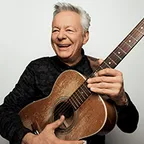
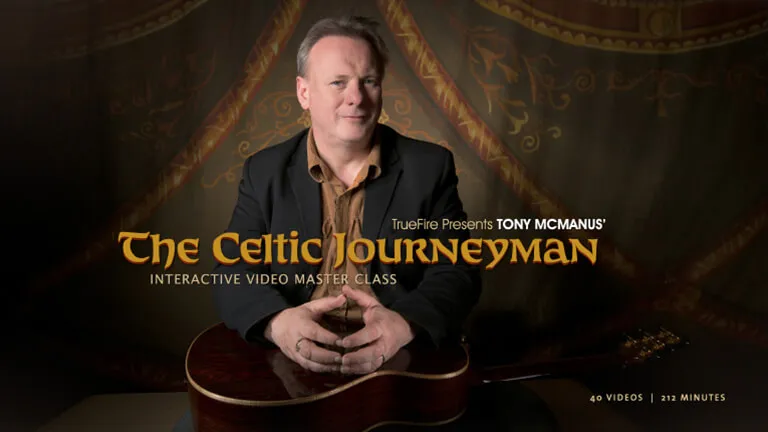
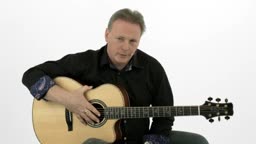
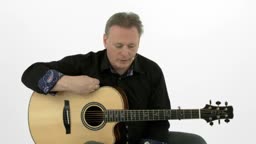
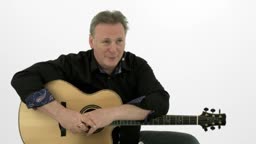
Guitar is not ordinarily associated with Celtic music. And there’s certainly nothing ordinary about Tony McManus. Yet, the music that sings from his six strings is indisputably Celtic to its roots, and at the same time, extraordinarily fresh, contemporary and infectious.
Fair warning: If you happen to come within earshot of a McManus live performance, prepare to be spellbound where you stand for the duration of the concert. John Renbourn calls Tony McManus, “the best Celtic guitarist in the world,” and you’d be hard-pressed to find anyone that would disagree with that statement.
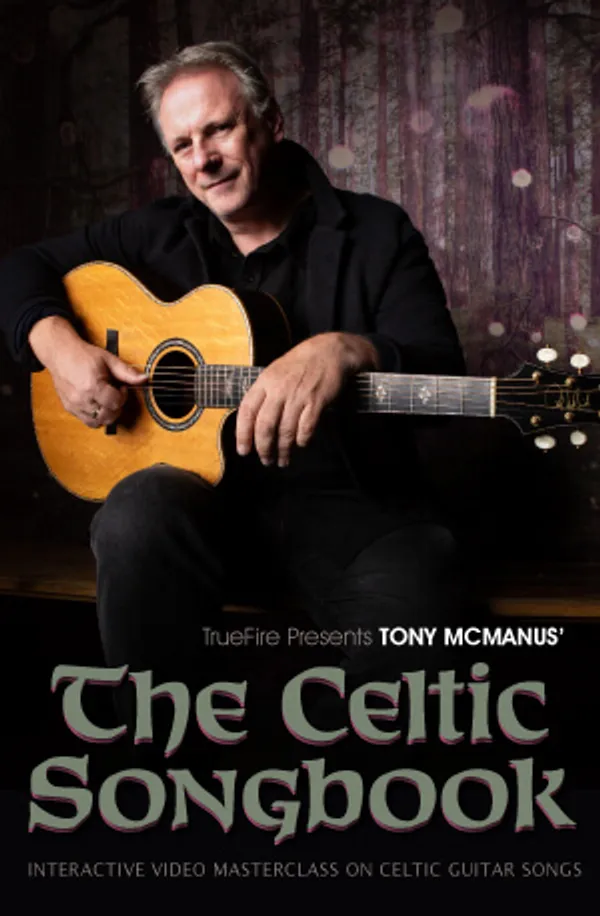
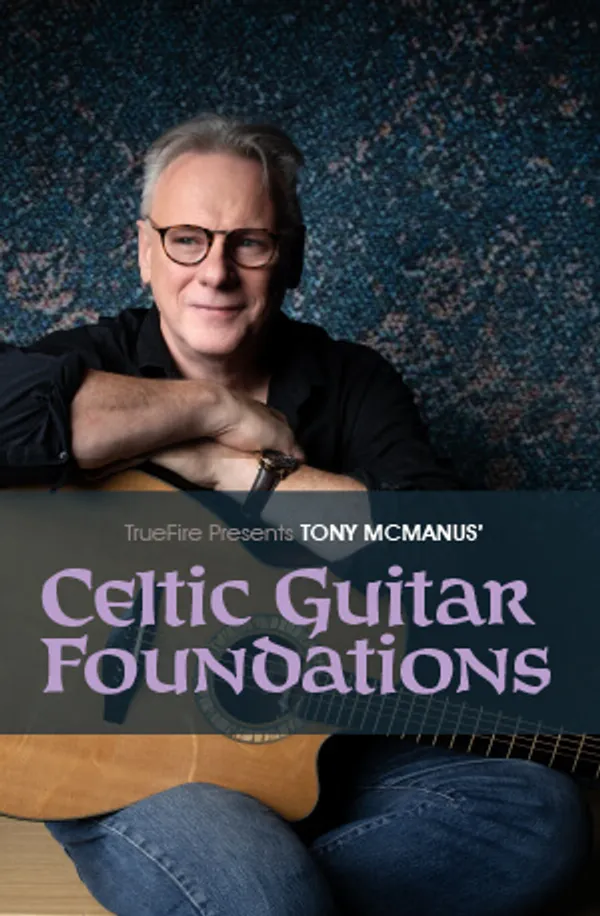
We’re so proud and excited to welcome Tony to the family of TrueFire educators! We asked Tony to prepare a curriculum that introduces acoustic and fingerstyle players to the key concepts and techniques that underlie Celtic guitar music, and also provides a starting repertoire of accessible Celtic tunes. The Celtic Journeyman over-delivers on every count and we’re confident you’ll likewise agree.
“We’re going to be looking at the real nuts and bolts Celtic dance music that got, and still gets people through the day. The guitar in this music is still finding its own way. I grew up in Scotland listening to a lot of Irish music and have been grappling with two obsessions - one being the guitar itself, the instrument we all love - and the other being the traditional music itself.”
Tony organized The Celtic Journeyman into two sections. The first section presents a toolkit of 17 essential concepts; Intro to Dropped D Tuning, Drop D In Ballad Arrangements, Arpeggiating Chords, Jig Time, Scale Harmonizing, Arranging Melodies, Intro to DADGAD Tuning, Harp-Like Scales In DADGAD, Melodies with Open Scales , The "Celtic" Mode, Left Hand Techniques, Triplet on Strings 1 & 2, Triplet With Thumb, Frailing, Using a Capo, Common Celtic Rhythms and Tonal Considerations.
In the second section, Tony demonstrates all of key concepts and techniques by sparking up your repertoire with six tunes…
“We’re going to look at six significant Celtic tunes that illustrate the depth and scope of the genre; an Irish ballad called The Accursed Kerryman; a Scottish fiddle tune, Tullochgorum; a slow arrangement of an Irish reel, The Old Bush; a march from Brittany in DADGAD tuning; an Irish jig, Out on the Ocean; and finally a four part march, The Heights of Cassino, from the Highland bagpipe tradition that sums up all of the ideas presented in the course.” Tony also includes a bonus lesson he refers to as, “The laziest jig ever!’
Tony will first perform the tune at tempo, then break it down referring back to the key concepts and techniques, and then finish up with a slow run-through of the piece. All of the performances are tabbed and notated, plus you’ll get Guitar Pro files so you can loop and slow down any section as you work through it.
The Celtic Journeyman is a masterpiece on so many levels. You’ll find yourself just watching the performance videos over and over again just for the sheer pleasure of it. When you’re able to break the spell and actually dig in to the lessons, you’ll find Tony’s teaching brilliantly clear, accessible and inspiring. Plus, he’s so likeable you’ll just plain enjoy every minute you spend in the shed with him.
Put the pipes, fiddle and tin whistles away — grab your guitar and lets get Celtic!
What you'll learn
Execute complex hammer-on and pull-off combinations to create momentum
Use grace notes effectively in Scottish traditional style
Create variations on traditional melodies
Apply dissonant bass notes for harmonic color
Understand and execute authentic strathspey rhythm
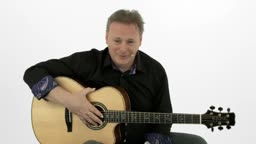
Hi, I’m Tony McManus and welcome to “The Celtic Journeyman”
Celtic music is basically the traditional music of the western extremities of Europe- the coast of Scotland and Ireland, also Wales, northwest France (Brittany) and northwest Spain (the provinces of Galicia and Asturias). We are going to be looking at the real nuts and bolts dance music that got, and still gets people through the day.
The guitar in this music is still finding its own way. I grew up in Scotland listening to a lot of Irish music and so have been grappling with the two obsessions- one being the guitar itself- the instrument we all love- and the other being traditional music itself. I’ve been trying to find a role for our instrument in that music.
I’ve divided the course into two sections. The first being a toolkit of essential concepts; we’re going to look at ornamentation with each hand, we’re going to play a scale across the strings and more. Hopefully these ideas will unlock some doors for you.
In the second section we’re going to look at six significant tunes that illustrate some the aspects of Celtic music – the depth and scope of the genre including; an Irish ballad air “The Accursed Kerryman”, a Scottish fiddle tune “Tullochgorum”, a slow arrangement of an Irish reel “The Old Bush”, a march from Brittany in DADGAD tuning, an Irish jig “Out on the Ocean” and finally a four part march “The Heights of Cassino” from the Highland bagpipe tradition that sums all the ideas presented in the course. For each performance study in addition to playing the tune I’ll break it down and refer back to concepts introduced earlier in the course and finish up each performance with a slow run through of the tune.
In addition to the audio you’ll get for each tune both standard notation and tablature so you can take as much time as you need to get these tunes under your fingers.
So, if you’re ready for your celtic journey to begin grab your guitars and let’s play.
In this first section we’re going to introduce some essential ideas and break them down into small manageable chunks. We’ll look at rhythmic ideas- different tune types; jigs, reels, marches, strathspeys etc. We look at different tunings- a major aspect of my approach to this music. I don’t often play in standard tuning.
In this course we’ll use Dropped D and DADGAD tunings- maybe others in future courses.
We’ll look at left and right hand ornamentation; grace notes, triples with ring, middle and index fingers, triplets with the thumb on wound strings- a very unusual idea which I hope you jump on!
We study each concept in turn and give you enough to get going before moving onto the next idea. Let’s look at these essential concepts.
Let’s talk about dropped D tuning. We begin in Standard- the tuning everyone knows, the tuning I like everyone else started in, learned all my fist position “cowboy’ chords. As a kid I was listening to a lot of Irish music and playing along and finding standard a little unsatisfying in the lower end because the Irish pipes are centred around the key of D. The drones are in D in three octaves. A standard D chord has as its lowest note an A, the fifth, not the root D. You can hook the thumb around and play an F# on the bottom but that’s a 3rd not the root. To get a root I tuned the low E down to D....hardly rocket science! It not a huge alteration from standard but it does change things. First of all there’s this great low D I use to anchor accompaniment to Irish and Scottish music. And having done this so long ago it’s become my “standard” tuning. I usually start the day in dropped D. I use it for accompaniment, for flatpicking jigs and reels (maybe for another course). I also use it for arranging tunes fingerstyle- the subject of this course. It’s a very rich sound!
It has a feature common to many tunings I use. On the bottom we have D A D- in terms of the key of D that’s root, fifth, root. That pattern is also found in DADGAD tuning which we talk about later.
So that’s Dropped D tuning- we’ll look at some vocabulary in this tuning and arrange a ballad or two.
Let’s look at how we use this tuning in arrangements. The key of D is very much like “party central”- it’s not like standard where you can access lots of important keys very easily. It’s a very versatile tuning. The “key universe” in Celtic music is narrower- there are very few tunes in Bb, Eb or C# for example. So in tuning the bottom string down to D we have narrowed our focus considerably. So it’s useful to have some vocabulary in this tuning.
Your “cowboy D” chord now has an extended bass and if want a D chord with no 3rd you have a D power chord with roots and fifths- it’s just Ds and As. There are various voicing of the D chord from where you can get other chords very simply- Dsus2, D maj7, D 7, D minor. So it’s useful to have these chord positions at your fingertips as they will crop up as we arrange tunes.
One of the main attractions is the simplicity of these melodies. It’s not Mahler or Coltrane but it does speak very emotionally and very directly. What makes them speak is the ornamentation so it’s useful to think of the melody usually occurring on the top three strings and the rest is arpeggiating chords around the melody.
I just made that up! I’m just playing a simple melody on top and using the rest of the strings to support. So the chord positions above are going to be important- so have them ready!
When I invented that mundane little arrangement a few minutes ago what I was illustrating is the idea of carrying a melody on the top two strings maybe. There’s a bass line on the bottom string and you have a whole series of strings in between so what I tend to do is arpeggiate the chords and the idea is to fill out the arrangement. We are trying to orchestrate a relatively simple melody with one instrument. One approach is to have arpeggios between the bass line and the melody.
You need to be aware of not confusing the listener. They have to know that that is the melody note, that is the bass line and, in between, be aware of the dynamics. Using this technique you don’t want to have everything at the same level. It’s not a harpsichord- there are dynamics involved. You don’t want arpeggios to fill out to the extent that it crowds out the melody.
I want to introduce you to a concept that is fundamental to Scottish music, Irish music, to celtic music in general and that is: The Jig. The defining property is the time signature 6/8. I have a lot of experience teaching bluegrass players and in that music there seems to only be two time signatures- 4/4 and the Tennessee Waltz....so it’s great fun introducing people who play in straight fours to 6/8.
Jig rhythm is quite precise. You have 6 beats in the bar and you’d emphasis beat 1. I often ask students which other beat to emphasis and the innate answer is to split things evenly and say “1 and 4”. That splits the 6 into two groups of three; 1-2-3, 4-5-6. But if you’re strumming “4” is an upstroke which is an odd thing to be emphasising. So I naturally fall into the pattern of emphasising 1 and 3. So that to me is jig rhythm and it occurs throughout Scottish music both the fiddle and bagpipe tradition, throughout Irish music- there are reels and then there are jigs. If you look at the celtic music of Spain, the “muniera” is really just jig rhythm. In Brittany it’s less common but the Dérobée is jig rhythm. So this jig time is a fundamental concept if you want to get into the music of the Celtic countries.
An important aspect of learning any music is playing scales and it can be as tedious as it is fundamental but it’s part of the process.
What I’d like to do is combine two of the ideas above- the jig rhythm and arpeggiating chords. So let’s arpeggiate chords, but in jig time. There’s a D power chord and to play that in jig time, hear the rhythm? What I want to do is slow that down and think about how you would play a scale in that pattern- a scale consisting of chords. The next chord is an E minor- with or without the thumb hooked over. Then a D/F# which is a D chord with an F# in the bass. Then G and then A or and Asus2 with a B in the chord. Then a B minor or Bm7 and then A/C# bring us back to D.
Let’s look at these in sequence. What I’m trying to get to is that these chords and the links between them will crop up in arrangements of melodies and ballads in particular. So let’s combine that with the notion of the jig rhythm
You can mix the picking pattern. It doesn’t have to be “root, 3rd, 5th root”. You can mix it up. It’s still jig rhythm.
Another thing I was doing there instinctively is to lean on some notes. Dynamics! You don’t want every not be the same volume. You don’t just want to play a melody you want to articulate the melody so certain notes have to be front and centre. As you do this you can choose which notes you want to lean on. One more instinctive thing- I was not just playing the chords mechanically, I was linking then sometimes through the bass, sometimes chromatically, sometimes through hammer ons.
So, that’s a way of playing a scale that teaches you a couple of things- one is jig rhythm 6/8, the other is these chord shapes that are going to be used a lot.
you need to manage DADGAD a little
There is a gap between lessons and songs to manage them.
Lot of work ahead.
But it’s interesting and Tony is amazing
Thx
M
mikecee
Verified buyer
01/18/25
The legend Tony McManus teaches Celtic Guitar
Was excited to find the legendary Mr Tony McManus teaching Celtic guitar technique on True Fire. As well as being a legend player, he is also an awesome teacher. Do not hesitate to purchase any of his teaching courses, you will not be disappointed. I am just a hobby guitar player and his teaching style is great for all levels, you will learn some awesome tunes whatever your playing ability is.
S
Shifter
Verified buyer
12/12/24
My True Fire Experience.
I find Tony's approach to Celtic music delightful. I have been interested in learning this style for a while. It takes you to another world.
R
Robsn
Verified buyer
03/15/22
So happy I finally purchased this course.
I was always drawn to the Celtic music and Tony McManus explains this style of music in such a well and fun way!
Thank you very much Mr. McManus:)
R
ROYER
Verified buyer
01/16/22
Soul refiner
Tony is a person who inspires serenity. From the start, we want to dive into his Celtic universe! His teaching method is well structured and progressive and makes you want to play for hours on end (good nights of sleep guaranteed!) Thank you for these moments of happiness!
MR