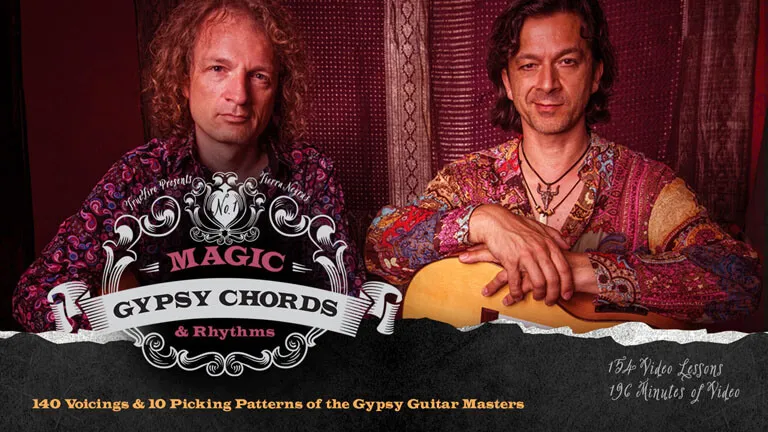
Magic Gypsy Chords & Rhythms

140 voicings & 10 picking patterns of the gypsy guitar masters

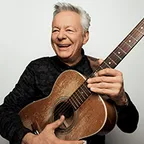
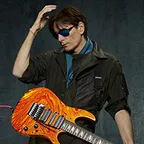
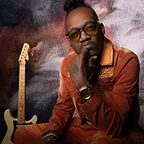
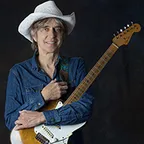
Marty FriedmanTommy EmmanuelSteve VaiEric GalesEric Johnson

Get this course and 1,000+ more with All Access

Try 14 days free. Cancel any time.

Purchase Individual Course for $14.99
Magic Gypsy Chords & Rhythms

About this course

Derived from Spanish mythology, the term ’duende’ refers to a heightened state of emotion in response to a piece of art or music. “El duende is the spirit of evocation. It is what gives you chills, makes you smile or cry as a bodily reaction to an artistic performance that is particularly expressive.”

The authenticity and soulfulness of blues, jazz, folk and especially gypsy music is what triggers duende in the hearts of minds of their audiences. As a student of guitar, you’ve likely already been exposed to blues, jazz and folk music, all of which have influenced all forms of popular music from rock to pop and everything in between.

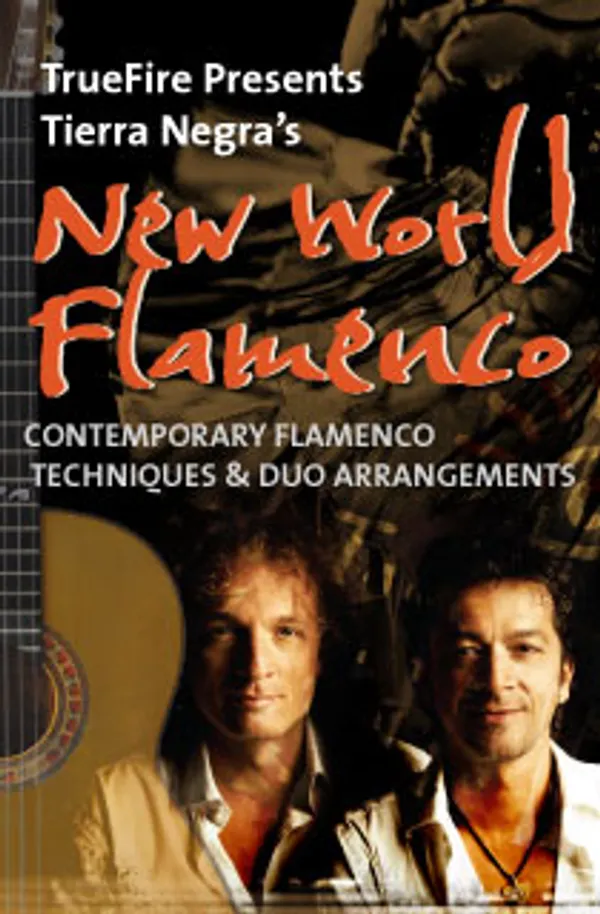
Thanks to Raughi Ebert and Leo Henrichs, the guitar duo known as Tierra Negra, you are now just a click away from a timeless and creative resource for guitar players; Magic Gypsy Chords and Rhythms. While rooted in the history, music and culture of the gypsies of Andalusia, these “magical” chords, progressions and rhythms have also influenced a wide range of contemporary latin, rock, jazz, dance, singer-songwriter and pop music.

In a way, Magic Gypsy Chords and Rhythms is 25 years in the making. That’s how long Raughi and Leo have been studying the history, culture and music of the gypsies. They’ve traveled the world to meet and study with the gypsy masters, documenting their specific chord voicings, fingerpicking patterns, techniques and subtle nuances of the style.

For this curriculum, Raughi and Leo selected 140 of their favorite chord voicings and 35 of the most versatile picking and rhythmic patterns for you to learn, reference and call on whether you intend to play modern interpretations, compose original music or perform traditional gypsy Flamenco — either way, this resource is priceless.

The material is presented in an interactive format designed to get you up and running quickly without having to struggle through boring exercises or tedious theory; you will play your way through the course and you can do so on any electric or acoustic guitar you own.

The course is organized into 10 sections where each section features a particular gypsy “cadence,” aka chord progression, in a different key. Each of the 10 sections also feature four variations of chord voicings and rhythmic patterns for the featured progression.

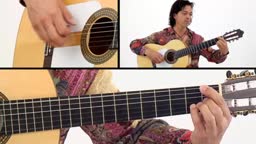
Within each variation, Raughi and Leo will demonstrate a performance example and then provide a detailed breakdown of the techniques, chord voicings and fingerpicking patterns being used.

You’ll practice all of the progressions, patterns and variations with Raughi and Leo using the slow and at-tempo playalongs that they’ve also included in ALL of the sections for ALL of the variations. Everything is tabbed and notated, plus you’ll get all of the playalong click tracks to practice with on your own.

Your El duende awaits!

“To help us seek duende there is neither map nor discipline. All one knows is that it burns the blood like powdered glass, that it exhausts, that it rejects all the sweet geometry one has learned, that it breaks with all styles.”
- Federico Garcia Lorca, Poet

What you'll learn

  • Master 140 gypsy chord voicings across 10 different progressions
  • Use as a reference for phrasing and dynamics
  • Observe a complete performance of Variation 1
  • Learn 35 variations of picking patterns and progressions in different keys
  • Develop percussive and rhythmic strumming techniques specific to gypsy music
Release date: 12/18/2013 • 3h 14m runtime
Start Course
Sample lessons
B Minor Progression
B Minor Progression
Overview and Picking Pattern
Performance: Variation 1
B Minor Progression - V1 Performance
Breakdown: Variation 1
B Minor Progression - V1 Breakdown
Performance: Variation 2
F# Minor Progression - V2 Performance

What's included

154 lessons • 150 charts • 70 Jam Tracks

Magic Gypsy Chords and Rhythms
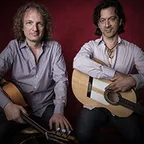
Performing as the guitar duo Tierra Negra, Raughi Ebert and Leo Henrichs have double-handedly sparked a "New World Flamenco" craze amongst guitar players and enthusiasts the world over. Clear symptoms of this particular craze are involuntary tapping of feet, entranced urge to dance, ear-to-ear grins, and an irresistible pull to their merch table in search of CDs and guitar lessons covering this new and exciting modern take on flamenco. Sadly, no instruction was readily available. Until now.

Over two years in development, this hands-on interactive Magic Gypsy Chords and Rhythms video course gets you up and running more quickly, more effectively, and in a far more entertaining manner than anything we've seen before. You will play your way through the course without having to struggle through boring exercises or tedious theory; and you can do so on any guitar you own, although a nylon stringed acoustic instrument would certainly be ideal. Magic Gypsy Chords and Rhythms serves two types of students; it's an ideal study program for any student who wants to delve into the world of flamenco or world music by learning some of the traditional rhythm techniques and developing a strong repertoire of gypsy chord progressions that they can perform. But, it's also very appealing for blues, rock, jazz, pop and acoustic players who are more interested in flavoring their own sound with this very compelling, harmonic and rhythmic world vibe.
Progressions, Keys & Capo
In this course we offer you a collection of famous and beautiful flamenco chords and progressions. We have restricted ourselves in this tutorial to our personal favorite chords and progressions.

It's an impossible task to record all popular flamenco chords. Different styles and eras have their own chord voicings. In earlier times, regional differences influenced chord selection. Modern flamenco is strongly influenced by jazz, using many typical jazz chords. Today, masters such as Paco de Lucia and Vicente Amigo, cross all stylistic boundaries to extend the harmonies and rhythms in their music.

The Progression/Cadence

The flamenco term for a chord progression is also “Cadence.” In classical music that refers to a phrase at the end of a piece, but in flamenco, a cadence is a chord progression that generally repeats.

We have made a choice of ten Spanish progressions from the whole range of flamenco styles, such as Taranta, Solea, Buleria, and Rumba, etc.

We will explain them to you in the same key as they were originally used in traditional flamenco by accompanying guitarists. Later, when the guitar became a solo instrument, these typical keys were the basis for instrumental guitar compositions.

In flamenco the key is determined by the style and the character of the song. For each chord voicing we offer you a choice of variations in each progression. We have described the character of each progression with a short sentence.

Most of the progressions in this course are based on the popular flamenco cadence with the classical progression 4-3-2-1. We name the key of a cadence after the first minor chord used (4-3-2-1), and also after the Phrygian chord (4-3-2-1).

The Capo

Many prejudices exist against guitarists using a capo. Among people who don’t know better, capos are for people who can´t play their instrument. The truth is far beyond. To understand the meaning of the capo we have to go back in history.

It would be hard to imagine traditional flamenco music without capos. In the past, flamenco guitarists were less soloists than accompanists for singers and dancers. Some singers had a higher voice, some had a lower voice. The capo allowed the guitarist to adjust to the individual range of a singer’s voice within one second.

Using a capo allows guitar players to transpose the key of a musical piece without having to relearn the fingerings. In flamenco music it´s essential to keep the same chord voicings no matter where the capo is placed. With a capo you can play any song in almost any key. It is possible to use chord voicings with open strings in any key and any position on the fret board. Especially in old flamenco guitar recordings you can hear very often that the capo is placed in very high positions, up to the 5th or 7th fret. Certain keys have a very charming character here.

All you hear is a wall of great sounding rhythm guitars and beautiful cascades of voicings and overtones.
B Minor Progression
Place the capo at the 2nd fret.

This is one of the most beautiful cadences of all and very easy to play. Because of the open strings, the chords sound very colorful and immediately transport you under the blue Mediterranean sky. Variation 1 is especially easy to handle for beginners.

With these chords you capture the gypsy lifestyle in a very authentic way. Flamenco feeling guaranteed! To play this rumba arpeggio pattern, I'm going to use my thumb, index, middle and ring fingers, which are referred to in both flamenco and classical guitar by the letters of their Spanish names:

(p) = pulgar = thumb

(i) = indice = index finger

(m) = medio = middle finger

(a) = anular = ring finger

It’s a progression that will always lift your spirits.
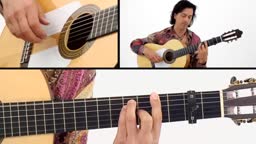
Performance: Variation 1
Put the capo in the second position and start with variation 1.

The first chord is in the same shape as a 2nd position B-minor, but the capo makes it sound in the key of C#-minor.

Play the second chord, the A, by using the open strings. For the third chord mute the A-string here with your first finger, and you’ve got the G major chord with the open B- and E-string. Until here, the 3rd finger rests on the fret board on the D-string. The last chord is a F# 7/11 with open strings. For the third and fourth chord you have to touch the low E-string in the bass.

This arpeggio pattern in combination with this typical flamenco chord progression creates almost a little solo piece.
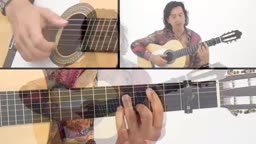
Breakdown: Variation 1
Put the capo in the second position and start with variation 1.

The first chord is in the same shape as a 2nd position B-minor, but the capo makes it sound in the key of C#-minor.

Play the second chord, the A, by using the open strings. For the third chord mute the A-string here with your first finger, and you’ve got the G major chord with the open B- and E-string. Until here, the 3rd finger rests on the fret board on the D-string. The last chord is a F# 7/11 with open strings. For the third and fourth chord you have to touch the low E-string in the bass.

This arpeggio pattern in combination with this typical flamenco chord progression creates almost a little solo piece.
Slow Playalong: Variation 1
Put the capo in the second position and start with variation 1.

The first chord is in the same shape as a 2nd position B-minor, but the capo makes it sound in the key of C#-minor.

Play the second chord, the A, by using the open strings. For the third chord mute the A-string here with your first finger, and you’ve got the G major chord with the open B- and E-string. Until here, the 3rd finger rests on the fret board on the D-string. The last chord is a F# 7/11 with open strings. For the third and fourth chord you have to touch the low E-string in the bass.

This arpeggio pattern in combination with this typical flamenco chord progression creates almost a little solo piece.
At Tempo Playalong: Variation 1
Put the capo in the second position and start with variation 1.

The first chord is in the same shape as a 2nd position B-minor, but the capo makes it sound in the key of C#-minor.

Play the second chord, the A, by using the open strings. For the third chord mute the A-string here with your first finger, and you’ve got the G major chord with the open B- and E-string. Until here, the 3rd finger rests on the fret board on the D-string. The last chord is a F# 7/11 with open strings. For the third and fourth chord you have to touch the low E-string in the bass.

This arpeggio pattern in combination with this typical flamenco chord progression creates almost a little solo piece.

+ 147 more lessons

Start Course

Reviews

12 results

riviltd

Verified buyer

12/18/24

Good
DrHMark

Verified buyer

01/31/23

Great sounds from Spain!

Great variety of unique and haunting Spanish chords. Taking it slow to achieve clear sounding results. My progress is slow but steady thanks to going at my own pace.

Michael C.

08/12/21

Good course. I enjoyed learning the different picking and strumming patterns and the different chord extensions and substitutions. My only complaint is that all the chord progressions are essentially the same just in different keys and with different extensions. ie: All the chord progressions are essentially i VII VI V just in different keys and slightly different variations on the chords. I'm sure there are different progressions used in flamenco music as well as chords beyond the major and minor so focusing on just one progression limits the applications one can use this for and adding some other progressions would make the course more interesting.

wholmer

01/04/21

So glad I got this course

I saw a russian concert on youtube and loved the gypsy vibe. Then I saw this class ans thought it was meant to be. It was! I really like these guys, they made the class fun and surprisingly easy. I have since added flashes of flamenco to my standard blues playing and it always gets a great response.

FrankHammer

Verified buyer

11/27/20

Great course. It is easy to understand and gives new inspiration. For me it is most important that I get ideas for my own songwriting, and in every single chord progression I learn, a new song idea is included. I will never become a master of Gypsy Guitar, but I will be able to surprise my audience with ideas that are not too common in simple one-two-three pop music :-) The results come very quick and easy since the technics of the progressions are not too difficult. And of course you get the perfect service with tabs and everything you need to understand how to play the progressions...

Stop searching. Start improving with All Access.

Try 14 days free. Cancel any time.