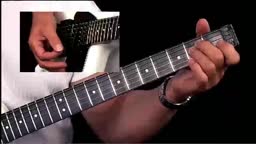
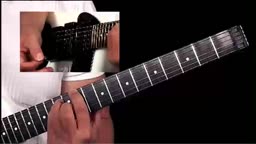
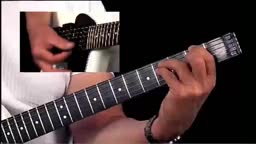
We all learned our fair share of "open string" chords when we first picked up the guitar but most players gravitate pretty quickly to "barre" chords and other movable chords. Some of those chord forms also take advantage of open strings in certain positions on the neck where those open strings complement the harmony of that particular chord. There's nothing much sweeter than a beautiful-sounding, ringing open string chord placed perfectly in the context of a tune or improvisation.
Open strings are one of the very special "guitaristic" qualities of the instrument, yet even advanced players usually have a limited open string chord vocabulary at their command. Open String Universe takes you to school on dozens and dozens of open string chords and movable shapes. And true to form, TrueFire's educational guru, Brad Carlton doesn't stop there - he also covers best practices for soloing and improvising over open string chords.
All in all, everything you need to know about playing and soloing over open string chords is covered extensively across the following sections and video segments:
Open String Chords: E Major, F Major 7#11, F#7 add4, G6, Ab add#9#5, A add9, Bb add b9 #11, B add4 (11), C Major 7, C#7#9, D 6/9, Eb add#5b9, E Minor, F Minor Maj7#11, F# Minor 7/11, Gb add#9, G# Minor add#5, A Minor add9, Bb Minor add9 b5, B Minor Add4 (11), C Major 7 #9, C# Minor 7, D Minor 6/9, Eb Minor add b6 b9
I have titled this course "Open String Universe" because the realm of information which combines open strings with fretted notes is astronomical.
As guitarists we all utilize moveable shapes which allow us to access tonal snapshots in any key. If we include moveable formations with static open strings the harmonic and melodic implications change with each fret shift.
In these 24 lessons we will take basic E or Em open string chord forms and move them up the neck. The first and second strings will remain open and therefore each position up the neck will present a different harmony.
My goal is to give you a comprehensive analysis of each chord voicing and the scales (modes) that are applicable to each sonority.
The chord presented in this lesson is the E form in open position. The voicing is as follows from lowest to highest in pitch: Root, 5th, root, 3rd, 5th, root.
There are four common scales(modes) that are applicable to this voicing. They are ionian: 1-2-3-4-5-6-7, lydian: 1-2-3-#4-5-6-7, mixolydian: 1-2-3-4-5-6-b7, and overtone: 1-2-3-#4-5-6-b7.
Notice how the chord tones (1-3-5) constitute a subset of each of these scales. Since the ionian, lydian, mixolydian and overtone scales are in the heptatonic category (seven note scales), there are four color tones available to the soloist. They are the 9(2), 11(4) or #11(#4), 13(6), and 7.
Your scale choice may be clearly defined by how this E chord functions, so analyze the progression you are using it in. If it is functioning as a static chord, consider any other melodic or harmonic parts that may be occuring in the music.
This chord voicing is achieved by moving the lowest four voices of the open E form up 1 fret. The first and second strings(voices) remain open and thus extend and/or alter the basic major chord which is always occuring in voices 6 through 3.
The voicing for this chord is as follows (from low to high in pitch):
Analyzing this chord against the 6th voice (as the root) reveals the name as Fmaj7#11.
The applicable scale(s) for soloing over this chord would be:
F Lydian 1 2 3 #4 5 6 7 F G A B C D E
This chord voicing is achieved by moving the lowest four voices of the open E form up 2 frets. The first and second strings(voices) remain open and thus extend and/or alter the basic major chord which is always occuring in voices 6 through 3.
The voicing for this chord is as follows(from low to high in pitch): 6th string(voice) 1
Analyzing this chord against the 6th voice (as the root) reveals the name as F#7add4(11).
The applicable scale(s) for soloing over this chord would be:
F# mixolydian 1 2 3 4 5 6 b7 F# G# A# B C# D# E
This chord voicing is achieved by moving the lowest four voices of the open E form up 3 frets. The first and second strings(voices) remain open and thus extend and/or alter the basic major chord which is always occuring in voices 6 through 3.
The voicing for this chord is as follows(from low to high in pitch):
Analyzing this chord against the 6th voice (as the root) reveals the name as G6.
The applicable scale(s) for soloing over this chord would be: G ionian 1 2 3 4 5 6 7 G A B C D E F#
G lydian 1 2 3 #4 5 6 7 G A B C# D E F#
G mixolydian 1 2 3 4 5 6 b7 G A B C D E F
G overtone 1 2 3 #4 5 6 b7 G A B C# D E F
This chord voicing is achieved by moving the lowest four voices of the open E form up 4 frets. The first and second strings(voices) remain open and thus extend and/or alter the basic major chord which is always occuring in voices 6 through 3.
The voicing for this chord is as follows(from low to high in pitch):
Analyzing this chord against the 6th voice (as the root) reveals the name as Abadd#9#5.
The applicable scale(s) for soloing over this chord would be:
Ab Super locrian Ab Bbb Cb Dbb Ebb Fb Gb 1 b2 b3 b4 b5 b6 b7
Notice that the super locrian mode does not contain a natural 5 which is occuring in voice 5 of the chord.
This chord voicing is achieved by moving the lowest four voices of the open E form up 5 frets. The first and second strings(voices) remain open and thus extend and/or alter the basic major chord which is always occuring in voices 6 through 3.
The voicing for this chord is as follows(from low to high in pitch):