Songwriting on Guitar

The complete creative, technical & reference compendium for composing songs on guitar

Marty FriedmanTommy EmmanuelSteve VaiEric GalesEric Johnson

Get this course and 1,000+ more with All Access

Try 14 days free. Cancel any time.

Purchase Individual Course for $9.99
Songwriting on Guitar

About this course

Songwriting is a creative process, but there are still key guidelines and formulas that ALL of the great songs and songwriters follow. Songwriting on Guitar covers all of these essential musical rules in layman's language, but Songwriting on Guitar is so much more than a 'textbook' approach to songwriting; it's an immersive, contextual and highly creative process that you play and compose your way through. No tedious theory or boring exercises to work through here. In fact, you will likely create hundreds of your own motifs and song ideas as you journey through Songwriting on Guitar.
“This is the first course that I purchased when I joined TrueFire. It's also the one that got me hooked on their method. If you ever wanted to know why songs work the way that they do, gain an understanding of chord progressions, changing keys, writing melodies... then this is the course for you. I recommend this course to anyone who wants to write a better song!” - Dwane Woodard, TrueFire Student
There are dozens and dozens of musical and physical characteristics that make the guitar THE ideal instrument to compose songs with. Songwriting on Guitar reveals a truckload of 'guitaristic' tricks-of-the-trade that every guitar-playing songwriter should know.

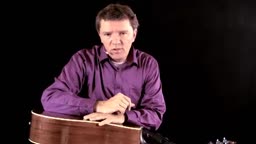
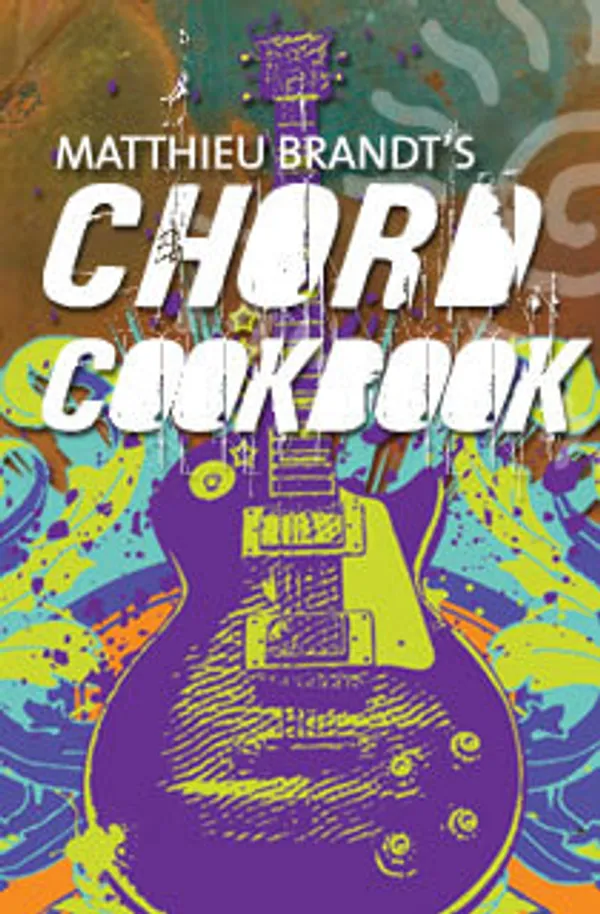
There are few instructors walking the planet today that can assimilate, document, organize and then present a curriculum as robust and insightful as this one. Dutch recording artist and top European guitar educator, Matthieu Brandt, invested several years researching and compiling the curriculum for Songwriting on Guitar and its companion, Chord Cookbook. Brandt, who also authored TrueFire's highly popular Jump Blues and Slap, Frail and Thump courses, is considered one of the most thorough, creative and insightful educators in the biz and he's clearly delivered his Sistine Chapel with this course of study.

Brandt has constructed the curriculum in an interactive manner so that you can 'play' and compose your way through the course as you cover key topics like:

  • How to use harmonic devices to craft the atmosphere of your song
  • How to shape your melodies with melodic contours using closed and open phrases
  • How to create strong and memorable hooks
  • How to organize your song sections and hooks with AB and ABAC formulas
  • How to use repetition and contrast in your songs
  • How, when and why to use symmetric and asymmetric shapes
  • The conscious placement of important chords in your composition
  • How to support your lyrics with solid melodies using regular speech patterns
  • How to use the capo as a creative tool in your writing process

What you'll learn

  • Use chord progressions to support or contradict melody and lyrics
  • Apply modulation techniques to change keys within a song
  • Create harmonic ambiguity intentionally in songwriting
  • Understand how listeners perceive the key of a progression
  • Understand how to compose melodies using Aeolian, Dorian, and harmonic minor modes
Release date: 10/14/2010 • 8h 13m runtime
Start Course
Sample lessons
Identifying the Key
Identifying the Key
Chord Options
Harmonic Concepts
Harmonic Concepts
Minor From Major
Chord Progressions Based on Chord Tricks
Quick Overview
Mixed Mode Harmony
Mixed Mode Harmony
Adding Edge

What's included

57 lessons • 24 charts • 3 Jam Tracks

Songwriting On Guitar
Normally if you want to learn something you
- set the boundries on what you what you want to learn
- break it up in parts
- find out what you need to know for each smaller part
- decide on a logical road through the material
- and keep on plugging away till you know the smaller chunck

Which for guitarists is developing techniques, learning a bit of theory, getting some motor skills, studying other players and developing our ears. When we have mastered one of those smaller parts we move on to the next, until we've gone through all the pieces we needed for the original task we set ourselves.

Composing and writing songs is different in that sense that the boundries of the big task we set ourselves are vague:
what is a song or composition?
does it involve all four elements we generally divide songs into (rhythm, harmony,melody and lyrics) ?
Do we need all of those ?
In that case we would dismiss certain forms of African music, rap music, chanting, bass-and drum and you name it as non-musical. Can't do that!

And where does a composition or a song differ from random generated sounds? Are sounds music, can we make a composition of noise?
I'm sure we can; but how to compose with those tools, is the question ?

And then there's the subdivision in parts and learning everything you need about the smaller parts to move on.
Do you first need to know everything there is to know about music theory before you can compose?
Do you need to be a full blown poet before you start to write lyrics?
Do you need to be a killer guitar player before you can write a song?
No, of course not. In this way learning how to write songs is different from any other learning process. It's a creative process and these never move in a linear way. You can't and will never know all the things there are to know about these smaller chuncks you devided your task in.
Dealing with vagueness, uncertainty and being creative with things you only half know, puzzling with small chuncks of information; all this is an integral part of composing, of writing songs.

Songwriting on Guitar will give you a huge number of tools to help you with this puzzle. Your toolbox is not empty; it is filled with an educated ear, compliments of tens of thousands of hours of listening to music. It's filled with some theory, pratcical skills on guitar and a good developed feel for what 'works' in songs. We'll add to that toolbox and work towards giving you all the skills needed to write your songs.
Harmony
Songwriting on Guitar' starts off with an quick introduction in 'Major Hamony'. We'll devide our Western Pop- and Rock music in three types of harmony:

- Major
- Minor
- Blues

Each of these types we'll researsch for the chords and melodies we can create within them to tailor our songs We'll start with major harmony and concentrate on the use of the I, IV and V chords as a solid bases to compose songs with. Placing these chords conciously and experimenting with order, will make you find out what works for your songs. We'll lift a tip of the veil in rfegards to openness and closedness of chord sequences.
Major Harmony
In this chapter we'll start by looking at the chords you can use in Major harmony. The most important chords are the chords found on the 1st, 4th and 5th degree of the scale. The 2nd, 3rd and 6th degree chords can be used as replacement chords for the forementioned. Limiting your focus on the three most important chords, can give you a good insight in how important the placement of these chords in your songs are.
Identifying the Key
Here you are; jamming a great groove and a good sounding chord sequence. It's a good thing to step back at some point and evaluate what you have. One of the first things to look at is the key you are playing a chord groove in. Finding the initial key of a song will give you your first melody options. You don't have to stick to those throughout your song. And every chord can have it's own set of notes that sound good. But getting some solid ground beneath our harmony we'll help your ear in finding other chord options and strong melodic movement. We'll first look at major harmony and get the tools to find 'home base'.
Leaving Home Base
Chord progressions move from a state of balance and rest to a state of tension and back again. When you've found the key you are composing in, you know which chord gives you that 'home 'feeling. The song will feel at rest when you play that chord. Other chords within the key will give you some degree of tension and a feeling that you're on the move. You have left home.
Making sure the listener knows what home is, techniques to move away to a home 'outside of home' and sets of chords that go together well is what this lesson is about. How far away you stray from home, is only a matter of which chords you chose.
The Percieved Key of a Progression
Giving the listener some solid ground beneath their feet is a good way to start a song off. You make clear what the key is and give the ear it's home.
By chosing a chord order and a chord rate change you can make this very obvious or obscure the home feel. Even with a limited number of chords you can play with what is percieved as the tonic chord. Melody notes can give you extra information on the key you are playing in.
Creating an expectation, sattisfying it or breaking it are all tools of a songwriter.
Patterns in Chord Changes
Repetition in chord sequences and the use of patterns are great ways to shape your songs and devide it in sections.
A songwriters task is to balance out the introduction of new elements and repeating parts. The most obvious element to a listener is the pattern or patterns with which the chords change. Repeating a chord pattern means there is space to listen to other elements of the song. Breaking a pattern will attract attention to the harmony.

+ 50 more lessons

Start Course

Reviews

8 results

stuart_w

Verified buyer

03/08/26

Love Matthieu’s teaching style

Just what I was looking for.

zonemark

Verified buyer

03/28/21

useful but sometimes a bit "just information". In general the chapters are too long. Anyway I watched every chapter.

LuigiD

Verified buyer

03/08/21

Wonderful course! Over 8 houres of lessons! Well done!

Jimbo35

12/15/20

Blown away

I`ve just started this course but I`am totally blown away by how Matthieu packs every sentence with useful information in a really clear way. He also covers the real nuts of bolts of getting a handle with composing songs. I can't wait to dig in more.

BluesfanX

Verified buyer

08/20/20

Connecting theory and practice

I love Matthieu Brandt's way of explaining the building stones, not only of the guitar but of music in general. It's clear and well structured. I have learned a lot from this course and it have helped me tie together a diversity of things I have heard or learned earlier.

Stop searching. Start improving with All Access.

Try 14 days free. Cancel any time.