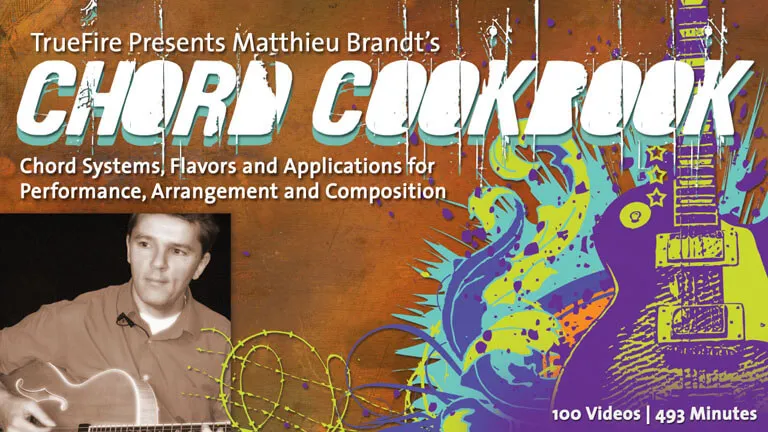

Chord Cookbook

Chord Systems, Flavors and Applications for Performance, Arrangement and Composition

Marty FriedmanTommy EmmanuelSteve VaiEric GalesEric Johnson

Get this course and 1,000+ more with All Access

Try 14 days free. Cancel any time.

Purchase Individual Course for $9.99
Chord Cookbook

About this course

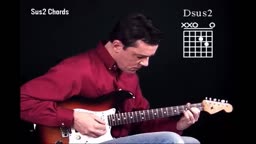
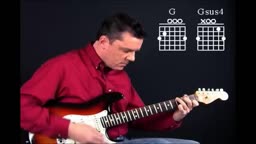
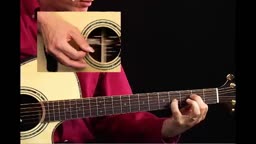
Chord Cookbook explores several of the most powerful polyphonic wonders of the guitar – chord systems, flavors and applications. The creative resource and firepower of Chord Cookbook will feed you flurries of ideas for vamps, original songs and arrangements.

Chord Cookbook takes your ears to school so that you can identify chord “flavors” and systems when listening to or learning your favorite tunes. But that’s just the start. The real firepower behind Chord Cookbook is how the course presents and organizes chord systems and applications to teach you the how, why, what and when for performance, accompaniment, composition and arrangement applications.

Chord Cookbook is an unusual course of study. You’ll likely grow accustomed to referencing Chord Cookbook frequently (although this course is NOT a chord dictionary). There’s no real beginning or end – you’re encouraged to start your exploration anywhere within the course. And while Chord Cookbook is not a methodology, there’s an underlying organization of material, ranging from the theoretical to the practical, which connects it all in a very logical and cognitive way. In short, Chord Cookbook guides your selection and application of chords to “flavor” the songs you play, arrange and write.

Your exploration takes you through 35 categories of chord systems and flavors with performance examples, breakdowns, theoretical analysis and an extensive compendium of reference charts and related information.

You’ll learn how to apply open position chords up the neck, barre chords without the barre, closed voicings, pedal tones in chord progressions, counterpoint, contrary motion and melodic movement, inversions, triads, power chord triads and ways to expand them, quartal harmony and dozens of other approaches. You’ll also learn to classify chords by their “flavor” to make it easier to recognize chords used by your favorite artists.

All of these concepts are covered, demonstrated and analyzed in depth. Chord Cookbook focuses primarily on rock, rhythm and blues and popular music.

Dutch recording artist and top European guitar educator, Matthieu Brandt, has invested several years’ researching and compiling the curriculum for Chord Cookbook. Brandt, who also authored TrueFire’s highly popular Jump Blues and Slap, Frail and Thump courses, is considered one of the most thorough, creative and insightful educators in the biz.

What you'll learn

  • Use chord inversions to create smooth bass motion
  • Integrate melody notes into chord progressions seamlessly
  • Use close chord voicings with both fingerpicking and pick techniques
  • Create floating, uneasy atmospheres using interval tension
  • Identify and play complex chord extensions with close voicings
Release date: 11/13/2008 • 8h 13m runtime
Start Course
Sample lessons
Auditory Index
Auditory Index
Breakdown
Add9 and Add11 Chords
Made To Whack
Min7 Chords
Min7 Chords
The Chill Is On
Power Chord Based Triads
Power It Up

What's included

100 lessons • 44 charts • 14 Jam Tracks

Chord Cookbook
This chord reference library includes all open position chords, bar chords, all the important extensions a chord can have and a number of chord tricks and systems to classify chords.

Among these chord tricks are
- moving an open position chord up the neck to create new sounds
- using bar chords without a bar
- build chords that have so called close voicings, which is the use of two notes in a chord that are ½ step or 1 step apart
- the use of pedal notes in a chord progression
- counterpoint, contrary motion and melodic movement within a chord
- an extensive look at inversions, triads, powerchord triads and ways to expand them
- and finally chords that are built with quartal harmony

You can find an overview of all the chords, chord tricks and harmony in the pdf with this lesson. The introduction video will give you an overview of the audio examples in this library. You can use it to zoom in on a specific subject you'd like to study.

Auditory Index
This chord reference library includes all open position chords, bar chords, all the important extensions a chord can have and a number of chord tricks and systems to classify chords.

Among these chord tricks are
- moving an open position chord up the neck to create new sounds
- using bar chords without a bar
- build chords that have so called close voicings, which is the use of two notes in a chord that are ½ step or 1 step apart
- the use of pedal notes in a chord progression
- counterpoint, contrary motion and melodic movement within a chord
- an extensive look at inversions, triads, powerchord triads and ways to expand them
- and finally chords that are built with quartal harmony

You can find an overview of all the chords, chord tricks and harmony in the pdf with this lesson. The introduction video will give you an overview of the audio examples in this library. You can use it to zoom in on a specific subject you'd like to study.

Introduction Theory
This section contains a short rundown of the theory you need to understand where chords come from. The chords we'll discuss in the first sections are built on the notes of an Ionian major scale. Each chord tone functions as the root for a chord; major or minor. You can derive these chords from the Ionian major scale through the formula 1-3-5 for three note chords and 1-3-5-7 for four note chords.
Introduction Theory
This section contains a short rundown of the theory you need to understand where chords come from. The chords we'll discuss in the first sections are built on the notes of an Ionian major scale. Each chord tone functions as the root for a chord; major or minor. You can derive these chords from the Ionian major scale through the formula 1-3-5 for three note chords and 1-3-5-7 for four note chords.
Chord Formulas
Chords are derived from scales. The chords we will discuss here are all have a chord formula (1-3-5 for major chords, 1-b3-5 for minor chords, 1-3-5-b7 for dominant seventh chords,etc). These numbers refer to the distance that the note has to the root. In this section you'll get a breakdown of what these numbers mean and how a chord with a certain formula sounds. We continue with an overview of Open Position Chords.
Open Position Chords
Chords are derived from scales. The chords we will discuss here are all have a chord formula (1-3-5 for major chords, 1-b3-5 for minor chords, 1-3-5-b7 for dominant seventh chords,etc). These numbers refer to the distance that the note has to the root. In this section you'll get a breakdown of what these numbers mean and how a chord with a certain formula sounds. We continue with an overview of Open Position Chords.
4 Note Open Position Chords
In this section we will take a look at 4-Note Open Position Chords, which are chords that use one or more open strings and voicings in the first three fret positions. The chords we will look at all use the 1-3-5-7 formula to create major seventh, dominant seventh and minor seventh chords.

+ 93 more lessons

Start Course

Reviews

13 results

TravoneL

Verified buyer

12/12/25

Great value for the information presented

Great course for reference on how to play all the chord types you can think of and how you might use them within a track. I’d highly recommend for anyone trying to gain a full chord vocabulary with an understanding of how to use them.

Osokin

Verified buyer

03/08/22

Chordal Cookery!

Matthieu Brandt's 'Chord Cookery' is an invaluable reference library of chords, chords systems and harmony that should be of interest to any serious guitarist. The material is broken down into different sections, and chords are presented in the context of great sounding progressions. A good course to work from as part of your daily practice routine.

Rankles

Verified buyer

12/21/21

A great reference

I haven't really had the time to delve into every detail of this course yet but its section on triads alone was worth the money for me and I can't wait to explore all the various sections discussed in such detail. Each has a great reference guide and this course as a whole is a perfect reference for those wanting to expand their chord vocabulary.

2canoe

Verified buyer

12/04/20

This is one of those courses you won't talk a lot about dynamics and technique but is is one you can add to your every day practice routine. Matthieu Brant's Chord Cookbook is an enormous volume of information. A course ...more of a reference you will keep coming back to. Another great one from the Truefire website....Thanks Matthieu

geologist

Verified buyer

06/14/20

Chord cookbook

The ‘cookbook’ covers such a wide variety of chords for different genre and styles.

Stop searching. Start improving with All Access.

Try 14 days free. Cancel any time.