

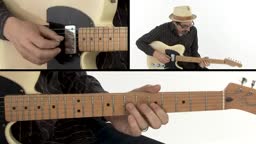
Take 5: Jazz Blues Soloing

Accelerated Jazz-Blues Self-Study Program for Guitar

Marty FriedmanTommy EmmanuelSteve VaiEric GalesEric Johnson

Get this course and 1,000+ more with All Access

Try 14 days free. Cancel any time.

Purchase Individual Course for $14.99
Take 5: Jazz Blues Soloing

About this course

Jazz musicians have a vocabulary of their own when it comes to the blues. Understanding the nuances of jump blues, swing and bebop can provide you with all kinds of new licks, colors, and ideas to incorporate into your playing, whether you play jazz or not.

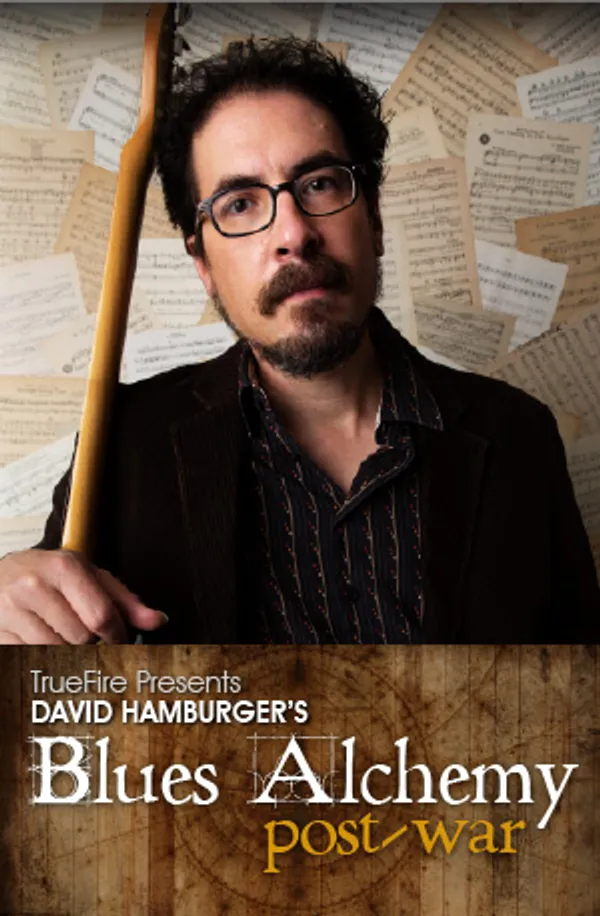
David Hamburger’s Take 5: Jazz Blues Soloing features an accelerated curricular approach designed to help you get up to speed quickly on jazz-blues improvisation and soloing.

"Jump blues, swing, bebop and hard bop are all various phases in the development of jazz. Musicians in each of, these eras had their idiomatic ways of approaching the blues form, beginning with the differences in how they thought about the blues chord progression itself. But from the 1930's through the 1960's, you'll find two relatively constant practices: the development of flowing, eighth note lines to create the swing feel, and the combination of blues licks and "playing the changes" to create contrast.”

You’ll start the course with a quick primer where David explains how jazz musicians approach the blues chord progression, how they “play the changes” and how they utilize chord tones, chromatic passing tones, and altered tones. David will then guide you through 5 Jazz Blues performance studies, from basic to more sophisticated approaches.

All of the performance studies are tabbed and notated, and you’ll have the jam tracks to work with on your own. You can loop and slow down the videos so you can work at your own pace.

David will explain and demonstrate all of the key concepts and approaches along the way. You’ll get standard notation and tabs for all of the soloing Performance Studies. Plus, David includes all of the rhythm tracks for you to work with on your own. Also, you’ll be able to loop or slow down any of the videos so that you can work with the lessons at your own pace.

Grab your guitar and let’s Take 5 with David Hamburger!


About the Take 5 Series

TrueFire’s Take 5 courses feature an accelerated curricular approach to help students get up to speed quickly on a particular style or technique. Each Take 5 course starts with a primer on the particular style or technique and then guides the student through 5 performance studies progressing from basic applications to more sophisticated approaches.

What you'll learn

  • Execute rake picking technique for specific rhythmic effects
  • Apply major scale vocabulary over the I chord in jazz context
  • Use chromatic approach notes to create bebop phrasing
  • Spell out altered dominant chords (b13, b9) in solo lines
  • Learn to play the changes in jazz blues context
Release date: 06/11/2018 • 1h 21m runtime
Start Course
Sample lessons
Level 2: Jazz Blues Soloing
Overview
Level 2: Jazz Blues Soloing
Performance
Level 2: Jazz Blues Soloing
Breakdown
Level 3: Jazz Blues Soloing
Overview

What's included

18 lessons • 5 charts • 5 Jam Tracks

Take 5: Jazz Blues Soloing
Whatever I know about how to think like a jazz musician over the blues chord progression, I learned when I stopped thinking like a jazz student and resumed thinking like a blues fan. By that I mean: I stopped worrying about playing scales and arpeggios in every key, practicing ii-V-I patterns and applying any of that to standards. Instead, I began doing with George Benson and Stanley Turrentine and Tommy Flanagan what I'd already done with B.B. King, Buddy Guy and Gatemouth Brown: listened to their records, figured out some licks, and tried to draw some general conclusions about how they play over a 12-bar form.
The Jazz Blues Sound
Jump blues, swing, bebop and hard bop are all various phases in the development of jazz. Musicians in each of these eras had their own idiomatic ways of approaching the blues form, beginning with the differences in how they thought about the blues chord progression itself. But from the 1930's through the 1960's, you'll find two relatively constant practices: the development of flowing, eighth note lines to create the swing feel, and the combination of blues licks and "playing the changes" to create contrast.
Level 1: Jazz Blues Soloing
Musicians in each of these eras had their own idiomatic ways of approaching the blues form, beginning with the differences in how they thought about the blues chord progression itself. But from the 1930's through the 1960's, you'll find two relatively constant practices: the development of flowing, eighth note lines to create the swing feel, and the combination of blues licks and "playing the changes" to create contrast.
Level 1: Jazz Blues Soloing
I'd read in interviews that T-Bone Walker was a big influence on B.B. King, but it wasn't until I got my hands on a reissue of B.B.'s 1950's recordings that I heard it for myself. Where's the guy who plays just one note and lets it vibrate? 1950's B.B. King has much of the same chattery flow as classic T-Bone, along with a brighter tone, very different from the more complete, rounded but penetrating sound captured on Live at the Regal. Hearing 50's B.B. makes you realize both how much he loved T-Bone and how much he had already found his own muse by the 1964 Regal show.
Level 1: Jazz Blues Soloing
Rhythm is a huge part of getting inside a new style, or in this case, a sub-genre of a style. A big part of the jazz-blues sound is creating a steady flow of eighth notes, and you can hear right away how different this study sounds from, say, a Freddie King solo. Part of it is the use of brighter scale tones like the major 3rd, major 6th and the 9th. But it's also about using those notes to play in a more stepwise manner, and in so doing, create the kind of longer, more flowing phrases that characterize this style.
Level 2: Jazz Blues Soloing
For my money, swing guitar kind of starts and ends with Charlie Christian. I can't count how many times I've recommended The Genius of the Electric Guitar to someone interested in learning to play the changes on the blues. It's got most of the classic songs and solos Christian recorded as part of the Benny Goodman Sextet, and it's a textbook on how to simultaneously sound smooth, funky and surprising over dominant seventh chords.
Level 2: Jazz Blues Soloing
Like T-Bone Walker, Charlie Christian was a huge influence on both his contemporaries and subsequent generations of guitarists. Two of his most immediate and successful influence-ees, if that's a word, were Oscar Moore and Mary Osborne. Moore played in the very popular and influential Nat Cole Trio, while Osborne worked with many of the great jazz musicians throughout her career. Both made solo records which are worth seeking out along with Moore's Nat Cole recordings.

+ 11 more lessons

Start Course

Reviews

17 results

Cdougoud

Verified buyer

06/04/25

Clear explanations and tasty phrasing

I have learned a lot from David's courses and this is no exception. David is really able to clarify the "how" and "why". I highly recommend it to anyone who wants to add some jazziness to his solos

pmorey

Verified buyer

12/31/22

David Hamburger is witty, insightful and an excellent communicator. Definitely worth the price!

trader46

Verified buyer

09/24/22

Strong on several styles

Excellent course to show how jazz blues differs from trad blues. I found the Swing material (based around Charlie Christian) and the bebop work especially strong. It's all "playable with reasonable technique, builds your theory fast and has detailed, understandable breakdowns. I'm still learning plenty from this and its a springboard for more.....

tomac

Verified buyer

11/12/21

My first steps with jazz

krvavi

07/14/21

highly recommended

For me as big fan of Jazz and blues it is must to go through this course. And it is great one! David is fantastic teacher, he bring the player to then next level. Thank you so much!

Stop searching. Start improving with All Access.

Try 14 days free. Cancel any time.