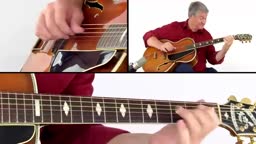
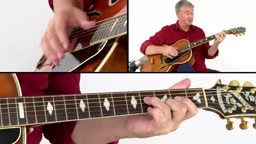
How would Blind Blake have played a Jerry Reed guitar boogie? What would it sound like if Jerry Reed and Roger Miller recorded together? Or if Big Bill Broonzy jammed with Tommy Tucker? How does a 60’s R&B bassline enhance a 30’s Country Blues?
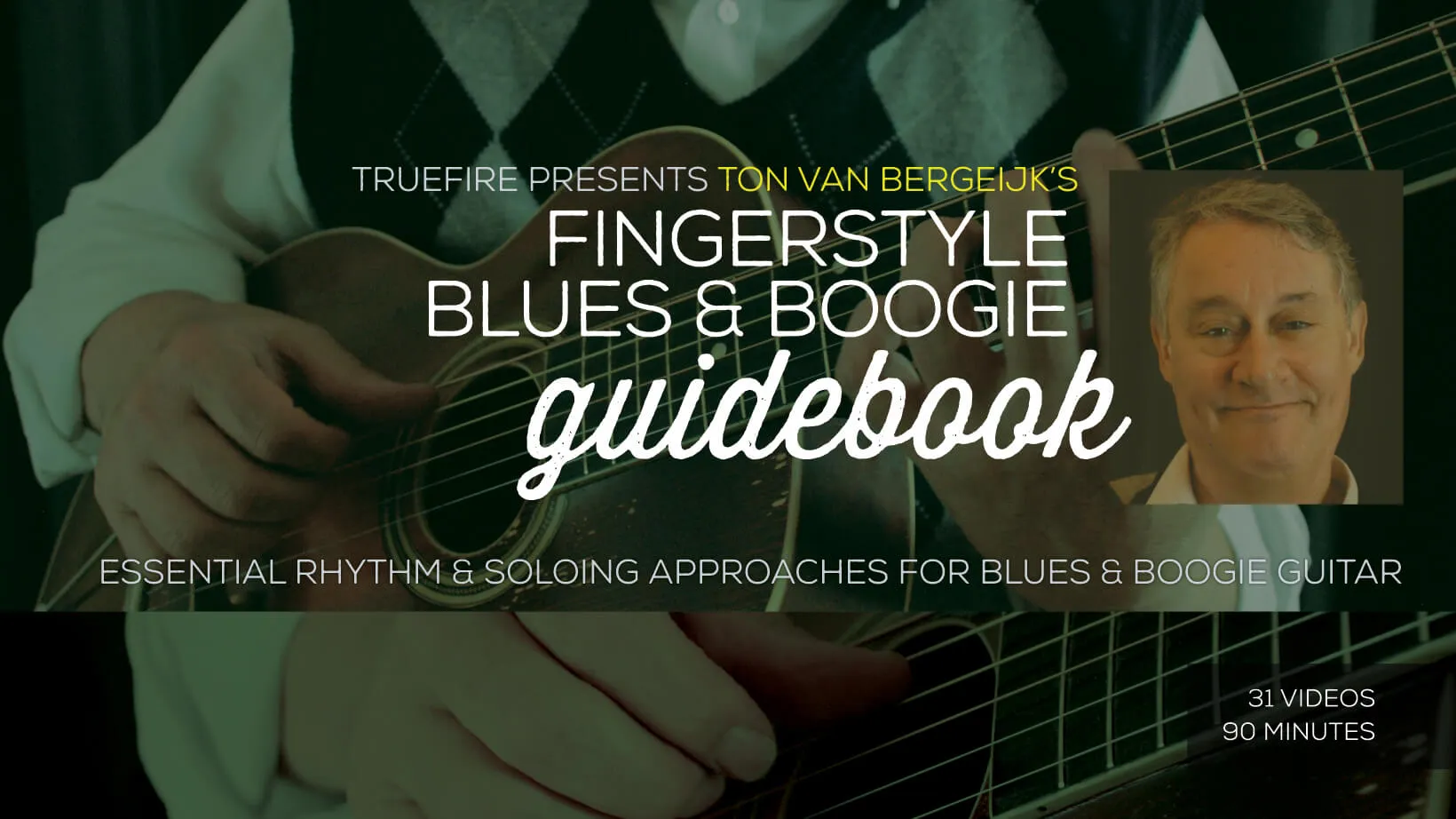
Ton van Bergeijk’s Fingerstyle Blues and Boogie Guidebook explores the wide world of blues and boogie and demonstrates how to artfully blend musical elements and techniques from the past to breathe new life into contemporary blues and boogie performances and vice versa.
”It has always been my belief that the gems from musical history can be used in many different ways. I've gathered licks, patterns, New Orleans piano based grooves, and other influences from country blues, swing, rhythm & blues, and even the funky 70's. I've adapted them for fingerstyle guitar and projected them on a blues and boogie environment. Fiddling and juggling all of these elements is what this course is all about. The old supporting the new, and the new enriching the old.”
Ton van Bergeijk is a world renowned Dutch master of guitar, banjo, ukuleles, harmonica, and vocals. In the 60’s Ton played in a duo with guitarist and vocalist Philip Kroonenberg. In the 70’s Ton appeared as a solo-guitarist on Stefan Grossman's Kicking Mule label, recording five critically acclaimed fingerstyle blues and ragtime guitar albums. Ton has played with The Boulevard of Broken Dreams Orchestra, The Izzies, The Beau Hunks, and from 2004 through 2015 he was a key member of the internationally renowned Dutch Swing College Band. We are very proud and excited to welcome Ton to the family with his first TrueFire course, Fingerstyle Blues And Boogie Guidebook!
??In the first section of the course, Ton guides you through 8 key concepts and techniques: CAGED System, Ton’s signature approach to comping with Triad Chords, Ton’s unique approach for Bending 6ths, Thumb Stumbles a la Blind Blake, Big Chief Rolls, Clawing, an inventive use of Half Diminished Chords, and Blues Turnarounds. Ton’s experience playing with such a diverse range of bands, ensembles, orchestras, and solo performance makes this section’s “priceless instruction” worth the price of admission alone!
In the second section of the course, you’ll apply all of the key concepts and techniques from the first section as Ton guides you through 8 performance studies, all of which are taken from his latest album Pickin' Again: Blind Baking Beans, Gimme Some More, High Heel Sneakers, Keep On Gwine, Lonesome Day Blues, Water Wagon Moan, Weekend Boogie, and Won’t Be Long.
Ton overviews and demonstrates all of the following performance studies and then breaks them down, emphasizing the concepts and techniques to master them and then "fiddle around with them to make them your own." Throughout these performance studies, Ton also shows you a variety of intricate rhythms, licks, and boogie bass lines on guitar, which were inspired by the piano work of James Booker, Ray Charles, Dr. John and Professor Longhair.
All of the performance studies are tabbed and notated for your practice, reference and study purposes. You’ll also get Guitar Pro files so that you can play, loop and/or slow down the tab and notation as you work through the lessons.
Ready to get started? Grab your guitar and let’s spice up our boogie and blues guitar with Ton van Bergeijk’s Fingerstyle Blues and Boogie Guidebook!
Hi I'm Ton van Bergeijk, and welcome to the Fingerstyle Blues & Boogie Guidebook. It has always been my belief that the gems from musical history can be used in many different ways. So I've gathered licks, patterns, New Orleans piano based grooves, and other influences from a variety of sources. From country blues, swing, rhythm & blues, and even the funky 70's. I've adapted them for fingerstyle guitar and projected them on a blues and boogie environment. Fiddling & juggling with all these elements is what this course is all about. The old supporting the new, and the new enriching the old: How would Allan Reuss have played a "Blake Rag"? What would it sound like if Jerry Reed and Roger Miller would've recorded together? If Big Bill Broonzy only would have met Tommy Tucker? And what can a 60's R&B bassline add to 30's country blues? Going from George Van Eps to Sly Stone via Pops Staples. How would Blind Blake have played a Jerry Reed guitar boogie?
My aim in teaching is not just to tell you how I play it - we already know that Houdini escaped from the milk can and the trick has already been done. I'd rather tell you the basics and then build on that so that you can make it your own. The patterns & licks in this course are all based on the tunes of my latest CD: Pickin' Again! As always, tabs and notation for this course are included, so grab your guitar and let's get pickin'!
It's always handy to have an idea how someone thinks about their chords. When communicating about chords without a guitar at hand, I've always found it handy to refer to the chord shapes of open strings positions. I've done that all my life, only to find out recently that is generally known as the CAGED system.
Having worked a good forty years in a load of bands and orchestras on acoustic rhythm guitar, I found that my concept of chords and their fingering had changed considerably over that period of time. That has left its mark on my fingerpicking escapades. When I compare my present left hand moves with the ones of my solo-recordings in the 70's, a bit of explaining might not go amiss.
I got my first electric guitar quite late in life. I believe I was 28 when I got a Telecaster. A friend of mine then gave me a tape with what he thought I should listen to concerning electric guitar. I heard a lot of bending of double stops, and thought that was the fashionable thing to do. I didn't feel quite comfortable with bending 3rds, but was more at ease with 6ths.
The circle of guitar friends I grew up with in the late 60's and early 70's all referred to Blind Blake's thumb patterns as "thumb stumbles", so any variety of the classical "rest stroke" in my mind is a "thumb stumble". I tend to apply these types of thumbing to several different kinds of picking patterns.
Practically everybody from the New Orleans rhythm & blues scene has played the Earl King composition "Big Chief". On the piano, it consists of up and downward rolls, which is an essential element of New Orleans piano styles. Since those styles are chord based rather than scale based, it's a small step to adapt them to the guitar.
"Clawing" is a picking pattern made famous by Jerry Reed in which you use two fingers as one on two strings. Reed used to do this with his ring and middle finger, but other combinations are useful as well, each having a distinct effect. When thumb and index are used on the same string, it creates a percussive effect.
It´s a great Guidebook for advanced Fingerpicking especially when you like prewar blues and boogie. Tom is a good teacher and i love his dutch accent.
S
Sindibad
01/19/21
Fingerstyle Blues & Boogie Guidebook
It is a very good lesson to work on the rights and the ear.
L
Liegeradfahrer1
Verified buyer
12/25/20
great
N
Nachman
12/08/20
Really steps up the learning
Ton is one of my favorite instructors on Truefire. Very laid-back, patient and relaxed. He gives over advanced techniques and concepts in a way that makes you wanna learn them. Sometimes I put in his courses while I am working, just to hear him speak about music. All his (few) courses imho are highly recommended.
R
rick56
Verified buyer
12/01/20
Fun Lessons
This one is fun from beginning to end. The Tunes are fun to play and very easy to learn. I rather enjoyed this set of lessons.