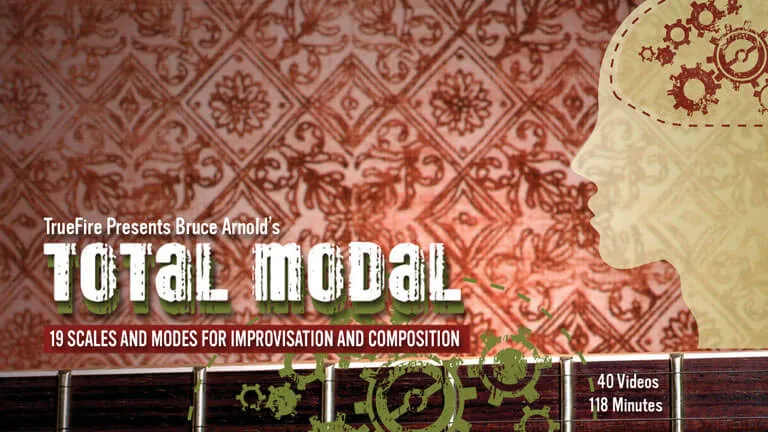
Total Modal

19 Scales and Modes for Improvisation and Compisition

Marty FriedmanTommy EmmanuelSteve VaiEric GalesEric Johnson

Get this course and 1,000+ more with All Access

Try 14 days free. Cancel any time.

Purchase Individual Course for $5.00
Total Modal

About this course

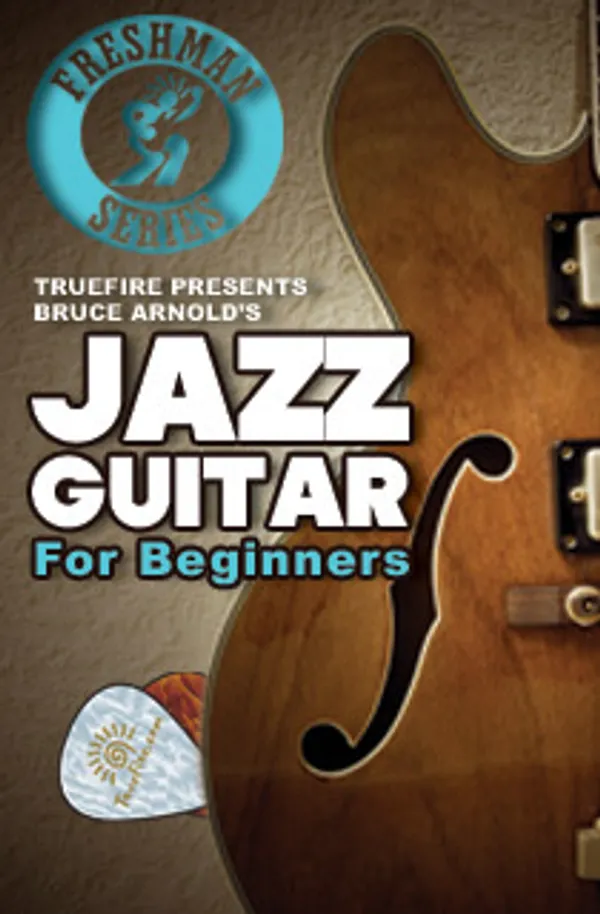
Total Modal thoroughly examines the theory, harmony and application of 19 essential modes and scales for composition and improvisation. This intensive study program will provide a comprehensive framework for composing melodies and hooks, improvising over any set of changes, superimposing scales, creating progressions and constructing chords for any musical application. In short, Total Modal is the definitive scale and mode application resource.

The 19 scales and modes covered are: Ionian, Dorian, Dorian b2, Phrygian, Lydian, Lydian #5, Lydian b7, Mixolydian, Mixolydian b6, Mixolydian b2 b6, Aeolian, Locrian, Locrian natural 2, Jazz Minor, Harmonic Minor, Altered, Diminished, Symmetrical Diminished and Whole Tone. In short, every essential scale and mode necessary for composing and improvising across rock, blues, jazz and popular music.

Your Total Modal professor is Bruce Arnold. Bruce runs the guitar programs at Princeton University and New York University, hosts the Summer Jazz Workshops in NYC, and is one of the most respected and prolific educators in the business. Arnold also composes, records and performs worldwide with a long list of top artists.

While you will certainly learn the fingerings and positions for all 19 scales and modes, in all keys, Total Modal goes much further than any “scale/mode” course on the market. Every scale and mode is demonstrated in a musical context to illustrate their "colors" and characteristics.

What you'll learn

  • Apply diminished scale modally for creating sounds
  • Identify when to use diminished scale vs passing diminished scale
  • Understand the construction of the Lydian b7 scale (1, 2, 3, #4, 5, 6, b7)
  • Understand the eight-note symmetrical structure of the diminished scale
  • Develop ear training for recognizing diminished key centers
Release date: 05/08/2007 • 1h 58m runtime
Start Course
Sample lessons
C Major
C Major
C Major Application
C Major Application
Mixolydian
Mixolydian
Mixolydian Application

What's included

40 lessons • 20 charts • 5 Jam Tracks

Total Modal
Welcome to Total Modal. The primary goal of this course is to teach you about modes and their uses in music. You can revisit what you will discover here year after year because exploring the modes is an unending and rewarding experience; there is always another way to apply a mode that creates something new and unexpected. If you approach this course with an open mind you will find it to be a deep resource of ideas that reveal the underlying theoretical principles of each scale. You can then improvise, compose and create new ideas with the modes you may already know, and possibly learn some new ones to spice up your palette of sound. The study of modes is a lifetime pursuit. No course can teach you how to “master” modes in a few months. Scales can obviously help you with improvising but hopefully as you explore the videos and help files included in this course you will realize that modes can be practiced in many ways and by exploring different paths you can create many of the sounds you hear other musicians play. But they will also show you how you can develop ideas that haven't been fully explored so that you can create music that is uniquely yours. Total Modal will also help you understand how to use modes to: 1. Compose new songs. 2. Find new chord ideas. 3. Find ideas to fill out accompanying parts for your original music. 4. Help you understand how other compositions were written. I've included a variety of charts and reference material, which I explain in the second video. Print these charts out and study them as you work through the course. I've also included dozens of practice rhythm tracks for each mode both within the context of a mode's lesson and on the accompanying Total Modal JamBox. Working with these tracks will develop your ear and feed your improvisational and composition skills. You'll also find a variety of Study Tips woven throughout the course. I've found these to be invaluable aids for learning and performing music. OK, enough talk. Let's dig in! - - - - - - - - - - - - Bruce Arnold plays Peavey Guitars, Peavey Amps and La Bella Strings Mr. Arnold used the following equipment during the production of this course: Peavey V-Type* NTB TR Guitar Peavey JSX Amp SuperCollider Special Thanks to David Ellefson of Peavey Electronics Corp for supplying Guitars and Amps for Mr. Arnold and to Michal Shapiro of LinkTV for proofreading and helpful suggestions.
Charts
Welcome to Total Modal. The primary goal of this course is to teach you about modes and their uses in music. You can revisit what you will discover here year after year because exploring the modes is an unending and rewarding experience; there is always another way to apply a mode that creates something new and unexpected. If you approach this course with an open mind you will find it to be a deep resource of ideas that reveal the underlying theoretical principles of each scale. You can then improvise, compose and create new ideas with the modes you may already know, and possibly learn some new ones to spice up your palette of sound. The study of modes is a lifetime pursuit. No course can teach you how to “master” modes in a few months. Scales can obviously help you with improvising but hopefully as you explore the videos and help files included in this course you will realize that modes can be practiced in many ways and by exploring different paths you can create many of the sounds you hear other musicians play. But they will also show you how you can develop ideas that haven't been fully explored so that you can create music that is uniquely yours. Total Modal will also help you understand how to use modes to: 1. Compose new songs. 2. Find new chord ideas. 3. Find ideas to fill out accompanying parts for your original music. 4. Help you understand how other compositions were written. I've included a variety of charts and reference material, which I explain in the second video. Print these charts out and study them as you work through the course. I've also included dozens of practice rhythm tracks for each mode both within the context of a mode's lesson and on the accompanying Total Modal JamBox. Working with these tracks will develop your ear and feed your improvisational and composition skills. You'll also find a variety of Study Tips woven throughout the course. I've found these to be invaluable aids for learning and performing music. OK, enough talk. Let's dig in! - - - - - - - - - - - - Bruce Arnold plays Peavey Guitars, Peavey Amps and La Bella Strings Mr. Arnold used the following equipment during the production of this course: Peavey V-Type* NTB TR Guitar Peavey JSX Amp SuperCollider Special Thanks to David Ellefson of Peavey Electronics Corp for supplying Guitars and Amps for Mr. Arnold and to Michal Shapiro of LinkTV for proofreading and helpful suggestions.
C Major
Watch the video clips to get a general idea of how you to use the 19 modes covered in Total Modal. You are going to have to play each mode we introduce in lots of places on the neck in order to get comfortable with playing it in different situations. As I mentioned in the intro you should: Concentrate on one mode in one key per week or more modes if you have more than an hour to practice each day. You want to learn the mode in all positions, so refer to the mode fingering charts to see how to finger each position of the mode. You should work through all the modes in the key of C first and then move to other keys. So first learn C Ionian then C Dorian, C Lydian etc... and continue through all 19 modes. When you have played all the modes in the key of C you want to start the process over in the key of F. Progress through the keys in the following sequence: C,F,Bb,Eb,Ab,Db,Gb,B,E,A,D,G YES this is a lot of work but think what you will have accomplished at the other end: an ability to play over any chord in any key! That means total freedom to express yourself on any chord progression that might come your way. Just so you can gauge your progress, I find that most dedicated guitar music majors in college go through all modes through all 12 keys in 4 months. Obviously you have to practice more than one hour a day to do this. Students that have approximately one hour to practice a day usually go through all 19 modes in one key in about 4 months. Just a few reminders. 1. Play the mode in all 7 positions think the names of the notes (i.e. C, D, E etc..._) or the degrees that the notes (i.e. C is the root, D is the 2nd, E is the 3rd etc...). 2. Play the mode over a jam track so that you hear the mode and get used to soloing with it. When you are soloing pick a small area of the mode --4 or 5 notes-- and try creating melodies. You may have to think about where the notes are at first but once you know what notes to play forget about their names just listen to the sound and try to hear melodies in your head. This should be the fun part so try it with distortion if you have an electric guitar. Most importantly just be creative. 3. The 4th degree of a major mode is the avoid note. That means you can play the note when you improvise but it will feel like it needs to resolve. Spend some time playing this note and listen for how it wants to resolve.
C Major Application
Watch the video clips to get a general idea of how you to use the 19 modes covered in Total Modal. You are going to have to play each mode we introduce in lots of places on the neck in order to get comfortable with playing it in different situations. As I mentioned in the intro you should: Concentrate on one mode in one key per week or more modes if you have more than an hour to practice each day. You want to learn the mode in all positions, so refer to the mode fingering charts to see how to finger each position of the mode. You should work through all the modes in the key of C first and then move to other keys. So first learn C Ionian then C Dorian, C Lydian etc... and continue through all 19 modes. When you have played all the modes in the key of C you want to start the process over in the key of F. Progress through the keys in the following sequence: C,F,Bb,Eb,Ab,Db,Gb,B,E,A,D,G YES this is a lot of work but think what you will have accomplished at the other end: an ability to play over any chord in any key! That means total freedom to express yourself on any chord progression that might come your way. Just so you can gauge your progress, I find that most dedicated guitar music majors in college go through all modes through all 12 keys in 4 months. Obviously you have to practice more than one hour a day to do this. Students that have approximately one hour to practice a day usually go through all 19 modes in one key in about 4 months. Just a few reminders. 1. Play the mode in all 7 positions think the names of the notes (i.e. C, D, E etc..._) or the degrees that the notes (i.e. C is the root, D is the 2nd, E is the 3rd etc...). 2. Play the mode over a jam track so that you hear the mode and get used to soloing with it. When you are soloing pick a small area of the mode --4 or 5 notes-- and try creating melodies. You may have to think about where the notes are at first but once you know what notes to play forget about their names just listen to the sound and try to hear melodies in your head. This should be the fun part so try it with distortion if you have an electric guitar. Most importantly just be creative. 3. The 4th degree of a major mode is the avoid note. That means you can play the note when you improvise but it will feel like it needs to resolve. Spend some time playing this note and listen for how it wants to resolve.
Dorian
You should learn all 19 scales in all 12 keys. I would suggest first learning all the scales in C then moving them cycle 5 to other key centers. I would move through the keys as follows: C, F, Bb, Eb, Ab, Db, Gb, B, E, A, D, G By learning your modes in all keys you will be equipped to play any song in any key and play over any chord in any key. It will also help you to know your guitar fretboard better and make you a better musician. This process can take up to a year to complete but is well worth the time. Try to complete one key for all 19 scales in a 2 week practice period. Remember to think the note names or the degrees of the scales as you play them. I would suggest alternating days of thinking note names and scale degrees. Also play the modes over vamps for so that you can hear the mode in a musical situation. STUDY TIP ..... Use the following list to find additional books that will help you with music theory, chord knowledge, and ear training. I've also included a brief practice outline to help you organize your practice time. Remember that by working with music theory, chord knowledge, and ear training along with your scale work you will greatly increase your ability to play any music and play it well. Ear Training One Note Complete Fanatic's Guide to Ear Training and Sight Singing Chord Workbook for Guitar New York Guitar Method Primer Book One 1st Steps for a Beginning Guitarist New York Guitar Method Volume One
Dorian Application
You should learn all 19 scales in all 12 keys. I would suggest first learning all the scales in C then moving them cycle 5 to other key centers. I would move through the keys as follows: C, F, Bb, Eb, Ab, Db, Gb, B, E, A, D, G By learning your modes in all keys you will be equipped to play any song in any key and play over any chord in any key. It will also help you to know your guitar fretboard better and make you a better musician. This process can take up to a year to complete but is well worth the time. Try to complete one key for all 19 scales in a 2 week practice period. Remember to think the note names or the degrees of the scales as you play them. I would suggest alternating days of thinking note names and scale degrees. Also play the modes over vamps for so that you can hear the mode in a musical situation. STUDY TIP ..... Use the following list to find additional books that will help you with music theory, chord knowledge, and ear training. I've also included a brief practice outline to help you organize your practice time. Remember that by working with music theory, chord knowledge, and ear training along with your scale work you will greatly increase your ability to play any music and play it well. Ear Training One Note Complete Fanatic's Guide to Ear Training and Sight Singing Chord Workbook for Guitar New York Guitar Method Primer Book One 1st Steps for a Beginning Guitarist New York Guitar Method Volume One
Phrygian
With all the modes you learn in Total Modal try to relate them back to modes you have already learned to help you memorize them. For instance Phrygian is like a Dorian mode but you have added a b2 and a b6 to the b3 and b7 found in the Dorian mode. Phrygian can create some very interesting sounding chord progressions. I have listed a few of these on the mode construction and chord application document. You always need to apply the modes through improvisation and composition. You will gain a personal connection to these modes by doing this, which is essential. If you are playing the Phrygian mode over a minor jam track the b2 and b6 are avoid notes and will feel like they need to resolve. Frequently students have a hard time understanding that the characteristic notes of a Phrygian mode are the b2 and b6 yet they are the avoid notes. Nevertheless it is true, and when playing the mode listen for how the b2 and b6 want to resolve. You can also play the Phrygian mode over a 7sus4 chord. When you use a 7sus4 chord the b2 and b6 don't need to resolve because they are available tensions on a 7sus4. Look at the charts of modes grouped by chord type to see what the avoid notes and tensions are for each chord type and mode.

+ 33 more lessons

Start Course

Reviews

7 results

bubbarom

Verified buyer

02/21/21

Lots of ideas!

Nice to hear someone else's take on modes.
DYARTER

Verified buyer

12/20/20

CAN'T WAIT TO START THIS ONE - LOOKS LIKE IT HAS EVERYTHING I NEED.

petersteen1

10/05/20

Will break you out of playing patterns

A very comprehensive look into Major, Minor, Melodic Minor and Diminshed with a few other commonly used scales. The value you will get from this course, if followed as Bruce intends, is that it will break you out of playing patterns. By having you say the note names and scale degrees (on alternating practice days) you will have a better understanding of the fretboard. By using this along with one of his other theory books, I now know all of the notes on the fretboard along with a better understanding of the scales.By going through the scales in all 12 keys will also your muscle memory. It is hard work and can takes months or over a year but if you put in the work it is well worth it. Highly recommended.

cgorman

Verified buyer

06/04/20

Good but mostly known.

littlewing17

Verified buyer

10/08/18

An eye opener!

Total modal is an educational inspiration. I had not known the modes or how to apply them in my music until this course came along. Adds sophistication and variety to my playing.

Stop searching. Start improving with All Access.

Try 14 days free. Cancel any time.