Improv a la Mode

Unravel the mystery of improvisation

Marty FriedmanTommy EmmanuelSteve VaiEric GalesEric Johnson

Get this course and 1,000+ more with All Access

Try 14 days free. Cancel any time.

Purchase Individual Course for $5.00
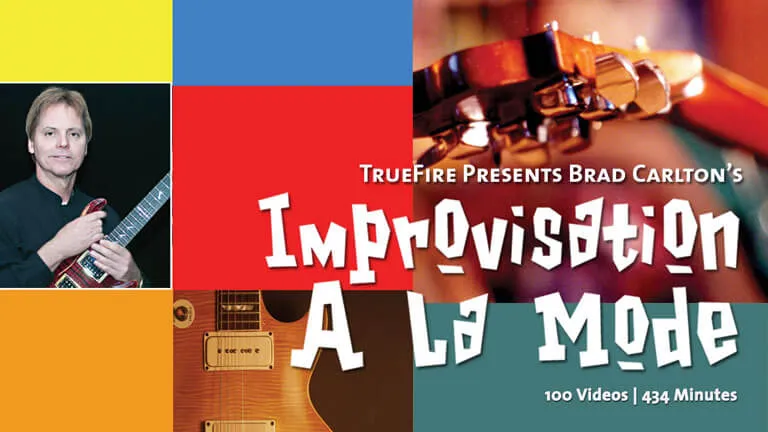
Improv a la Mode

About this course

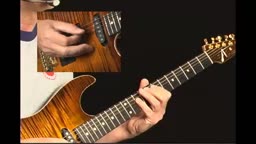
Brad Carlton's reputation as one of the industry's most sought after "stunt" studio guitarists is well deserved. His mastery of the fretboard is exceeded only by his working knowledge of theory, harmony and technique. Carlton is best known for his uncanny ability to improvise impeccably executed solos over any changes, in any style -- with little or no rehearsal time.

Improvisation A La Mode unravels the mystery of improvisation by revealing Carlton's unique approach for instantly identifying parent keys along with their respective modes and applying his improvisational know-how to create rich colors and textures in solos and rhythm work.

Improvisation A La Mode is a hands-on playing course - no manuals, tedious theory, paperwork or exercises required. You will play your way through the course by following the video segments, referencing a single chart and practicing over correlated jam tracks. Here's how Improvisation A La Mode works:

All seven modes are presented and discussed in detail to explore the mode's construction and tonality.

Using the mode's corresponding jam track, Carlton demonstrates the mode's tonal colors and their application for solo and rhythm work.

Carlton presents all major scale forms, across the neck, from which the modes can be utilized in any position.
A system for quickly identifying parent keys and scales is presented and demonstrated extensively.
Octaves and pentatonic scales are presented to quickly connect parent scales with their respective modes.
A wide variety of progressions are examined with demonstrations of solo and rhythm improvisation.

What you'll learn

  • Navigate between strings using octave relationships
  • Map all five pentatonic scale forms across the entire fretboard
  • Prepare for pentatonic scale learning
  • Locate any note across the entire fretboard
  • Understand how pentatonic forms interlock like puzzle pieces
Release date: 11/19/2004 • 7h 14m runtime
Start Course
Sample lessons
Modes Intro
Modes Intro
Continued
Ionian
Ionian
Part 1
Ionian
Ionian
Part 2
Ionian
Ionian
Part 3

What's included

100 lessons • 7 charts • 21 Jam Tracks

Modes Intro
Modes. Some players swear by them and some consider them useless. Whatever camp you may gravitate towards, everyone agrees that players should understand modes as they apply to improvisational theory and then decide how much or how little to incorporate into their own playing. This course will cover all of the bases and give you a solid foundation to build on and add more color and texture to your solos and rhythm work. There's no licks or parts to learn throughout this course -- it's all about applying this approach while improvising over the various jam tracks we've prepared. Your primary reference materials are the charts provided as the PDF element in this first lesson - print these out right away for easy access during the course. For obvious reasons, there are no Power Tab, or additional PDF elements - it's all on the videos, jams and charts. The best way to approach this series is to first watch all of the video segments and then go back to review and then apply the theory against the jam track so that you can clearly "hear" what's going on harmonically. Every example throughout the series is presented in the key of C and so, you'll also want to start transposing the material to every key as well as memorizing the basic construction of each mode and it's underlying chords. Modes. Some players swear by them and some consider them useless. Whatever camp you may gravitate towards, everyone agrees that players should understand modes as they apply to improvisational theory and then decide how much or how little to incorporate into their own playing. This course will cover all of the bases and give you a solid foundation to build on and add more color and texture to your solos and rhythm work. There's no licks or parts to learn throughout this course -- it's all about applying this approach while improvising over the various jam tracks we've prepared. Your primary reference materials are the charts provided as the PDF element in this first lesson - print these out right away for easy access during the course. The best way to approach this series is to first watch all of the video segments and then go back to review and then apply the theory against the jam track so that you can clearly "hear" what's going on harmonically. Every example throughout the series is presented in the key of C and so, you'll also want to start transposing the material to every key as well as memorizing the basic construction of each mode and it's underlying chords. At first, all this might sound tedious and confusing but it's really not. In fact, it's very simple to comprehend and apply once you get the general idea. Be patient, spend your practice time wisely - learn a little and then apply it right away over the jam tracks. Now let's get busy! At first, all this might sound tedious and confusing but it's really not. In fact, it's very simple to comprehend and apply once you get the general idea. Be patient, spend your practice time wisely - learn a little and then apply it right away over the jam tracks. Now let's get busy!
Modes Intro
Modes. Some players swear by them and some consider them useless. Whatever camp you may gravitate towards, everyone agrees that players should understand modes as they apply to improvisational theory and then decide how much or how little to incorporate into their own playing. This course will cover all of the bases and give you a solid foundation to build on and add more color and texture to your solos and rhythm work. There's no licks or parts to learn throughout this course -- it's all about applying this approach while improvising over the various jam tracks we've prepared. Your primary reference materials are the charts provided as the PDF element in this first lesson - print these out right away for easy access during the course. For obvious reasons, there are no Power Tab, or additional PDF elements - it's all on the videos, jams and charts. The best way to approach this series is to first watch all of the video segments and then go back to review and then apply the theory against the jam track so that you can clearly "hear" what's going on harmonically. Every example throughout the series is presented in the key of C and so, you'll also want to start transposing the Modes. Some players swear by them and some consider them useless. Whatever camp you may gravitate towards, everyone agrees that players should understand modes as they apply to improvisational theory and then decide how much or how little to incorporate into their own playing. This course will cover all of the bases and give you a solid foundation to build on and add more color and texture to your solos and rhythm work. There's no licks or parts to learn throughout this course -- it's all about applying this approach while improvising over the various jam tracks we've prepared. Your primary reference materials are the charts provided as the PDF element in this first lesson - print these out right away for easy access during the course. The best way to approach this series is to first watch all of the video segments and then go back to review and then apply the theory against the jam track so that you can clearly "hear" what's going on harmonically. Every example throughout the series is presented in the key of C and so, you'll also want to start transposing the material to every key as well as memorizing the basic construction of each mode and it's underlying chords. At first, all this might sound tedious and confusing but it's really not. In fact, it's very simple to comprehend and apply once you get the general idea. Be patient, spend your practice time wisely - learn a little and then apply it right away over the jam tracks. Now let's get busy! material to every key as well as memorizing the basic construction of each mode and it's underlying chords. At first, all this might sound tedious and confusing but it's really not. In fact, it's very simple to comprehend and apply once you get the general idea. Be patient, spend your practice time wisely - learn a little and then apply it right away over the jam tracks. Now let's get busy!
Ionian
Do Re Mi ... that's the happy sound of the Ionian mode that was ingrained in our musical memory when we were very young. You should be able to quickly learn how to recognize the sweet melodic sounds of the Ionian mode. Please view both videos completely before applying this section's improvisational theory over the jam track provided here.
Ionian
Do Re Mi ... that's the happy sound of the Ionian mode that was ingrained in our musical memory when we were very young. You should be able to quickly learn how to recognize the sweet melodic sounds of the Ionian mode. Please view both videos completely before applying this section's improvisational theory over the jam track provided here.
Ionian
Knowing "the numbers" of a scale is essential for choosing your sound. Here we will examine all seven tones of the Ionian mode. Please view both videos completely before applying this section's improvisational theory over the jam track provided here.
Ionian
Knowing "the numbers" of a scale is essential for choosing your sound. Here we will examine all seven tones of the Ionian mode. Please view both videos completely before applying this section's improvisational theory over the jam track provided here.
Ionian
In this section we will present an overview of the chords that are built from the Ionian mode. This will give you more harmonic options. Please view both videos completely before applying this section's improvisational theory over the jam track provided here.

+ 93 more lessons

Start Course

Reviews

7 results

sjbuzz54

11/11/22

Improvisation ala Mode

Thanks so much Brad for your continued dedication to teaching guitar, you pack a lifetime of information in every course, your hints are so valuable, I only wished I had started your courses earlier!!


Mysticguitar

11/01/22

One of the best

I don't understand why this course hasn't gotten more reviews, I can't say enough good things about it.

boogie50

Verified buyer

02/21/21

And tastes great, too!

Brad does his usual thorough job of explaning the different modes and how to aplly them to improvisiation. This will come in quite handy in those modal based jazz tones. A great start for jazz newbies and a great refresher for those who have been playing for a while. Either way, I'd recommend this as a resorce for your playing library.

shoebox5t5

Verified buyer

06/25/20

Outstanding Tutorial

One of the best from Mr. Carlton... just the kind of information I need to get my 'Improv' juices flowing.

Acrooster

Verified buyer

03/29/20

Very useful

Modes can be such a mystery. Trying to teach my students just seems to confuse them so much so this is awesome. The approach helps students hear the sound of the mode and simplifies it's origin and use. Great job as usual.

Stop searching. Start improving with All Access.

Try 14 days free. Cancel any time.