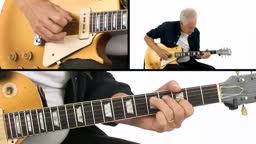
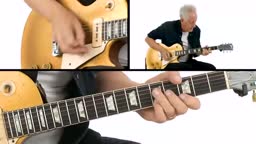
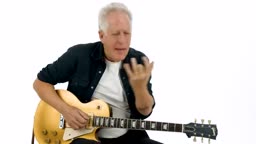
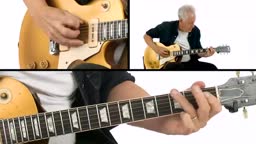
Good blues has humor, sex, danger; a good man feeling bad, a bad man feeling good, Lightning in a bottle — three chords and the truth! Great Blues guitarists connect with their listeners on an emotional level. In skilled hands, blues solos can evoke a whole range of human emotion.
As we aspiring players start developing our own soloing skills, we tend to think about what scales, arpeggios, or licks to use and that’s why we find ourselves playing more notes, but less music.
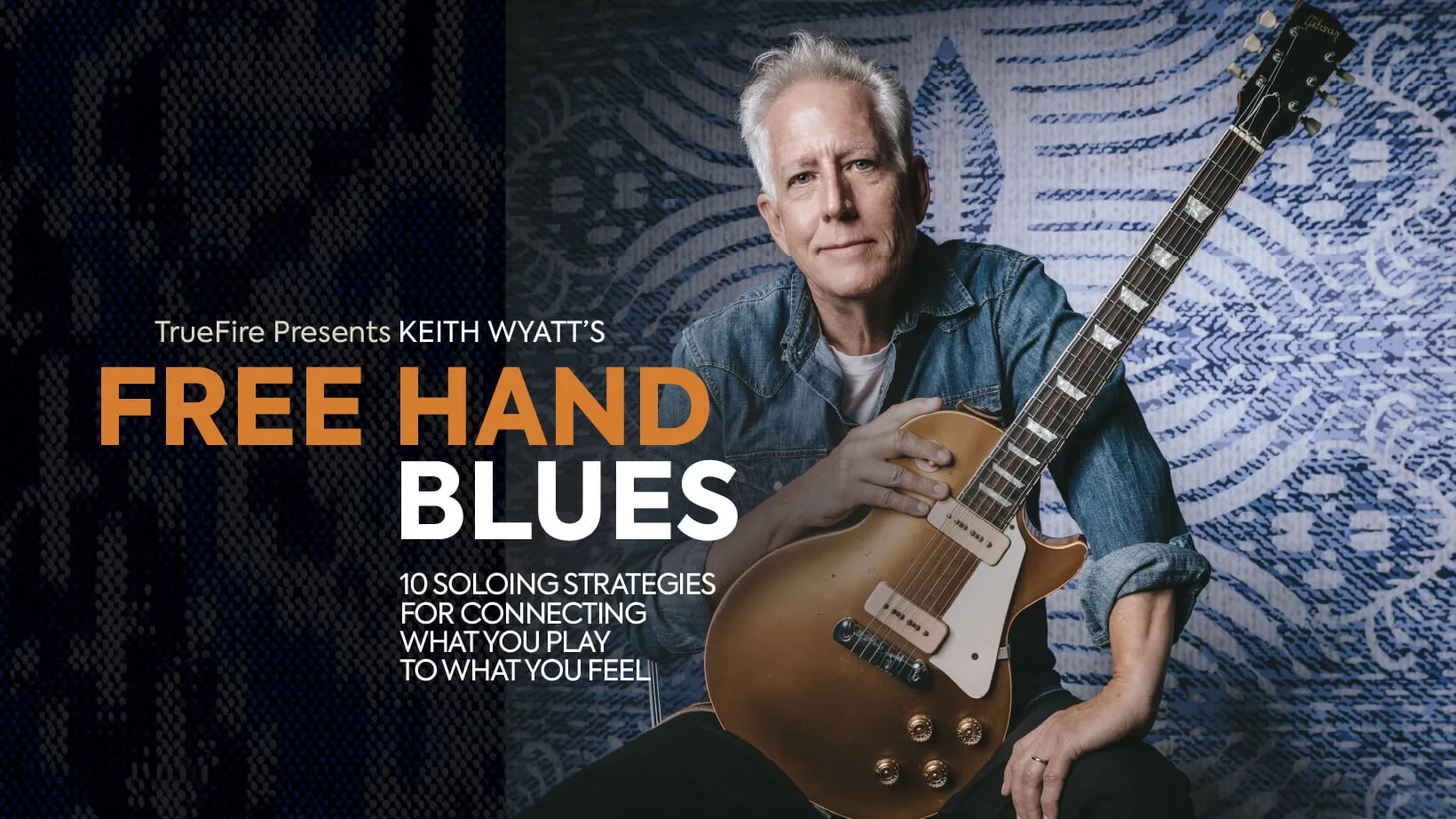
Keith Wyatt shares 10 distinctive blues soloing strategies and as much different approach in Free Hand Blues. You’ll learn how to “play what you feel” to spark emotional reactions and connect with your listeners.
”A single blues phrase can express power, romance, weariness, optimism, joy, despair - the whole range of human feelings.
How do you express desire? Frustration? Maintain an interesting musical conversation? Get your point across clearly? Fill the room with energy? Handle challenging music in a direct, bluesy way? Carry blues feels into other styles?
Start with what you want the listener to feel, and then line up the techniques and vocabulary to express it. I’ll show you how to craft solos by starting with the feelings that inspire you and then working backward to develop the musical tools that you’ll need to communicate them.
I’ve prepared 10 Free Hand Blues soloing studies, each focused on a key approach for building your solos following this principle.”
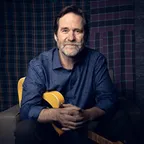
Keith Wyatt has been performing, recording, touring and teaching guitar professionally for over four decades. Keith directed the GIT guitar program, written best-selling instruction books, hundreds of articles, and released over a dozen full-length best-selling instructional videos. Keith’s online School of Blues Guitar, featured on ArtistWorks (our sister company) continues to be top-ranked and highly acclaimed.
You’ll have all of TrueFire’s advanced learning tools at your finger tips to personalize your workspace and learn at your own pace.
You can loop, slow down, or speed up any section of a lesson. Plus, all of the tab and notation is synced to the videos for the optimal learning experience. You’ll also get tab and standard notation files to print out, Guitar Pro files, and all of the backing tracks to practice with.
Grab your guitar, and let’s play some Free Hand Blues with Keith Wyatt!
What you'll learn
Execute hybrid picking technique for expressive blues phrasing
Use bending choices (whole step vs half step) to follow harmony
Play authentic Memphis R&B rhythm guitar patterns
Play blues ballads using melody as the foundation
Handle 3-6-2-5 bridge progressions in blues context
Hi, I’m Keith Wyatt. Great blues guitar players hit us on an emotional level. A single phrase can express power, romance, weariness, optimism, joy, despair - the whole range of human feelings. If we’re thinking about what scales, arpeggios, or licks to use — then that’s what your audience will hear. To create an emotional reaction with the listener — which we all aspire to do — we need to think of soloing in a much different way. Start with what you want the listener to feel, and then line up the techniques and vocabulary to express it. With this in mind, I’ve prepared 10 soloing studies, each focused on a key approach for building your solos following this principle. Ready to dig in? Let's get started!
"Jelly on a Plate" is a medium 12-bar shuffle in F that demonstrates a variety of solo-building concepts, starting with interpreting a vocal melody and then transitioning to a new idea in each of the seven choruses. The technical ingredients all come from the blues tradition, but the emphasis here is on arranging, i.e. keeping the energy flowing naturally toward the conclusion. Learn the rhythms and solos phrase-by-phrase and chorus-by-chorus, then step back and listen to how it all flows. You get much more out of your existing vocabulary when you think "big picture" - small ideas add up to big results.
The aspiration of a great blues soloist is to tell a story with the guitar that enhances the song. Solos are usually short, a chorus or two, but the longer the solo, the more challenging it is to keep the listener engaged. "Jelly on a Plate" uses a variety of story-telling techniques including melody, repetition, contrast, energy flow, texture, dynamics and call-and-response. It's not just a bunch of licks strung together - there is a plan for how to develop the story so it builds to the final conclusion. Plan your work, work your plan and good things happen.
The aspiration of a great blues soloist is to tell a story with the guitar that enhances the song. Solos are usually short, a chorus or two, but the longer the solo, the more challenging it is to keep the listener engaged. "Jelly on a Plate" uses a variety of story-telling techniques including melody, repetition, contrast, energy flow, texture, dynamics and call-and-response. It's not just a bunch of licks strung together - there is a plan for how to develop the story so it builds to the final conclusion. Plan your work, work your plan and good things happen.
The aspiration of a great blues soloist is to tell a story with the guitar that enhances the song. Solos are usually short, a chorus or two, but the longer the solo, the more challenging it is to keep the listener engaged. "Jelly on a Plate" uses a variety of story-telling techniques including melody, repetition, contrast, energy flow, texture, dynamics and call-and-response. It's not just a bunch of licks strung together - there is a plan for how to develop the story so it builds to the final conclusion. Plan your work, work your plan and good things happen.
"Splainin'" is an up-tempo shuffle in G based on standard ichanges arranged into more "uptown" form. The challenge is to play a choherent, bluesy solo at a fairly quick tempo over moving chords and shifting keys. The solution presented here is to simplify - less notes/more rhythm, and a focus on simple, repetitive themes that flow through the changes with only slight adjustments. When you're faced with a technical challenge, don't complicate - simplify. Clear ideas played with authority are the essential language of blues.
One of the traditional aspirations of blues is "play less, say more." How do you make that happen? This solo "splains" it as a conversation between different voices - one low and one high, one rhythmic and one melodic, one repetitive and one flowing. By concentrating on the quality of each phrase and playing simple, vocal ideas, the conversation stays on point. Great instrumentalists like Freddie King and Albert Collins recorded dozens of pieces like this that still sound fresh and natural decades later because what they didn't play counts as much as what they did.
I recently purchased Keith Wyatt’s ‘FreeHand Blues’ & really like it!! It’s full of tasteful rhythms & licks & I’m already jumping around and working on tunes/pieces that are my favorites, for starters… Keith is a cool teacher & I thank him for sharing his knowledge & music…. !!
1
10YearsGone
Verified buyer
10/22/25
Keeping it Free Hand!
Love his teaching and was recommended for learning the blues!
L
littlesister
Verified buyer
10/07/25
Free Hand Blues
An excellent course. I learned phrasing I had missed out on years ago. Highly recommended