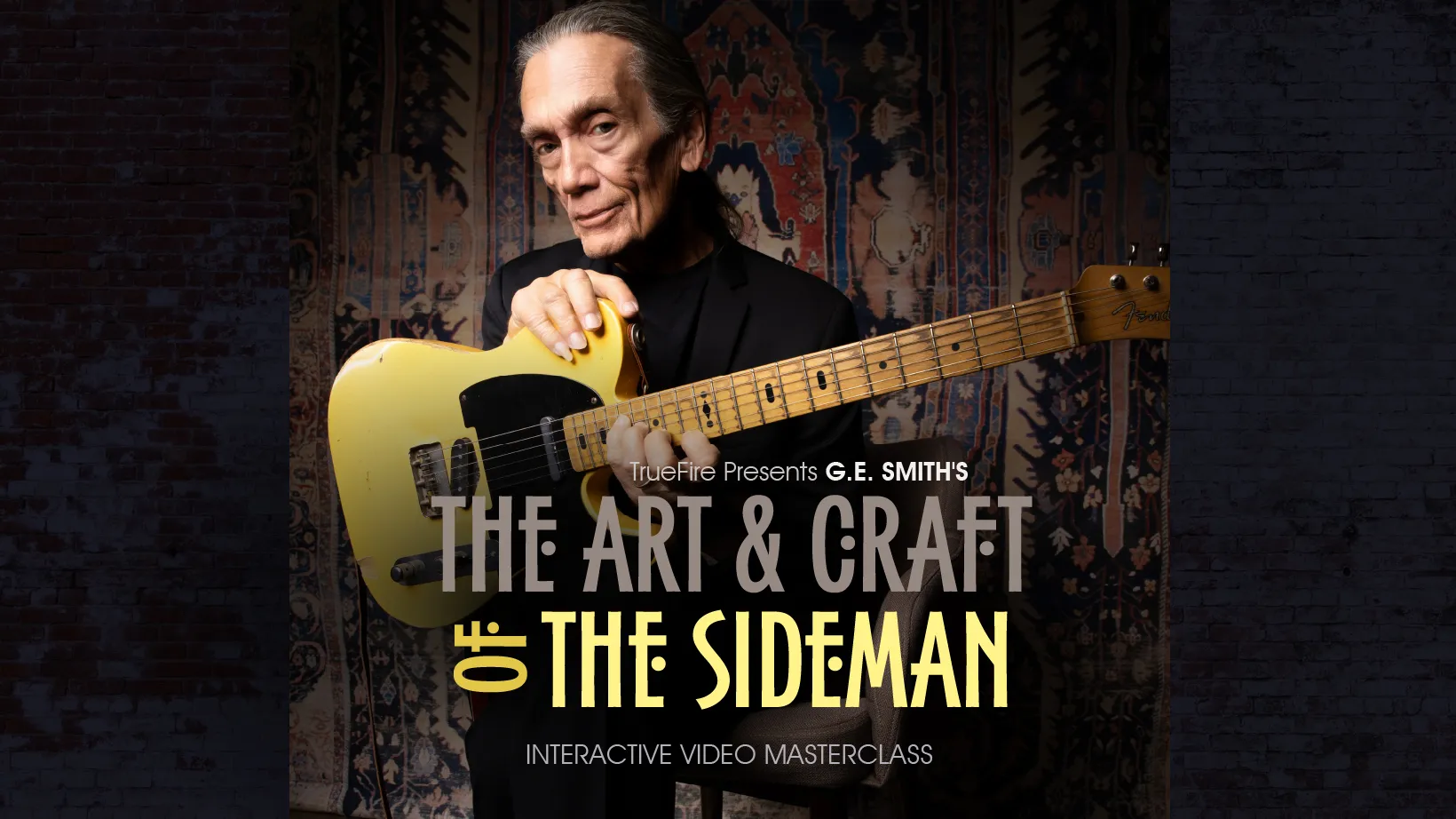
The Art & Craft of the Sideman

Interactive Video Masterclass

Marty FriedmanTommy EmmanuelSteve VaiEric GalesEric Johnson

Get this course and 1,000+ more with All Access

Try 14 days free. Cancel any time.

Purchase Individual Course for $19.99
The Art & Craft of the Sideman

About this course

The role of a sideman in a band is equally, if not more, crucial to a band’s success than the role of the frontman. The sideman requires a unique set of skills and sensitivities that are often overlooked but vital for any aspiring professional musician.

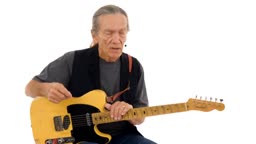
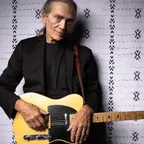
The Art and Craft of the Sideman is authored and presented by one of the most accomplished, sought-after ‘sidemen’ in the biz — G.E. Smith. This masterclass will guide your development of the skills you’ll need command of to make you a valuable band member while enriching your musical journey, opening doors to diverse and rewarding opportunities.

”I’ve always been drawn to the role of a sideman. The variety of genres and musicians that I get to play with and learn from keeps me inspired. The challenge of crafting guitar parts on the fly, supporting a singer, and honoring the song keeps me on my toes.

There are no shortcuts for developing the big ears and solid chops you’ll need as a sideman, But… I can give you a running start.

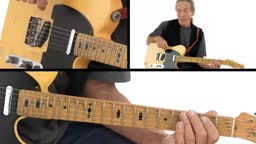
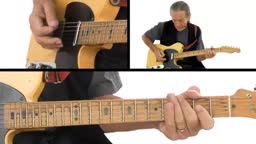
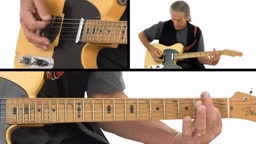
We’ll play through 10 backing tracks in a variety of styles. I’ll demonstrate and explain what to listen for and how to quickly craft rhythm and lead parts to keep your singer, band members, and audience smiling.”


G.E. Smith was the lead guitarist for the duo Hall & Oates during the band's heyday from 1979 to 1985, playing on five number-one singles. Smith then took on the role of Saturday Night Live's bandleader and has recorded and performed with David Bowie, Mick Jagger, Bob Dylan, Roger Waters, Tina Turner, Tracy Chapman, Tom Waits, and dozens of other top-tier artists.

In short, G.E. is one of the most prolific, respected guitarists and musicologists of all time, which is why we are thrilled to welcome him to the family with his first TrueFire course, The Art & Craft of the Sideman.

G.E.’s masterclass is a must-have learning journey for any musician aspiring to play in a band professionally or just for the joy of making music with other musicians.

You’ll have TrueFire’s advanced learning tools at your fingertips to personalize your workspace and learn at your own pace.

The performances are tabbed, notated, and synced to the video with looping and slow-motion controls. Backing tracks, Guitar Pro files, printable tab and notation are also included.

Grab your guitar, and let’s dig in with G.E. Smith!

What you'll learn

  • Execute harmonic picking technique by adjusting pick grip and thumb placement
  • Control chord density by selective string muting
  • How to follow chord changes using fifths instead of root notes
  • Techniques for varying rhythmic entry points in solos
  • Understanding when to play and when to leave space
Release date: 12/12/2023 • 5h 12m runtime
Start Course
Sample lessons
Music Should be Fun
Music Should be Fun
Key Insights
Stoned Free
Stoned Free
Overview
Stoned Free: Rhythm
Stoned Free: Rhythm
Performance
Stoned Free: Rhythm
Stoned Free: Rhythm
Breakdown

What's included

94 lessons • 35 charts • 47 Jam Tracks

The Art & Craft of the Sideman
Hey, G. E. Smith here. Welcome to The Art and Craft of The Sideman.

Now me, I've always been drawn to the role of Sideman. All the different varieties of music and all the different musicians that I've gotten to play with and learn from have really kept me inspired.

I don't think there are any shortcuts to developing big ears and solid chops. You'll need them as a sideman, but I hope I can give you a running start here. In this course, we'll play through some backing tracks together in a variety of styles. I'll demonstrate what I listen for and how to quickly craft rhythm and lead parts.

Keep your singer happy, gotta do that. Keep your band members happy, and the audience too. You ready to get started? I am. So grab your guitar, and let's dig in.
The Sideman
So, at some point in my musical career, probably when I was in my twenties, I started buying these old books about music, about the jazz bands in the twenties and thirties. There were all these great pictures of these bands, and they would talk about the sidemen. There might be a featured singer, like Duke Ellington or Count Basie leading the band, but there were the sidemen.

Then there were the blues guys, like Howlin' Wolf. I'd look at the guys in his band and wonder, who are these sidemen? At one point, I got to play with Hubert Sumlin, the great guitar player from Wolf's band. I showed him one of those pictures, with Hubert in it, and asked, "Who are these other guys in the band?"

He said, "Well, the bass player, that's Bluefields. And the piano player, they called him "Destruction" because he played so hard, the ivories would come flying up across the stage." That whole concept of being a sideman was just something I wanted to do.

You know, some might say I wasn't brave enough to be the frontman. I never really wanted to be the frontman. When I was, it felt kind of awkward. I've always loved the idea of backing good singers. I'm really lucky to have played with great people like Daryl Hall, John Oates, and Bob Dylan. Say what you want about Bob, he's a great singer. His phrasing, the different tones he uses, and of course, his songs are amazing.

Supporting a good singer has always been really important to me and has made me a much better guitar player. If I could give any advice about being a sideman, part of it is, obviously, you have to know how to play your instrument, get different tones and sounds, and be adaptable and quick. You have to listen and quickly catch on to what's going on.

You have to listen to a lot of recordings. For me, it was records – 33s and 45s. I learned a lot of songs, all the Motown stuff, Smokey Robinson, the Supremes, and more.

I also listened to country stuff like George Jones, Merle Haggard, Merle Travis, Hank Williams. You have to know your Hank, even if you never play a Hank Williams song. Get that stuff under your fingers.

And then there's fitting into an organization. You're going to be on the bus and in hotels for months with these people, so the hang has to be right. You have to know how to hang out, get along with people, and enjoy different personalities instead of being dismissive. Sure, every once in a while, you'll meet a jerk, but generally, you have to be open and just try to get along. Pay attention – that's the main thing.
Bucket List
In this lesson series, we will explore the process of learning and adapting to new music tracks. We'll start by analyzing a piece I'm partially familiar with, identifying chord progressions and observing the drummer's and bass player's techniques. Focusing on rhythm-based music, the importance of each band member's role, especially the drummer and bass player, will be highlighted. We'll then delve into creating a rhythm guitar part, emphasizing the value of playing less to avoid overcrowding the musical space. This approach includes using smaller combinations of strings for a more refined sound. The lesson will be hands-on, beginning with a performance, followed by a detailed breakdown of the techniques and concepts discussed.
Bucket List: Rhythm
In this lesson series, we will explore the process of learning and adapting to new music tracks. We'll start by analyzing a piece I'm partially familiar with, identifying chord progressions and observing the drummer's and bass player's techniques. Focusing on rhythm-based music, the importance of each band member's role, especially the drummer and bass player, will be highlighted. We'll then delve into creating a rhythm guitar part, emphasizing the value of playing less to avoid overcrowding the musical space. This approach includes using smaller combinations of strings for a more refined sound. The lesson will be hands-on, beginning with a performance, followed by a detailed breakdown of the techniques and concepts discussed.
Bucket List: Rhythm
In this lesson series, we will explore the process of learning and adapting to new music tracks. We'll start by analyzing a piece I'm partially familiar with, identifying chord progressions and observing the drummer's and bass player's techniques. Focusing on rhythm-based music, the importance of each band member's role, especially the drummer and bass player, will be highlighted. We'll then delve into creating a rhythm guitar part, emphasizing the value of playing less to avoid overcrowding the musical space. This approach includes using smaller combinations of strings for a more refined sound. The lesson will be hands-on, beginning with a performance, followed by a detailed breakdown of the techniques and concepts discussed.
Bucket List: Rhythm 2
In this lesson series, we will explore the process of learning and adapting to new music tracks. We'll start by analyzing a piece I'm partially familiar with, identifying chord progressions and observing the drummer's and bass player's techniques. Focusing on rhythm-based music, the importance of each band member's role, especially the drummer and bass player, will be highlighted. We'll then delve into creating a rhythm guitar part, emphasizing the value of playing less to avoid overcrowding the musical space. This approach includes using smaller combinations of strings for a more refined sound. The lesson will be hands-on, beginning with a performance, followed by a detailed breakdown of the techniques and concepts discussed.
Bucket List: Rhythm 2
In this lesson series, we will explore the process of learning and adapting to new music tracks. We'll start by analyzing a piece I'm partially familiar with, identifying chord progressions and observing the drummer's and bass player's techniques. Focusing on rhythm-based music, the importance of each band member's role, especially the drummer and bass player, will be highlighted. We'll then delve into creating a rhythm guitar part, emphasizing the value of playing less to avoid overcrowding the musical space. This approach includes using smaller combinations of strings for a more refined sound. The lesson will be hands-on, beginning with a performance, followed by a detailed breakdown of the techniques and concepts discussed.

+ 87 more lessons

Start Course

Reviews

14 results

MudMudski

Verified buyer

12/02/25

G. E. Smith is a great teacher. I sometimes have trouble counting while I play. Smiths lesson is really helping in that area.
littlesister

Verified buyer

10/27/25

The Art and Craft of the Sideman is one of the most instructive courses I have followed from Truefire. G E Smith is more than just a teacher, he has played with and for many top performers. His course is packed full of useful advice and creative approaches to rhythm and lead accompaniment.

Lunaticevolver

Verified buyer

12/29/24

Great Source of knowledge G. E Smith

Excellent source of information from one of the best to ever play the instrument G. E one of my heroes since I was young , highly recommended

guitarguy234

Verified buyer

12/20/24

Nothing like a sideman!

Enjoy the level of knowledge from this guy ,take it to the bank!

grenadier6ayc

Verified buyer

09/12/24

Hip stuff!

A lifetime of wisdom, hear if you listen!

Stop searching. Start improving with All Access.

Try 14 days free. Cancel any time.