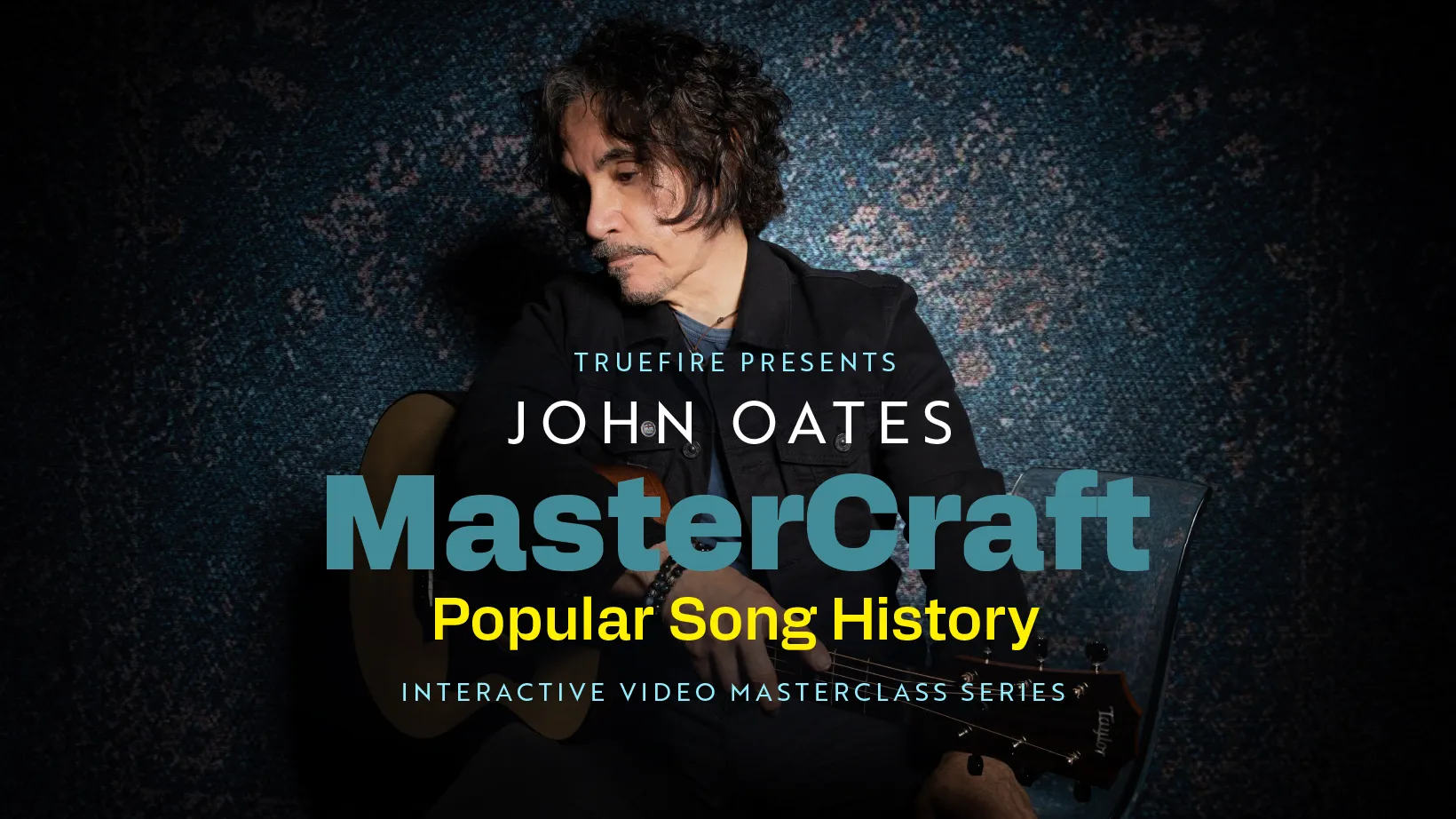
MasterCraft: Popular Song History

Interactive Video Masterclass Series

Marty FriedmanTommy EmmanuelSteve VaiEric GalesEric Johnson

Get this course and 1,000+ more with All Access

Try 14 days free. Cancel any time.

Purchase Individual Course for $19.99
MasterCraft: Popular Song History

About this course

Studying the origins and evolution of popular music provides contemporary songwriters with valuable insight and a deeper understanding of the art form to help them write more meaningful and relevant music.

In this Popular Song History edition of John Oates’ MasterCraft series, you’ll learn timeless songwriting techniques as you explore key “songwriting” milestones of popular music from the early 1900s to the present.

” We’ll examine the development of song form, harmony, the hook, and, very importantly — how cultural influences have informed the popular songwriter over the decades.

As we explore popular music’s chronology, I’ll play examples to illustrate the progression of songwriting techniques in a musical context.

I hope this edition inspires you to learn more about the proven songwriting approaches of the past so you can put that knowledge to work in your own songwriting.”


John guides you through the history of popular songwriting emphasizing the best practices from the past that inform the craft of songwriting today. Key lessons include The Traditional Folk Song, Ragtime & Delta Blues, Tin Pan Alley, Early 20th Century, Big Band and Swing, Early Rock & Roll, Evolution of the “Hook,” The Modern Era of Pop Production, and The Current State of Songwriting.

You’ll have TrueFire’s advanced learning tools at your fingertips to personalize your workspace and learn at your own pace.

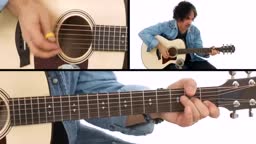
The performances are tabbed, notated, and synced to the video with looping and slow-motion controls. Backing tracks, Guitar Pro files, printable tab and notation are also included.

Inducted into the Songwriters Hall of Fame and the Rock & Roll Hall of Fame, John Oates’ exceptional talents as a musician, songwriter, and producer have and continue to make seminal contributions to our musical heritage.

Grab your guitar and notebook — let’s explore the past with John Oates!

Note: John Oates' 3-course MasterCraft series is available for purchase as a bundle, which includes early access, bonus content, and big savings! Click here to learn more about the bundle.


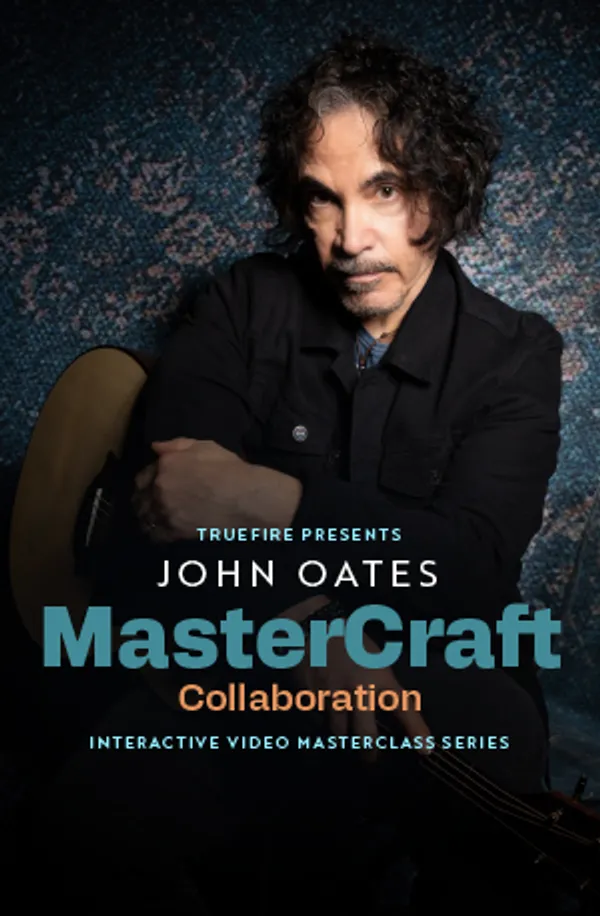
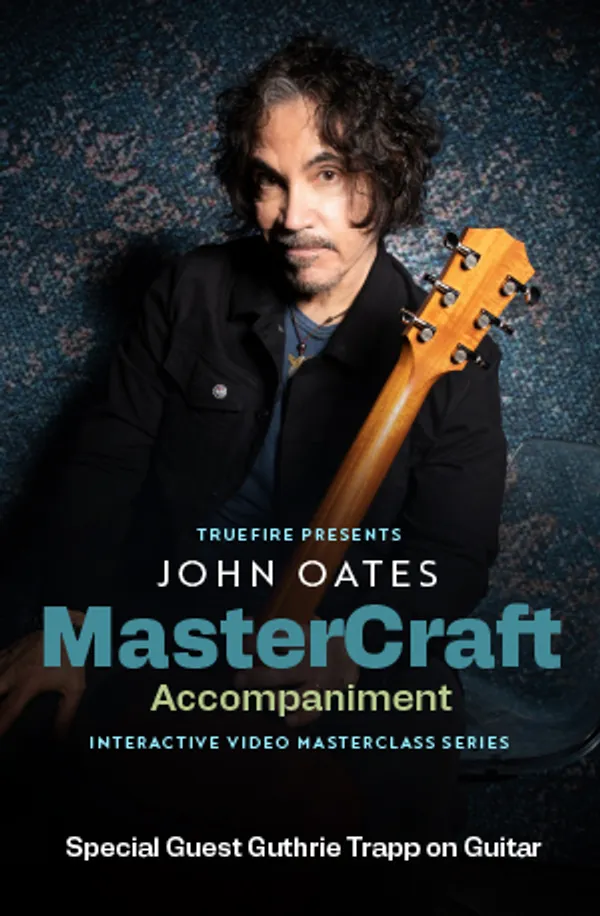
P.S. Aspiring songwriters might also be interested in two other editions from John’s Masterclass series: The Art of Collaboration passes on best practices for co-writing; The Art of Accompaniment demonstrates the most important aspects of supporting other musicians and serving the song.

What you'll learn

  • Play a complete fingerstyle arrangement of 'Sittin' On Top of the World' with modern chord substitutions
  • Apply hybrid picking technique switching between thumb pick and flat pick approach
  • Integrate melody picking within fingerstyle accompaniment
  • Extract and play melody lines within chord progressions
  • Arrange a Duke Ellington big band song for solo acoustic guitar
Release date: 04/01/2024 • 2h 27m runtime
Start Course
Sample lessons
The Traditional Folk Song
Exploring an Era
Come Back Baby
Come Back Baby
Overview
Come Back Baby
Come Back Baby
Performance
Come Back Baby
Come Back Baby
Breakdown

What's included

40 lessons • 10 charts

MasterCraft: Popular Song History
Hello everyone, this is John Oates. Understanding the origins and evolution of popular music is immensely beneficial for contemporary songwriters. It provides valuable insights and deepens our grasp of this art form, aiding in the creation of more meaningful and relevant music.

In this edition of Mastercraft, we will delve into key songwriting milestones of popular music from the early 1900s to the present day. As we journey through the chronology of popular music, I'll play examples to showcase the progression of songwriting techniques in a musical context. My hope is that this edition inspires you to learn about and apply the proven songwriting approaches of the past to enhance your own creative process.

So, pick up your guitar, and let's embark on this exploration together.
About This Course
I consider myself somewhat of a pop music historian, and I find it fascinating to trace the roots of American popular music. Before I begin, I want to clarify that I'll be sharing my interpretations of traditional and classic American popular music throughout history. So, please understand if my renditions don't strictly adhere to the originals.

Let me start with a disclaimer: American popular music, in my opinion, is one of America's greatest exports, profoundly influencing and being embraced by cultures worldwide. Other than modern democracy, I believe it's one of the finest contributions America has made globally. As a small part of this musical tradition, I enjoy celebrating and exploring its origins.

Some might assume that American popular music began with rock and roll, but its roots extend much further back. Its development dates back to the 19th century, evolving significantly in the early to mid-1800s, and then experiencing a transformative period in the early 1900s. This transformation was largely due to the advent of radio and the phonograph machine, both pivotal to the history of American popular music and inextricably linked. These two innovations have evolved together over the years, shaping the course of American music.
The Traditional Folk Song
I'd like to begin by discussing the early influences in the American colonies, particularly focusing on the Scotch-Irish and English ballad traditions brought over by the colonists. These traditions, primarily oral, evolved in the Appalachian region of the American South, eventually giving rise to what we now recognize as American folk and bluegrass music.

This evolution is fascinating because these traditional songs were not static; they were continually adapted and enriched by the people who sang and performed them, incorporating their life experiences into a rich tapestry of music imported from Europe.

Another critical aspect of American popular music is the African American experience. The music originating in the deep south, especially from New Orleans up the Mississippi Delta, represents a pivotal part of this narrative. This includes the music of slavery and the broader African American experience, encompassing genres like the blues and jazz. These two elements – the folk traditions from Europe and the African American musical heritage – are the cornerstones of what makes American popular music so distinctive.

Throughout this discussion, I hope to demonstrate key elements of these traditions that have shaped our music up to the present day, which is a story in itself.
Silver Dagger
In this lesson series, we will explore the evolution of a traditional English ballad within American folk music, illustrating how a song from the 1800s transformed across time and oceans. We'll focus on a version popularized during the American folk music revival, particularly the rendition by Joan Baez. This will include an analysis of Baez's contemporary folk techniques, like the Carter family strum, demonstrating the dynamic nature of musical adaptation and interpretation in the context of American musical history.
Silver Dagger
In this lesson series, we will explore the evolution of a traditional English ballad within American folk music, illustrating how a song from the 1800s transformed across time and oceans. We'll focus on a version popularized during the American folk music revival, particularly the rendition by Joan Baez. This will include an analysis of Baez's contemporary folk techniques, like the Carter family strum, demonstrating the dynamic nature of musical adaptation and interpretation in the context of American musical history.
Silver Dagger
In this breakdown, we will delve into the intricacies of a unique right-hand guitar technique based on the Carter family strum, as used in American folk music. We'll explore how this technique involves alternating bass notes with the thumb and a brushy index finger motion for a syncopated effect, including hammer-ons for added depth. This approach results in a rich and flowing sound. We will see how this technique is applied in a folk hybrid version of 'Silver Dagger,' illustrating its evolution from a traditional English ballad to a distinct style within American folk music.
Ballad of Omie Wise
In this lesson series, we will explore the role of the capo in guitar playing, particularly how it aids in adapting songs to different vocal ranges and styles. We'll discuss its impact on chord positions, inversions, and the overall sound of finger-picking pieces. Additionally, we'll delve into the finger-picking style of the legendary Doc Watson, focusing on his technique of using only the thumb and index finger. We'll examine his approach through the song 'Omi Wise', a classic Appalachian murder ballad, and learn how these techniques contribute to the unique sound of American folk music

+ 33 more lessons

Start Course

Reviews

2 results

wanderwolf

05/02/24

T.K. Chang

Great!
Joe H.

04/03/24

John Oates' MasterCraft: Popular Song History

This was a great course for me. I have been concentrating on learning Ragtime Blues for the last 3 years and I am so happy that Truefire have added many courses that have helped me immensely. John Oates is a really great teacher and storyteller. I love learning the background of players and where they come from. I loved the story of Mississippi John Hurts Guild guitar (1964 JF-30) that he played in Newport and that John is now the owner by way of his own guitar teacher ! I play Guild guitars since I was 14 years old in 1977 and would have loved to see John play his in this course. He does play it online elsewhere and plays MJH's "Spike Driver Blues". What a sound on that guitar. Hey John, I'll trade you my Guild M-20 for that JF-30, haha. I do look forward to Johns other courses, "MasterCraft: Collaboration" and "MasterCraft: Accompaniment", but I have a feeling that I was born in the era of "MasterCraft: Popular Song History" and that this is going to be my favorite go to course for a while ! Well Done John.

Stop searching. Start improving with All Access.

Try 14 days free. Cancel any time.