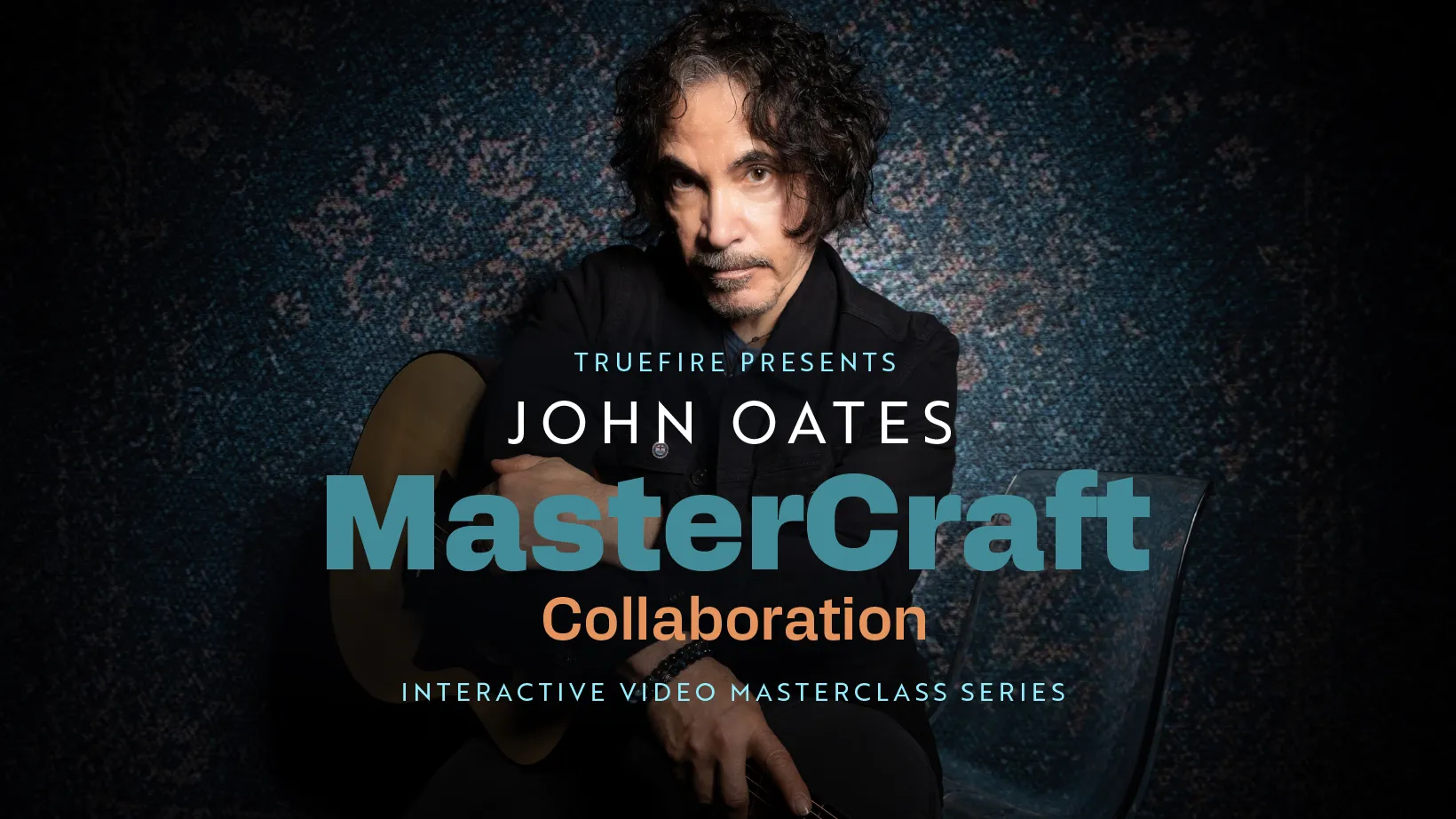
MasterCraft: Collaboration
Interactive Video Masterclass Series


Get this course and 1,000+ more with All Access
Try 7 days free. Cancel any time.

About this course
Countless hit songs across the entire history of popular music were written in collaboration with another songwriter. Co-writing is an essential aspect of the songwriting process, and today’s writers will find themselves in a wide variety of co-writing situations.
In this Collaboration edition of John Oates’ MasterCraft Series, you will learn how to approach and make the most out of the many different co-writing situations you will inevitably find yourself in.
” I’ve had many years of experience co-writing with Daryl, but also with many other songwriters. Learning how to approach and make the most out of each situation can be challenging and, naturally, requires first-hand experience.
In this edition of MasterCraft, I’ll share many of the key learnings from my own experiences and pass on the approaches that have worked best for me. Hopefully, you’ll find these approaches helpful on your own journey as a songwriter.“
John describes actual co-writing experiences from his own career to illustrate best practices for collaborative co-writing. Key lessons include A Safe Place for Creativity, The Dynamics of Collaboration, The Benefits of Getting Feedback, Working With a Lyricist, Keeping an Open Mind, and The Business of Collaborating.
You’ll have TrueFire’s advanced learning tools at your fingertips to personalize your workspace and learn at your own pace.
The performances are tabbed, notated, and synced to the video with looping and slow-motion controls. Backing tracks, Guitar Pro files, printable tab and notation are also included.
Inducted into the Songwriters Hall of Fame and the Rock & Roll Hall of Fame, John Oates’ exceptional talents as a musician, songwriter, and producer have and continue to make seminal contributions to our musical heritage.
Grab your guitar and notebook — let’s “collaborate” with John Oates!
Note: John Oates' 3-course MasterCraft series is available for purchase as a bundle, which includes early access, bonus content, and big savings! Click here to learn more about the bundle.
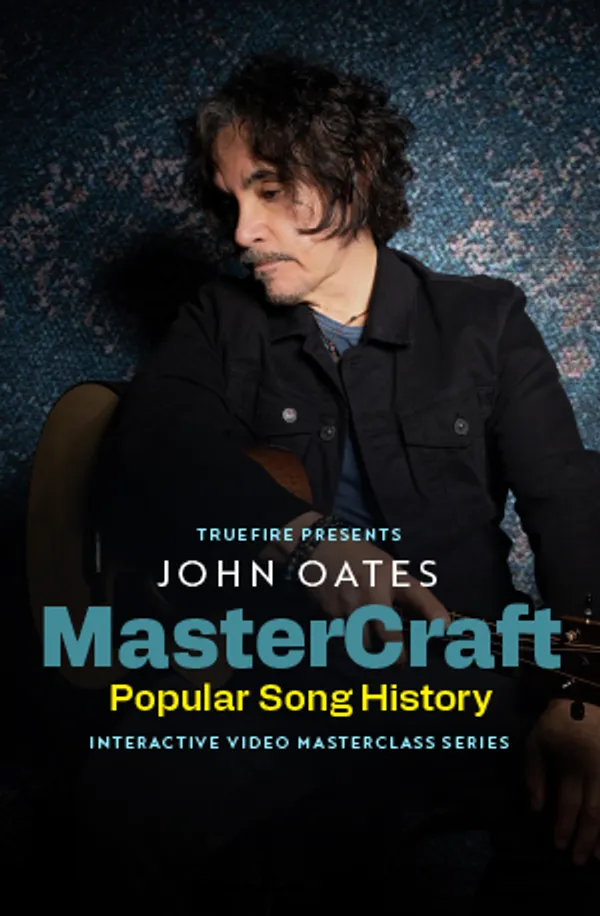
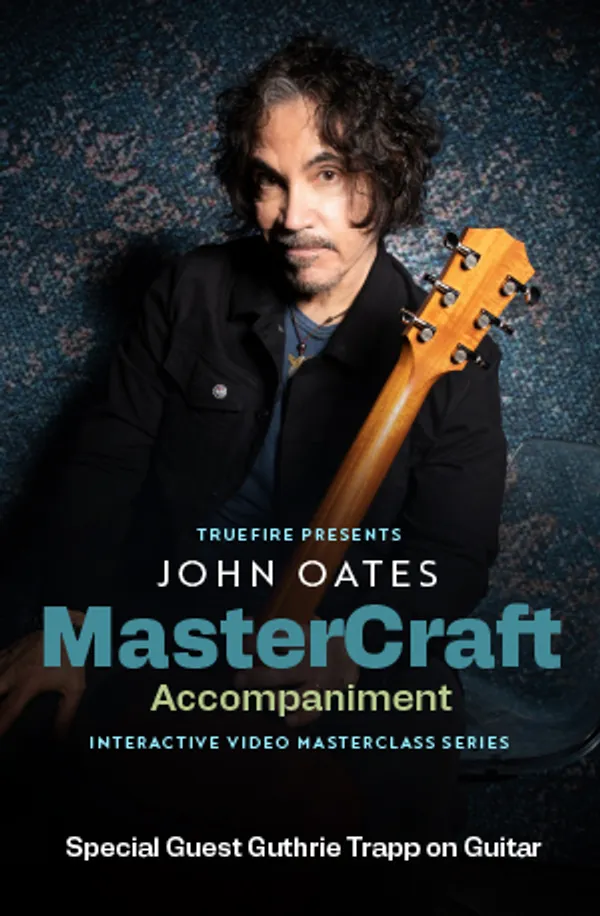
P.S. Aspiring songwriters might also be interested in two other editions from John’s MasterCraft series: Popular Song History reveals timeless aspects of the songwriting craft; The Art of Accompaniment demonstrates the most important aspects of supporting other musicians and serving the song.
In this Collaboration edition of John Oates’ MasterCraft Series, you will learn how to approach and make the most out of the many different co-writing situations you will inevitably find yourself in.
” I’ve had many years of experience co-writing with Daryl, but also with many other songwriters. Learning how to approach and make the most out of each situation can be challenging and, naturally, requires first-hand experience.
In this edition of MasterCraft, I’ll share many of the key learnings from my own experiences and pass on the approaches that have worked best for me. Hopefully, you’ll find these approaches helpful on your own journey as a songwriter.“
John describes actual co-writing experiences from his own career to illustrate best practices for collaborative co-writing. Key lessons include A Safe Place for Creativity, The Dynamics of Collaboration, The Benefits of Getting Feedback, Working With a Lyricist, Keeping an Open Mind, and The Business of Collaborating.
You’ll have TrueFire’s advanced learning tools at your fingertips to personalize your workspace and learn at your own pace.
The performances are tabbed, notated, and synced to the video with looping and slow-motion controls. Backing tracks, Guitar Pro files, printable tab and notation are also included.
Inducted into the Songwriters Hall of Fame and the Rock & Roll Hall of Fame, John Oates’ exceptional talents as a musician, songwriter, and producer have and continue to make seminal contributions to our musical heritage.
Grab your guitar and notebook — let’s “collaborate” with John Oates!
Note: John Oates' 3-course MasterCraft series is available for purchase as a bundle, which includes early access, bonus content, and big savings! Click here to learn more about the bundle.
P.S. Aspiring songwriters might also be interested in two other editions from John’s MasterCraft series: Popular Song History reveals timeless aspects of the songwriting craft; The Art of Accompaniment demonstrates the most important aspects of supporting other musicians and serving the song.
What you'll learn
- Use chord inversions to create smooth bass line movement
- Apply suspended and diminished chords for emotional color
- Play a complete fingerstyle arrangement with integrated bass line and melody
- Incorporate rhythmic variations and tempo rubato for expression
- Learn a technique for developing lyrics using nonsense syllables first
Release date: 05/01/2024 • 2h 08m runtime
Sample lessons
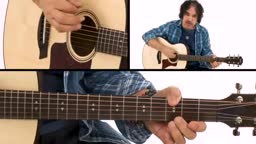
Arkansas
Performance
The Benefits of Getting Feedback
Key Insights & Approaches
Lose It in Louisiana
Story of a Songwriting Collaboration
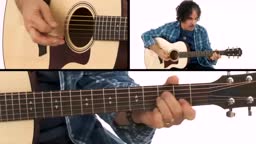
Lose It in Louisiana
Performance
What's included
24 lessons • 5 charts
Hello, this is John Oates. Throughout the history of popular music, countless hit songs have been crafted by songwriters working together. Collaborative writing is a vital part of the songwriting process, and today's songwriters often find themselves in diverse creative situations. In this edition of Mastercraft, I will share several key tricks of the trade that I've discovered through my own experiences. I'll also pass on some techniques that have been particularly effective for me. These lessons, I hope, will be useful in your own songwriting journey. So, grab your guitar, and let's get started.
Welcome to this course on songwriting, with a special focus on collaboration, a crucial aspect of the craft. Songwriting has always been a passion of mine, a journey that I've been on for many years. My path to becoming a songwriter began uniquely in the seventh grade. We had an assignment to write a poem about a current event, which at the time was the Bay of Pigs incident in Cuba. My poem about this topic led my English teacher, aware of my guitar skills, to suggest putting my words to music. This idea sparked my first venture into songwriting, aligning with the era of popular protest songs, and it deeply resonated with me.
From that point, I began writing more earnestly. My first recorded song was with my high school band in 1967. Over the years, my collaboration with Daryl Hall has been a significant part of my creative life, leading to considerable success. Our collaborative process was central to my work for many years. In this course, I'll discuss the dynamics of songwriting partnerships. While each collaboration is unique, there are common threads that bind them. We'll explore these dynamics, and I'll share examples of songs that emerged from these unique partnerships with incredibly creative individuals.
From that point, I began writing more earnestly. My first recorded song was with my high school band in 1967. Over the years, my collaboration with Daryl Hall has been a significant part of my creative life, leading to considerable success. Our collaborative process was central to my work for many years. In this course, I'll discuss the dynamics of songwriting partnerships. While each collaboration is unique, there are common threads that bind them. We'll explore these dynamics, and I'll share examples of songs that emerged from these unique partnerships with incredibly creative individuals.
Although this course primarily focuses on collaboration in songwriting, I'm going to start with a song that I wrote solo. I want to share the unique inspiration behind it and explain why it's relevant to our discussion.
The story begins in Wilson, Arkansas, a small town roughly 20 to 30 miles northwest of Memphis. Known for being one of the largest cotton plantations globally, Wilson set the scene for this song's creation. After performing with my Nashville band, the Good Road Band, at a small venue there, we found ourselves outside on Highway 61, famously known as the Blues Highway. It was a night with a full moon, and the highway cut through fields of white blooming cotton, with the Mississippi River flowing nearby.
Standing in the middle of Highway 61, looking up at the moon and surrounded by the glowing cotton fields, I felt a deep connection to the rich tradition of American song, tracing its roots along the Mississippi River and evolving into rock and roll. At that moment, inspired by the scenery and realizing I had been recording many songs by other artists, I felt a strong urge to write something that encapsulated this experience.
This was a moment of divine inspiration, a rare and precious occurrence for any songwriter. It’s essential to capture these moments when they happen, whether through a phone or a notebook. For me, the inspiration was so vivid that I didn't need anything to note it down. The rhythmic beauty of the white cotton fields in Arkansas struck a chord with me, and I started with the line, 'In the cold, white cotton fields of Arkansas.'
That line was all I had initially, and it wasn't until later, when I returned home and worked on it, that the song began to take shape. This process illustrates the blend of divine inspiration and craftsmanship in songwriting. With a basic hook and the inspiration from that night, I had to work to develop it further. The result is a song titled 'Arkansas,' which became the title track of my 2018 album. I'll now play 'Arkansas' for you, and hopefully, it conveys the essence of that inspirational night.
The story begins in Wilson, Arkansas, a small town roughly 20 to 30 miles northwest of Memphis. Known for being one of the largest cotton plantations globally, Wilson set the scene for this song's creation. After performing with my Nashville band, the Good Road Band, at a small venue there, we found ourselves outside on Highway 61, famously known as the Blues Highway. It was a night with a full moon, and the highway cut through fields of white blooming cotton, with the Mississippi River flowing nearby.
Standing in the middle of Highway 61, looking up at the moon and surrounded by the glowing cotton fields, I felt a deep connection to the rich tradition of American song, tracing its roots along the Mississippi River and evolving into rock and roll. At that moment, inspired by the scenery and realizing I had been recording many songs by other artists, I felt a strong urge to write something that encapsulated this experience.
This was a moment of divine inspiration, a rare and precious occurrence for any songwriter. It’s essential to capture these moments when they happen, whether through a phone or a notebook. For me, the inspiration was so vivid that I didn't need anything to note it down. The rhythmic beauty of the white cotton fields in Arkansas struck a chord with me, and I started with the line, 'In the cold, white cotton fields of Arkansas.'
That line was all I had initially, and it wasn't until later, when I returned home and worked on it, that the song began to take shape. This process illustrates the blend of divine inspiration and craftsmanship in songwriting. With a basic hook and the inspiration from that night, I had to work to develop it further. The result is a song titled 'Arkansas,' which became the title track of my 2018 album. I'll now play 'Arkansas' for you, and hopefully, it conveys the essence of that inspirational night.
In this lesson, we explore the unique intersection of divine inspiration and craftsmanship in songwriting. We start with a personal story from the instructor about writing the song 'Arkansas,' a piece not born from collaboration but from a moment of profound inspiration in Wilson, Arkansas. This example demonstrates how a songwriter can draw inspiration from their surroundings and experiences, transforming them into a compelling narrative set to music. The story behind 'Arkansas' serves as an excellent introduction to the course, illustrating the multifaceted nature of songwriting and setting the stage for deeper discussions on collaboration and creative processes in future lessons.
In this lesson, we explore the unique intersection of divine inspiration and craftsmanship in songwriting. We start with a personal story from the instructor about writing the song 'Arkansas,' a piece not born from collaboration but from a moment of profound inspiration in Wilson, Arkansas. This example demonstrates how a songwriter can draw inspiration from their surroundings and experiences, transforming them into a compelling narrative set to music. The story behind 'Arkansas' serves as an excellent introduction to the course, illustrating the multifaceted nature of songwriting and setting the stage for deeper discussions on collaboration and creative processes in future lessons.
Many songwriters often wonder how to know when they've created something special, when a song just feels right. Personally, I experience a very physical reaction during songwriting sessions, especially in collaborations. When there's a magical moment, I can feel it - my arm hairs stand up. It's a real indicator for me, although it's not the only way magic happens. But when you feel that sensation, you know something special is unfolding.
The key for songwriters is to be satisfied with expressing their emotions or the initial feeling that sparked the song. It's crucial not to overanalyze. If you're happy with the song and it feels right, that's a good sign. Another effective way to gauge a song's impact is to play it for someone. Create a captive audience, even if it means having them sit on the sofa, and observe their reaction. You can often tell immediately if a song is working based on their response.
Songwriting, especially when coupled with performing, is unique because you receive instant feedback, unlike other art forms. For example, a painter works in isolation and waits for an exhibition to gauge reactions. But as a songwriter and performer, the audience's immediate response can be incredibly telling.
I recall working with the great songwriter Jim Lauderdale from Nashville, who's quite a character. During our sessions, he would sometimes suggest an idea, and I'd unconsciously make a strange face, not realizing it. Jim humorously pointed this out, highlighting how natural reactions can shape the creative process.
When collaborating, it's important to ensure a safe, creative, and emotionally secure environment. Working with someone overly judgmental or overbearing can hinder the process. Many creative individuals have strong personalities, which can be beneficial, but it's essential that your collaborator helps facilitate and not dominate the process, ensuring there's no hidden agenda.
The key for songwriters is to be satisfied with expressing their emotions or the initial feeling that sparked the song. It's crucial not to overanalyze. If you're happy with the song and it feels right, that's a good sign. Another effective way to gauge a song's impact is to play it for someone. Create a captive audience, even if it means having them sit on the sofa, and observe their reaction. You can often tell immediately if a song is working based on their response.
Songwriting, especially when coupled with performing, is unique because you receive instant feedback, unlike other art forms. For example, a painter works in isolation and waits for an exhibition to gauge reactions. But as a songwriter and performer, the audience's immediate response can be incredibly telling.
I recall working with the great songwriter Jim Lauderdale from Nashville, who's quite a character. During our sessions, he would sometimes suggest an idea, and I'd unconsciously make a strange face, not realizing it. Jim humorously pointed this out, highlighting how natural reactions can shape the creative process.
When collaborating, it's important to ensure a safe, creative, and emotionally secure environment. Working with someone overly judgmental or overbearing can hinder the process. Many creative individuals have strong personalities, which can be beneficial, but it's essential that your collaborator helps facilitate and not dominate the process, ensuring there's no hidden agenda.
As many of you know, I've spent almost my entire adult life working with Daryl Hall. Together, we've written many songs, sometimes collaborating with outside writers. Today, I'm going to share a song that kick-started our career and put us on the map. It's from our 1973 album 'Abandoned Luncheonette,' which we recorded in New York City with the great Arif Mardin. This song was special, but we didn’t realize its full potential until the record was made.
Before diving in, I want to clarify the difference between a song and a record. They are not the same. A song is the initial creation by the writers, in whatever form it begins. The record is what it becomes in the recording studio, with inputs from producers, arrangers, and technology. It's the record that people hear and embrace, but the core elements of the song are what you build the record upon.
Now, onto the song's origin. It was late December of 1972 in Greenwich Village. It was cold, and late-night eateries were rare at the time. I ended up in a soul food restaurant, the Pink Teacup, around 3 am, where I met a woman wearing a pink tutu and cowboy boots. We started dating almost immediately. I invited her over for New Year's Eve, but she never showed up. Sitting alone with my guitar, I realized she was probably gone for good. That's when the line 'She's gone' came to me, starting off with a folky vibe.
A few days later, I shared this with Daryl. He liked it and added a signature piano riff, which I’ll demonstrate on the guitar. The songwriting process was a true example of divine inspiration, with both of us channeling our experiences of loss and using vivid imagery for the lyrics.
One interesting aspect of this song is that the tonic chord is never played. It starts with a pedal tone, a common piano technique that I had to adapt for the guitar. The song begins on an A chord with a B in the bass, alternating to a straight B major chord. I'm going to perform the song now, and then we'll break down its unique elements. So here we go with 'She's Gone' from 1973.
Before diving in, I want to clarify the difference between a song and a record. They are not the same. A song is the initial creation by the writers, in whatever form it begins. The record is what it becomes in the recording studio, with inputs from producers, arrangers, and technology. It's the record that people hear and embrace, but the core elements of the song are what you build the record upon.
Now, onto the song's origin. It was late December of 1972 in Greenwich Village. It was cold, and late-night eateries were rare at the time. I ended up in a soul food restaurant, the Pink Teacup, around 3 am, where I met a woman wearing a pink tutu and cowboy boots. We started dating almost immediately. I invited her over for New Year's Eve, but she never showed up. Sitting alone with my guitar, I realized she was probably gone for good. That's when the line 'She's gone' came to me, starting off with a folky vibe.
A few days later, I shared this with Daryl. He liked it and added a signature piano riff, which I’ll demonstrate on the guitar. The songwriting process was a true example of divine inspiration, with both of us channeling our experiences of loss and using vivid imagery for the lyrics.
One interesting aspect of this song is that the tonic chord is never played. It starts with a pedal tone, a common piano technique that I had to adapt for the guitar. The song begins on an A chord with a B in the bass, alternating to a straight B major chord. I'm going to perform the song now, and then we'll break down its unique elements. So here we go with 'She's Gone' from 1973.
+ 17 more lessons
Reviews
No reviews yet
Complete this course and be the first to share your experience.
Stop searching. Start improving with All Access.
Try 14 days free. Cancel any time.