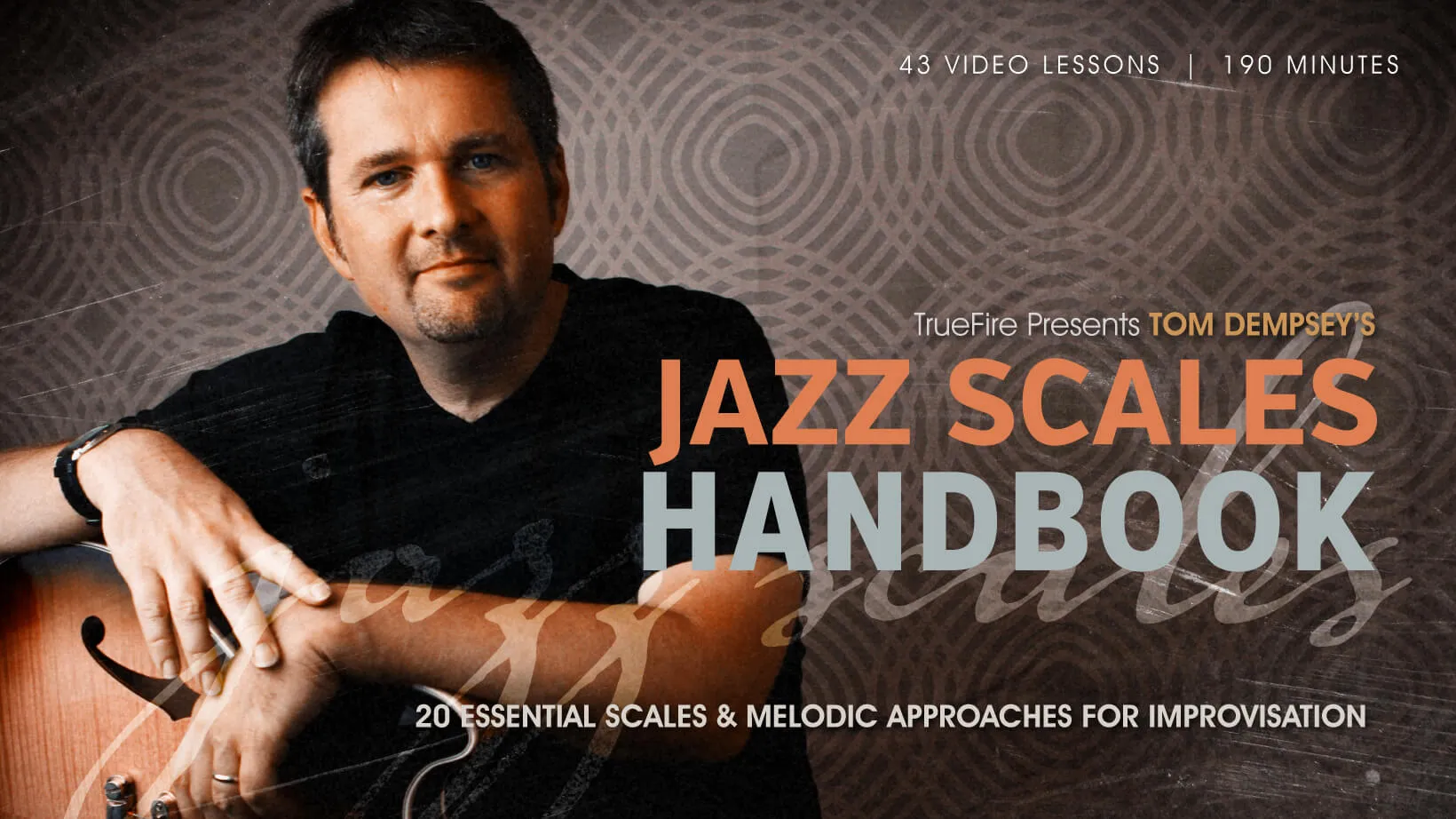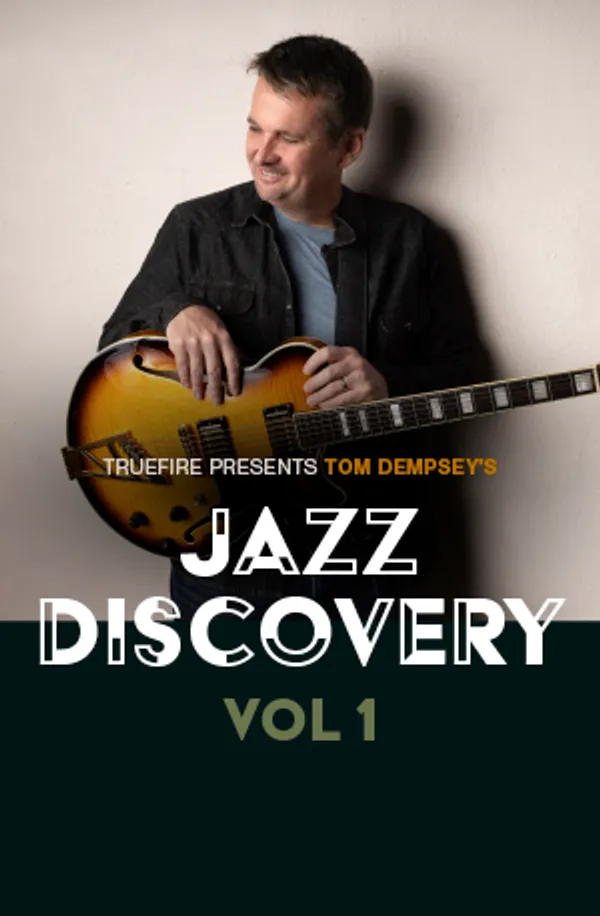
Jazz Scales Handbook

20 Essential Scales & Melodic Approaches for Improvisation

Marty FriedmanTommy EmmanuelSteve VaiEric GalesEric Johnson

Get this course and 1,000+ more with All Access

Try 14 days free. Cancel any time.

Purchase Individual Course for $14.99
Jazz Scales Handbook

About this course

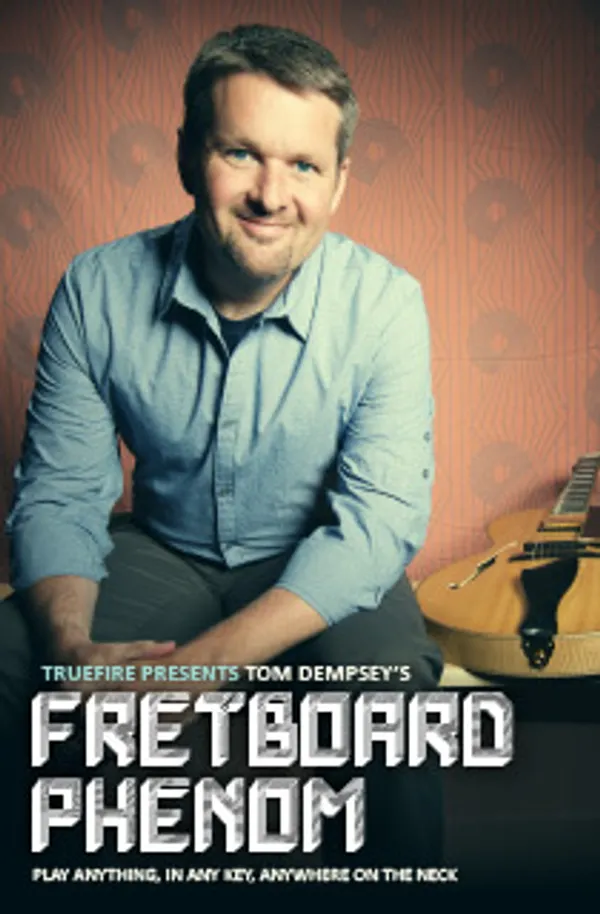
Scales are the foundation of any musician’s improvisational vocabulary. Understanding how scales relate to specific chords and progressions broadens the player’s palette of possibilities when improvising. Using Tom Dempsey’s Jazz Scales Handbook as your guide, you’ll learn how to apply and improvise with 20 of the most commonly used scales found in jazz.

"I'll cover 20 of the most commonly used scales found in jazz, although ALL of these scales can be applied to any genre.  So, if you’re a rock player, blues player or even a country player — learning these scales will help you become a better soloist. As you work through the Jazz Scales Handbook, you’re going to learn how to play these 20 scales, identify their distinctive sonic colors, and then apply them in a jazz setting."

For each of the 20 scales, Tom will show you one 2-octave fingering for both the scale, and the arpeggio of the parent chord. You’ll learn the formula for each of the following 20 scales so that you can easily play them anywhere on the fretboard, in any key.

Tom will also point out the distinctive characteristics of each scale as a sonic color to help you craft effective creative approaches. Additionally, you’ll learn a musical example that’s derived from this sound so that you can immediately apply it to your improvisational vocabulary.

"There are two segments dedicated for each scale. In the first segment, I'll show you the fingering of the scale that we're going to use. You'll learn about the scale and one fingering of that scale. In the second segment, you'll learn how to apply the scale in a real jazz setting with a backing track. This will help you to learn how to transition from playing the scale to playing music with the scale. All of this is in an effort to build up your repertoire of scales and improvisational ideas."

All of the musical examples are tabbed and notated for your practice, reference and study purposes. You’ll also get Guitar Pro files so that you can play, loop and/or slow down the tab and notation as you work through the lessons. Plus, Tom generously includes all of the backing tracks for you to work with on your own.

Tom also includes a Jazz Scales Handbook Reference Guide, which reveals 5 essential fingerings for each of the 20 scales so that you can easily find and play them anywhere on the neck, in any key. This fingering system is based on Tom’s innovative Tonality Shapes organization of the fretboard from his Fretboard Phenom course.

Grab your guitar and let’s dig deep into 20 jazz scales with Tom Dempsey!

What you'll learn

  • Understand harmonic minor scale construction
  • Learn two-octave harmonic minor scale fingering
  • Understand scale-based improvisation
  • Develop understanding of unique scale intervals
  • Learn two-octave Locrian mode fingering
Release date: 04/05/2017 • 3h 10m runtime
Start Course
Sample lessons
Aeolian Scale
Aeolian Scale
Analysis & Demonstration
Aeolian Lick
Aeolian Lick
Demonstration
Jazz Melodic Minor Scale
Analysis & Demonstration
Jazz Melodic Minor Lick
Demonstration

What's included

43 lessons • 41 charts • 18 Jam Tracks

Jazz Scales Handbook
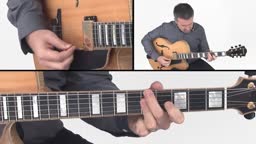
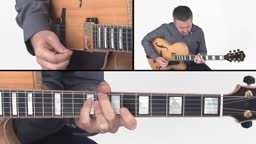
Hi, I'm Tom Dempsey, and welcome to the Jazz Scales Handbook. In this course, we're going to explore how to play twenty of the most important jazz scales that you need to know in your jazz improvisation. You're going to learn how to play these various scales and then how to apply them to a real jazz setting.

There are two segments dedicated for each scale. In the first segment, I'll show you the fingering of the scale that we're going to use. You'll learn about the scale and one fingering of that scale. In the second segment, you'll learn how to apply the scale in a real jazz setting with a backing track. This will help you to learn how to transition from playing the scale to playing music with the scale. All of this is in an effort to build up your repertoire of scales and improvisational ideas.

You'll also have the opportunity to increase your study by using the reference guide to learn these scales all over the neck of the guitar. You can then begin to transfer the musical ideas presented to different areas of the neck and eventually transpose them into different keys. But for now, it's time to dig into these scales and the musical ideas that I have generated from them. So, grab your guitar and get going!
Reference Manual
Before we get started with this course, I wanted to talk about one extra component that I added to the course, which is the Reference Manual. Because there's so much to get through in this course, I'm basically giving you an example of each one of these scales coming from one position on the neck. But, I've also laid out the different fingerings for each of the scales in different positions through a system I call "tonality shapes". With tonality shapes, there are basically five different shapes that exist within a 12 fret span of the guitar. Three of them are going to be one octave shapes, and two of them are going to be two octave shapes, and they all connect together. Here we'll look at some examples of them.

All of these connect together up the neck, and the great thing is that once you learn these scales coming out of these various positions and shapes, you essentially start to know them all over the neck in all 12 keys.

As I mentioned, we really only have time to get through one for each one of these video segments, but if you want to get deeper and get thoroughly through the scales, you need to be cross-referencing with the Reference Manual. So, as you start to learn one scale, go back to the Reference Manual and check it out in the various positions. You should also do the same with the various musical examples that I'll be giving throughout the course.

The Reference Manual is basically a guide, I tried to streamline it to make it as user friendly as possible. Once you get these fingerings underneath your fingers, and really start to get the sound of the scale in your ears, you're well on your way to being able to play these jazz scales and incorporate them into your playing.
Major Pentatonic Scale
Pentatonic scales: They're not just for rock and blues playing, they're also an important part of the sound of jazz.

In this lesson, we're going to take a look at learning a two octave fingering of your Bb major pentatonic scale. I'll show you my method of learning the scale so that you're able to learn the motor memory skills necessary to learn to play the scales while at the same time getting the sound of the scale in your ears. This is somewhat of a departure from the traditional way that guitarists commonly learn their scales. We'll also relate this to the sound of the parent chord in its arpeggiated form.
Major Pentatonic Lick
Our first lick in this series is called "Charlie Come Riffin'". This is derived from the major pentatonic scale and can be played in a variety of applications.

One of the most influential jazz guitarists was Charlie Christian. Part of his trademark sound was how he used riffs similar to this one in his solos. This particular lick uses the major pentatonic scale in a way similar to Charlie's style. It's a great lick that you can use in a major setting as well as in a blues.
Minor Pentatonic Scale
Continuing our look at the pentatonic scale, in this lesson we're going to take a look at one of the stalwart scale choices and fingerings in any guitar player's toolbox...the minor pentatonic scale.

In this lesson, we'll be focusing on the G minor pentatonic scale in 3rd position. We'll learn the entire two octave fingering and compare it to the minor 7th chord arpeggio. Once again, we'll see that the difference between the minor pentatonic scale and the arpeggio fingering is only one note. Being able to understand this connection will lead to more musical applications of the scale in your own playing.
Minor Pentatonic Lick
Here I'm going to share with you a classic minor pentatonic scale lick that can be used playing over a minor chord as well as in a blues setting. The sound of this lick is similar to what a great guitarist like Kenny Burrell might play. When you listen to his playing, you can hear the influence of the minor pentatonic throughout. Becoming comfortable with this sound is very important and will serve you well as you build your repertoire of ideas.
Blues Scale
The next logical place to move after the minor pentatonic scale is the blues scale. In considering the intervallic construction of the blues scale, we'll see how it is exactly the same as the minor pentatonic scale with the addition of a chromatic passing tone between the 4th and 5th degrees. This is known as the b5, which has also come to be known as the "blue note". You've heard it throughout your life, and now we're going to learn how to extract that bluesy sound from this scale.

+ 36 more lessons

Start Course

Reviews

12 results

CasperFrank

Verified buyer

05/13/25

Tom Dempsey is a great teacher!
Caeso2010

Verified buyer

10/09/21

Reference Course

This is a good course for reference. I use it in parallel to some other Jazz courses and jump right in when I need to know new scales. Very good course to become familiar with scales.

Wessel07

Verified buyer

09/07/21

I love it because it not only give the scale, but also an arpeggio and as a bonus included a musical theme based on the scale and arpeggio. I just love it. If you don't have the Guitar Pro 5 multi-track tablature editor software for gp5 file download, it also comes with full pdf downloads. Great stuff!!!!!!!!!!!

jkeith

07/08/21

I keep coming back to ths course

This is a useful course and reference. Tom introduces a bunch of jazz and blues scales, breaks them down into their individual notes, parent chords, and positioning, and then demonstrates how to apply each of these scales with a set of licks. For me, the licks provide a handy starting point to jump off into my own improvisational style – playing around and discovering. The lessons also come with PDF guides for each particular scale. Bottom line: These video lessons and written materials are a valuable resource that I keep coming back to.

pendejo57

Verified buyer

03/25/21

Tom is a great teacher, and the reference manual that accompanies the course helps too. A great reference guide with practical applications for someone who wants to learn the nuts and bolts of jazz.

Stop searching. Start improving with All Access.

Try 14 days free. Cancel any time.