Jazz Guitar Heroes

Learn Signature Techniques of Jazz Guitar Legends Wes Montgomery, Kenny Burrell, Jim Hall, Grant Green, Pat Martino, and Joe Pass

Marty FriedmanTommy EmmanuelSteve VaiEric GalesEric Johnson

Get this course and 1,000+ more with All Access

Try 14 days free. Cancel any time.
Purchase Individual Course for $9.99
Jazz Guitar Heroes

About this course

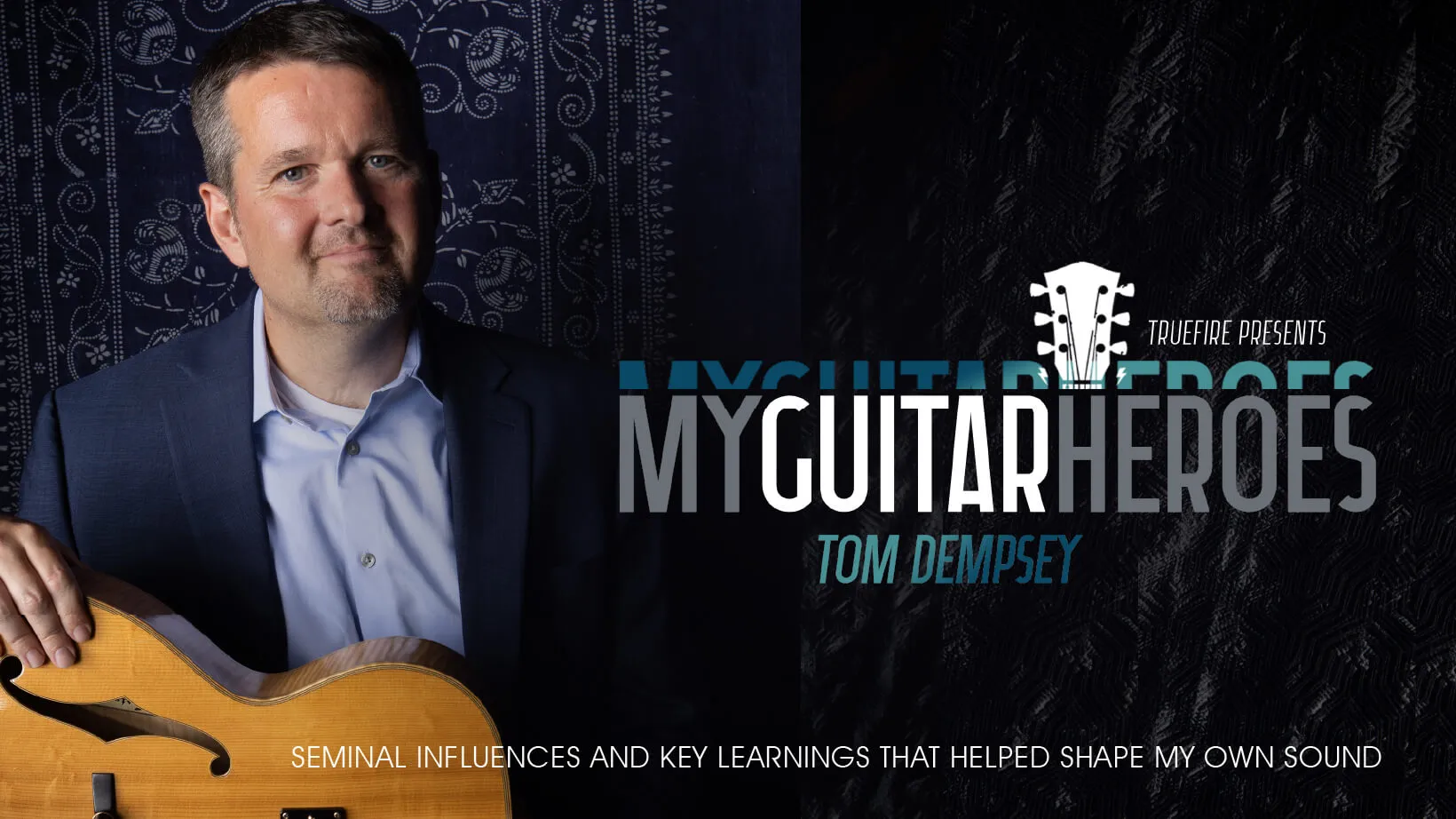
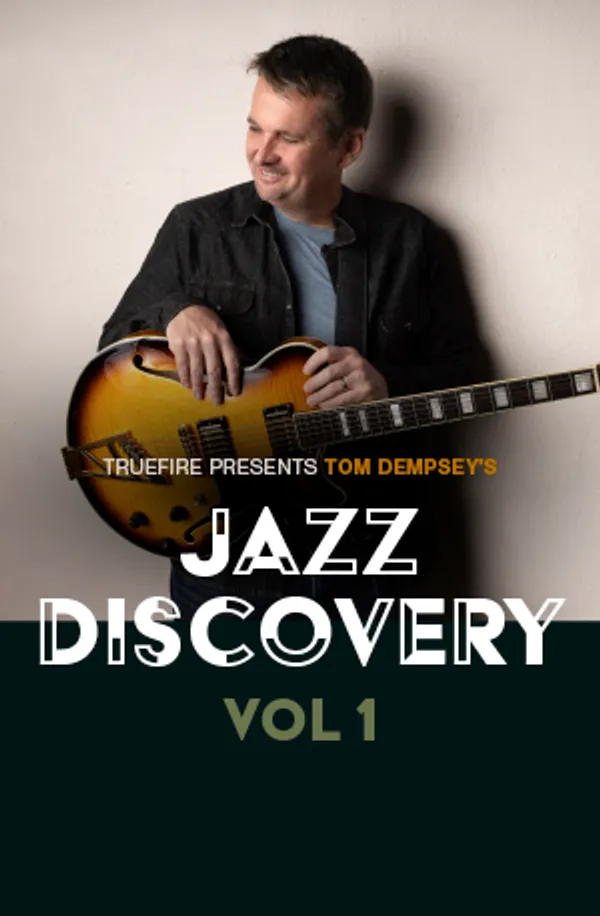
Every musician has a long list of other musicians, past and present, that have inspired, influenced and helped shape their own sound and musicality. It's the natural evolution of music. We asked Tom Dempsey to pass on to you some of the key learnings that his Guitar Heroes passed on to him.

”Wes Montgomery, Kenny Burrell, Jim Hall, Grant Green, Pat Martino, and Joe Pass are just a few of the players that greatly influenced my sound.

I’ll first show you a few of the techniques and approaches that I picked up from each one of them and then we’ll play through a series of performance studies for musical context, complete with all of TrueFire’s learning tools to help you work through the content.

One of the things I love about Wes Montgomery’s playing is his signature use of octaves in his solos, which I’ll demonstrate for you. Next we’ll dig into Kenny Burrell’s seamless transitions between hard bop and blues language. Jim Hall’s use of motivic development is something every player can put to good use.

We’ll also take a look at Grant Green’s well crafted lines that beautifully outline the changes. We’ll examine Pat Martino’s virtuosic improvisational approach and last, but certainly not least, Joe Pass and his masterful solo guitar playing.”


In this course, Tom will first introduce his heroes to you and describe why he found them so influential. After each discussion, Tom will then present a performance study illustrating those influences in a musical context, over a backing track. A breakdown follows every performance and he will explain and demonstrate all of the key concepts and approaches in play.

You’ll get standard notation and tabs for all of the performance studies. Plus, you’ll be able to use TrueFire’s learning tools to sync the tab and notation to the video lesson. You can also loop or slow down the videos so that you can work with the lessons at your own pace. All of the backing tracks are included to work with on your own as well.

Grab your guitar and let’s dig in with Tom Dempsey!

What you'll learn

  • Learn to outline chord changes with precision
  • Learn how to blend blues vocabulary with jazz harmony
  • Learn signature techniques from six legendary jazz guitarists
  • Develop rhythmic consistency in eighth-note lines
  • Develop clearer, more succinct improvisational ideas
Release date: 07/29/2021 • 1h 57m runtime
Start Course
Sample lessons
Kenny Burrell
Kenny Burrell
My Guitar Heroes: 2
K.B. Bop
K.B. Bop
Overview
K.B. Bop
K.B. Bop
Performance
K.B. Bop
K.B. Bop
Breakdown

What's included

26 lessons • 12 charts • 5 Jam Tracks

My Guitar Heroes: Tom Dempsey
Hey, I’m Tom Dempsey, and welcome to My Guitar Heroes.

Wes Montgomery, ,Kenny Burrell, Jim Hall, Grant Green, Pat Martino, and Joe Pass are just a few of the players that greatly influenced my sound.

In this course, I’ll first show you a few of the techniques and approaches that I picked up from each one of them and then we’ll play through a series of performance studies for musical context, complete with all of TrueFire’s learning tools to help you work through the content.

One of the things I love about Wes Montgomery’s playing is his signature use of octaves in his solos. Next we’ll dig into Kenny Burrell’s seamless transitions between hard bop and blues language. Jim Hall’s use of motivic development is something every player can put to good use. We’ll take a look at Grant Green’s well crafted lines that beautifully outline the changes. We’ll examine Pat Martino’s virtuosic improvisational approach. And last, but certainly not least, Joe Pass and his masterful solo guitar playing.

Grab your guitar and let me take you on a tour of some of my favorite jazz guitarists of all time!
Wes Montgomery
Wes Montgomery was truly one of the first real jazz guitarists that I heard. Where I grew up in Binghamton, New York, I didn't have access to record stores that carried much jazz. And I didn't have the money as a kid to buy a lot of records. But our public library had a decent collection of jazz records which became my early source for learning the music. In the collection of recordings that were present in the library there was the Wes Montgomery record "Smoking at the Half Note." When I discovered "Smoking at the Half Note" I felt that I had heard something that was beyond anything I had every heard on the guitar. The touch, the feel, the groove, the blues the octaves, the chords. It was all so incredible. I had to live with this record. The way it worked in the library is that you could only check out the record for 14 days and you couldn't renew it. And you could only take out I think 8 records. So every two weeks I would go to the library and check out 8 records. One of these 8 records was always "Smoking at the Half Note." When I returned the records I would then walk to the books on the second floor and pretend to be browsing. From this vantage point I could look over the circulation desk. I would watch as they went through the process of checking the record back in and then returning it to the stacks. Once that was completed I would go back downstairs and take out the recording. After about a year I think they caught on to my ways.
Wes-like
This solo is performed in the sound and spirit of Wes Montgomery. Make sure you check out the progression of this solo as it moves from single note ideas to octaves, then to a chord solo. The solo itself is performed over the chord changes to the Wes Montgomery classic tune "Four on Six."
Wes-like
This tune is one of my favorites of Wes. The performance contains a number of ideas that were influenced by Wes's single note playing. There are also some solid octave and chord solo ideas here for you to pick up on that you can start to incorporate into your own style of playing.
Wes-like
As we break this solo down in detail I think the most effective approach is to identify and separate the three different sections: single note ideas, octave, and chord solo. Each of these areas need a different kind of attention. I would also encourage you to listen to this while studying the solo from "The Incredible Jazz Guitar" on the Riverside label from 1960 and his solo from "Smoking at the Half Note" from 1965 on the Verve label. This will give you even more context to the material here.
Kenny Burrell
Kenny Burrell was one of the first legends of jazz guitar that I heard live in concert. I had heard his recordings of "Midnight Blue", his work as a sideman on Jimmy Smith's recording "Back at the Chicken Shack," and of course his work on John Coltrane's recordings "The Cat" and "Kenny Burrell & John Coltrane."All of these recordings had a tremendous impact on me. The fusing of hard bop language with a deep affinity of the blues was very infectious. Kenny Burrell's approach to playing is both approachable and sophisticated. It was the presence of these two elements that had such an impact on me as a player.
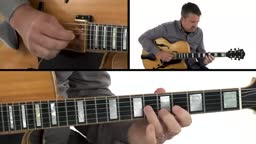
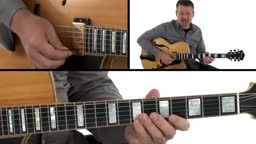
K.B. Bop
This solo is insipired by the guitar language of Kenny Burrell. It is based on his tune "Freight Trane" which is a bebop blues tune which is from his recording with John Coltrane entitled "Kenny Burrell and John Coltrane."

+ 19 more lessons

Start Course

Reviews

7 results

Osokin

Verified buyer

11/11/22

Jazz Guitar Inspiration!

Tom Dempsey provides enlightening insights into the techniques and approaches of six of his jazz guitar heroes (Wes Montgomery, ,Kenny Burrell, Jim Hall, Grant Green, Pat Martino, and Joe Pass) and then gives examples of their playing in performance studies. An inspiring course for the aspiring jazz guitarist!

Sindibad

09/01/21

My Guitar Heroes

It is a very large study of the legacy of great musicians.

stapes

Verified buyer

08/27/21

Brilliant

Only my opinion but all those players have ‘that’ jazz guitar sound that I’ve been trying to emulate for so long. Great course and great teacher (imho)

Sindibad

08/24/21

My Guitar Heroes: Tom Dempsey

This lesson provides a great foundation for working and how to play inspired music. It is a lot of patience and concentration.

Joël J.

08/23/21

Great selection

Tom clearly demonstrates and explains the ideas used by some of his "guitar heroes". These ideas can be used as licks over other tunes but also modified to create one's own language "in the style of".

Stop searching. Start improving with All Access.

Try 14 days free. Cancel any time.