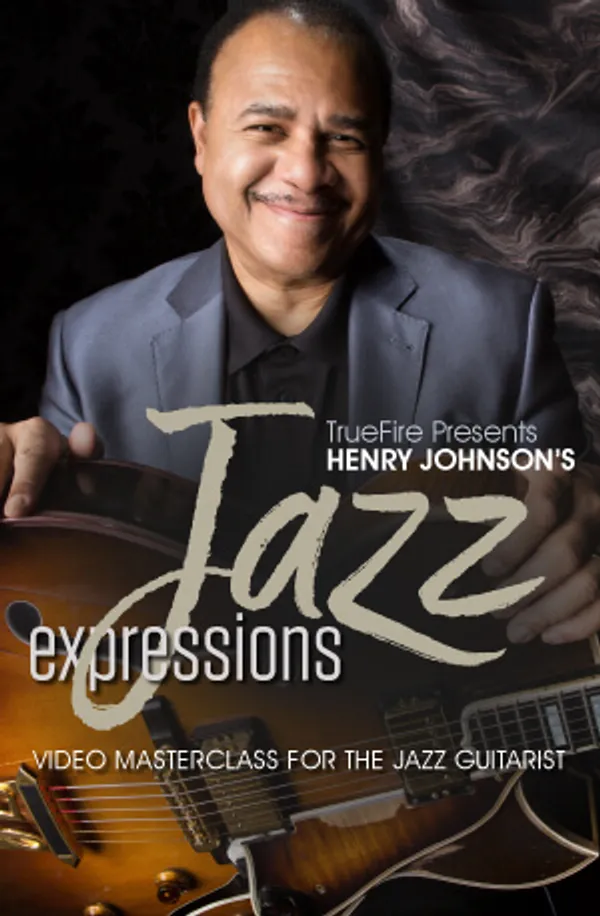
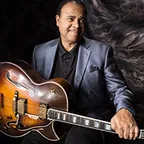
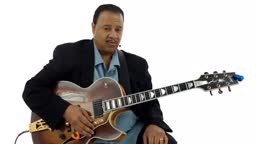
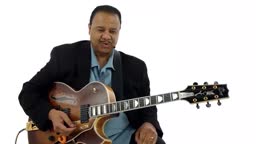
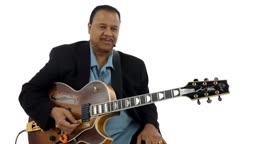
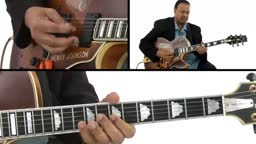
Every musician has a long list of other musicians, past and present, that have inspired, influenced and helped shape their own sound and musicality. It's the natural evolution of music. We asked Henry Johnson to pass on to you some of the key learnings that his Guitar Heroes passed on to him.
”In this edition of My Guitar Heroes, I’ll show you how a few of my own favorite players influenced my playing and helped shape my sound.
We’ll explore my key learnings from Wes Montgomery, Kenny Burrell, Joe Pass, Pat Martino, George Benson and Freddie Hubbard.
I’ll first show you a few of the techniques and approaches that I picked up from each one of them and then we’ll play through a series of performance studies for musical context.”
Henry will first introduce his heroes to you and describe why he found them so influential. After each discussion, Henry presents a performance study illustrating those influences in a musical context. A breakdown follows every performance and he will explain and demonstrate all of the key concepts and approaches in play.
You’ll get standard notation and tabs for all of the performance studies. Plus, you’ll be able to use TrueFire’s learning tools to sync the tab and notation to the video lesson. You can also loop or slow down the videos so that you can work with the lessons at your own pace.
Grab your guitar and let’s dig in with Henry Johnson!
What you'll learn
Learn to move chord inversions systematically up the fretboard
Develop a unified approach to viewing chord changes
Understand Pat Martino's philosophy of simplifying complex harmony
Learn specific techniques and approaches from six jazz guitar masters
Develop insight into how to learn from your own guitar heroes
Hey it’s Henry Johnson here, in this edition of My Guitar Heroes I’ll show you how a few of my favorite players influenced my playing and helped shape my sound. We’ll explore my key learnings from Wes Montgomery, Kenny Burrell, Joe Pass, Pat Martino, George Benson and Freddie Hubbard. I’ll first show you a few of the techniques and approaches that I picked up from each one of them and then we’ll play through a series of performance studies for musical context. You’ll have all of TrueFire’s learning tools to help you work through the lessons at your own pace. Grab your guitar and let’s dig in!
2Wes Montgomery
Wes Montgomery was one of the greatest and original jazz guitarists of all time and guitarists from all genres owe him immensely because of his contributions to jazz music. He was also a great composer as all musicians have played some of his many songs. He still remains one of the most influential guitarists of the 20th century.
3Thumb Swing for Wes
What I’ll talk about is some of the tools that I got from listening to and studying Wes Montgomery. The tools I’ll show you are his octave playing, double-octave playing, single-note phrases, use of major and minor 3rds, and of course his use of block chords played by using the thumb to get that organic sound.
4Thumb Swing for Wes
What I’ll talk about is some of the tools that I got from listening to and studying Wes Montgomery. The tools I’ll show you are his octave playing, double-octave playing, single-note phrases, use of major and minor 3rds, and of course his use of block chords played by using the thumb to get that organic sound.
5Thumb Swing for Wes
What I’ll talk about is some of the tools that I got from listening to and studying Wes Montgomery. The tools I’ll show you are his octave playing, double-octave playing, single-note phrases, use of major and minor 3rds, and of course his use of block chords played by using the thumb to get that organic sound.
6Kenny Burrell
Kenny Burrell is one the most recorded guitarists in history and he is considered to be Duke Ellington’s favorite guitarist. Kenny is a fantastic guitarist, composer, arranger, accompanist, and a very good singer. Kenny has influenced a great number of guitarists because of the common ground of blues in all his music.
7Hammer Slur Blues in G
In this series of lessons we’ll look at the tools and sounds I learned from studying Kenny Burrell and his music. And how he connected the blues and Bebop together to create his unique single-note phrases.