Rock Guitar Greatest Hits Vol. 1

Ramp Up Your Rock Guitar Chops with 15 Top Educators

Rock Guitar Greatest Hits Vol. 1

About this course

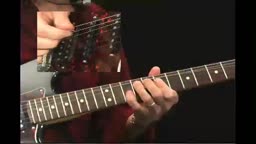
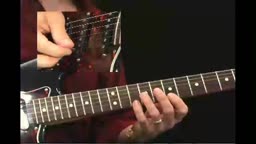
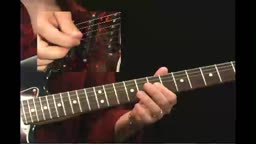
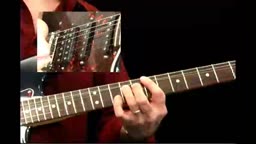
This Greatest Hits compilation presents top-ranked rock video guitar lessons from 17 of TrueFire’s top rock guitar educators. All of the lessons are tabbed and notated, include Guitar Pro files, and come with the backing tracks used in the lesson. All in all, this Greatest Hits collection delivers essential and very versatile vocabulary, techniques and insight for any rock guitar player.

Source Courses & Educators:
Release date: 12/01/2013 • 2h 17m runtime
Start Course
Sample lessons
Southern Jam - Solo
Southern Jam - Solo
Performance
Southern Jam - Solo
Southern Jam - Solo
Breakdown
Southern Jam - Solo
Southern Jam - Solo
Variations
Southern Jam - Solo
Southern Jam - Solo
Extended Performance

What's included

35 lessons • 26 charts • 22 Jam Tracks

Alright Arps
Lesson Source: Neil Zaza's 50 Melodic Rock Licks

Sometimes the best melodies are the ones that follow the chord progression. Not just follow the chord sequence, but actually are like white on rice with them (if you’ll excuse the expression). Where the chord goes the melody and arpeggio goes. This lick is the first half of the main theme of my song "I’m Alright" and I think it shows that a very compelling melody can come from honoring the backing chords with some outlining arpeggios. Using arpeggios in this way can add some movement in the piece which adds excitement for the listener. Using the simple chord tones of 1, 5, and 3 you can add this kind of treatment to your themes and solos.
Bm7 E D A
Lesson Source: Robbie Calvo's Sweet Notes

In this lesson I wanted to discuss the difference between key centers and tonal centers. This is such an important lesson plan and it will help you to understand the modes and how they relate to harmonic progressions. Let's start by looking at our new chord progression, Bmi7 - E - D - A.

Those of you who have training in harmony and theory will look at the three major chords E - D - A and have deduced that those chords come from the key of A. Most of you have probably come across the term I ,IV, V progression. Well A would be I, D would be IV and E would be V. So what about the Bmi7 chord? Bmi7 is the II chord in the key of A. Are you with me so far? Good! So we know that the chords in our progression are all in the key of A. If you listen to the chord progression you will notice that the progression resolves to the Bmi7. Your ear is the ultimate guide here and I think this example is pretty definitive.

O.K., so we have chords in the key of A resolving to Bmi7. This means the key we are in is A but our tonal center is Bmi7. So what we'll want to do when improvising is ultimately target our resolutions towards the Bmi7. In Lesson 15 I will be explaining tonal centers further and hopefully de-mystifying the modes but until then let's focus our thoughts on learning a Bmi pentatonic scale at the 2nd fret and an adjoining shape so we can shift between the two if we want to. The notes in the scale are B - D - E - F# - A. Let's play this pattern/shape and name the notes. From our previous lessons you will remember that the minor pentatonic has all four of our Sweet Notes of a mi7 chord and the 4th is useable as a passing tone. The 4th is E and our chord tones are B - D - F# - A.

Single-note Lick 1 - Here is a single note U2 style idea over our chord progression. Add some ping-pong delay to get the full effect.

Lick 1a - Bmi pentatonic scale starting and ending on B. Lick 2a - Bmi pentatonic scale starting on D (mi3) and resolving to D. Lick 3a - Bmi pentatonic scale starting and resolving to F# (5th). Lick 4a - Bmi pentatonic scale starting and resolving to A (b7). Lick 5a - A Bmi pentatonic lick that starts with a whole tone bend from E up to F# in bar 1, 'lets down' to the root of the E chord in bar 2 and resolves to B on the last quarter note. Lick 2b - A Bmi7 arpeggio lick resolving to the root (B). Lick 3b - This is a triplet feel minor pentatonic lick with a position shift out of our box at the second fret which allows us to incorporate some nice glissando/slides into the phrasing. Try to make this really smooth. Lick 4b - This is a really nice position shift lick which again allows us to slide in and out of position.

***Please note that at 15.46 in this video segment I say 'take the B up to A. What I meant to say was take the A up to B.


Southern Jam - Solo
Lesson Source: Jeff Scheetz's Rock Solid

One of the main things southern rock solos have is a strong melody. Lots of great southern rock solos are ones you can hum or sing along with (think "Freebird"). A lot of this melodic posturing can be attributed to the major pentatonic scale. Just like a lot of country players use this to great advantage, so do the southern rebels. Check out solos on any Skynrd, Molly Hatchet, or Duane Allman release and you will hear it.
Southern Jam - Solo
Lesson Source: Jeff Scheetz's Rock Solid

One of the main things southern rock solos have is a strong melody. Lots of great southern rock solos are ones you can hum or sing along with (think "Freebird"). A lot of this melodic posturing can be attributed to the major pentatonic scale. Just like a lot of country players use this to great advantage, so do the southern rebels. Check out solos on any Skynrd, Molly Hatchet, or Duane Allman release and you will hear it.
Southern Jam - Solo
Lesson Source: Jeff Scheetz's Rock Solid

On this solo I tried to be melodic and also cover some "classic" southern techniques. Things like a call and response type of playing, bending notes up with double stops to give you that pedal steel flavor, and slides to keep it all smooth. Sometimes it is the little things that make a solo stand out - so phrasing is so important. Although most southern rock bands worth their salt had at least 3 guitar players on stage at any one time - if you pick your notes and riffs carefully you can get that "big southern" sound all by yourself.
Southern Jam - Solo
Lesson Source: Jeff Scheetz's Rock Solid

On this solo I tried to be melodic and also cover some "classic" southern techniques. Things like a call and response type of playing, bending notes up with double stops to give you that pedal steel flavor, and slides to keep it all smooth. Sometimes it is the little things that make a solo stand out - so phrasing is so important. Although most southern rock bands worth their salt had at least 3 guitar players on stage at any one time - if you pick your notes and riffs carefully you can get that "big southern" sound all by yourself.
Gilberto
Lesson Source: Tony Smotherman's 50 Power Pentatonic Licks

This idea is one that you can use to great effect. I've heard Paul Gilbert do something similar to this. This lick has a Dorian feel to it. If you’re not familiar with your modes, Dorian is the 2nd mode of 7 it's a minor scale with major 6th. For that reason slipping into our basic minor pentatonic and adding a few extra notes will create a really cool pseudo blues type of feel. This is great for sharpening up your pinky finger strength. Did I forget to mention to try string skipping with this lick too?

+ 28 more lessons

Start Course

Reviews

6 results

schultziedog

Verified buyer

12/27/24

Good information, easy to understand.

pab14

Verified buyer

10/26/23

Something for Everyone

Good content. Older format with pdf displayed. Need Guitar Pro if you like more interactivity.

dwa79

Verified buyer

06/06/23

Great Lessons

Insights from a variety of teachers broken down into bite sized lessons that can be viewed in sequence or any way you chose.

dahrothgar

Verified buyer

08/29/22

Great course!

Good tunes, great licks. all delivered with the usual easy to follow videos.

Paul696

08/26/22

Greatest Hits Rocks

What a great course with so many lessons and licks from scales to modes to Arpeggiated Chords

Stop searching. Start improving with All Access.

Try 14 days free. Cancel any time.