
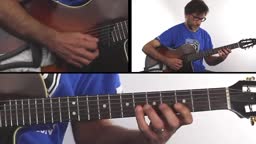
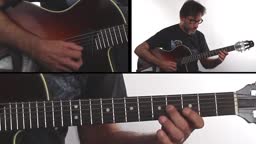
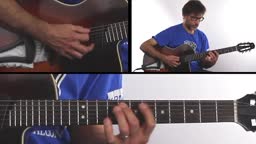
Understanding & Applying the Chromatic Scale (Foundry)

An Independent Production on Key Chromatic Scale Concepts

Marty FriedmanTommy EmmanuelSteve VaiEric GalesEric Johnson

Get this course and 1,000+ more with All Access

Try 14 days free. Cancel any time.

Purchase Individual Course for $29.99
Understanding & Applying the Chromatic Scale (Foundry)

About this course

NOTE: TrueFire Foundry courses are independently-produced courses presented by a hand-picked selection of top-notch artists and educators from around the world. Filmed in the educator’s own studio, Foundry courses bring fresh educational concepts and very effective teaching methodologies to TrueFire Students.

The chromatic scale — all 12 notes played in succession, moving one half-step at a time — is considered the "mother scale.” All chords, arpeggios, and scales can be constructed from the chromatic scale. Understanding the chromatic scale, and learning how to apply it in a musical context will open up countless improvisational doors.

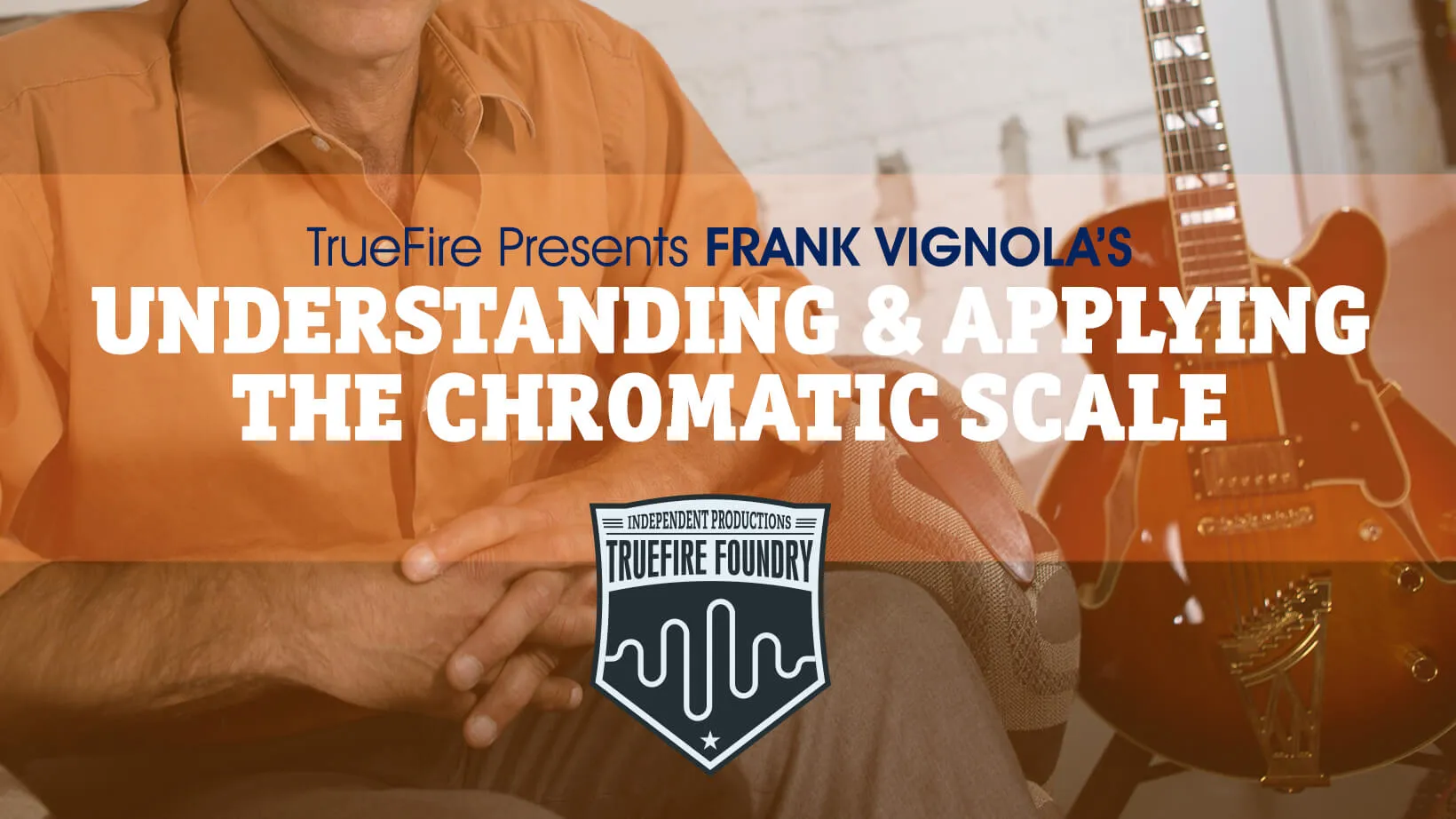
Frank Vignola’s Understanding & Applying the Chromatic Scale will introduce you to the chromatic scale and illustrate how to apply the scale to one of the most commonly encountered jazz progressions, the 2-5-1.

”This course will help you unravel the mystery of the 12-note chromatic scale and teach you how to apply this awesome "mother scale" to your improvisations. We’ll start with the vertical and horizontal chromatic scale to help you get the sound of all 12 notes into your head. Then, we’ll explore playing the chromatic scale in-between chord tones. This is a big step. Finally, I’ll guide you through 20 ways to apply the scale over the infamous 2-5-1 progression.”

In the first section of the course, Frank presents key concepts for applying the chromatic scale: Horizontal Chromatic Scale, Vertical Chromatic Scale, Applying Chromatic Scale In-Between Chord Tones - Major Lesson, and Applying Chromatic Scale In-Between Chord Tones - Minor.
In the second section the course, Frank shares 20 2-5-1 riffs constructed from the chromatic scale. Frank performs the riff over a backing track and then breaks the riff down explaining how and why the riff works over the c chord progression. You’ll expand your vocabulary of 2-5-1 licks and walk away with a thorough understanding of crafting your own chromatic lines in your improvisations.

Frank will explain and demonstrate all of the key concepts and approaches along the way.  You’ll get standard notation and tabs for all of the riffs. Plus, Frank includes all of the rhythm tracks for you to work with on your own. In addition, you’ll be able to loop or slow down any of the performances so that you can work with the materials at your own pace.

Grab your guitar and let's get chromatic with Frank Vignola!

What you'll learn

  • Apply chromatic passing tones between chord tones
  • Execute swing rhythm patterns with quarter notes and eighth notes
  • Use question-answer phrasing in jazz context
  • End phrases on strong chord tones
  • Understanding how to apply the chromatic scale in improvisation
Release date: 03/14/2018 • 1h 21m runtime
Start Course
Sample lessons
Horizontal Chromatic Scale
Lesson/Breakdown
Riff #1
Riff #1
Performance
Riff #1
Riff #1
Breakdown
Riff #5
Riff #5
Performance

What's included

46 lessons • 6 charts • 1 Jam Tracks

Understanding & Applying the Chromatic Scale
Hi, I'm Frank Vignola and welcome to my Foundry course, Understanding & Applying the Chromatic Scale. The chromatic scale is playing all 12 notes in succession, moving one half step at a time. The chromatic scale is considered the "mother scale", meaning all of the major, minor, chords, etc. is taken from the chromatic scale. This course will help you unravel the mystery of this 12 note scale and teach you how to apply this awesome "mother scale" to your improvisation.

First, we start with the wertical and horizontal chromatic scale. This will help you get the sound of all 12 notes into your head. Then, we explore playing the chromatic scale in between chord tones. This is a big step. Then, I go through, in detail, 20 ways or riffs for the infamous 2-5-1 progression, which is in just about every jazz standard you can think of. I'll go through exactly how I use the chromatic scale in making improvisational ideas.

Grab your guitar and let's get started!
Horizontal Chromatic Scale
This is a lesson on the horizontal chromatic scale. Be able to play on each string.
Vertical Chromatic Scale
This is a 2-octave vertical chromatic scale. Move it around the neck as suggested.
Applying Chromatic Scale in between chord tones - Major
This is a detailed explanation of how to use the chromatic scale in between chord tones with a major tonality.
Applying Chromatic Scale in between chord tones - Minor
This is a detailed explanation of how to use the chromatic scale in between chord tones with a minor tonality.
Riff #1
These 20 riffs are examples of how to use the chromatic scale in a jazz 2-5-1 riff.
Riff #1
Frank breaks it down for you note by note.

+ 39 more lessons

Start Course

Reviews

7 results

Wessel07

Verified buyer

04/06/24

Frank's Applying the Chromatic Scale

I have since I have started the first couple of lessons implemented the chromatic scale in my playing. I try not to be mechanical as suggested but still have to keep the beat and the key. Absolutely love it. Great!
dwa79

Verified buyer

09/20/23

Refreshing

Applying the chromatic scale at just the right pace

ostran

Verified buyer

10/24/22

The sure fire way to the application of the chromatic scale

Excellent explanations and strait forward strategies for implementing the teachings in this video

Osokin

Verified buyer

01/15/22

Why Not Use All 12 Notes?

Frank Vignola does a great job of demonstrating how to use the chromatic scale in your improvisations over 2-5-1 progressions. As usual, his explanations are crystal clear and he provides lots of great sounding examples. A really good course for expanding your improvisational palette.

rnappi

Verified buyer

07/16/21

A Must for Jazz!

A great study for learning to use chromatics to connect the dots between single note and chordal lines.

Stop searching. Start improving with All Access.

Try 14 days free. Cancel any time.