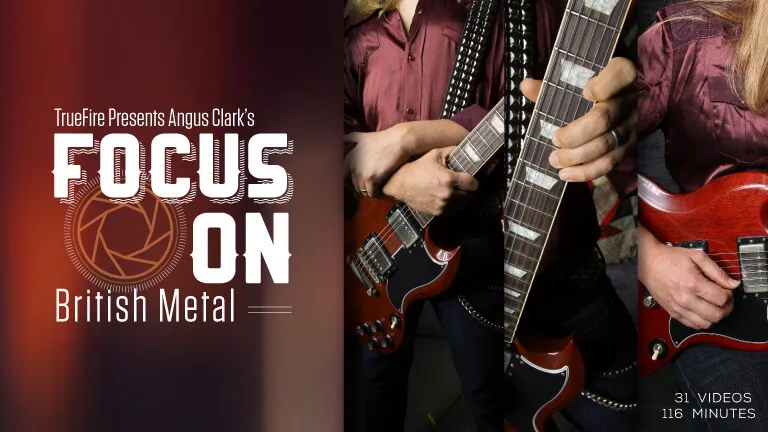
Focus On: British Metal

A fast-track learning program for British metal guitar.

Marty FriedmanTommy EmmanuelSteve VaiEric GalesEric Johnson

Get this course and 1,000+ more with All Access

Try 14 days free. Cancel any time.

Purchase Individual Course for $19.99
Focus On: British Metal

About this course

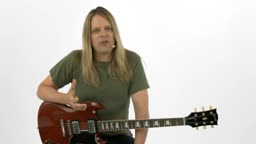
Angus Clark’s Focus On: British Metal will quickly impart the requisite right and left-hand techniques, harmonic considerations, rhythm and soloing approaches to play in the style of British Metal.

“British Metal is a broad genre and it’s certainly evolved over the years. Black Sabbath, Uriah Heep and Deep Purple pioneered the sound in the early years. Bands like Judas Priest and Thin Lizzy followed. New wave bands like Iron Maiden and Saxon kept the genre very much alive. Seminal guitarists leading the British Metal charge include Tony Iommi, Ritchie Blackmore, KK Downing, Glenn Tipton, Brian Robertson, Scott Gorham, Dave Murray, Adrian Smith and John Sykes. These players’ rhythm and soloing techniques personify British Metal, and that’s exactly what and why we’ll focus on them throughout Focus On: British Metal.”

Angus presents his curriculum in four sections. The first section is a quick summary of British Metal history and its most influential players — the players that you should be listening to as you learn to emulate their sound in your own playing. Angus also passes on critical advice for dialing in the optimal British Metal tone on your own rig.

In the second section, you’ll get right down to business as Angus guides you through five key soloing concepts and techniques that will power your British Metal improvisational prowess: Blues Scale PLUS, Bending and Inflections, Scales and Arpeggios, Melodicism and Solo Structure.

Rhythm guitar chops is the focus of the third section. Angus steps you through another five key concepts and techniques for your British Metal rhythm work: The Mighty Riff, Keeping It Straight, Gallops, Between the Chords and Mixing Up the Arrangement.

It all comes together in the fourth section as you apply all of the key concepts and techniques across a series Performance Studies. Angus has prepared four real-world arrangements and rhythm tracks, across a variety of feels and tempos, to put all ten of your new skills to work.

Additionally, each of these performance studies pay homage to a particular British Metal master. Work through these four Performance Studies studies and you’ll be ready to take your new-found British Metal chops to the bandstand: 1: Iommi Swings (Tony Iommi), 2: Scott and Brian (Thin Lizzie), 3: Dave and Adrian (Iron Maiden), and 4: Glenn and K.K. (Judas Priest).

All of the key examples and performance studies are tabbed and notated, plus you’ll get all of the practice rhythm tracks to work with on your own.

Ready to focus on British Metal? Rock that mouse to the appropriate place on this page and click now!

About the Series

TrueFire’s Focus On courses are fast-track learning programs for specific styles. Designed for intermediate and advanced students with limited practice time, the courses ‘focus’ on the most essential concepts and techniques bypassing detailed background, lengthy theoretical explanations and skill-building exercises.

What you'll learn

  • Create pentatonic-based riffs with strong rhythmic hooks
  • Establish groove as a solo guitarist without drummer support
  • Develop aggressive picking attack for powerful riff delivery
  • Understand the three essential elements of memorable riffs: rhythmic hook, melodic point of difference, and technical complexity
  • Understand the history and key players of British metal
Release date: 01/20/2015 • 1h 56m runtime
Start Course
Sample lessons
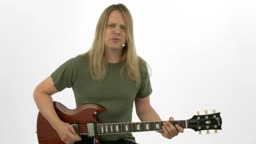
Melodicism
Melodicism
Soloing Concept 4
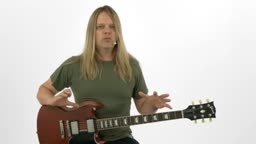
Between the Chords
Between the Chords
Rhythm Concept 4
Iommi Swings
Iommi Swings
Overview
Iommi Swings
Iommi Swings
Performance

What's included

31 lessons • 12 charts • 5 Jam Tracks

Focus On: British Metal
I'm pumped that the TrueFire guys asked me to do this course as it is right in my wheelhouse. I love the British Metal. Research for this course included but was not limited to: Drinking warm beer at a bar made of ancient mahogany; getting out my old vinyl and playing it on my turntable (which is now at my mom's house - thanks mom!); and reading old issues of Kerrang! magazine.

I want to thank Martin Popoff for taking the time to answer a few questions on the topic. He's a great guy, awesome writer, and a wonderful Canadian.
SECTION 1: Background
In this section we'll define what we mean by British Metal and talk about the sound and the gear required.
History and Players
We had to narrow the definition in order to keep the course focused. It's always evolving, but there are three basic categories:
Early: Sabbath, Uriah Heep, Deep Purple
Middle: (or "Bridge"): Judas Priest, Thin Lizzy
New Wave: Iron Maiden, Saxon, etc.

There's a lot of other bands that made less impact outside the UK, but we're still covering a fairly diverse bunch of bands. In the segment I talk about how the whole genre grew out of the British Blues movement which had gotten very aggressive and very loud by the late sixties. When Sabbath made it "Metal" they moved away from the strict forms, harmony, and lyrical content of the blues, but they kept the aggressiveness, volume, improvisatory nature, and the pentatonic scale. It's 50 years gone, but those first two Sabbath records are still the bible for British Metal.

So the players involved may not be the guys on the cover of your favorite gear-hawking, NAMM-friendly publications. And I figure that's a welcome change for a good number of people. It'll be Iommi, Blackmore, KK Downing and Glenn Tipton (big shoutout to Richie Faulkner who's doing a great job in Priest right now), Brian Robertson and Scott Gorham, Dave Murray and Adrian Smith, John Sykes, and others. They're a fun bunch. The playing isn't technically over the top. The playing succeeds because it rocks. And rocking will always win over technical proficiency. Always.
Tones & Gear
It's a fairly simple formula: Humbucker guitar into a medium gain tube amp with some kind of pedal in between. The pedal would be a Treble Booster for Tony Iommi or Richie Blackmore, it'd be a Tube Screamer for Thin Lizzy and forward. And/or a wah wah. The tube amp is most likely a Marshall, but don't forget Laney and Orange. The neat thing about the British bands is that they were not getting the modded Marshalls that all the California guys were getting, they were putting pedals in front of the stock amps.

Blackmore is unique because he used the mic pre in a reel to reel tape machine between his guitar and amp - which gave him a very smooth compression. There are lots of pedals out there to emulate this kind of thing now.

The humbucker guitar is very often a Gibson, but those guys would put a PAF in just about anything, Tipton and Dave Murray both had strats with humbuckers in them. Blackmore, and Fast Eddie Clark from Motorhead are the most notable Strat abusers in the scene, and their contribution cannot be underestimated.

I'm using a Gibson USA '61 reissue SG with their classic 57 PAFs in it. It is not a high output guitar. The rhythm tracks were cut using an '85 Marshall JCM 800 with an SM57 dead center on the dust cap. The live stuff for the video is done through an 11 rack using maybe the Soldano model? Remember the tone is in my fingers so please don't ask me for my settings, I'll get offended.
SECTION 2: Essential Soloing Concepts
We're starting with lead because I know you want to. You can do the rhythm part first if you want, but the rhythm playing is so riff-based you'll want to have the scales, trills, bends and other info in your hands to make it sound authentic.
Blues Scale PLUS
Your command of the blues scale is paramount to getting this style happening. Even if you are familiar with the blues scale and all of its forms, I recommend checking out this segment. My take on this material is mildly unique.
Bending and Inflections
Make sure that you know how to bend in tune, and that your vibrato isn't just you playing sharp. If these are problem spots for you then stop right here and get it together. If you can't bend in tune and your vibrato is really just you playing sharp then anything else you learn in this course will still sound terrible. Tough love people.

The rest of the stuff is all good fun. Some of it may seem rudimentary, but when was the last time you practice your trills? I thought so.

+ 24 more lessons

Start Course

Reviews

5 results

MichelJean

Verified buyer

09/19/21

The real School of rock

A historical and technical journey that allowed me to get to the essence of the spirit of this style. I had a lot of fun going through this course and immersing myself in this era

GregLancey

Verified buyer

01/04/21

I find the course easy to follow, and understand.

Acrooster

Verified buyer

01/13/19

Really good

This is awesome if you are interested in the days of Black Sabbath and Judas Priest. Angus does a great job of nailing the intricacies of each example and puts a perfect solo to each piece. Brings me back to my early days when I first picked up a guitar. This was a nice walk down memory lane and brought me back to that early spark.

Crangus1

Verified buyer

01/01/19

Great Course

Angus really did a great job again. I already bought a couple of courses from Angus Clark. Again he managed to create a course that is effective and very instructive like all the other courses from Angus. A big recommendation for everbody who wants to learn the specialties of british metal. Great course! Very well done! 👍🏼

Jeffochka

10/31/18

Made In Iron Maiden

I was sold at the mention of Dave Murray and Adrian Smith, my favorite dynamic duo from the legendary Iron Maiden. Angus has the chops and ability to teach. I love his easygoing style. You get a lot of content and absolutely no fluff; the teacher stays on subject and keeps the lessons bite-size so you are able to learn as much as possible in a short amount of time while adding layers of knowledge with each new lesson. Great teacher and great material! This teacher is superb and the course totally blew me away. The teacher makes theory so accessible while keeping it practical and fun. Great job! Angus Clark is a true virtuoso and a brilliant teacher. All his courses are phenomenal and this one is no exception! Angus's love for the guitar is contagious and his enthusiasm is infectious.

Stop searching. Start improving with All Access.

Try 14 days free. Cancel any time.