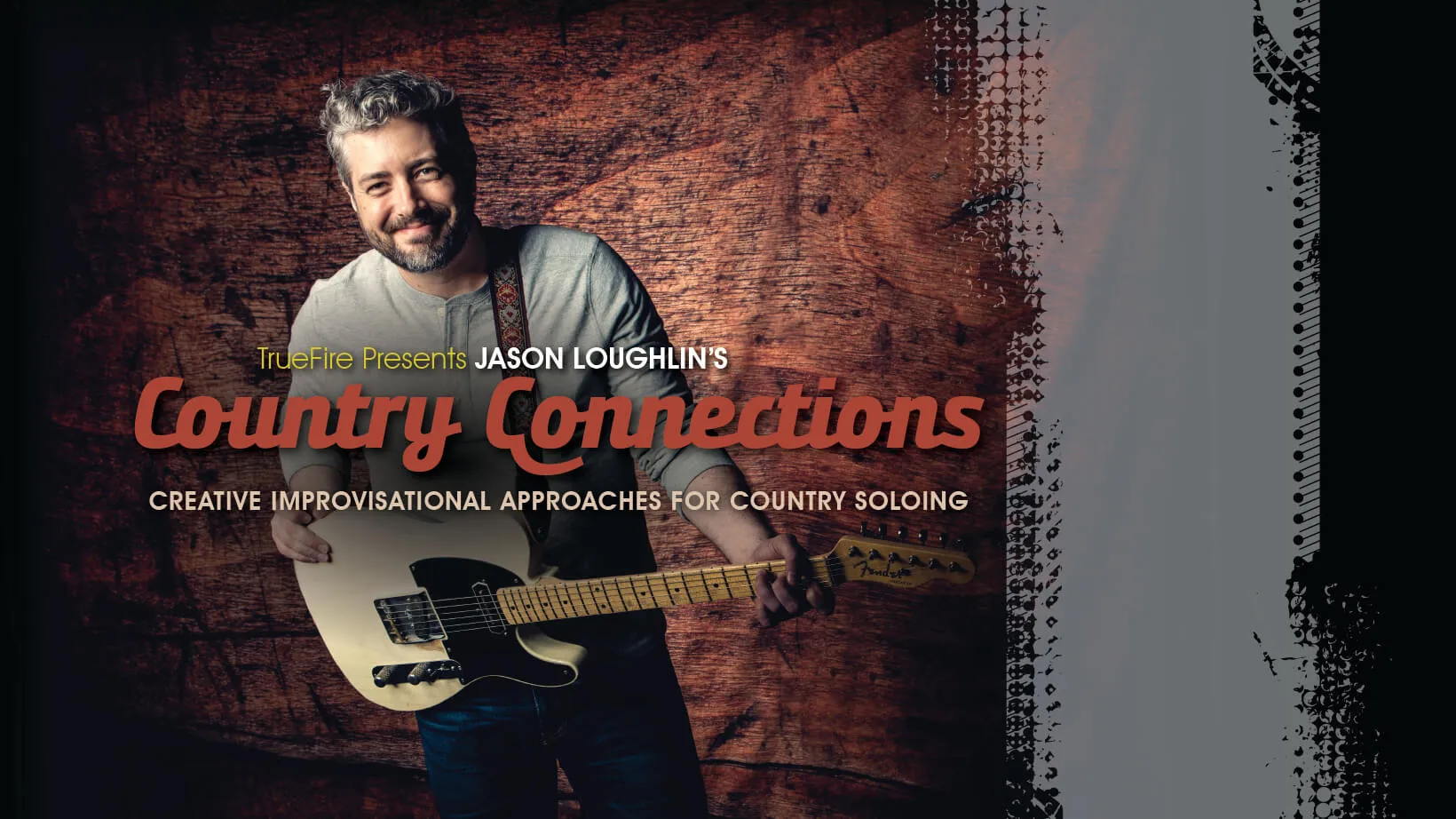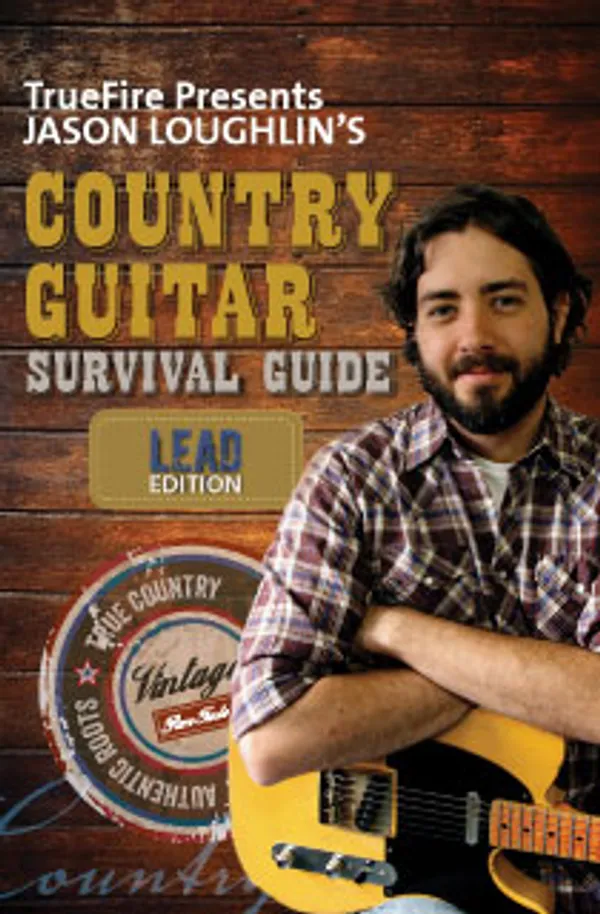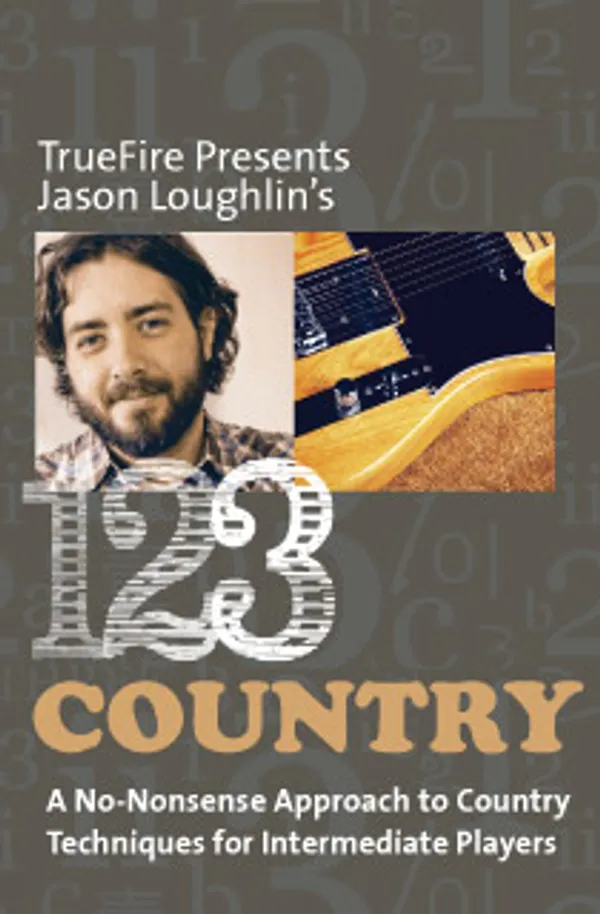

Country Connections

Creative Improvisational Approaches for Country Soloing

Marty FriedmanTommy EmmanuelSteve VaiEric GalesEric Johnson

Get this course and 1,000+ more with All Access

Try 14 days free. Cancel any time.

Purchase Individual Course for $19.99
Country Connections

About this course

One of the challenges that most guitarists encounter when playing country guitar is learning how to ‘play the changes.’ You get a lot of mileage with blues and minor pentatonic scales if you’re playing rock or blues, but they won't get you very far when playing country.

In Country Connections, Jason Loughlin shows you an easy-to-master system for targeting tones and selecting the correct scales when soloing over any country changes.

"I’ll show you five positions of the major pentatonic scale in multiple keys, how to voice-lead those scales over changes, and how to visualize common chord shapes in each position to serve as templates for finding chord tones. You’ll also learn universal scales that will work with the overall key and I’ll show you how to connect positions using intervals and sliding pentatonic scales. Along the way, I’ll pass on a versatile vocabulary of flat-picking licks, double-stop licks, pedal steel bends and share a few tips for using improvisational devices to shape powerful solos. We’ll then take all of the new scales, shapes, and approaches and play solos in each of the five positions. Finally, we’ll wind up the course learning 3 solos, which connect all 5 positions using 3rds, 6ths or sliding pentatonic scales."

Jason will explain and demonstrate all of the key concepts and approaches along the way. You’ll get standard notation and tabs for all of the performance studies. Plus, you’ll be able to use TrueFire’s learning tools to sync the tab and notation to the video lesson. You can also loop or slow down the videos so that you can work with the lessons at your own pace. All of the backing tracks are included to work with on your own as well.

Grab your guitar and let’s connect with Jason Loughlin!

What you'll learn

  • Play major pentatonic scales across the neck using sliding technique
  • Execute slides with either first or third finger
  • Execute a complete position 3 solo over a 12-bar blues/country progression
  • Use double stops melodically with root/third and other intervals
  • Match appropriate pentatonic scale to chord being played
Release date: 12/09/2019 • 2h 24m runtime
Start Course
Sample lessons
Five Positions of Major Pentatonic
Demonstration
Five Positions with Passing Tones
Demonstration
Voice Leading with Passing Tones
Performance
Minor Pentatonic Scale
Demonstration

What's included

44 lessons • 19 charts • 9 Jam Tracks

Country Connections
Hi, I'm Jason Loughlin. Welcome to Country Connections

One of the blocks guitarists can encounter when they start playing country guitar is playing the changes. If you come from a rock or blues background, you can get a lot of mileage using blues scales or minor pentatonic scales. When you're playing country guitar, that doesn't get you very far. You have to target chord tones and know what scales to use over chords. Great country improvisers can move in and out of these scales and chord shapes effortlessly knowing what notes to target. In Country Connections, you'll learn this valuable skill while playing over a common country progression.

This course lays out a system for learning how to play changes, which will elevate you soloing by build a plan of attack for each of the five positions on the neck. We achieve this by doing a few things: knowing the five positions of the major pentatonic scale in multiple keys, voice leading those scales over changes, seeing common chord shapes in each position as templates for finding chord tones, learning universal scales that work with the overall key, connecting our positions using intervals and sliding pentatonic scales, common flatpicking licks, common double stop licks, pedal steel bends and using improvisational devices to shape powerful solos.

Section 1 will cover building major pentatonic scales. You'll learn how to build them and how to voice lead them over a country progression.

Section 2 will add common passing tones to our major pentatonic scales. We'll take these newly modified scales and voice lead them over a country progression.

Section 3 covers how to use common chord shapes as a road map for finding chord tones and how to build your own double stop licks from these shapes. We'll locate these chord shapes in each position.

Section 4 Looks at scales that work for all of the chords. These universal scales relate to the overall key and can be played anywhere at anytime. We'll learn two of these scales and how to find them in each position.

Section 5 Will take all of these new scales, chord shapes and approaches and make music out of them. We'll learn one jam packed country solo for each of the five positions.

Section 6 will show us how to connect these five positions. It could be with 3rds, 6ths or sliding pentatonic scales. These three solos will be our highways to get from one position to the next.

All of the performances are tabbed and notated for your practice, reference and study purposes. You can loop and/or slow down the tab or notation as you work through the lessons. All of the rhythm tracks are also included for you to work with on your own.

Ready? Grab your guitar and let's get started.
SECTION 1: Major Pentatonic
In this section, we'll look at how to build the major pentatonic scale on single string, learn the five positions of the major pentatonic, how to voice lead pentatonic scales over changes and how to add common passing tones.
Single String Major Pentatonic
Playing scales and arpeggios on single strings is important to be able to move freely from position to position on the neck and to reinforce the intervallic distances between notes. The major pentatonic is root, 2, 3, 5, 6. Very similar to a major scale. We're just dropping the 4th and 7th scale degrees. The scale formula is whole - whole - minor 3rd - whole - minor 3rd. Do this on every string, it'll help you when you're trying to find starting points for the major pentatonics in positions.
Five Positions of Major Pentatonic
This is very similar to a major scale. We're just leaving out the 4th and 7th. This leaves us with Root, 2, 3, 5 and 6. This a five note scale and there are five positions on the neck we can play it starting off of a different note of the scale each time. In country music you can't get very far without playing the changes. So, if you're playing a I-IV-V progression like we are in this course, you'll have to learn the corresponding pentatonic scale for each chord. Make sure you review your C major pentatonic and D major pentatonic, too. You need to run those scales enough where you can recognize the scale patterns. I wrote out all of the scale patterns for you here.
Voice Leading Major Pentatonic
Some of you have heard the term "voice leading". It means we're looking for the most organic or efficient path from one scale to another or from one chord to another. We don't want our musical ideas interrupted because we only know a scale starting from the root note or starting in one position. This is a conditioning exercise that forces you to engage the changes. Let's take a simple progression of I-IV-V-I. I'm going to stay in position. This means that when I'm playing over G I can use the root position pentatonic scale, but for C and D I have to pick the scale pattern that keeps me in this position. For C I'm starting on the 5th, and for D I'm starting on the 3rd. I'm going to ascend and descend using eighth notes and change scales when the chord changes. You could pick any rhythm though. Quarters, eighths, triplets, sixteenths...try them all. I recommend doing this without the track at first. If you were to keep going or start from a different note in this position, the scale would change a different place.
Voice Leading Major Pentatonic
For this voice leading performance, I'm in the key G and I've chosen eighth notes as my rhythm. I'm swinging the eighths a little. The progression I'm playing over is I-I-I-I-IV-IV-I-I-V-V-I-I. Do this without the track at first. Once you can play it comfortably, try it with the track. If you want to challenge yourself further, see how many times you can go around the form. It will get offset each time so you have to be engaged.
SECTION 2: Passing Tones
This section is pretty similar to the previous one, but we're going to introduce two passing tones that are going to make this sound much hipper. We'll be adding the b3rd and the b7th. These are very common notes to embellish the major pentatonic.

+ 37 more lessons

Start Course

Reviews

24 results

BRAD072

Verified buyer

06/05/26

Great teacher

jc72

Verified buyer

01/10/26

Very nice course !

jakobvidar

Verified buyer

01/05/25

Jason Loughlin is a great teacher.

It´s absolutly great like every course that I bought from True Fire. Jason Loughlin is a great teacher and I´ve got few courses from him and I´ve learn a lot.

AlFox

Verified buyer

12/05/22

For me this puts together some common procedures in a very understandable way.

George

09/29/22

The Foundation for Exploring Country Guitar

This is a great course that demonstrates a lot of the "thinking" (and differences to other genres) behind the sounds of country music as well as giving a good toolkit of scales and such to get under one's fingers. It is less about showing you licks and more of teaching you how to create your own and to understand, and thus modify any licks you do know.

Stop searching. Start improving with All Access.

Try 14 days free. Cancel any time.