dwa79
Verified buyer
07/12/23
Eye Opener
I especially appreciate the expanded way to approach power chords .


Get this course and 1,000+ more with All Access
Try 7 days free. Cancel any time.
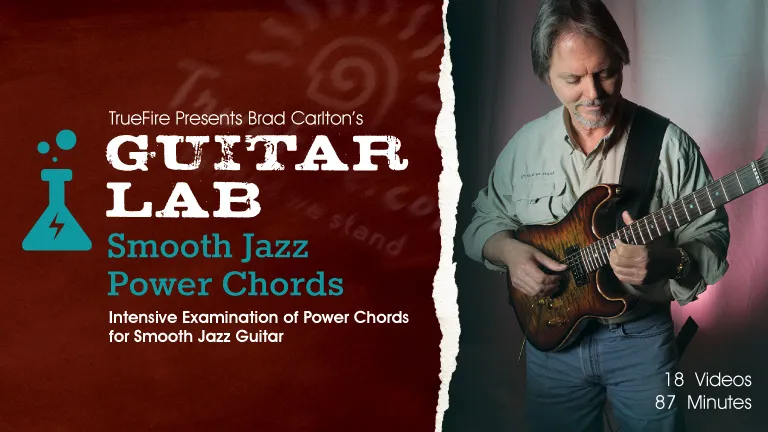
About this course
We'll then extend the arpeggio to a major 9 to enhance the sonority. You'll learn how to utilize the 9 as a connector between the root in the 3rd, the 6 as a connector between the 5 and 7, and the root as a connector between the 7 and the 9. Finally, we'll learn how to utilize all of this G major 7(9) information over an E bass thus generating an E minor 11 harmony.
What you'll learn
18 lessons • 17 charts • 2 Jam Tracks
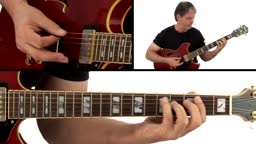
Octaves are a staple of a jazz guitarist's vocabulary. They're a great way of fattening up a single note line without contributing to harmonic implications. This course takes octaves a step further by including an interior voice which will produce a power chord in root position or an inverted power chord. These will be applied to a major 7 arpeggio in the key of G in various layouts on the fingerboard.
We'll then extend the arpeggio to a major 9 to enhance the sonority. You'll learn how utilize the 9 as a connector between the root in the 3rd, the 6 as a connector between the 5 and 7, and the root as a connector between the 7 and the 9. Finally, we'll learn how to utilize all of this G major 7(9) information over an E bass thus generating an E minor 11 harmony.
This lesson will develop your skills in visualizing inverted (first inversion) G power chords all over the neck. These three voice structures will be our building blocks throughout this course.
This lesson will develop your skills in visualizing root position G power chords all over the neck. These three voice structures will be our building blocks throughout this course.
Example 4 adds the octave to each note of the G major 7 arpeggio that you learned in example 3. These octaves establish the lower and upper parameters of the upcoming three note structures which will be used throughout this course.
Example 5 demonstrates the inclusion of an interior voice into the octaves you learned in example 4. The protocol for applying these structures to a major 7 arpeggio is to use root position power chords off the root and 3rd of the chord, and inverted power chords off the 5th and 7th of the arpeggio. Notice that the resulting chord tone is a power chord for the structures built off the root and 5th of the chord, and the structures built off the 3rd and 7th of the chord containing the guide tones establish a major 7 harmony.
Example 6 changes the layout on the fingerboard to a 2-2 pattern. The resulting G major 7 arpeggio creates a symmetrical pattern which presents technical advantages.
+ 11 more lessons
8 results
dwa79
Verified buyer
07/12/23
Eye Opener
I especially appreciate the expanded way to approach power chords .
Ohio5665
Verified buyer
04/14/23
Guitar Lab: Smooth Jazz Power Chords
I am hooked on Brad Carltons Guitar Lab courses! this is another great one. I always come away learning something new from his courses!
KlausE
Verified buyer
11/07/21
Secrets of great Guitarplayer
This Course expand the Guitar vocabulary. To learn to playing single notes in octaves help you to sound like great guitar player like Wes Montgomery, Lee Ritenour and George Benson. Thanx Brad
SandChannel
Verified buyer
11/03/20
Smooth
Great course. Typically, we think of power chords in rock, but they really lend themselves to jazz as well. This course makes you break out of that thinking and shows how you can use them to add color in unexpected places. Very well done.
Anto
08/01/20
great course
easy to undersgand,,,regards from spain
Try 14 days free. Cancel any time.