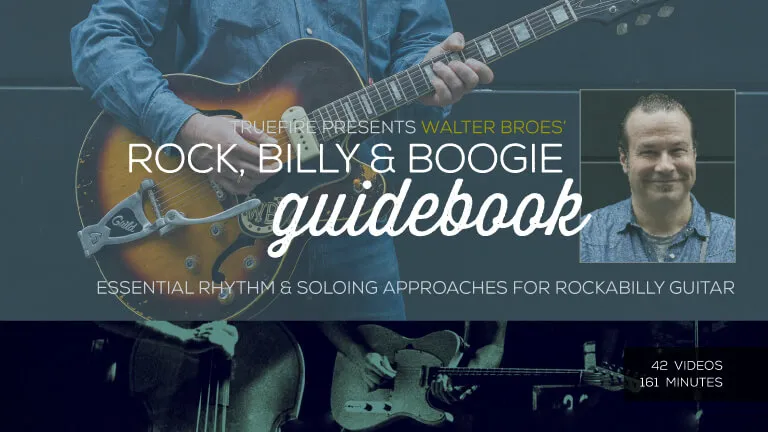
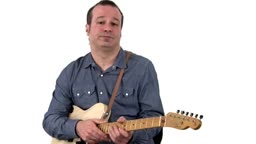
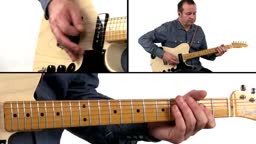
Dating back to the early 50s, Rockabilly blended country, hillbilly, jump blues and western swing to form one of the earliest styles of rock music. Rockabilly launched the careers of Elvis Presley, Jerry Lee Lewis, Bill Haley, Roy Orbison and Buddy Holly with its raunchy blues riffs, uptown Western swing licks, and foot-tapping boogie patterns, all of which you’ll get plenty of here in this Rock, Billy & Boogie Guidebook from Walter Broes.
Band leader, singer/songwriter and guitarist in the Belgium’s most popular roots rock band, The Seatsniffers, Walter recorded seven albums and toured all over Europe for 15+ years with the band. A self-professed guitar geek, Walter has a deep love for American Roots music styles and is a passionate educator. We’re thrilled to welcome Walter to the family with his first TrueFire course.
”We're going to take an in depth look at some of my favorite guitar players from the 50's who shaped this exciting style, including my all-time favorite Grady Martin. We'll also stray off the beaten path a little and dig into some lesser famous studio pickers, like Scotty Moore, who turned country thumbpicking into exciting rock and roll riffs.”
Walter organized the course into two sections. In the first section, you’ll work through the key concepts and techniques that are requisite Rockabilly skills: Travis Picking: History, Travis Picking: Use, Travis Picking: Technique, Chords, Lead Playing, Echo: History and Echo: Use
In the second section, you’ll put all of the key concepts and techniques to work as you play your way through 16 Performance Studies designed to give you a versatile Rockabilly vocabulary inspired by many of the greatest Rockabilly guitarists in history.
Walter demonstrates all of the Performance Studies over rhythm tracks and then breaks them down by stepping you through the key concepts, techniques and creative approaches that he used in each study.
Scotty Moore's Train - ”The guitar parts and licks that Presley’s guitar player, Scotty Moore, came up with are some of the most influential and imitated in rockabilly guitar. Mystery Train is a great tune to learn, as it'll introduces you to a finger picked alternating bass pattern and schools you in the aesthetics of rockabilly guitar.”
Single Note Scotty - ”When Elvis moved from Sun Records to RCA records, his style changed a little. A lot of recordings featured a larger band than the stripped down acoustic guitar/electric guitar/double bass combo you hear on the Sun-era recordings. This freed up Scotty Moore to play more single note guitar parts than he played before, and he was as brilliant at playing exciting single note leads as he was at playing Travis-inspired finger picked parts.”
Travis Lead - ”In a lot of cases, you'll hear Travis-picked parts used for rhythm and backup. Playing finger picked leads doesn’t have to be a lot more complicated though; simple variations of your rhythm pattern will get your there, or chord shapes/inversions played higher up on the fingerboard. The triplet lick in the second part of this example is a classic, and though its origin isn’t in rockabilly music, it’s a lick that pops up often and isn't that hard to play. Very flashy and effective, and a great panic button.”
Clever With Chords - ”A good way to stop jumping around the fretboard all the time in big intervals is to figure out different inversions of the chords you know or usually play. Trying to stick to the position of your I chord when figuring out your IV and V chord positions is a great place to start, and playing the different chords with as many notes in common as possible can really make or break a part and make it more effective and musical.”
Walking The Strings - ”This move is a staple in the Merle Travis repertoire, and can also be heard in Scotty Moore’s playing. It’s not too difficult once you have the basic move down, and can really add excitement and direction to backup or lead parts.”
Rockin' Hybrid Rhythm - ”Using a hybrid grip where you play with a flatpick and your fingers can be a great way to spice up your rhythm playing. There’s more going on than you can typically do with just a flatpick, and having the flatpick ready to go at any time leaves you the possibility of throwing in a lead fill or faster eighth-note or triplets.”
Boom Chick - ”This style of playing is all over hardcore honky tonk country, and it's one of the main influences on rockabilly. Listening to it, it can seem almost too easy to pay attention to, but try playing along to your favorite records in different spots on the fretboard and you'll see it’s not always as easy as it sounds. Having this style of backup in your bag of tricks is almost essential, so practicing it in different positions, closed as well as open, is a good idea.”
One Bar Boogie Pattern - ”If you're the only electric guitarist in a rockabilly setting, boogie patterns on guitar are something you'll be playing a lot of. Make sure to listen to some boogie-woogie piano for some inspiration! Blues and R&B players are another great source of inspiration, as well as country and honky tonk players. From Lightnin’ Hopkins to Arthur “Guitar Boogie” Smith, there are too many examples to list, and listening to them will give you ideas for improvising your own boogie lines fairly quickly.”
Two Bar Boogie Pattern - ”Two-bar boogie patterns are a little harder than the one-bar kind, so having them organized in your head before jumping head-first into a tune is a good idea. Two-bar boogie lines give an entirely different feel to an arrangement and really fill out the sound. Remember to lay back and don't rush: these patterns work best if you're a little bit behind the beat, emphasizing beat two and four, making the band swing a little harder.”
Harmonized Boogie - ”Harmonized boogie lines and leads are almost impossible to come up with on the spot if you've never figured out how they work. They can seem a little daunting in a “what the heck is going on here?” kind of way, but once you realize you're really only playing chord or scale tones, you'll find harmonized lines are really not all that far-fetched, and they can really add a lot of flavor to an arrangement.”
Boogie: Bass & Chromatic - ”Here we're really looking over the bass player’s shoulder for inspiration. Walking bass lines and chromatic connecting notes between chord and scale tones can make boogie patterns a lot less generic, and sound a little busier to add excitement to a tune. This, again, can be a little more involved than it sounds, so take it slow and take your time to figure this type of thing out.”
Straight Eights Or Not - ”The “swing against straight eights” is the thing that separates “rock and roll” from “rock." For some great examples, listen to the rhythm guitar on Chuck Berry’s Almost Grown, on which he plays straight eights against the drummer’s triplet swing feel on the high-hat and cymbals. Little Richard’s music on the Specialty label is another killer example of this phenomenon at work; he'll play straight eights on his piano against drummer Earl Palmer’s swing beat.”
G For Grady - ”Grady Martin was a Nashville A-list session player in the 50’s and 60’s, playing on an incredible number of records in many different styles. He’s probably one of the only session players to play on rockabilly records who gets some credit, as he really put his stamp on the style. Look for recordings by the Johnny Burnette Rock and Roll Trio, Johnny Carroll, Brenda Lee, Don Woody, Johnny Horton, Gene Maltais, and Wayne Walker for examples of him playing rock and roll and rockabilly.”
Grady A - ”In this example we'll look at some typical Grady Martin-isms in the key of A. Note the clever use of double and triple stops, and his fairly unique use of open strings. It’s rumored Martin didn't think much of the rock and roll sessions he played and was surprised when people asked him about them.”
Grady Leads in E - ”Grady Martin had his own unique approach to open strings, and doesn't just start licks on them but uses them almost as a drone when moving little riffs around. Twangy open string riffs on the low strings are something he had in common with Duane Eddy, it’s almost impossible to say today who influenced who, or if there was just some synchronicity in the air and licks like these were going to materialize no matter what!”
No Big Blues Bends - ”This is not a rule as much as it is a general pointer: As with anything, there are big exceptions to the “no big blues bends” idea in rockabilly music. What I'm getting at in this example is that a lot of us fall into the habit of playing typical bends when playing the minor pentatonic scale in a I - IV - V setting, and that it’s worth re-evaluating when you’re tackling rockabilly. There are a lot of very cool riffs and licks involving the minor pentatonic scale where you don't bend any strings, or only use half-step ones.”
All of the Performance Studies are tabbed and notated for your practice, reference and study purposes. You’ll also get Guitar Pro files so that you can play, loop and/or slow down the tab and notation as you work through the lessons. Plus, Walter generously includes all of the rhythm tracks for you to work with on your own.
Grab your guitar and let’s rock, billy and boogie with Walter Broes!
What you'll learn
Play the classic boom-chick rhythm pattern using root-octave-fifth-octave
Transpose the pattern across I-IV-V chord progressions
Apply the Carl Perkins sixth variation from 'Gone, Gone, Gone'
Apply two-bar boogie patterns to I-IV-V progressions
Make musical choices about register and consistency
Hi, I'm Walter Broes and welcome to Rock, Billy & Boogie Guidebook. Very few music styles are as guitar oriented as rockabilly; the music that launched the careers of Elvis Presley, Jerry Lee Lewis, Roy Orbison, and Buddy Holly. In rockabilly, you'll find anything from hot and raunchy blues riffs to uptown Western swing licks, and in this guidebook you'll get plenty of them, but there's also a strong focus on playing solid backup, from boogie patterns to intricate Travis picking and clever chord usage.
In this course, we're going to take an in depth look at some of my favorite guitar players from the 50's who shaped this exciting style, including my all-time favorite Grady Martin. We'll also stray off the beaten path a little and dig into some lesser famous studio pickers, like Scotty Moore, who turned country thumbpicking into exciting rock and roll riffs.
We'll start out by studying some crucial concepts you'll need to play rockabilly, starting with some basic Travis moves, typical chord shapes, and learning how to create that echoing slap-back rockabilly sound. These building blocks create a solid foundation for the 16 practical examples in this course and riffs that can be used as backing or lead. As usual, you'll get tabs and jam tracks with each example. Let's roll!
Thumbpicking has become a genre in itself, with practitioners around the globe; a club of enthusiasts with the late great Chet Atkins as a spiritual president. In the context of rockabilly, you can take it as far as you want, although a basic grasp of it should be enough to get by.
The earlier recordings of both Merle Travis and Chet Atkins would be a good place to start of course, as it's the music that directly influenced the 50’s rock and roll generation. Ragtime music, as played by Blind Blake or the Reverend Gary Davis, is very interesting in this context too, being similar in a lot of ways but with a bluesier slant.
Thumbpicking has become a genre in itself, with practitioners around the globe; a club of enthusiasts with the late great Chet Atkins as a spiritual president. In the context of rockabilly, you can take it as far as you want, although a basic grasp of it should be enough to get by.
The earlier recordings of both Merle Travis and Chet Atkins would be a good place to start of course, as it's the music that directly influenced the 50’s rock and roll generation. Ragtime music, as played by Blind Blake or the Reverend Gary Davis, is very interesting in this context too, being similar in a lot of ways but with a bluesier slant.
Thumbpicking has become a genre in itself, with practitioners around the globe; a club of enthusiasts with the late great Chet Atkins as a spiritual president. In the context of rockabilly, you can take it as far as you want, although a basic grasp of it should be enough to get by.
The earlier recordings of both Merle Travis and Chet Atkins would be a good place to start of course, as it's the music that directly influenced the 50’s rock and roll generation. Ragtime music, as played by Blind Blake or the Reverend Gary Davis, is very interesting in this context too, being similar in a lot of ways but with a bluesier slant.
I failed to mention the very obvious here: you’ll need a good grasp of the typical dominant seven chords. Knowing different inversions of dominant seven chords all over the fretboard is very useful, and a great way to explore the fingerboard. Try playing licks you know in one chord shape in a different place on the fretboard around a different chord shape. Having a basic grasp of where the root, third, fifth, and seventh are located in your chord will only speed up the process of using them effectively and playing around chord shapes and the arpeggios associated with them.
Lead guitar in rockabilly guitar is a broad topic, but there are a couple of handy pointers.
Don't get too hung up on scales, even though it does pay to know your basic major scale as a reference. Use the Mixolydian scale (major scale with a flat seventh) because more often than not all the chords in your progression are dominant seventh chords or the minor pentatonic scale, giving rockabilly it's bluesy tinge.
Echo is an integral part of the rockabilly sound. Early pioneers like Les Paul, Cliff Gallup and Chet Atkins started the trend of using the echo in the studio before it came in pedal form and became synonymous with the rockabilly guitar tone that we know and love today. In this segment I'll outline a brief history of how the echo came from the studio to the stage.
This is a wonderful lesson set for more rhythm and travis picking in the rockabilly style. The instructor may seem a little monotone, but the lessons and the instruction from the teacher is superb. It is not a rockabilly lead lesson by any means, but do not let that dissuade you from purchasing the lesson. It is great
S
sixthbeatle
Verified buyer
03/22/23
Great Course!!!
Great tips and licks for solid rockabilly playing
T
tamazcalo
Verified buyer
04/11/22
Excellent lessons!
Bery comprehensive guide to the style of rockabilly/boogie/50’s rock n roll. This has helped me a lot to get my footing on this music style.
Thank you, Walter!
J
jotka53
Verified buyer
11/06/21
Very good lessons
D
Dave58
Verified buyer
09/06/21
Great teacher, fantastic course
very interesting course for the Roots, Rockabilly fan. Walter explains in a very clear way with examples and technique how you can master this style. There is a lot of theory involved but with his calm way of teaching it is not boring. A fantastic course and a pleasant teacher, not to mention a very good guitarist with a lot of experience. I enjoyed this course and will come back to it several times.