Fast tempos, instrumental virtuosity, ear-bending improvisations, advanced harmonies, complex syncopation, altered chords, chord substitutions, asymmetrical phrasing and intricate melodies are all bebop’s rules of engagement. And it’s exactly those rules that attract the likes of Kenny Burrell, Herb Ellis, Tal Farlow, Barney Kessel, Joe Pass, Wes Montgomery, Jim Hall and so many more giants of jazz guitar to the genre.
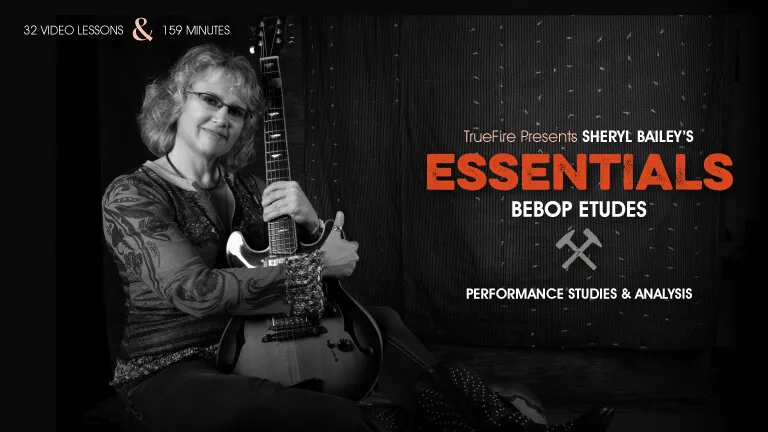
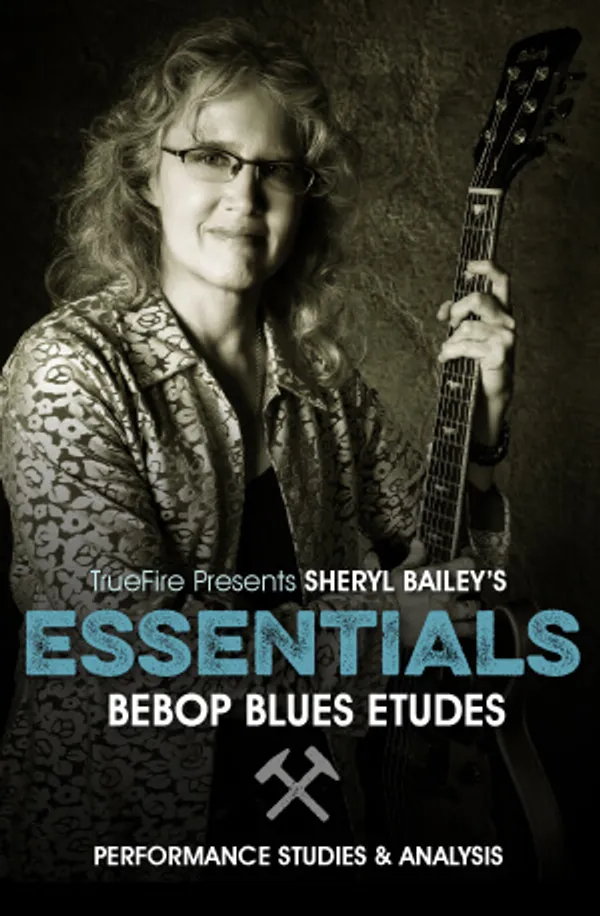
You’ll find our resident Bebop Dojo sensei, Sheryl Bailey also listed on the Who’s Who of bebop jazz guitar. Fortunately for we students of bebop guitar, Sheryl is also a passionate and brilliant educator as you’ll experience for yourself in this Bebop Etudes edition of Essentials.
”In constructing this collection of etudes, I've shared some of my favorite harmonic, rhythmic, and melodic techniques. We’ll be soloing over ten rhythm tracks, each one featuring a progression that jazz players encounter frequently. As you play through these ten etudes, you’ll gain insight into ways that you can use these concepts to expand not only your improvisations, but your ears and your overall understanding of the bebop language.”
Sheryl demonstrates all of the solos over rhythm tracks and then breaks them down by stepping you through the key concepts, techniques and creative approaches that she used in each performance study.
Soulio - ”Soulio is based on the iconic standard, Body And Soul. This chord melody solo weaves together drop 2 voicings, the min7 ala Wes technique, min7b5 substitutions, upper structure triads, and a few of my favorite voicings that I thought you'd dig.”
Flipso Calypso - ”You may recognize a classic Sonny Rollins tune here, but I've added a nod to Sonny's long time guitar collaborator, Jim Hall, in the construction of this tune. Jim and Sonny both had a quirky sense of placement and displacement in their phrasing.”
Blues By II V - ”Everybody's got to play the blues, and playing a jazz blues means not only creating melodies off of the changes of the song form, but also creating melodies on the invisible changes; implying II-7 V7's within the song form.”
Bebop Lee - ”Indiana became Charlie Parker's Donna Lee, which then became my version, titled Bebop Lee. This etude explores the many uses of the major7 bebop scale and the dominant 7 bebop scale.”
Petite Tournesol - ”Let's get modal with my take on the chord progression to the Freddie Hubbard classic, Little Sunflower — now named "Petite Tournesol. This one is always a favorite at jam sessions of all levels.”
Soulstice - ”This is a 12-bar Db minor blues based on the Coltrane classic, "Equinox." We'll explore some more modern techniques made popular by McCoy Tyner, looking at quartal harmony and constant structures."
Dem Changes One - ”There are certain touchstones, in terms of note choices, that a player needs to express when playing a rhythm change. Here I've included the most important ones, so you can be on your way to mastering this fun and challenging puzzle.”
Dem Changes Two - ”I've expanded the chromatic passages here, and make sure to take a look at that B section—adding sub II V's!”
Reflections One - ”I've borrowed ideas from the famous George Benson solo on "So What" from "Beyond the Blue Horizon" by creating a quick V7 - I cadence and using the tri-tone sub triad pair.”
Reflections Two - ”Here are some nice long, flowing lines you can use in many harmonic situations. These will move you away from playing up and down scales and give more harmonic shape to your ideas.”
All of the performances are tabbed and notated for your practice, reference and study purposes. You’ll also get Guitar Pro files so that you can play, loop and/or slow down the tab and notation as you work through the lessons. Plus, Sheryl generously includes all of the rhythm tracks for you to work with on your own.
Grab your guitar and let’s get busy with our bebop sensei Sheryl Bailey!
What you'll learn
Play and understand quartal harmony as both chords and melodic lines
Execute the finger roll technique for melodic fourths
Navigate triad inversions melodically
Use tritone substitution triad pairs
Create sophisticated harmonic colors over minor blues progressions
Hi, I'm Sheryl Bailey and welcome to Essentials: Bebop Etudes. In constructing this collection of etudes, I've shared some of my favorite harmonic, rhythmic, and melodic techniques. My hopes for you are that as you play through these you'll gain insight into ways you can use these concepts to expand not only your improvisations, but your ears and your understanding of the bebop language.
After each performance, I'll break it down for you and explain the key concepts and techniques. All of the etudes are tabbed and notated, with the jam tracks included as well so you can craft your own improvisations. Ready to dig in? Grab your guitar, and let's get started!
"Soulo" is based on the iconic standard, "Body And Soul." This chord melody solo weaves together drop 2 voicings, the "min7 ala Wes technique," min7b5 substitutions, upper structure triads, and a few of my favorite voicings that I thought you'd dig.
Now let's play "Soulo" through 4 choruses.
The first A section uses drop 2 minor 7 voicings connected by passing dim7 chords, much like Wes Montgomery used to employ. The second A uses a similar technique, but this time with drop 2 min7b5's. Also, I use dim7 voicings to substitute for dom7. In the B section, notice the "major triad pair" and use of "upper structure triads."
You may recognize a classic Sonny Rollins tune here, but I've added a nod to Sonny's long time guitar collaborator, Jim Hall, in the construction of this tune. Jim and Sonny both had a quirky sense of "placement and displacement" in their phrasing.
This solo is inspired by Jim Hall's use of playing "3 against 4" rhythms. He would imply a feeling of 3/4 against the 4/4 groove by using a few of fun rhythmic phrases. It makes the bar lines more "elastic" and gives you the feeling that you're never quite on the ground.
The rhythms used here are based on a dotted quarter note that imply the feeling of being in 3/4 against the 4/4 groove. Within that dotted quarter note, you can break it into 3/4 phrases. The other main trick employed here is using phrases based around a dotted half note.
I've only just begun, but the lesson on connecting diminished chords is excellent, and though it requires practise (like any concept), is an easy enough idea to work into your playing. Sheryl Bailey's clear explanations and warm personality make for easy learning.
J
jeff k.
11/25/22
Yrs of lessons in these studies!
Bialy packs a ton of information in each etude, and circles back to some of her key concepts (tri-subs, family of four arps); my fav is her lesson on McCoy Toyner's use of 4ths, which are beyond cool. I wish TF would do an entire course just on that! as is, this will keep me busy for yrs to come!
H
hendanine
Verified buyer
10/11/22
The etudes are a good way to make the concepts fun to learn
O
Ohio5665
Verified buyer
08/31/22
Another great course from Sheryl Bailey! I always learn something from her lessons and love the way she explains everything. This one will keep me busy awhile!