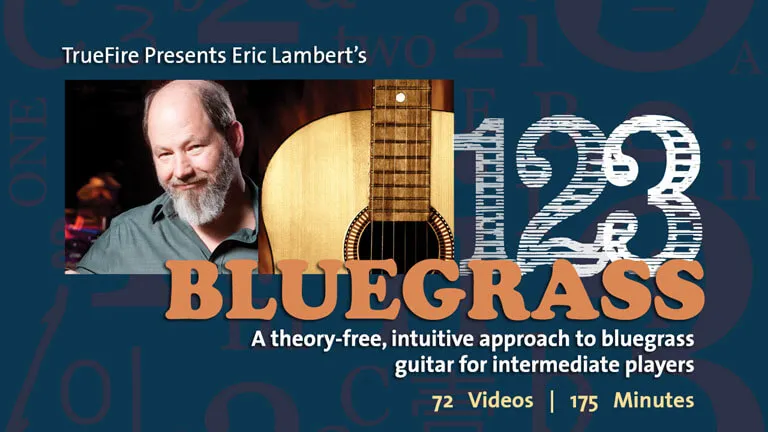
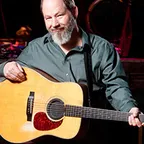
1-2-3 Bluegrass is a course designed to introduce you to the exciting world of bluegrass guitar through a series of easy to understand lessons explaining the use of chord patterns, picking techniques, the capo, the metronome and some classic bluegrass tunes that you can play at your local jam session. We'll also be able to pick together thanks to modern technology and the provided rhythm tracks.
If you're new to the bluegrass style of guitar, you'll be pleasantly surprised to know that you don't need to know a lot of chords or have a degree in music theory or even know how to read music for that matter -- it's really quite simple. All you need to know is a few bluegrass techniques, all of which are covered in this interactive video course, and you'll be off and running.
One of the very cool things you'll discover right away about bluegrass guitar is that you can use a capo. By learning how to use the capo, you'll be able to take the chord shapes and techniques, move them up and down the neck to change the keys, and boom -- bluegrass magic.
Eric Lambert has organized this course in 6 easy-to-understand sections. You'll learn everything from rhythm playing and chord voicings to melody playing and soloing, as well as repertoire. Within each of the sections, Eric presents 3 essential techniques you must know in order to become a proper bluegrass guitarist.
You'll work on chord shapes in G, C, and D, for that bluegrass vibe. Alternating bass, to develop a nice pulse. Walking the bass, to create energy beneath your chords. Hammer-ons, a great soloing technique. Half step dissonance, to get that ol' banjo sound. G runs, a staple in bluegrass guitar playing. Harmony slides, a great way to alter the voice of you solo lines. Open string ring, another banjo technique. Hammering thirds, add some real character to your rhythm and solo playing. And of course, that great banjo twang!
In the last section, Eric will show you the rhythm parts, the melody and some soloing for 6 bluegrass standards. You'll learn how to play Carter Family classic "Wildwood Flower", "Rolling in My Sweet Baby's Arms", "Will The Circle Be Unbroken", "Nine Pound Hammer", "Mountain Dew", and "Arkansas Traveler".
There's really no better way to learn than the old fashioned way of "how'd you do that?!", so that's why Eric has also included a number of interactive playalongs in this course. He'll play something, then you'll play it, then you'll play together. Good ol' fashioned oral tradition.
Eric has also included slow rhythm tracks, medium rhythm tracks, and fast rhythm tracks so that you can work yourself up to speed as you go along. You'll also find charts, tab, and other necessary learning tools to get up and running in this unqiue style of guitar. Enough talk - let's pick!
What you'll learn
Use hammer-ons in chord transitions
Adding energy to chord progressions
Using capo to change keys while maintaining chord shapes
1-2-3 Bluegrass is a course designed to introduce you to the exciting world of bluegrass guitar through a series of easy to understand lessons explaining the use of chord patterns, picking techniques, the capo, the metronome and some classic bluegrass tunes that you can play at your local jam session. We'll also be able to pick together thanks to modern technology and the provided rhythm tracks.
If you're new to the bluegrass style of guitar, you'll be pleasantly surprised to know that you don't need to know a lot of chords or have a degree in music theory or even know how to read music for that matter -- it's really quite simple. All you need to know is a few bluegrass techniques, all of which are covered in this interactive video course, and you'll be off and running.
One of the very cool things you'll discover right away about bluegrass guitar is that you can use a capo. By learning how to use the capo, you'll be able to take the chord shapes and techniques, move them up and down the neck to change the keys, and boom -- bluegrass magic.
Eric Lambert has organized this course in 6 easy-to-understand sections. You'll learn everything from rhythm playing and chord voicings to melody playing and soloing, as well as repertoire. Within each of the sections, Eric presents 3 essential techniques you must know in order to become a proper bluegrass guitarist.
You'll work on chord shapes in G, C, and D, for that bluegrass vibe. Alternating bass, to develop a nice pulse. Walking the bass, to create energy beneath your chords. Hammer-ons, a great soloing technique. Half step dissonance, to get that ol' banjo sound. G runs, a staple in bluegrass guitar playing. Harmony slides, a great way to alter the voice of you solo lines. Open string ring, another banjo technique. Hammering thirds, add some real character to your rhythm and solo playing. And of course, that great banjo twang!
In the last section, Eric will show you the rhythm parts, the melody and some soloing for 6 bluegrass standards. You'll learn how to play Carter Family classic "Wildwood Flower", "Rolling in My Sweet Baby's Arms", "Will The Circle Be Unbroken", "Nine Pound Hammer", "Mountain Dew", and "Arkansas Traveler".
There's really no better way to learn than the old fashioned way of "how'd you do that?!", so that's why Eric has also included a number of interactive playalongs in this course. He'll play something, then you'll play it, then you'll play together. Good ol' fashioned oral tradition.
Eric has also included slow rhythm tracks, medium rhythm tracks, and fast rhythm tracks so that you can work yourself up to speed as you go along. You'll also find charts, tab, and other necessary learning tools to get up and running in this unqiue style of guitar. Enough talk - let's pick!
2SECTION 1
This section explains the use of the G C and D shapes and how they can be transposed using a capo to play in the key of A, B flat and B
3Chord Shapes: 1
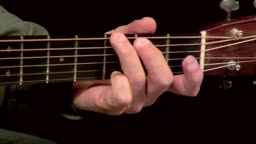
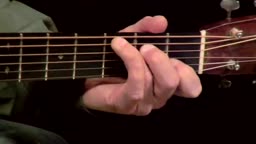
This section demonstrates a bluegrass G shape, an alternate G7 shape, a hammer on with the C shape, and the split measure D to D7 shape. We’ll demonstrate how the chord shapes function together as a chord progression and revisit the fact that they can be moved up the neck with the capo to play in the key of A, B flat and B.
4Chord Shapes: 2
This section demonstrates the C shape, the C7 shape, a hammer on with the C shape, the F shape, a hammer on with the F shape, and the split measure G to G7 shape. We’ll demonstrate how the chord shapes function together as a chord progression and revisit the fact that they can be moved up the neck with the capo to play in the key of D and E.
5Chord Shapes: 3
In this section we’ll demonstrate the D shape to G shape to A7 shape progression. We’ll use a hammer on with the D shape as well as a D7 move to the G shape and explain that we’ll sometimes use the G7 and move to the two finger A7 shape. Again, we’ll explain that, with a capo, we can move these shapes up the neck to play in the key of E and the key of F.
6SECTION 2
A verbal intro to the G shape techniques to embellish your bluegrass rhythm playing. The three techniques we will cover will be: alternating bass, walking bass, and using hammer-ons. Here we go!
7G Chord Shape Techniques 1
In this performance, I'll demonstrate using alternating bass while playing our chord progression.
Love it! Perfect for learning some basic skills to play bluegrass. Really like the instructor. He keeps it very simple and doesn’t over complicate what this course is about.

J
jpi68
Verified buyer
10/13/25
Helpful Course
I’m trying to get into Bluegrass right now, and this is helping me…
P
Praver
Verified buyer
04/13/23
Great course but not for the faint of heart. Requires a solid practice regimen and learning plan.