

sindibad
Verified buyer
08/04/26
Swingin'Uke Handbook
The guitar's little sister is good to play and to listen to.





Get this course and 1,000+ more with All Access
Try 7 days free. Cancel any time.

About this course
What you'll learn



39 lessons • 25 charts • 23 Jam Tracks
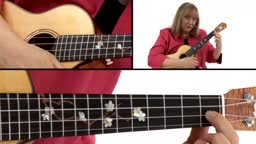
Welcome to Swingin' Rhythm Handbook! This series will keep you playing all the way through. There is a jam track for every lesson, each about one minute long.
Here's how I suggest you practice: Play through each jam track ten times, about ten solid minutes of practice. Stop and shake out your hands before playing again. When you feel like you're getting a lesson down and it's time to move on, go ahead. Start each new practice session by playing through each jam track that you've finished one time before starting a new lesson as a reminder of the lessons you've completed. The one minute lessons will serve as a great warm up to playing music. You'll really have this down by the end!
We'll use moveable closed chord positions for most of this series. Closed chords will allow us to use string dampening techniques with our right hand, giving a more percussive sound to our playing. Closed chords also allow us to move around the fingerboard, using the same patterns to change keys.
We'll primarily use two different right hand swing patterns in this course. We'll accent the downbeat in the first pattern, and accent the backbeat in the second. Groove is important in any kind of music, but placing the groove in just the right place makes swing, swing.
This first strum is a straightforward strum-chunk. Here we'll strum-chunk using down strokes while playing a C chord. You're not hitting the strings hard, you're hitting them fast, being concise and accurate. It's the speed of the strum that gives swing its signature bounce. Notice that there is a little bit of space between each strum. That happens when you relax your left hand just a little bit, taking pressure off the strings to dampen them.
Remember to play through the jam track ten times even though it may seem easy. The repetition will put you firmly in the swing head space. Count this strum: ONE - two - THREE - four.
Our second strum emphasizes the backbeat. Count this strum: one - TWO - three - FOUR. Beat one is lighter. Beat TWO is stronger. Beat three is lighter. Beat FOUR is stronger. Remember to play through the jam track ten times to get firmly into the swing rhythm feel.
We'll play two inversions of each chord to build fluidity and freedom on the fingerboard. Are there more inversions? Yes, but two inversions of each chord will really get you swinging.
There are jam tracks for every chord, with each track being about one minute long. Repeat each track ten times to play for a total of ten minutes. For more ukulele chords and solos make sure to check out my TrueFire classroom.
We'll use moveable closed chord positions for most of this series. Closed chords will allow us to use string dampening techniques with our right hand, giving a more percussive sound to our playing. Closed chords also allow us to move around the fingerboard, using the same patterns to change keys.
+ 32 more lessons
6 results
sindibad
Verified buyer
08/04/26
Swingin'Uke Handbook
The guitar's little sister is good to play and to listen to.
kh8yzsq8xt
Verified buyer
01/20/24
Great fun to play swing Ukulele
Perfect! Great course!
Herrenknecht
Verified buyer
11/12/21
Guitar/Uke Transition Accelerator
I'm coming from the guitar (particularly jazz/ gypsy jazz) and have just started to get into the Uke. This course helped me to transition very rapidly to approach fancy rhythms, chords, and progressions on the Uke as I was used to from the guitar.
tompedersen
Verified buyer
09/29/21
Changed my mind about play Uke
I start playing uke just to have an instrument small enough to teach my grandkids music. This coarse is taking my enjoyment with this fun instrument to a new level. Having these swing chords on the songs makes the instrument sound so much better!; and the back up tracks were just what I needed to practice them and get them smooth! Very fun!
Scott V.
02/13/19
Just as good as the first one!
I'm just getting into this course and is is every bit as good as the one before. I guess now I'm going to need Marcy's latest courses for the uke! :-D
Try 14 days free. Cancel any time.