

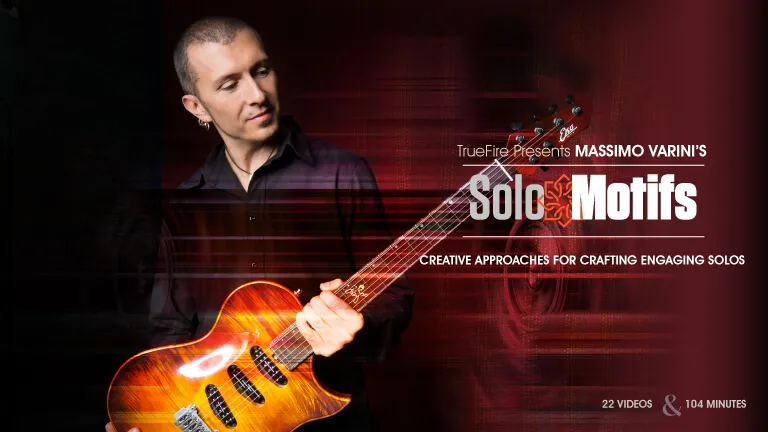

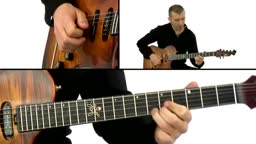
Solo Motifs

Creative Approaches for Crafting Engaging Solos

Marty FriedmanTommy EmmanuelSteve VaiEric GalesEric Johnson

Get this course and 1,000+ more with All Access

Try 14 days free. Cancel any time.

Purchase Individual Course for $9.99
Solo Motifs

About this course

Listen to any master musician comp or improvise a solo and you’ll hear a series of musical themes being introduced, developed and then resolved. The process is called motivic development and themes are referred to as motifs.

Motifs are very much a staple of Massimo Varini’s creative palette, “A motif is an initial idea, a spark, something that is first created spontaneously or taken from a melodic fragment or melodic rhythm, and then repeated, developed, varied rhythmically or melodically or both. The motif may even be so subtle it becomes almost unrecognizable but still serves as a point of reference for those musicians who are improvising or creating a rhythm part.”

Motifs are technically defined as “a short succession of notes producing a single impression; a brief melodic or rhythmic formula out of which longer passages are developed.” Motifs help you connect with your audience, interact with your band, and creatively frame the stories you tell them through your solos and improvisations.

Any guitar player with strong motivic development skills doesn't need blazing technique or deep theoretical knowledge to engage listeners and pull them to the edge of their seats.

Naturally, Massimo isn't consciously thinking about motifs while he’s comping or improvising; it’s a creative prowess that's been long embedded in his musicality. Fortunately, to help the rest of us develop those skills, Massimo dissected his own approach and presents his key soloing and improvisational motivic development techniques here in Solo Motifs.

“Many of my students ask me how I craft my solos, and how they should approach crafting their own. They may know all of the scales and modes, but they run into trouble when trying to put that knowledge to work in a creative, musical way. My answer is always — start with a simple motif, and then build out from there.”

Massimo presents Solo Motifs across 10 sets of Overviews and Demonstrations. “We’re going to work over 10 distinct backing tracks in a variety of styles, keys and tempos. For each track, I’ll show you a few creative approaches for developing simple motifs into longer, more interesting lines, and then I’ll apply those ideas and approaches in a Performance Study.”

All of the key demonstrations and performances are tabbed and notated for your practice, reference and study purposes. You’ll also get Guitar Pro files so that you can play, loop and/or slow down the tab and notation as you work through the lessons. Plus, Massimo generously includes all of the rhythm tracks for you to work with on your own.

Grab your guitar and let’s get motivic with Massimo Varini!

What you'll learn

  • Target chord tones to create strong melodic lines
  • Create motifs using the flat 5 sound over hard rock progressions
  • Apply question and answer phrasing in solos
  • Connect chord changes using passing tones
  • Develop pentatonic-based motifs with rhythmic variations
Release date: 09/25/2015 • 1h 44m runtime
Start Course
Sample lessons
Resolving Tension
Resolving Tension
Concepts & Approaches
Resolving Tension
Resolving Tension
Performance
Imitation
Imitation
Performance
Passing Tones & Modal
Performance

What's included

22 lessons • 10 charts • 10 Jam Tracks

Solo Motifs: Massimo Varini

What do we mean by the term "motif" in music? We refer to a "theme," an initial idea, a spark, something created spontaneously or taken from a melodic fragment or melodic rhythm.

Motifs are repeated and developed, varying rhythmically, melodically, or both. The motif may even become almost unrecognizable, but it still serves as a point of reference for improvising or creating a rhythm part. In this course, we're going to focus on building upon motifs for solo improvisation. Let's dig in!

Octaves & Targets

Let's start with a simple idea and develop our first motif. The concept that I want to convey here is this: start with a single idea and work with it until you get an idea of your own (as I'll show you in the next video).

In this video, we'll start from a motif, developing it by changing some of the "target" notes (notes inside of the chords) and melodic lines that follow the chords. Then we'll move one octave above and use expressive tools such as bending and vibrato with greater intensity.

Once you have this down, it will be easier to process your ideas and phrases for other parts of the neck using the "target" notes. We'll also explore other examples of motifs (similar to the short lick we've already used) and how to develop them.

Octaves & Targets

Now I'll show you how to put together some of the concepts and examples you've just seen. In this video, as in all other performances and examples, you have the notation and tablature to use as a base for practice.

Rhythm Changes

We'll use a short melodic phrase as the initial idea for our motif in this R&B groove in 12/8. We're going to build something in the style of Gary Moore, but change the original idea to develop it. In addition to the expressive tools that we usually use, we'll use some rhythmic variations—different notes of "color" that are located in the target notes.

Rhythm Changes

Now I'll show you how to put together some of the concepts and examples you've just seen. In this video, as in all other performances and examples, you have the notation and tablature to use as a base for practice.

Resolving Tension

This time, we'll try to do the opposite of what we've learned: we'll play notes that aren't target notes called "tensions," which we'll resolve by using the target notes. Given that triads are made of the fundamental (first), third, and fifth, we'll see how the second, fourth, sixth, and seventh change the notes that precede or follow it.

Resolving Tension

Now I'll show you how to put together some of the concepts and examples you've just seen. In this video, as in all other performances and examples, you have the notation and tablature to use as a base for practice.

+ 15 more lessons

Start Course

Reviews

14 results

Addahia

Verified buyer

01/12/25

Solo and Rythm motifs

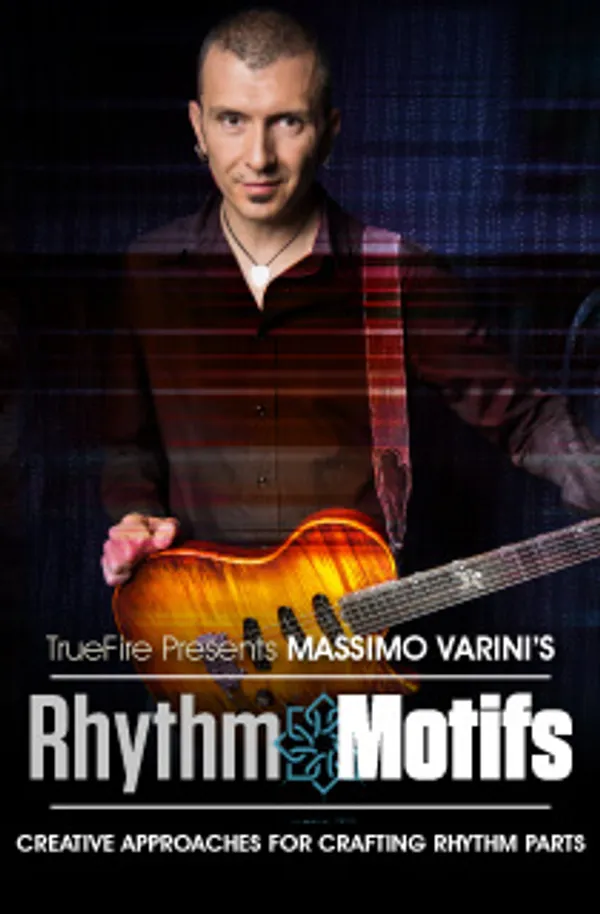
Both the Solo and Rythm edition of this motifs are outstanding. Massimo shares very simple core ideas that you can the develop to your own musical interest. But the ideas in it self are so cool that they really hook you up into the groove of the backing tracks. So if you are in a crative rut, this will help you for sure. Or, if you need some coordinates to organize your own ideas, here you have a compass.
vjuracak

Verified buyer

08/29/24

Extraordinary explained. It helps me a lot in progress from intermediate to advanced guitarist. Thank you from the bottom of my heart.

ArtemIV

Verified buyer

03/11/21

Available and understandable

It's rraly help to make my own solo

archiebald

Verified buyer

03/03/21

melodic

I live the feeling and für melodies of his playing. Wonderful

Bluesman55

Verified buyer

02/20/21

Solo motif

This hase really open my eyes to what i can achieve, got me away from the usual phrasing and i can now play more melodic lines.

Stop searching. Start improving with All Access.

Try 14 days free. Cancel any time.