Musicologists will tell you that Western Swing is a sub-genre of American country music that originated in the late 1920s down South and out West. An outgrowth of jazz, Western Swing blended Appalachian, Polka, Folk, Dixieland, Blues with heavy doses of Swing. Amplified stringed instruments, especially guitar, is what gives Western Swing its distinctive sound.
Ask Merle Travis back in the day and he would have told you that, "Western swing is nothing more than a group of talented country boys, unschooled in music, but playing the music they feel, beating a solid two-four rhythm to the harmonies that buzz around their brains. When it escapes in all its musical glory, my friend, you have Western swing.”
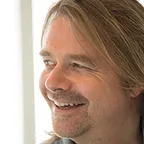
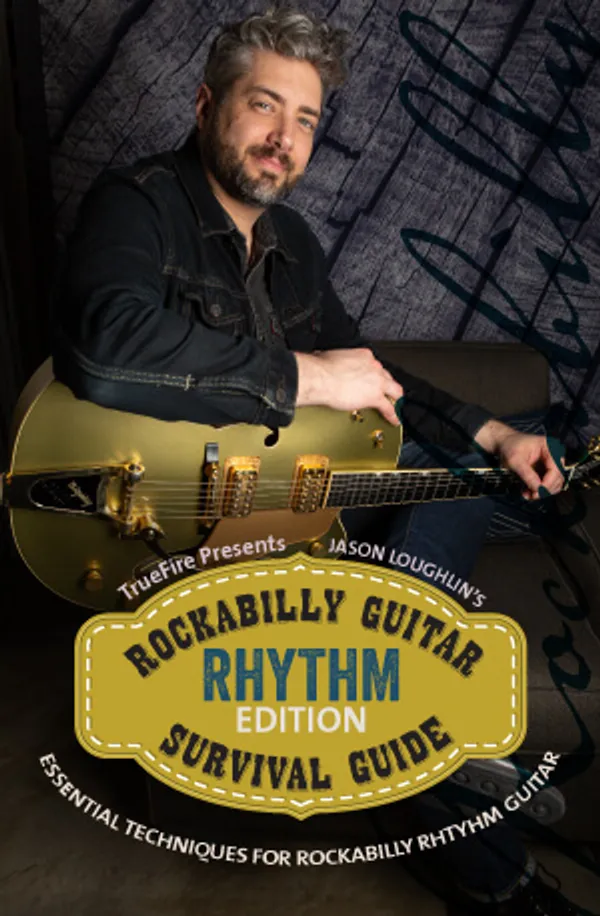
Ask Jason Loughlin and he’ll tell you that, “Western swing music is dance music plain and simple. It’s reign of popularity ranged from the late 20's into the early 40's with bands like Bob Wills and His Texas Playboys, Milton Brown and His Musical Brownies, and Spade Cooley and His Orchestra, but it still has a strong following thanks to torch-bearers like Asleep At The Wheel and The Time Jumpers.
This is a great style for any guitarist to learn. The rhythm guitar alone in a western swing band is a blast to play and really helps broaden your rhythm chops. As soloists we get to use blues, swing and even Appalachian improvisational concepts to expand your soloing chops.”
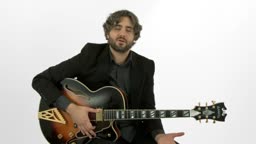
Jason Loughlin’s Focus On: Western Swing focuses on the key harmonic elements and techniques that you’ll need in your Western Swing toolbox to get in the game and on the Western Swing bandstand.
Jason organized the course into four sections. In the first section, Jason overviews the history of Western Swing and highlights some of Western Swings’ key players that you should be listening to. He’ll also run down some of the most common gear and tricks you’ll need to get that signature Western Swing sound.
In the second section, you’ll focus on rhythm guitar techniques and approaches. Jason shows you the most versatile moveable chords, inversions, and you’ll work on harmonic calling cards - these are the signature harmony embellishments that scream western swing.
In the third section, you’ll learn some essential soloing techniques. Jason shows how to embellish a melody, outline chords and improvise over western swing changes.
In the fourth and final section, you’ll apply everything you learned in the first three sections as you play your way through four Performance Studies. Jason first overviews the Study, then performs it for you, and then breaks it all down in detail.
Study #1: Crusty Doughboy: “This rhythm part is based on a Carter type strum with bass fills. We won’t get too far away from the melody when we solo. We’ll play three choruses. First, we’ll establish the melody, then we'll add melodic embellishments, and finally we’ll reharmonize the melody.”
Study #2: Tulsa Blues: “In this Western Swing blues study we will not be using the blues scale. and we don't want to put too much movement in the changes. The rhythm part is simple and as soloists we'll incorporate the swinging major pentatonic, second scale degree bends and outlining chords.”
Study #3: Oklahoma Playboy: “We’ll be really swinging with this Eldon Shamblin-inspired rhythm guitar part packed full of inversions, passing chords and secondary dominants. These create a strong bass melody and we’ll be using a simple quarter-note strum with accents on the backbeat.”
Study #4: Fast Rhodes: “Here we’ll focus on a Texas Troubadours inspired study. We'll be using a lot of harmonic information including altering dominant chords, using iv, outlining ii-Vs, using diminished scales and using a major 7th on our I chord.”
Jason demonstrates all of the Performance Studies over rhythm tracks and then breaks them down measure-by-measure, technique-by-technique. All of the key examples and performance studies are tabbed and notated for your practice, reference and study purposes.
You’ll also get Guitar Pro files so that you can loop and/or slow any section down as you work through the lessons. Plus, you'll get all of the rhythm tracks to work with on your own.
Grab your guitar and lets get swingin’…
What you'll learn
Navigate 1-4-5 progressions using chord tone targeting
Play authentic Western swing rhythm guitar with proper voicings and embellishments
Apply chromatic runs to add color to solos
Make chord changes audible in your improvisation
Understand the history and key players of Western swing music
Hi, I'm Jason Loughlin and welcome to Focus On Western Swing. Western swing music is dance music plain and simple. It's whole function is to get you up and dancing. It has incredible cultural importance too. It's one of the first truly American musical styles. The way western swing marries Appalachian, polka, Dixieland and the blues shows it to be one of the first successful fusion of styles to create an artform the is undeniably "new world". Tulsa Oklahoma was at the center of western swing. It gave birth to so many bands, western swing musicians and is home to Cain's Ballroom which is famously known as a mecca for western swing bands. Western Swing's reign of popularity ranged from the late 20's the the early 40's but still has a strong following thanks to torch bearers like Asleep At The Wheel and The Time Jumpers. This is a great style for any guitarist to learn. Rhythm guitar alone in a western swing band is a blast to play. As soloists we get uses blues, swing and appalachian improvasational concepts. The course is divided into four sections. In section one we will look at history, popular bands, players and gear. Section two is where we will start to discover our soloing concepts. Together, we'll work through outlining chords, swinging pentatonic, western swing blues, melodic embellishment and altering dominant chords. In section three I'll show five essential rhythm concepts. We'll cover common chords, inversions, harmonic calling cards, strumming and secondary dominants. Then in section four we put all of our concepts to use in four instrumental studies. Each study is focused around a feel or style within western swing. I'm providing you with all the backing tracks, notation and tab for every example. Let's get swinging!
In section one I'll be giving you some general history about the key players and bands. We'll also talk about guitars and amps of choice to help you represent the western swing guitar sound.
Western Swing was a term given by the press to the dance music in the south created by bands like The Light Crust Doughboys, Bob Wills and The Playboys, Milton Brown and His Musical Brownies, Spade Cooley and His Orchestra, The Modern Mountaineers and The Fort Worth Doughboys. Most of these bands rose out of the Tulsa, Oklahoma music scene. Western swing enjoyed a popular run from the late 20's to the early 40's. It's influences can traced to Appalachian music, Cowboy, Polka, Dixieland, Swing and Blues. The instrument driving it all early on was the fiddle. It served the same roll that trumpet or clarinet does in Dixieland music. The fiddle was responsible for establishing the melody of the tune and filling around the vocal. It wasn't long though until western swing gave rise to the lap steel guitar. Lap steel becomes integral part of the western swing sound by the mid 30's. Players like Leon McAuliffe, Joaquin Murphey and Herb Remington were the primary contributors. Other notable instruments associated with western swing are the accordion which passed down from the polka, saxophone, piano, drum set and banjo. Banjo was soon replaced by the guitar though. Good thing too! Otherwise, we would all have to buy banjos to play western swing and let's face it, nobody wants that. Sorry, banjo players. We have Bob Wills and Spade Cooley to thank for being so adventurous with western swings instrumentation. A lot of these bands evolved out of each other or shared members. It was fairly common for a player to leave to start up his own band or to go play with a better paying outfit. Here's a list of players you should check out. Eldon Shamblin, Jimmy Wyble, "Junior" Barnard, Muriel "Zeke" Campbell, Benny Garcia, Tommy Morrell, Billy Dozier, Bob Kiser and Leon Rhodes.
The guitar of choice was an archtop. Mostly gibsons though you did see some strombergs and D'Angelicos. You're going to want heavy gauge strings so you can really dig in. Don't worry you won't really be doing any bending more than a quarter step. What do we know about the amps? This gets a little tougher to pin down. Not a whole lot of documentation about who used what amps on what. Luckily, there weren't that many good amps to chose from. So chances are these western swing giants were using Gibson, epiphone and Rickenbacker amps. Low wattage, single speaker amps with volume and tone knobs. No effects were used.
Section two will focus on the essential rhythm concepts that you will need to play western swing. I'm sure we've all figured out by now that the majority of the time you're playing rhythm. That is especially true in western swing since guitar is not primarily the lead instrument. It's more common for fiddle or lap steel to take lead. So, we have to be able to enjoy playing rhythm. Fortunately, Eldon Shamblin turned western swing rhythm guitar into a tour de force. We will look at the must know chord shapes, chord inversions, adding secondary dominants and ii/Vs.
Here we'll learn common chord qualities that you'll come across in western swing. Let's take a look at Maj 6th, Dom 7th, Min 7th, Aug the and Diminished chords. I'll show you two shapes for each. One with a root on the 6th string and one with a root on the 5th string. This will help us use good voice leading in our comping and not have to jump around the neck.
Eldon Shamblin was western swing's rhythm guitar hero. His use of inversions keep Bob Wills band chugging and swinging hard. We'll look at how he uses inversions that give add movement and excitement to a chord progression. We'll focus on Maj6 and Dom7 chords. Some of the inversion we will use are not "true" inversions of the root chord but they are all common inversions used in western swing. Sometimes we will drop the maj6 or dom7. In some cases were even adding notes. When doing a first inversion of a dom7 we can substitute a min7b5 shape off of the 3rd to create Dom 9th chord.
Great overall introduction and a bit deeper into western swing. Learing thc chords and and charts.
A
arpeggio5
Verified buyer
04/06/26
very good course it gives you time to take area of the neck & practice
Q
Quigle
Verified buyer
02/28/26
Adds Colour & Tonality To Your Playing!
Very useful content which adds colour and tonality and injects that flavor into any style you might be playing, really enjoyed this course.
K
Kasperovich
Verified buyer
02/04/26
Jason Loughlin's classes/lessons are always great! He has a way of teaching that is easy to follow and always clearly understood. His way of playing and choices and explanations are always helpful.
J
Josef
Verified buyer
02/04/26
Western Swing lesson
Jason Loughlin's classes are great. Love his teaching style. Someone who can clearly express his choices and the theory behind those choices. I've bought a few of his lessons.