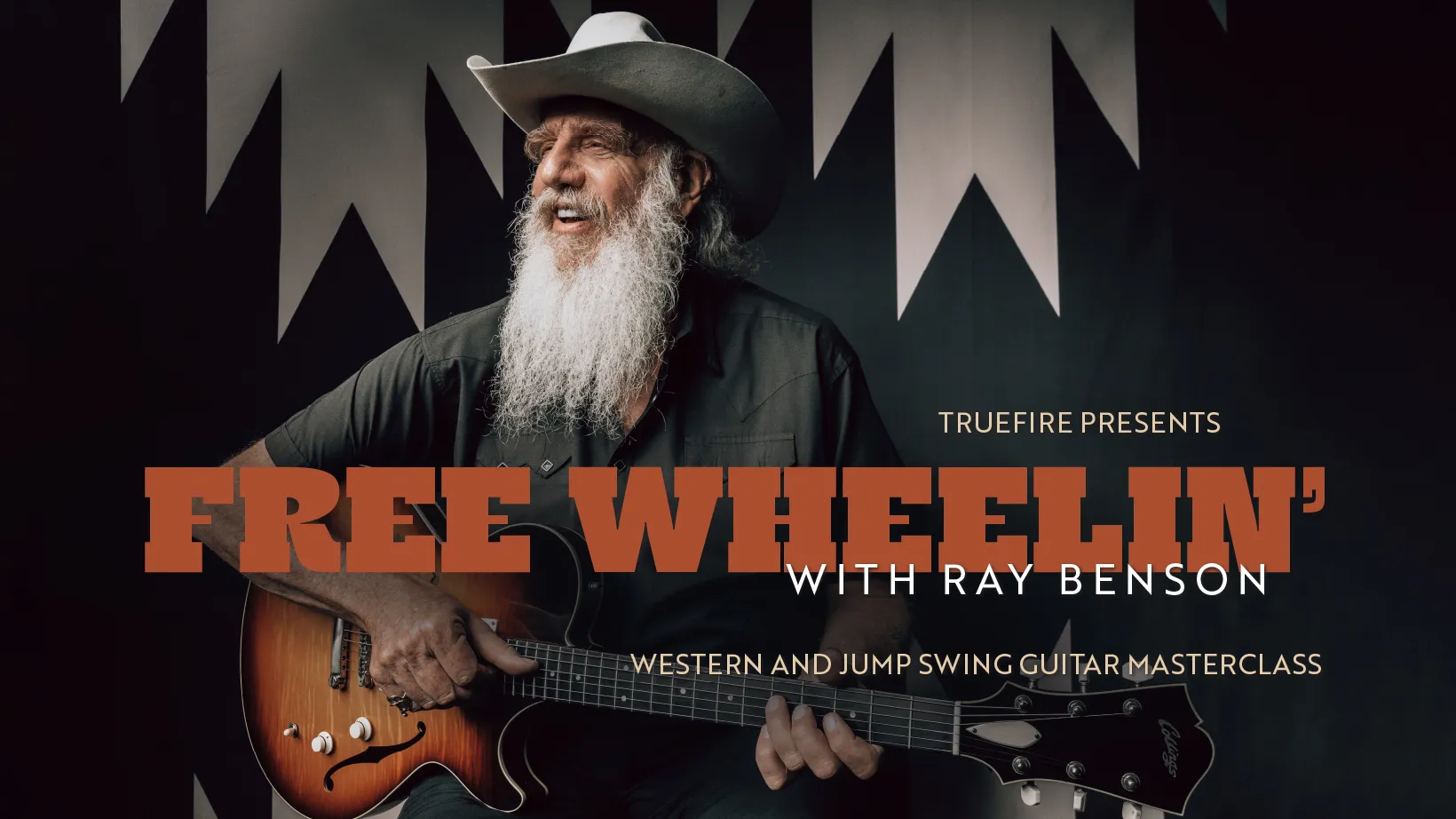
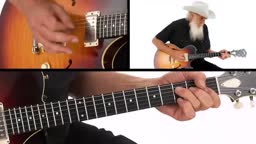
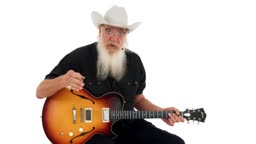
In the vast ocean of country music, few have steered their ships as deftly as Ray Benson, the towering frontman and bandleader of the iconic Western swing ensemble Asleep At The Wheel. With a career spanning more than half a century, Benson and his band have safeguarded the rich traditions of Western swing for generations to come.
We’re thrilled to welcome Ray Benson to the family with this Free Wheelin’ interactive video masterclass. Ray dives deep into Western and Jump Swing guitar, generously sharing his lead and rhythm guitar approaches, key insights and concepts, and thoroughly enlightening stories from the road.
”After five decades of touring and recording with Asleep at the Wheel, I can tell you first hand — music is a learning journey that never ends.
Every tune and every turn on the journey feeds your musicianship and keeps your fingers dancing. I’m excited for this opportunity to pass on what I’ve learned on my own ‘free wheelin’ journey.
We'll dive deep into Western and Jump Swing guitar. I’ll also share many of my influences and a few stories from the road that helped shape my playing, writing, and performing.”
Key lessons include: Chord Voicings, Flatpicking Tricks, Inversion Chords, Western Swing Rhythm, Walking Bass Lines, Finger Picking and Alternating Bass, Early Influences, Eldin Shamblin, Tic Tac Rhythm, Chords are Everything, Being a Band Leader, Finding Fingerpicking, How Chords Relate to Soloing, Improving What You Do Not Do Well, Playing Double Stop Lines, Gear and Guitars
Ray demonstrates all of the techniques and concepts shared in the masterclass over backing tracks that cover the full range of swing feels and tempos: After You Have Yawned, Faded Love, Route 6-T-6, Tulsa, Lincoln, Milk Cow, My House, Country Funky Johny Bush, and Slow Country
You’ll have TrueFire’s advanced learning tools at your fingertips to personalize your workspace and learn at your own pace.
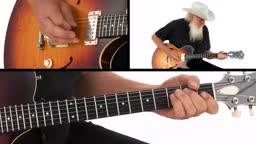
The performances are tabbed, notated, and synced to the video with looping and slow-motion controls. Backing tracks, Guitar Pro files, printable tab and notation are also included.
Grab your guitar, and let’s dig in with Ray Benson!
P.S. For maximum Free Wheelin’ fun, check out Ray’s companion immersive jamming experience, In The Jam with Ray Benson. Dial in your mix and jump in the jam with Ray and the band!
What you'll learn
Play funky country rhythm and lead guitar in the key of E
Create appropriate fills between vocal lines
Construct complete melodic phrases that resolve to the tonic
Hey, folks. Ray Benson here. You know, after 5 decades of touring and recording with Asleep at the Wheel, I can tell you first hand — music is a learning journey that never ends. Every tune and every turn feeds your musicianship and keeps your fingers dancing. I’m excited to pass on to you what I’ve learned on my own free wheelin’ journey. We'll dive deep into Western and Jump Swing guitar—both lead and rhythm. I’ll also share many of my influences and a few stories from the road that helped shape my playing, writing and performing. We’ll play our way through the course together using a variety of backing tracks that cover the full range of swing feels and tempos. And, you’ll have all the learning tools here at TrueFire so you can learn at your own pace. Grab your guitar and lets dig in!
The next song we're exploring is inspired by "After You've Gone," a classic tune prominent in the 1930s, especially in the swing guitar genre. This song is reminiscent of the style Django Reinhardt would have jammed to with Stephane Grappelli and the Hot Club de France. Although it's an up-tempo song, we've recorded it at a medium tempo. It's a fantastic piece due to its numerous chord changes that come quickly, offering a dynamic and engaging experience. In my rendition, I attempt a fingerpicking version akin to what Chet Atkins might have done. While I'm not Chet Atkins, I incorporate some fingerpicking techniques in my interpretation. This tune is particularly great because of its complex chord progressions and rapid changes, challenging and rewarding for any guitarist to tackle.
The next song we're exploring is inspired by "After You've Gone," a classic tune prominent in the 1930s, especially in the swing guitar genre. This song is reminiscent of the style Django Reinhardt would have jammed to with Stephane Grappelli and the Hot Club de France. Although it's an up-tempo song, we've recorded it at a medium tempo. It's a fantastic piece due to its numerous chord changes that come quickly, offering a dynamic and engaging experience. In my rendition, I attempt a fingerpicking version akin to what Chet Atkins might have done. While I'm not Chet Atkins, I incorporate some fingerpicking techniques in my interpretation. This tune is particularly great because of its complex chord progressions and rapid changes, challenging and rewarding for any guitarist to tackle.
The next song we're exploring is inspired by "After You've Gone," a classic tune prominent in the 1930s, especially in the swing guitar genre. This song is reminiscent of the style Django Reinhardt would have jammed to with Stephane Grappelli and the Hot Club de France. Although it's an up-tempo song, we've recorded it at a medium tempo. It's a fantastic piece due to its numerous chord changes that come quickly, offering a dynamic and engaging experience. In my rendition, I attempt a fingerpicking version akin to what Chet Atkins might have done. While I'm not Chet Atkins, I incorporate some fingerpicking techniques in my interpretation. This tune is particularly great because of its complex chord progressions and rapid changes, challenging and rewarding for any guitarist to tackle.
The next song we're exploring is inspired by "After You've Gone," a classic tune prominent in the 1930s, especially in the swing guitar genre. This song is reminiscent of the style Django Reinhardt would have jammed to with Stephane Grappelli and the Hot Club de France. Although it's an up-tempo song, we've recorded it at a medium tempo. It's a fantastic piece due to its numerous chord changes that come quickly, offering a dynamic and engaging experience. In my rendition, I attempt a fingerpicking version akin to what Chet Atkins might have done. While I'm not Chet Atkins, I incorporate some fingerpicking techniques in my interpretation. This tune is particularly great because of its complex chord progressions and rapid changes, challenging and rewarding for any guitarist to tackle.
When selecting chords for a song, consider how different chords can change the song's feel, much like how dialects can change the meaning of the same words in spoken language. For example, take the song "This Land is Your Land." Typically, it's played with major chords: C major, F major, C major, G major. But what happens when you use major 7th and dominant chords? The same lyrics – "This land is your land, this land is my land, from California..." – take on a different tone. Experimenting with chord variations can give a song a unique twist. For instance, adding a dominant seventh to the word "land" changes the song's character: "This land is your land, this land is..." And using a diminished chord offers yet another variation. It's about choosing the inflection or sound that best suits your interpretation of the song. While Woody Guthrie might have preferred major chords, you might choose differently. I often use major 6th chords, like a C major 6th, which differs from a standard C6. The key is to select chords that reflect the sound and mood you want to convey in your music.
My journey into flatpicking was challenging, and I'm still working on it. To me, guitar playing is all about the hands. I had a good friend, Roy Buchanan, one of the greatest electric guitar players of all time. He played in Bladensburg, Maryland, with Danny Denver, a singer. I remember meeting Roy backstage during a time when the Rolling Stones had tried to recruit him. He was known for his incredible hand techniques on the Telecaster, like using his finger to adjust the volume knob and creating unique sounds by manipulating the guitar's neck and using harmonics. Roy's approach showed me that your hands are crucial in every aspect of guitar playing. You can mute with your hands or use your fingertips for harmonics. Discovering all the tricks on the guitar has been an ongoing journey from day one. I often tell people that to sound like Stevie Vaughn, Cal Farlow, or B.B. King, it's not just about the gear; it's about what their hands did. B.B. King's vibrato, for instance, is iconic. This understanding highlights the importance of hands in guitar playing. That’s why guitarists are careful with their hands, avoiding activities that might cause injury. Chet Atkins, for instance, wore white gloves on his right hand to protect his nails before performances. This next song is an up-tempo, funky, country groove, a style often found in Nashville. It's medium-tempo and a little funky, offering more rhythmic input compared to many country songs that focus primarily on lyrics and melody. This song has a solid rhythmic base, so enjoy exploring it.