







10 Principles of Jazz Accompaniment

Jazz Guitar Comping for Vocalists

Marty FriedmanTommy EmmanuelSteve VaiEric GalesEric Johnson

Get this course and 1,000+ more with All Access

Try 14 days free. Cancel any time.

Purchase Individual Course for $24.99
10 Principles of Jazz Accompaniment

About this course

The art of comping for a vocalist requires a significantly different approach than comping with a soloist. Supporting a soloist requires more complex play and adapting to improvisations with varied chords and rhythms. Comping for a vocalist calls for a more elegant approach that underscores the melody without overshadowing the vocal performance.

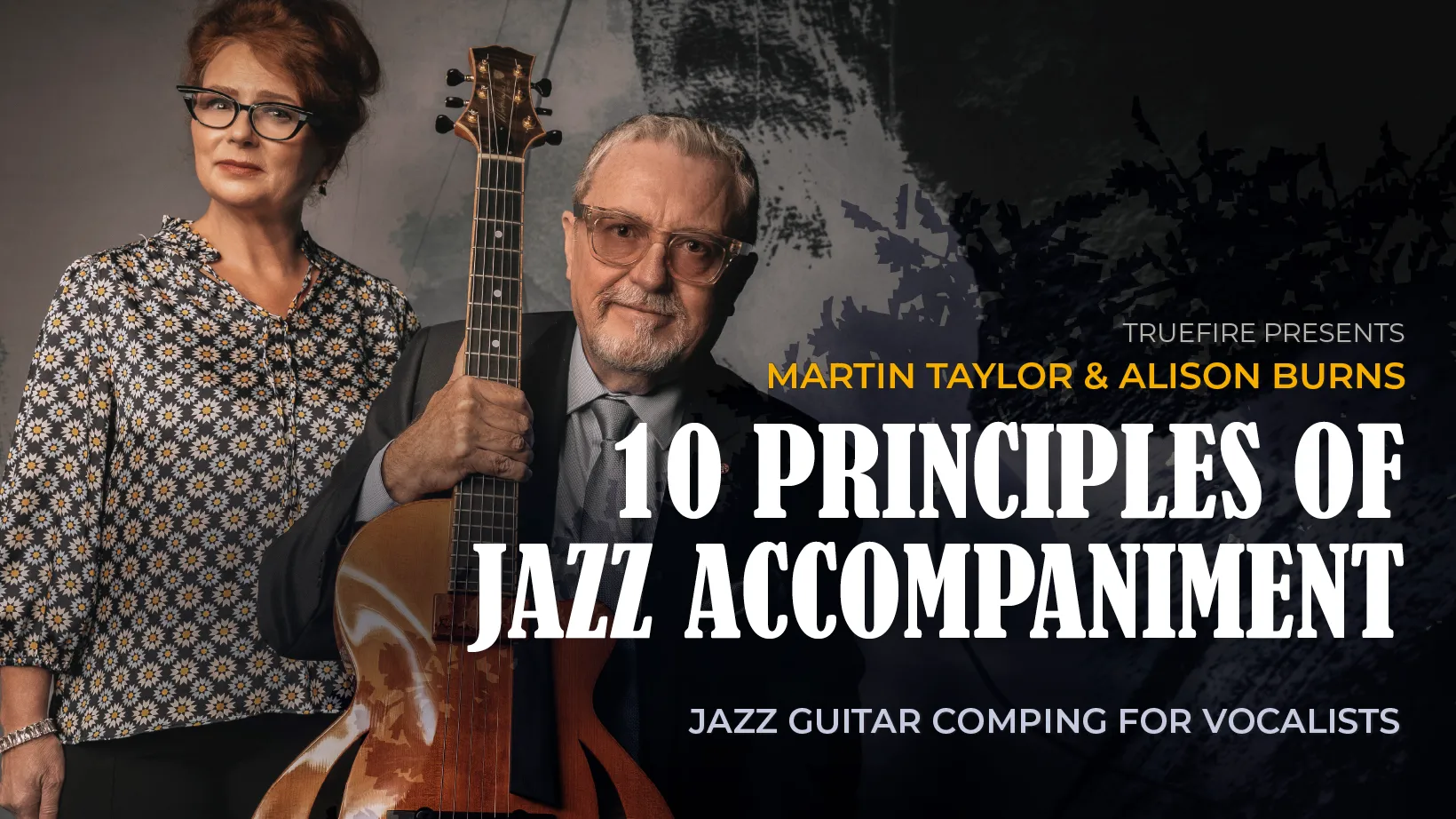
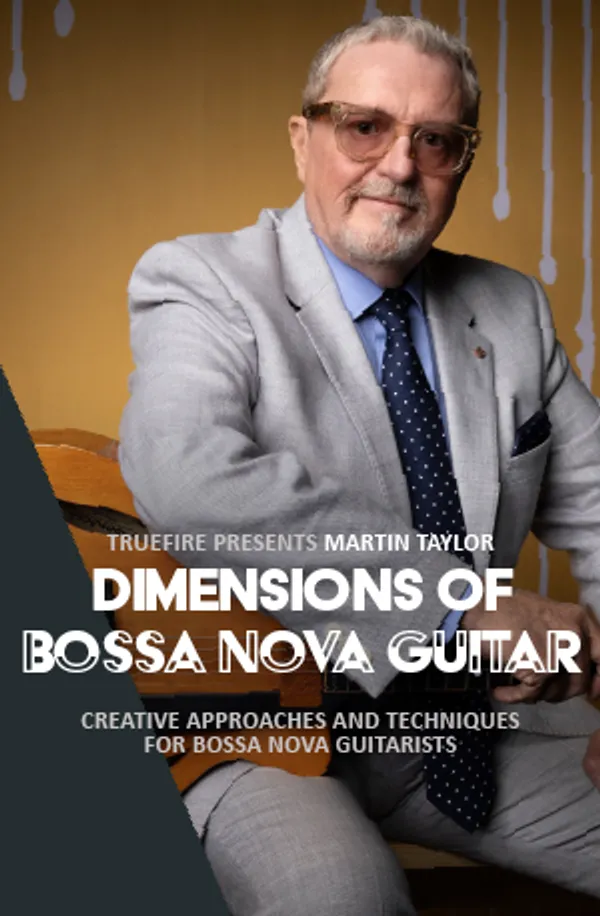
Fingerstyle jazz legend Martin Taylor has collaborated with hundreds of world-class musicians in virtually every setting, from duos and trios to ensembles and big bands. Drawing on years of experience, Martin and special guest Alison Burns guide you through a highly enlightening, interactive masterclass, 10 Principles of Jazz Accompaniment.

”Joining me on this course is the highly acclaimed jazz vocalist Alison Burns. Together, we'll share and demonstrate what we consider to be the ten most important considerations for guitarists when accompanying a singer.

We'll cover approaches for determining the optimal key, mood, and tempo for a song. We’ll also demonstrate how guitarists can complement the performance with dynamics, space, and fills. You’ll also learn key considerations for integrating the voice and guitar into a seamless conversation."


Martin and Alison use five songs, in various feels and tempos, as the framework for the masterclass. Each individual song features a series of lessons explaining and demonstrating the ‘principles’ that they will embrace when performing the song in a duo setting. After the performance, you’ll apply what learned in a musical context by practicing with a playalong track featuring just Alison’s vocal performance.

You’ll have TrueFire’s interactive learning tools to personalize your workspace and learn at your own pace.

The demonstrations and performances are tabbed, notated, and synced to videos with controls for looping, slow motion, fretboard animation, and many other tools designed to accelerate learning.

Grab your guitar, and let’s dig in with Martin Taylor and Alison Burns!

What you'll learn

  • Learn to create atmosphere that matches lyrical content
  • Understand the difference between instrumental and vocal accompaniment approaches
  • Understanding how to accompany a vocalist on guitar
  • Learning to play counter melodies that complement a vocal line
  • Develop counter melodies that create conversational texture
Release date: 03/12/2024 • 3h 11m runtime
Start Course
Sample lessons
Tea For Two
Tea For Two
Overview
Establishing the Mood & Tempo
Tea For Two: Demonstration
Dynamics & Space
Dynamics & Space
Tea For Two: Demonstration
Tea For Two
Tea For Two
Duo Performance

What's included

54 lessons • 39 charts • 5 Jam Tracks

10 Principles of Jazz Accompaniment
Hello, I'm Martin Taylor. Welcome to Ten Principles of Jazz Accompaniment. Joining me on this course is the highly acclaimed jazz vocalist, Alison Burns. Together, we'll share and demonstrate what we consider to be the ten most important considerations for guitarists when accompanying a singer.

We'll cover approaches for determining the optimal key, mood, and tempo for a song, and how guitarists can complement the performance with the use of dynamics, space, and fills. We'll share key considerations for integrating the voice and guitar into a seamless conversation and you'll be able to use TrueFire's learning tools to play along with us. So grab your guitar and let's get started!
10 Principles of Jazz Accompaniment
Before we begin, I want to discuss the ten essential considerations for accompanying a singer. These considerations aren't rigid steps but are crucial for a successful collaboration. The first three—key, mood, and tempo—are foundational, setting the stage for everything that follows. Key is vital because it must align with the singer's range, ensuring their comfort and best performance. Mood and tempo are closely linked, determining the song's emotional tone and pacing to match the lyrics and their delivery.

After establishing these, we move into the realm of interpretation, covering dynamics, fills, integrating the voice and guitar, using space effectively, soloing, and handling changes. Dynamics and fills, for example, allow us to enhance the song's narrative and emotional impact, weaving the guitar's voice with the singer's to create a unified story.

Part of our interpretative work also includes crafting thoughtful introductions and endings, setting the tone for the song and concluding it in a way that encapsulates the entire performance. These elements, from establishing the key to designing intros and outros, are critical in supporting the singer and enriching the musical experience.

First, we'll start things off with a performance and then we'll break it all down in detail. This approach not only demonstrates the concepts in action but also provides a practical framework for understanding how to apply these considerations in real musical settings.
Lady Be Good
In this lesson series we perform a song written by George Gershwin in 1924, highlighting the rich history of jazz standards. These songs, originating from Broadway shows and musicals, were adopted and adapted by jazz musicians, becoming integral to the jazz age of the 1920s and 1930s. Jazz, being the popular music of its time, was not just for listening but also for dancing and singing along. Today, Alison and I will perform George Gershwin's "Lady Be Good," and we'll discuss the concepts we use, such as finding the right key, setting the mood, determining the tempo, utilizing dynamics, and the importance of storytelling in our performance. Let's dive in.
Selecting the Key
In this lesson, we will explore the collaborative process of selecting the right key for a song, with a focus on "Lady Be Good" as our case study. Viewers will learn about the historical context of jazz standards, the importance of adapting to the singer's vocal range, and the technical considerations for instrumental accompaniment. Through this example, the lesson will demonstrate how musicians negotiate key choices, balancing technical preferences with the need to highlight the singer's voice, ultimately creating a performance that is both technically sound and emotionally resonant.
Establishing the Mood
In this lesson, we will explore the significance of mood and storytelling in music, using "Lady Be Good" as an example. We'll delve into how understanding the song's lyrics and story can influence the choice of tempo and overall interpretation, transforming a performance from a simple rendition of notes to a rich, emotional narrative. This exploration will highlight the collaborative nature of musical performances, emphasizing the importance of serving the song and its story, and how instrumentalists can support the singer in conveying the story's emotions and atmosphere. Through this, you will learn the value of immersive storytelling in music, creating an engaging and emotionally resonant experience.
Choosing the Right Tempo
In this lesson, we discuss the process of choosing the right tempo for a song, focusing on "Lady Be Good" as an example. We examine how mood, narrative, and lyric phrasing influence tempo selection, striving for a balance that facilitates expressive storytelling while preserving the song's charm. This exploration sheds light on the nuanced decisions musicians make in their interpretative process, demonstrating the dynamic between maintaining the song's essence and engaging with the audience during a live performance.
Coming Up With an Intro
In this lesson, you will learn how to craft an engaging musical introduction that sets the tone for a song, using "Lady Be Good" as a case study. We'll explore the concept of creating a mood through the imagery of walking through a rainy city and how this imagery can inspire the introductory chords and progressions. You'll discover techniques for making a progression more interesting by incorporating descending dominant seventh chords into two-five progressions, enriching the harmonic texture of the introduction.

We'll discuss the importance of pitch recognition and relative pitch for singers, and how an introduction can aid both the singer in finding their starting note and the listener in understanding the harmonic context. Additionally, you'll learn the significance of musical spacing and pacing, how to decide when to introduce certain musical elements like a consistent four beats per bar, and the strategic deployment of these elements to enhance the emotional journey of the song

+ 47 more lessons

Start Course

Reviews

7 results

PaulG18

Verified buyer

02/04/26

Accompaniment mastery

Martin Taylor and Alison Burns are amazing, To have a clear discussion on how to develop a song together with examples of this process is Invaluable. Something both a singer and guitarist will benefit from I highly recommend.
jil1

Verified buyer

02/13/25

Enjoy it very instructive thanks

bernhardbayi

Verified buyer

12/06/24

parfait

elaborate107B

Verified buyer

11/18/24

rare topic

. . . His Masters Guitar . . .

voroboy

Verified buyer

07/10/24

10 принципів джазового акомпанементу

Чудовий курс!!! Чудова інформація!!!

Stop searching. Start improving with All Access.

Try 14 days free. Cancel any time.