Roots, Rags & Blues

Delta Blues, Gospel, New Orleans, Ragtime & early jazz guitar lessons

Marty FriedmanTommy EmmanuelSteve VaiEric GalesEric Johnson

Get this course and 1,000+ more with All Access

Try 14 days free. Cancel any time.

Purchase Individual Course for $9.99
Roots, Rags & Blues

About this course

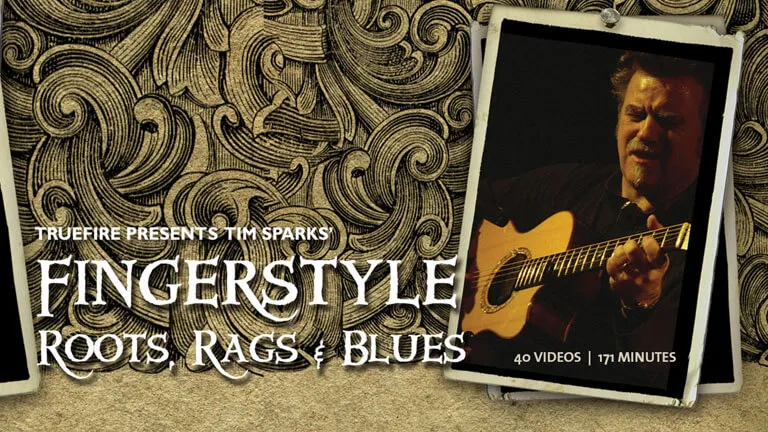
Virtuoso acoustic wizard and fingerstyle master, Tim Sparks presents Fingerstyle Roots, Rags & Blues, an insightful exploration of Early Americana Roots music and intensive fingerstyle study program for intermediate and advanced students. Fingerstyle Roots, Rags & Blues covers Delta Blues, Country Gospel, New Orleans, Ragtime, Early Jazz and the most amazing version of "The Mississippi Blues" that we've ever seen performed or heard here at TrueFire.

The tunes in this collection evoke a time when American Roots music crystallized and was transformed by the effects of recordings and radio. Some of these selections were written for guitar, others are adaptations from piano and jazz band arrangements. A long list of Roots Music fingerstyle guitarists particularly influenced the material covered in Fingerstyle Roots, Rags & Blues; Duck Baker, Pat Donohue, Woody Mann, Steve James, Eric Lugosch, Eric Schonberg, Ernie Hawkins, Dakota Dave Hull, Phil Heywood, Guy van Duser, Lasse Johansson, Andy Ellis and Teja Gerken.

Tim Sparks has been redefining the acoustic guitar repertoire since he won the US National Fingerstyle Championship in 1993 with a ground-breaking arrangement of Tchaikovsky's Nutcracker Suite. Since then, Sparks has continued to surprise, challenge, and thrill audiences with his diverse repertoire and stunning technique. Equally at home within the Country Blues, Ragtime, Jazz or World Music genres, Sparks' extraordinary ability to adapt virtually any music to the solo guitar has earned him an international reputation as one of the most innovative guitarists working today.

Sparks has seven solo CDs to his credit including The Nutcracker Suite, One String Leads to Another and Guitar Bazaar on Peter Finger's Acoustic Music Records. He has also recorded four projects for John Zorn's Tzadik label, Neshamah, Tanz, At the Rebbe's Table and Masada Guitars, (with Bill Frisell and Marc Ribot).

Fingerstyle Roots, Rags & Blues presents two completely different arrangements of "Amazing Grace," a rendition of Mother Maybelle Carter's "Victory Rag" and early Jazz and Blues by the likes of Jelly Roll Morton, Scott Joplin and Eubie Blake. Sparks breaks down each tune, passage by passage, in detailed video explanations, notation and tabs that not only allow you to play the songs, but also gives you a treasure trove of chord voicings, licks, scales and turnarounds to use in your playing.

What you'll learn

  • Navigate dissonant intervals within jazz chord voicings
  • Play syncopated chord rhythms while maintaining independent bass movement
  • Use bar technique across multiple chord changes
  • Understand and apply slash chord voicings in context
  • Understand how the bridge connects back to the main theme
Release date: 05/09/2007 • 2h 50m runtime
Start Course
Sample lessons
Jelly Roll Blues
Jelly Roll Blues
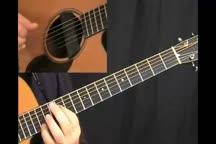
Breakdown 1 - 6
Breakdown 1 - 6
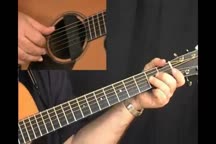
Breakdown 7 - 14
Breakdown 7 - 14
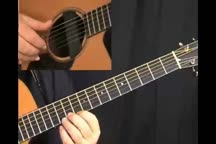
Breakdown 15 - 20
Breakdown 15 - 20

What's included

40 lessons • 17 charts

Amazing Grace
The tunes in this collection come from the early part of the 20th Century, some from the late 19th Century. They evoke a time when American Roots music crystallized and was transformed by the effects of recordings and radio. Some of these selections were written for guitar, others are adaptations from piano and jazz band arrangements. These tunes typically have a more complex architecture than the streamlined popular music of the Post WWII era. For example, a tune like Maple Leaf Rag has a form of AABBACCDD as compared to the AABA 32 bar form which became a staple from the 1930s through the late 1950's.

The best way to go through the lessons is to start with Amazing Grace and Victory Rag. I use a lot of partial bars to make chords and play melody passages and these two lessons introduce the basic fingering techniques and chord shapes used in the more difficult selections such as Mississippi Blues and Maple Leaf Rag.

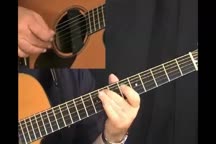
These video lessons were shot in two roughly 6 hour sessions. I tried to explain the most important fingering issues, and repeated most sections several times so you will have ample segments to stop, rewind, or advance slowly to check the fingerings. I apologize if sometimes the melody lines and riffs go by a little fast. I often refer to chord forms as an A shape, D7 shape, etc. Most of the time, this means a first or second position chord form. In reviewing the lessons, I did catch myself referring to a D chord as a G chord instead of G shape but I think you'll find things are made clear between the video and the tabs. I definitely hit more than a few clams but the tabs and notation indicate the correct notes.

A long list of Roots Music fingerstyle guitarists particularly influenced these efforts. Some contemporaries I should single out are Duck Baker, Pat Donohue, Woody Mann, Steve James, Eric Lugosch, Eric Schonberg, Ernie Hawkins, Dakota Dave Hull, Phil Heywood, Guy van Duser, Lasse Johansson, Andy Ellis and Teja Gerken. My experiences teaching at places such as the International Guitar Seminars, the Swannaoa Gathering, the Winnipeg Folk Festival and the University of Minnesota have also been priceless sources of ideas and inspiration.

Amazing Grace 1

Amazing Grace is one of the oldest and best known Gospel Hymns. It was written by John Newton, an 18th century English slave ship captain. Newton had a religious conversion during a violent storm at sea and composed the words. It has been assumed the melody is from an old bag pipe tune although it has recently been speculated that Newton took his inspiration from an African slave song. Newton became a minister and late in his life renounced the slave trade. Ever since, Newton's hymn has resonated in both Black and White American folk traditions through countless versions. Roling Stone writer Steve Turner chronicles the history of Amazing Grace from John Newton till present day in "Amazing Grace:The Story of America's Most Beloved Song". A good review and synopsis of Turner's book can be found here.

Breakdown 1 - 3
The tunes in this collection come from the early part of the 20th Century, some from the late 19th Century. They evoke a time when American Roots music crystallized and was transformed by the effects of recordings and radio. Some of these selections were written for guitar, others are adaptations from piano and jazz band arrangements. These tunes typically have a more complex architecture than the streamlined popular music of the Post WWII era. For example, a tune like Maple Leaf Rag has a form of AABBACCDD as compared to the AABA 32 bar form which became a staple from the 1930s through the late 1950's.

The best way to go through the lessons is to start with Amazing Grace and Victory Rag. I use a lot of partial bars to make chords and play melody passages and these two lessons introduce the basic fingering techniques and chord shapes used in the more difficult selections such as Mississippi Blues and Maple Leaf Rag.

These video lessons were shot in two roughly 6 hour sessions. I tried to explain the most important fingering issues, and repeated most sections several times so you will have ample segments to stop, rewind, or advance slowly to check the fingerings. I apologize if sometimes the melody lines and riffs go by a little fast. I often refer to chord forms as an A shape, D7 shape, etc. Most of the time, this means a first or second position chord form. In reviewing the lessons, I did catch myself referring to a D chord as a G chord instead of G shape but I think you'll find things are made clear between the video and the tabs. I definitely hit more than a few clams but the tabs and notation indicate the correct notes.

A long list of Roots Music fingerstyle guitarists particularly influenced these efforts. Some contemporaries I should single out are Duck Baker, Pat Donohue, Woody Mann, Steve James, Eric Lugosch, Eric Schonberg, Ernie Hawkins, Dakota Dave Hull, Phil Heywood, Guy van Duser, Lasse Johansson, Andy Ellis and Teja Gerken. My experiences teaching at places such as the International Guitar Seminars, the Swannaoa Gathering, the Winnipeg Folk Festival and the University of Minnesota have also been priceless sources of ideas and inspiration.

Amazing Grace 1

Amazing Grace is one of the oldest and best known Gospel Hymns. It was written by John Newton, an 18th century English slave ship captain. Newton had a religious conversion during a violent storm at sea and composed the words. It has been assumed the melody is from an old bag pipe tune although it has recently been speculated that Newton took his inspiration from an African slave song. Newton became a minister and late in his life renounced the slave trade. Ever since, Newton's hymn has resonated in both Black and White American folk traditions through countless versions. Roling Stone writer Steve Turner chronicles the history of Amazing Grace from John Newton till present day in "Amazing Grace:The Story of America's Most Beloved Song". A good review and synopsis of Turner's book can be found here.

Breakdown 5 - 6
This enduring gospel standard is typically played in 3/4. For this workshop I am presenting the tune in two 4/4 versions. The first version is in drop D tuning, with the 6th string tuned from E down to D. The melody is played over an alternating Travis style bass line picked by the thumb largely on the 6th and 4th strings. The main idea of the lesson is to demonstrate major and minor Blues pentatonic scale voicings which can be easily played over the drop-D alternating bass line. The drop D chord voicings come from Joseph Spence by way of Ry Cooder. I was introduced to this style by Pat Donohue about 35 years ago when he showed me his arrangement of the Sonny Rollins tune, St. Thomas. I'm also trying to channel something of the gentle spirit I hear in the music of Mississippi John Hurt into this adaptation.
Breakdown 7 - 10
This enduring gospel standard is typically played in 3/4. For this workshop I am presenting the tune in two 4/4 versions. The first version is in drop D tuning, with the 6th string tuned from E down to D. The melody is played over an alternating Travis style bass line picked by the thumb largely on the 6th and 4th strings. The main idea of the lesson is to demonstrate major and minor Blues pentatonic scale voicings which can be easily played over the drop-D alternating bass line. The drop D chord voicings come from Joseph Spence by way of Ry Cooder. I was introduced to this style by Pat Donohue about 35 years ago when he showed me his arrangement of the Sonny Rollins tune, St. Thomas. I'm also trying to channel something of the gentle spirit I hear in the music of Mississippi John Hurt into this adaptation.
Breakdown 11 - 14
In the second take on Amazing Grace, we modulate to C major and reharmonize the melody with some jazz chord voicings and more fingerings of the major and minor Blues scales. This is a good lesson to go through in order to familiarize yourself with the chord shapes used in the more difficult arrangements. The style of this version is rubato, which means not in a strict rhythm but very free. Once you've learned the arrangement, you can embellish the melody and interpret the rhythm to suit your mood.
Breakdown 15 - 18
In the second take on Amazing Grace, we modulate to C major and reharmonize the melody with some jazz chord voicings and more fingerings of the major and minor Blues scales. This is a good lesson to go through in order to familiarize yourself with the chord shapes used in the more difficult arrangements. The style of this version is rubato, which means not in a strict rhythm but very free. Once you've learned the arrangement, you can embellish the melody and interpret the rhythm to suit your mood.
Jelly Roll Blues
This version of Jelly Roll Blues is based on a piano roll made by Ferdinand "Jelly Roll' Morton, who claimed to have invented Jazz on a hot summer afternoon in 1902. The first great composer of Jazz, Morton was a virtuoso pianist, band leader, gambler, and all around hustler who honed his skills in the sporting houses of New Orleans' legendary Storyville district. A good link to learn more about the life and music of Morton is jazzitude.com.

+ 33 more lessons

Start Course

Reviews

15 results

Achille5789

Verified buyer

04/18/26

excellent

Very good lesson

Don196004

Verified buyer

12/11/23

Definitley Advanced

This course is definitely advanced. The songs he goes over are wonderfully complicated but breaks each section down in smaller segments so working methodically through all of them you should be able to work up to playing them. Become an advanced player.

tompedersen

Verified buyer

09/20/21

Clear Instruction - Mostly Late Intermediate Level

The bluesy arrangement of Amazing Grace is at the upper end of Intermediate level, all the rest seem to be at late intermediate. Plenty of time and detail is given to get you where you need to be if you have been in the intermediate level for a while.

vmjmurphy

Verified buyer

08/01/21

Classis Grassroots Stuff

This course will keep you busy for a long time, there's so much useful material. If you're looking for the chops to play classic early Americana then this is where you need to go.

rick56

Verified buyer

07/15/21

Great!

Actually alot of fun, Never gets old. Easily followed and very fun arrangements. Making it easier for the players. The Breakdowns are specific and logical.

Stop searching. Start improving with All Access.

Try 14 days free. Cancel any time.