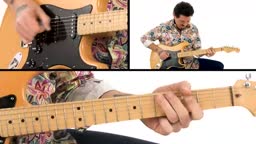
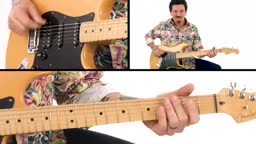
All right, are you excited to dive into some rock and roll techniques with me, Mike Zito? This course promises to be a blast. First, I'll show you some performances, then we'll break them down step by step. But before we dive into that, let's familiarize ourselves with the core techniques that will elevate your guitar playing with a touch of rock and roll.
Growing up, I spent a lot of time in a guitar store and worked there for a decade after high school. Let me tell you, it's essential to have some impressive licks, especially for those Saturday morning crowds. Imagine a scenario where someone walks in wanting to buy a guitar. If you can play a head-turning riff, you instantly become the center of attention. Trust me, these techniques are not just fun, they're game-changers. Let's dive into the first one.
Harmonics are scattered all over your guitar. Whether you play an acoustic, a clean guitar, or one with a single coil, they all produce harmonics. However, adding a bit of distortion, especially with a humbucker in the bridge position, enhances the effect. It's as simple as picking the E string and lightly touching it without fretting. The outcome? Pure rock and roll. This technique is particularly effective on wound strings, producing a richer sound than the unwound strings.
Many iconic rock and roll tracks utilize this type of harmonic. It might seem basic, but we can make it sound musical and incorporate it creatively.
Now, let's progress to the second technique. This one's simple but adds a distinctive flair when paired with distortion. It's a technique I first heard from Van Halen. It involves muting with your right palm and then executing a pull-off. The outcome is a fantastic percussive sound that's just pure fun.
Next up, the fail-safe pinch harmonic. This is a must-know for any rock and roll enthusiast. From Van Halen to ZZ Top, this technique is prevalent in many classics. The trick lies in using both the pick and the side of your thumb to strike the string simultaneously, creating a pinching effect. It might take a bit of practice, but the result is worth it.
Lastly, let's explore the tap harmonic. Natural harmonics exist at the 12th fret, which can be tapped using your fingers. This technique can be heard in Van Halen's tracks, where he would slap the string with his finger, producing a resonating sound. It's a more advanced technique but adds a unique flavor to your playing.