40 Day Rhythm SWAT Camp

Extensive hands-on exploration of classic and modern rhythm guitar styles

Marty FriedmanTommy EmmanuelSteve VaiEric GalesEric Johnson

Get this course and 1,000+ more with All Access

Try 14 days free. Cancel any time.

Purchase Individual Course for $9.99
40 Day Rhythm SWAT Camp

About this course

One of TrueFire's top-ranked interactive audio courses of all time is 40-Day Rhythm Guitar SWAT Camp, a compilation of 40 "rhythm" audio lessons that we produced for Guitar Player magazine. The 40 lessons were authored by a veritable “who’s who” of guitar educators who cover a very distinctive range of rhythm guitar styles and techniques.

The curriculum is designed to expose the student to a wide variety of instruction over 40 days, 1 lesson each day, thereby forcing the student out of their comfort zone and into the “learning” zone. Those who have taken on the challenge, and played by the rules (40 days, 40 lessons), report “grossly enlarged rhythm chops.”

We asked our resident Professor of Comp, Chris Buono, to update the course material with video segments demonstrating the more challenging examples within the 40 lessons. We also asked Chris to update the individual lesson selections by swapping out half of the lessons with more current material to give the course better range and balance.

After nine months of editing, recording, tweaking and arranging, Chris produced over 11 hours of video segments (no typo - eleven hours of video!) across the 40 lessons. This new, improved, video version of 40-Day Rhythm Guitar SWAT Camp includes all 11 hours of video instruction, all of the original audio lessons, all of the text narrative, notation and Power Tab for all of the examples.

You’re not expected to nail every lesson, every day. Not sure that’s even possible as there’s more than a few doozies from the likes of Jesse Gress, Joe Deloro, Keith Wyatt, Adam Levy and other monster educators that would take weeks for mere mortals to master. Rather you’ll explore each lesson to the best of your ability and then move on the next day. When you’ve completed the 40 days, you’re free to go back and dig in deeper on the lessons that you dug the most.

So, pack your boots and tell your loved ones that you’ll see them on the other side.

What you'll learn

  • Play Curtis Mayfield-style rhythm guitar using three different picking approaches
  • Play independent bass lines with thumb while maintaining chord voicings
  • Execute bossa nova rhythm patterns
  • Apply quartal harmony concepts to funk and disco styles
  • Develop finger independence for fingerstyle playing
Release date: 09/16/2009 • 11h 00m runtime
Start Course
Sample lessons
Day 10
Day 10
Introduction
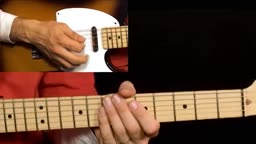
Chuck Berry: Super Chuck
Jim Campilongo
Day 13
Day 13
Introduction
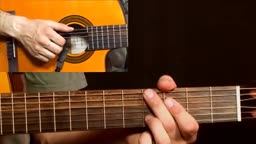
Bossa Nova Basics
Bossa Nova Basics
Adam Levy

What's included

86 lessons • 42 charts

40 Day SWAT Camp
Upon first picking up a guitar we all did the same thing--learned a few chords and bashed away with reckless abandon. Man! It was fun, but eventually the realization this assault on those six strings needed to get some groove on and so started the life-long study of rhythm guitar. To that end we bring you 40-Day Rhythm Guitar SWAT Camp--a colossal boot camp-style journey into playing your guitar with style(s).

Here at TrueFire we have an incredible archive of lessons from the most revered guitar-centric educators. What's more, we have accompanying audio tutorials from many of the original writers! Over the years we've assembled various CD-ROMs containing these informative packages and among them, the original 40-Day Rhythm Guitar SWAT Camp was one of the most popular. So much so, we set out to create a new and improved, revamped video version of this amazing collection of genius. All together not only are the original text and audio components present, you now have the advantage of actually seeing how it's done and you have over 20 new lessons to chew on. In addition to the PDF versions of the lessons--many from their initial publication--there will be Power Tab charts of all the licks, riffs, and vamps where you'll be able to slow down the passage in the Power Tab MIDI player so you can zero in on any details you like without altering the pitch.

I, Chris Buono, will be your host [ie: task master] for the next 40-Days and beyond. Not only will you see me in your TrueFire player guiding you through the lessons at hand, but I will also be adding my own gist on the concepts contained within the lessons for even more fodder for thought. The pleasure was all mine as I combed through the halls of TrueFire and the TrueFire forum searching for subject matter to make 40-Day Rhythm Guitar SWAT Camp even better. Careful attention was given to rounding out the compilation giving you an even broader palette of styles to gain knowledge.

Within the 11 hours (!) of video content we will explore rhythm guitar styles ranging from rock to rumba and everything in-between. Starting with the inimitable "Bo Diddley beat" we'll check out the inner workings of the triplet swing feel, dive into fresh approaches to playing a shuffle, deeply study the basics and beyond of funk rhythms, get introduced to chord substitutions, dissect those cool Hendrix-y chord embellishments, drop that low E string and chug some dropped-D riffage; even learn how to how spice up those acoustic campfire grooves. And that's just the tip of the headstock, folks. Along the way we'll take some days to focus on various rhythm guitar stalwarts (some of whom may have been criminally under your radar) such as Pete Townshend, Chuck Berry, Kenny Burrell, Billie Joe Armstrong of Green Day, Charlie Hunter, Muddy Waters, John Lee Hooker; even Avi Bortnick from Sco's jamband era and Ernest Shamblin of the Texas Playboys. Who's Ernest Shamblin you ask? Just wait until Day 22! Not only was the content dissected, but so was the order of things. The flow of these next 40-Days was set up so you are constantly engaging new grooves while building upon the basics of styles that have more than one inclusion. You'll have your long days; you'll have your seemingly short days, but one thing is for sure: Everyday will be an adventure.

The coolest part about 40-Day Rhythm Guitar SWAT Camp is that aforementioned adventure. To get the most out of the course try committing to the 40-day process you have before you. Set aside some time, say a half-hour, and let everyday be a day of six-string discovery. It's completely OK if you don't make it through the lesson that day. The goal is to pique your inner rhythm machine and to engulf your mind, body, and soul within the loads of very cool approaches to playing rhythm guitar. I want you to be inspired by what's out there and to come out of this 40-Day journey as a newly christened rhythm guitar devotee.

OK, enough talk! Get your guitar, tell your loved ones you'll see them on the other side and let's do it to it.

P.S. It's OK if a print out of my mug becomes a fixture on your dartboard. I realize no one likes their drill Sergeant and I forgive you in advance.
Day 1
Few things sound as cool as a loud, electric guitar pounding out a Bo Diddley beat. The pioneering Mr. Diddley a.k.a. Ellas McDaniel played a pivotal role in transforming blues into throbbing rock and roll. Inspired by Afro-Cuban rhythms, Diddley perfected his trademark beat (which was often accompanied by extreme amp tremolo, maracas, and wailing blues harp) in the 1950s, and used it to power such classics as "Bo Diddley," "Pretty Thing," and "Mona." A short list of songs that feature variations of his pulsing groove include "Magic Bus" (the Who), "Not Fade Away" (Buddy Holly, the Rolling Stones, the Grateful Dead), "Desire" (U2), "I Want Candy" (the Strangeloves, Bow Wow Wow), and "Willie and the Hand Jive," (Johnny Otis, Eric Clapton). Bo inspired beats still find their way onto the charts, as evidenced by Scottish songwriter KT Tunstall and her recent hit, "Black Horse and the Cherry Tree."To get a handle on this essential rhythm, set your metronome or drum machine to click quarter-notes at a relaxed tempo. Next, on muted strings, scratch out Ex. 1's unbroken eighth-notes using alternating downstrokes and upstrokes. Finally, add the accents, digging into the strings to emphasize the down or upstrokes, as shown. Gradually raise the tempo, and hear the beat take shape.Ex. 2 adds major triads played on the second, third, and fourth strings to the mix. Fret the chords on the accents, but otherwise relax your fingers and strum muted strings. For an authentic vibe, crank up the tremolo.Now try the variation in Ex. 3 Though the accents remain the same, we've souped up the first measure with a slide, and we're using two different major-triad voicings.Once you've got a firm grasp of the rhythm as notated in these examples, try eliminating some of the muted scrapes. Just skip a few here and there, nothing formal, to create a more fluid, jivey sound.

Hey, Bo Diddley!
Few things sound as cool as a loud, electric guitar pounding out a Bo Diddley beat. The pioneering Mr. Diddley a.k.a. Ellas McDaniel played a pivotal role in transforming blues into throbbing rock and roll. Inspired by Afro-Cuban rhythms, Diddley perfected his trademark beat (which was often accompanied by extreme amp tremolo, maracas, and wailing blues harp) in the 1950s, and used it to power such classics as "Bo Diddley," "Pretty Thing," and "Mona." A short list of songs that feature variations of his pulsing groove include "Magic Bus" (the Who), "Not Fade Away" (Buddy Holly, the Rolling Stones, the Grateful Dead), "Desire" (U2), "I Want Candy" (the Strangeloves, Bow Wow Wow), and "Willie and the Hand Jive," (Johnny Otis, Eric Clapton). Bo inspired beats still find their way onto the charts, as evidenced by Scottish songwriter KT Tunstall and her recent hit, "Black Horse and the Cherry Tree."To get a handle on this essential rhythm, set your metronome or drum machine to click quarter-notes at a relaxed tempo. Next, on muted strings, scratch out Ex. 1's unbroken eighth-notes using alternating downstrokes and upstrokes. Finally, add the accents, digging into the strings to emphasize the down or upstrokes, as shown. Gradually raise the tempo, and hear the beat take shape.Ex. 2 adds major triads played on the second, third, and fourth strings to the mix. Fret the chords on the accents, but otherwise relax your fingers and strum muted strings.For an authentic vibe, crank up the tremolo.Now try the variation in Ex. 3 Though the accents remain the same, we've souped up the first measure with a slide, and we're using two different major-triad voicings.Once you've got a firm grasp of the rhythm as notated in these examples, try eliminating some of the muted scrapes. Just skip a few here and there, nothing formal, to create a more fluid, jivey sound.

Day 2
Those too young to remember when Buddy Holly was alive and rockin' (he died in 1959, before his 23rd birthday) may not remember that the rave-up "Not Fade Away" was his baby. The song was an early-'60s hit single for the Rolling Stones and a perennial Grateful Dead concert fave. With all due respect to the Dead, the Stones, and the countless others who've taken their shot at "Not Fade Away," Holly's 1957 original recording with his trio, the Crickets is nearly impossible to beat in terms of raw, good-time energy. (Crickets drummer Jerry Allison played the song's funky "drum" part on a cardboard box now that's rock and roll.)If you call "Not Fade Away" at a jam session, the rhythm guitar player is likely to break into a Bo Diddley-style strum which is the groove most bands set the song to but Holly's rhythm pattern is quite different. The Bo Diddley rhythm puts the accents on beats one, the and of two, and four in the first half of a two-bar figure, and beats two and three in the second bar. But, as you can see in the music below, Holly's "Not Fade Away" figure accents beats two, the and of three, and four in bar 1, and beats two and three in bar 2. Bars 3 and 4 reprise the first two bars, with an added peeow on beat four of bar 4. (Holly played the quick down glissandos in the song's intro, interludes, and outro, though it's absent in the verses.) The key to acing Holly's "Not Fade Away" riff is to strum the strings relatively hard on the accented beats (see the indications below the staff) and to use a feathery touch on the other beats particularly in bar 1, where beats three and the and of four should be more felt than heard. (The same is true in bar 3, which is identical to bar 1.) Fingering the chords and chord fragments as indicated will help you minimize unnecessary fret-hand movement.Holly was a Strat man all the way, and like most everyone else in the late '50s his tone was squeaky clean. Because the original recording is basically three guys in a garage with just one microphone, it's hard to be sure which pickup he was using, but bridge or middle are the most likely candidates, and he probably used a low-wattage tweed Fender amp. Start there if you want to dial in an authentic Holly tone. (If you want to go all the way with it, take your gear out in the garage and dig the ambiance.)If you've never given Holly a good listen, do yourself a favor and pick up a "best of" on your next trip to the record store. Though his recording career was all too brief (from his first home demos in the early '50s, to his sessions at Owen Bradley's Nashville studio in 1956, to his final '59 sessions), Holly has inspired so many bands and songwriters. And his influence is not likely to fade away anytime soon.
Good-Time Rhythm
Those too young to remember when Buddy Holly was alive and rockin' (he died in 1959, before his 23rd birthday) may not remember that the rave-up "Not Fade Away" was his baby. The song was an early-'60s hit single for the Rolling Stones and a perennial Grateful Dead concert fave. With all due respect to the Dead, the Stones, and the countless others who've taken their shot at "Not Fade Away," Holly's 1957 original recording with his trio, the Crickets is nearly impossible to beat in terms of raw, good-time energy. (Crickets drummer Jerry Allison played the song's funky "drum" part on a cardboard box now that's rock and roll.)If you call "Not Fade Away" at a jam session, the rhythm guitar player is likely to break into a Bo Diddley-style strum which is the groove most bands set the song to but Holly's rhythm pattern is quite different. The Bo Diddley rhythm puts the accents on beats one, the and of two, and four in the first half of a two-bar figure, and beats two and three in the second bar. But, as you can see in the music below, Holly's "Not Fade Away" figure accents beats two, the and of three, and four in bar 1, and beats two and three in bar 2. Bars 3 and 4 reprise the first two bars, with an added peeow on beat four of bar 4. (Holly played the quick down glissandos in the song's intro, interludes, and outro, though it's absent in the verses.) The key to acing Holly's "Not Fade Away" riff is to strum the strings relatively hard on the accented beats (see the indications below the staff) and to use a feathery touch on the other beats particularly in bar 1, where beats three and the and of four should be more felt than heard. (The same is true in bar 3, which is identical to bar 1.) Fingering the chords and chord fragments as indicated will help you minimize unnecessary fret-hand movement.Holly was a Strat man all the way, and like most everyone else in the late '50s his tone was squeaky clean. Because the original recording is basically three guys in a garage with just one microphone, it's hard to be sure which pickup he was using, but bridge or middle are the most likely candidates, and he probably used a low-wattage tweed Fender amp. Start there if you want to dial in an authentic Holly tone. (If you want to go all the way with it, take your gear out in the garage and dig the ambiance.)If you've never given Holly a good listen, do yourself a favor and pick up a "best of" on your next trip to the record store. Though his recording career was all too brief (from his first home demos in the early '50s, to his sessions at Owen Bradley's Nashville studio in 1956, to his final '59 sessions), Holly has inspired so many bands and songwriters. And his influence is not likely to fade away anytime soon.
Day 3
If you can play a blues, funk, reggae, or swing-jazz shuffle, you’re familiar with 12/8 time. You may even understand the mechanics of 12/8—after all, it’s simply 4/4 time with threeeighth-notes per downbeat instead of just two. But do you have 12/8 truly nailed? One way to find out—and become more groove literate in the process—is to learn the Agbekor bell pattern. This must-know African rhythm shows up everywhere, including Cuban and Caribbean music, and in western pop, funk, and jazz. First, make sure you can strum triplets solidly (Ex. 1). To get your body involved, put your guitar aside, tap your foot in familiar 4/4 time, and with each tap, say “tripuhlet,” evenly splitting each beat into three parts. Now, move your right hand as if you’re strumming each syllable. Notice that if you start the first triplet with a downstrum, the second must start with an upstrum, and so on. Finally, grab your guitar, choose a chord, and strum these triplets until you can handle 12/8 at a range of tempos.Now you’re ready to bring out the accents that make up the Agbekor bell pattern (Ex. 2). Learning the rhythm is easy if you accent the syllables as follows: “tripuh-let tri-puh-let tri-puh-let tri-puh-let.”The boldfaced syllables represent the bell hits, the others are the rests. To see how the bell pattern manifests in a James Brown-flavored funk shuffle, move on to Ex. 3. Stay in the pocket by keeping your strumming motion going at all times, and half-lifting your chords on the rests to mute the strings. Once you’ve got it down, try reversing your strumming order, which will give the rhythm a brand new feel. Remember, with African and African-derived music, the old adage is especially true: The notes you don’tplay are just as important as the ones you do.
12/8 Rhythm Trainer
If you can play a blues, funk, reggae, or swing-jazz shuffle, you’re familiar with 12/8 time. You may even understand the mechanics of 12/8—after all, it’s simply 4/4 time with threeeighth-notes per downbeat instead of just two. But do you have 12/8 truly nailed? One way to find out—and become more groove literate in the process—is to learn the Agbekor bell pattern. This must-know African rhythm shows up everywhere, including Cuban and Caribbean music, and in western pop, funk, and jazz. First, make sure you can strum triplets solidly (Ex. 1). To get your body involved, put your guitar aside, tap your foot in familiar 4/4 time, and with each tap, say “tripuhlet,” evenly splitting each beat into three parts. Now, move your right hand as if you’re strumming each syllable. Notice that if you start the first triplet with a downstrum, the second must start with an upstrum, and so on. Finally, grab your guitar, choose a chord, and strum these triplets until you can handle 12/8 at a range of tempos.Now you’re ready to bring out the accents that make up the Agbekor bell pattern (Ex. 2). Learning the rhythm is easy if you accent the syllables as follows: “tripuh-let tri-puh-let tri-puh-let tri-puh-let.”The boldfaced syllables represent the bell hits, the others are the rests. To see how the bell pattern manifests in a James Brown-flavored funk shuffle, move on to Ex. 3. Stay in the pocket by keeping your strumming motion going at all times, and half-lifting your chords on the rests to mute the strings. Once you’ve got it down, try reversing your strumming order, which will give the rhythm a brand new feel. Remember, with African and African-derived music, the old adage is especially true: The notes you don’tplay are just as important as the ones you do.

+ 79 more lessons

Start Course

Reviews

17 results

antonc

Verified buyer

12/16/24

A deep dive into rhythm playing

At my typical rate of progress it will be more like 40 weeks of swat camp but this course is great- stylistically varied but divided up into bite sized chunks so it doesn't feel overwhelming. Probably best for someone who already has a good grasp of fundamentals though as Chris doesn't spoon feed you.

wanhui4

Verified buyer

12/13/24

I love this

This is exactly what i was looking for

macis

Verified buyer

09/08/24

Great Swat camp

I have only started on day 1 but have had a look though the whole 40 days and I like what I have seen from the day 1 lesson. It is a great resource covering different styles and techniques and look forward to going through the whole 40 days

Dougs4

Verified buyer

08/13/24

Great course Loving it

antoniosanchezcris

Verified buyer

07/25/24

Excelente 👌

Stop searching. Start improving with All Access.

Try 14 days free. Cancel any time.